
 Newsletter
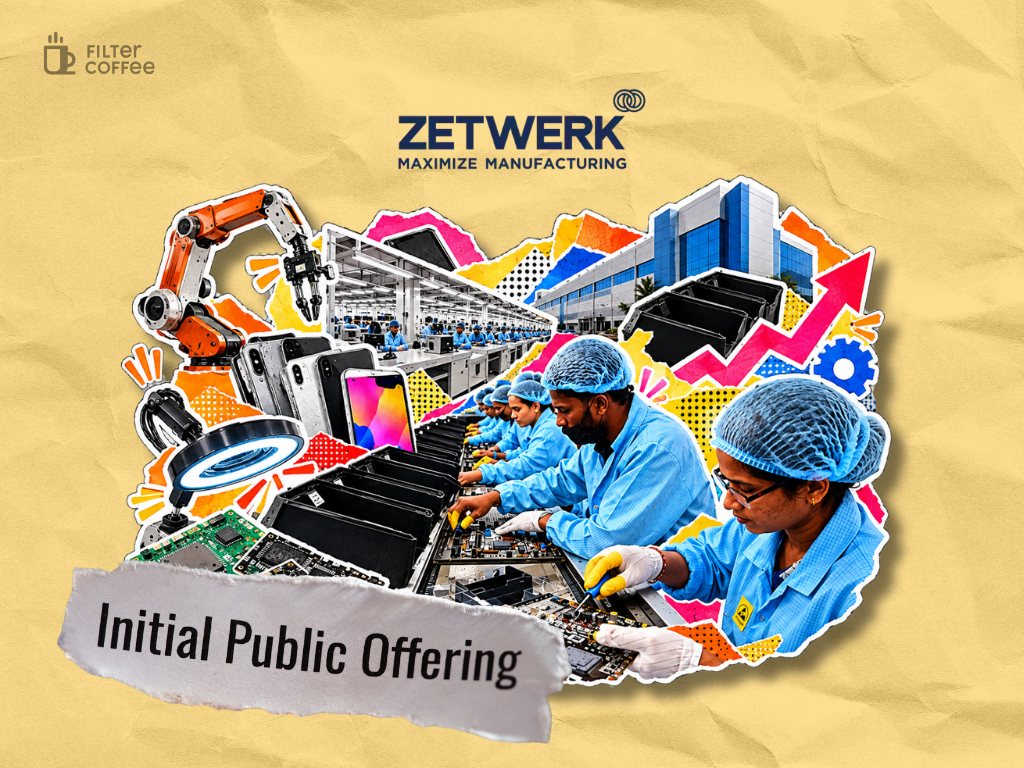
On 15th October 2026, a company that helps manufacture everything from solar equipment and power transformers to Bluetooth speakers will open its ₹5,012 crore IPO. Bengaluru-based Zetwerk has priced its shares at ₹143–151, valuing the business at around ₹25,583 crore at the upper end. That is quite a journey for a startup that originally wanted to sell software to factories.
Zetwerk has become one of India's largest technology-led manufacturing businesses by taking advantage of a problem that has existed for years. India has thousands of factories capable of producing industrial components, but finding the right supplier, managing quality and getting orders delivered on time can be a headache. A factory might have spare capacity while a buyer elsewhere struggles to find someone reliable enough to fulfil an order.
Amrit Acharya had experienced this while managing procurement at ITC, where he dealt with hundreds of suppliers. His IIT Madras friend Srinath Ramakkrushnan had seen similar problems through his father's fabrication workshop in Coimbatore.
In 2018, they joined Rahul Sharma and Vishal Chaudhary to start Zetwerk, initially building software to help companies organise their supplier networks. Potential customers liked the software, but wanted something more useful: help finding factories that could actually make their products. So Zetwerk changed course.
Suppose a renewable-energy developer needs thousands of metal structures for a solar project. Instead of negotiating with several workshops, checking manufacturing schedules and chasing deliveries, it can hand the order to Zetwerk.
The company selects suppliers, coordinates production, checks quality and manages delivery. Its technology helps organise the process, while Zetwerk takes responsibility for getting the work done. It is closer to a manufacturing contractor with a vast supplier network than a website listing available factories.
That network has grown to 6,979 third-party suppliers across 26 countries, supported by 26 company-owned factories in four countries. By March 2026, Zetwerk had served 1,802 customers. And those customers are spending in industries where investment is gathering pace.
Take renewable energy. India is targeting 500 GW of non-fossil electricity capacity by 2030, which means building solar and wind projects along with the equipment needed to support them. Solar panels require mounting structures and trackers. Wind farms need large, precisely engineered components.
Power projects need transformers and electrical systems. Zetwerk supplies several of these products, and energy accounts for nearly 70% of its manufacturing revenue. The country's clean-energy buildout is already a substantial source of business for the company.
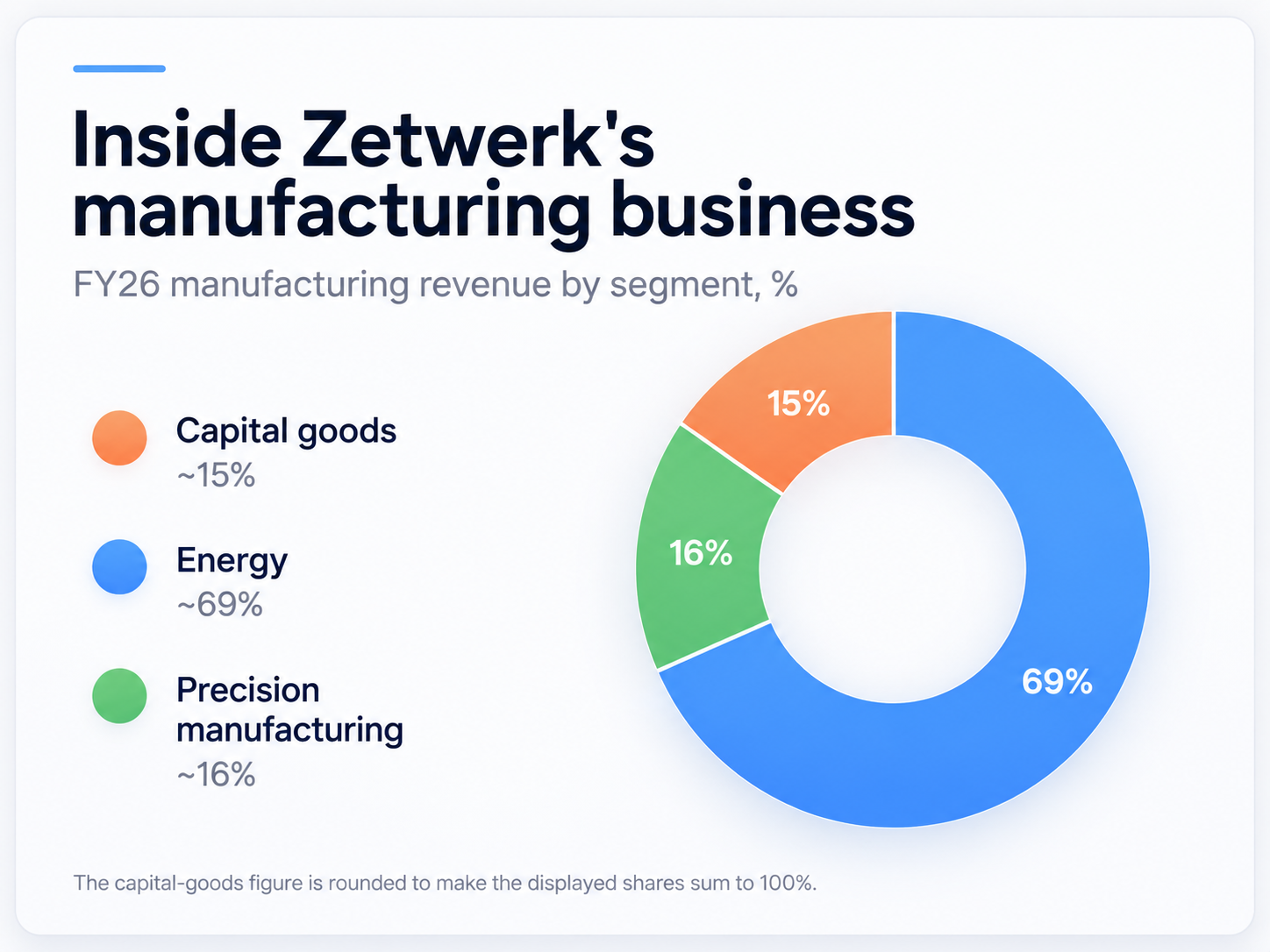
The opportunity extends beyond India. The global race to build AI data centres is driving demand for electricity infrastructure. Training powerful AI models may be a software story on your screen, but keeping the servers running requires very physical equipment. In the US, transformer manufacturers have struggled to keep pace with orders, stretching some delivery timelines from months to years. Zetwerk's CEO says the company has around ₹2,000 crore of transformer orders, largely for the American market. Its selling point is the ability to coordinate suppliers across locations and deliver specialised equipment faster.
There is also the broader push to diversify manufacturing away from China. Companies are building new supply chains, while India is encouraging domestic production through schemes such as PLI. Zetwerk hopes to benefit from both trends: supplying Indian projects and serving customers overseas. The company reported an outstanding manufacturing order book of roughly ₹13,062 crore at the end of June 2026. Those are orders it has won, though they still need to be executed before they become revenue.
To handle larger and more demanding contracts, Zetwerk is also changing how it operates. In FY24, its own factories produced only 7% of manufacturing revenue. By FY26, that share had climbed to roughly one-third. Owning plants gives it more control over quality, capacity and costs, particularly when outside factories cannot meet a customer's needs. The trade-off is that owning manufacturing capacity requires capital and brings fixed costs that a marketplace can otherwise avoid.
The financials show both the promise and the pressure. Zetwerk's FY26 revenue jumped 40% to ₹15,913 crore, from ₹11,332 crore the previous year. But manufacturing itself brought in ₹9,375 crore. Another ₹6,539 crore came from its procurement and ecosystem services business, including Terra91, which aggregates raw-material purchases for manufacturers. Management says that operation earns an EBITDA margin of around 1%. It adds considerable revenue without contributing much profit on each rupee of sales.
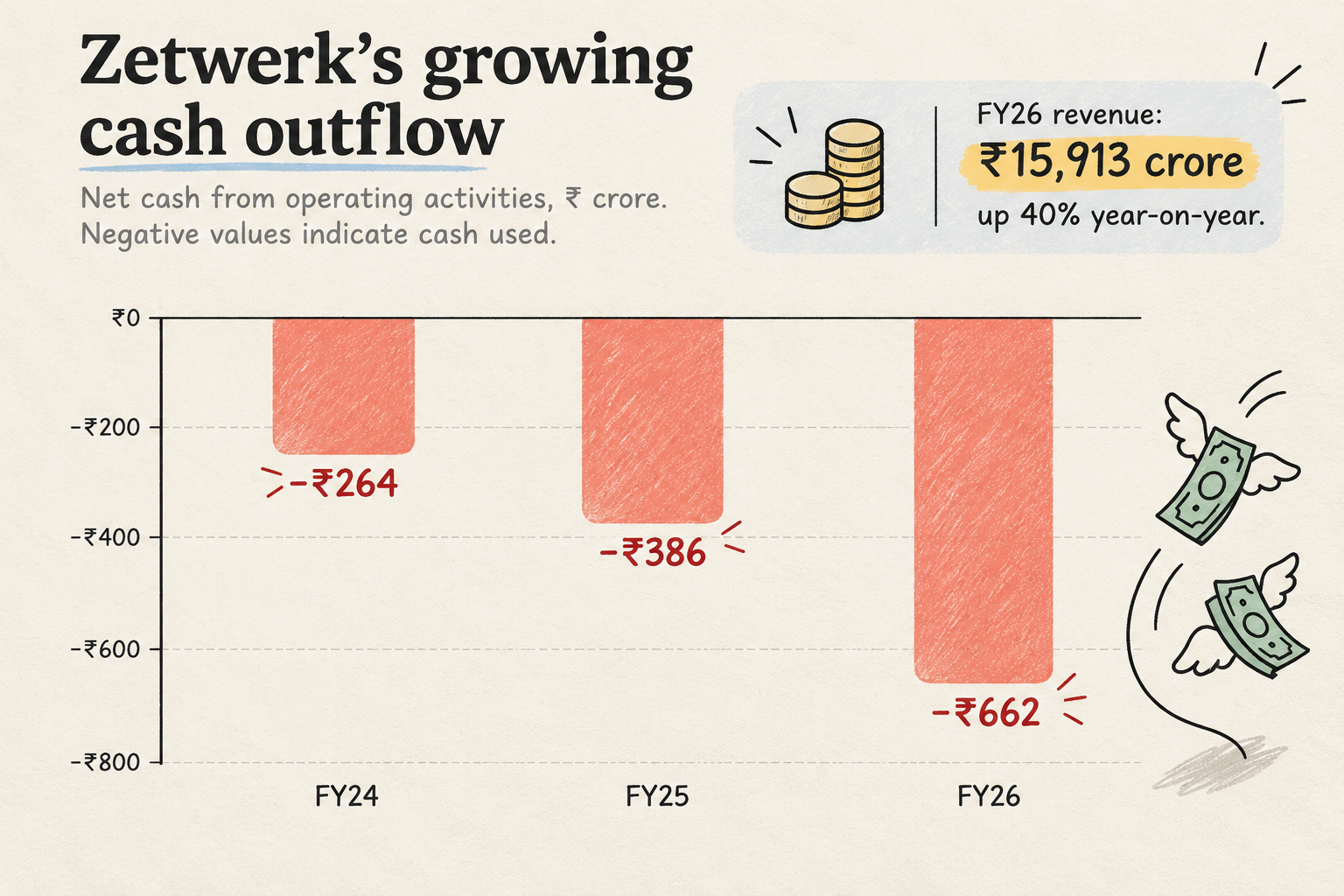
Across the group, adjusted EBITDA reached about ₹421 crore in FY26, leaving a margin of just 2.65%. Zetwerk also reported a ₹1,606 crore net loss, although much of that was linked to accounting charges and its discontinued civil-infrastructure business. The more immediate concern is cash: operating activities consumed around ₹682 crore during the year. The company needs money to fulfil orders and manage the gap between paying suppliers and collecting from customers, even when business is growing.
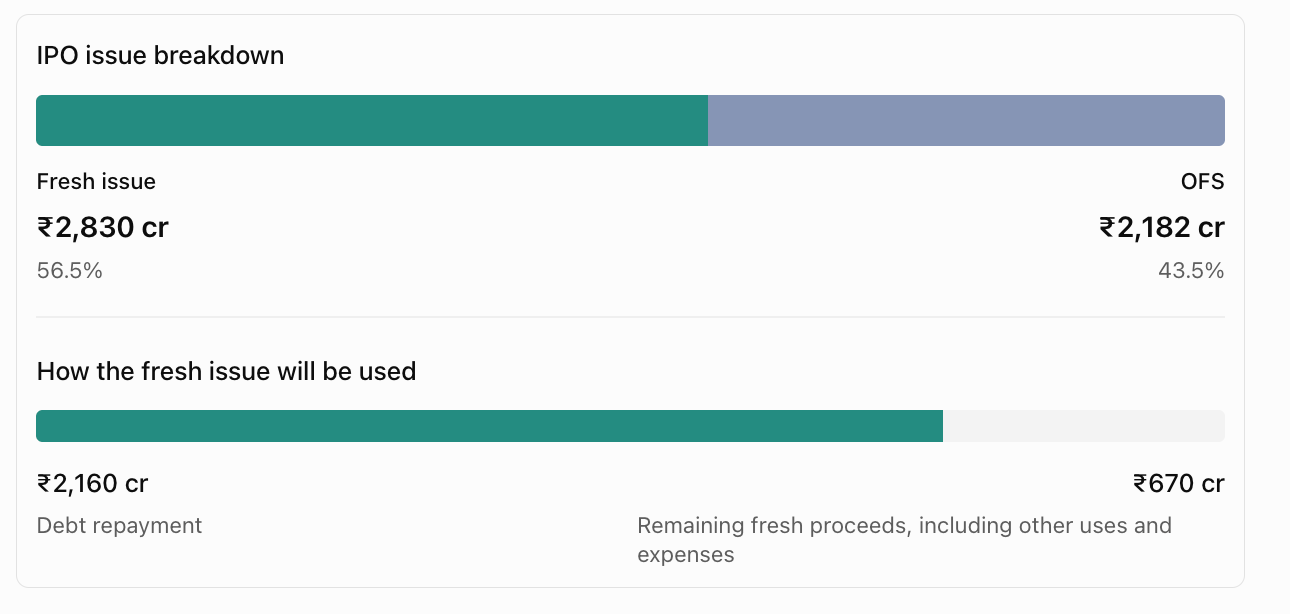
That makes the IPO's use of proceeds revealing. Of the ₹5,012 crore offer, ₹2,830 crore is fresh equity raised by Zetwerk, while approximately ₹2,182 crore is being sold by existing shareholders. The company intends to use ₹2,160 crore of the fresh money to repay borrowings, with the balance going towards potential acquisitions and general corporate purposes after expenses. Debt repayment can ease financial pressure, but this is not an IPO devoted mainly to constructing new factories.
At its proposed valuation, investors are being asked to back a company exposed to renewable energy, global manufacturing and even AI infrastructure, despite thin margins and negative operating cash flow. Zetwerk has shown it can win customers and grow across industries. Its next task is to turn that demand, and its increasingly expensive manufacturing network, into cash that the business can consistently keep.
Sources
- SEBI – Zetwerk IPO prospectus, financials, business segments and risk factors.
- Financial Express – Zetwerk's manufacturing strategy and expansion plans.
- Times of India – Order book, transformer demand and global opportunities.
- Moneycontrol – IPO size, price band and issue details.
- Zetwerk – Company background, manufacturing capabilities and supplier network.