

 Newsletter
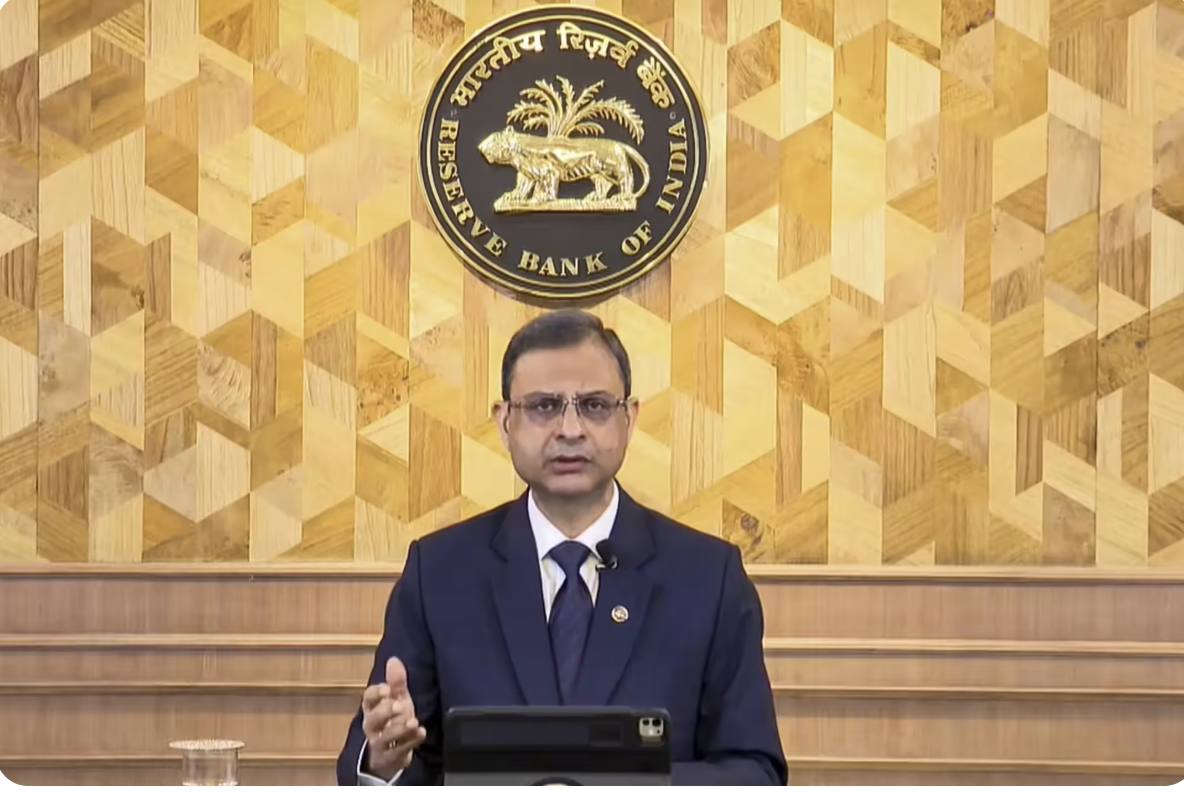
The RBI Governor Sanjay Malhotra-led Monetary Policy Committee (MPC) has kept the repo rate unchanged at 5.25% for the 4th consecutive time. The central bank also decided to retain its "neutral" policy stance.
First, what is the repo rate and why is it important: the repo rate is the interest rate at which the RBI lends money to banks. It influences how expensive or cheap it is for banks to borrow funds. If the repo rate goes up, loans like home, car and business loans can become costlier.
What does a "neutral stance" mean: it simply means the RBI is not committing to either raising or cutting interest rates in the coming months. Instead, it wants to keep its options open and will take future decisions based on how inflation, economic growth and global events evolve.
Now, the other important numbers -
Every time the RBI announces its policy decision, it also updates two of the country's most closely watched economic forecasts - GDP growth and inflation. This time, the central bank became slightly more optimistic about both.
- The GDP forecast for FY27 was raised to 6.7% from 6.6% earlier.
- The biggest upgrade came for the first quarter, where the RBI now expects the economy to grow 7%, compared with its earlier estimate of 6.6%.
- It also marginally increased its Q2 growth forecast to 6.4% from 6.3%, while leaving the second half of the year unchanged.
On inflation, the RBI reduced its FY27 CPI forecast to 5% from 5.1% earlier. It also lowered its estimate for core inflation, which excludes volatile food and fuel prices, to 4.3% from 4.7%, indicating that underlying price pressures are easing.
But there's a catch
The RBI warned that headline inflation could rise over the next few months before cooling again.
Governor Sanjay Malhotra said inflation is expected to increase in the near term as food and fuel prices remain elevated. The central bank expects inflation to peak during the October-December quarter (Q3) before easing again later in the year.
The RBI, however, stressed that these price pressures are not broad-based. That is important because broad-based inflation is usually much harder for a central bank to control.
Broader perspective: food prices have become one of the RBI's biggest concerns in recent months.
In June, India's retail inflation climbed to an 18-month high, largely because of higher food and fuel prices. Although core inflation remained relatively stable, rising prices of vegetables, edible oils and energy pushed the overall inflation number higher.
The RBI also flagged El Niño-related weather risks as an important uncertainty. Uneven rainfall could affect crop output, keeping food inflation under pressure in the coming months.