
 Newsletter

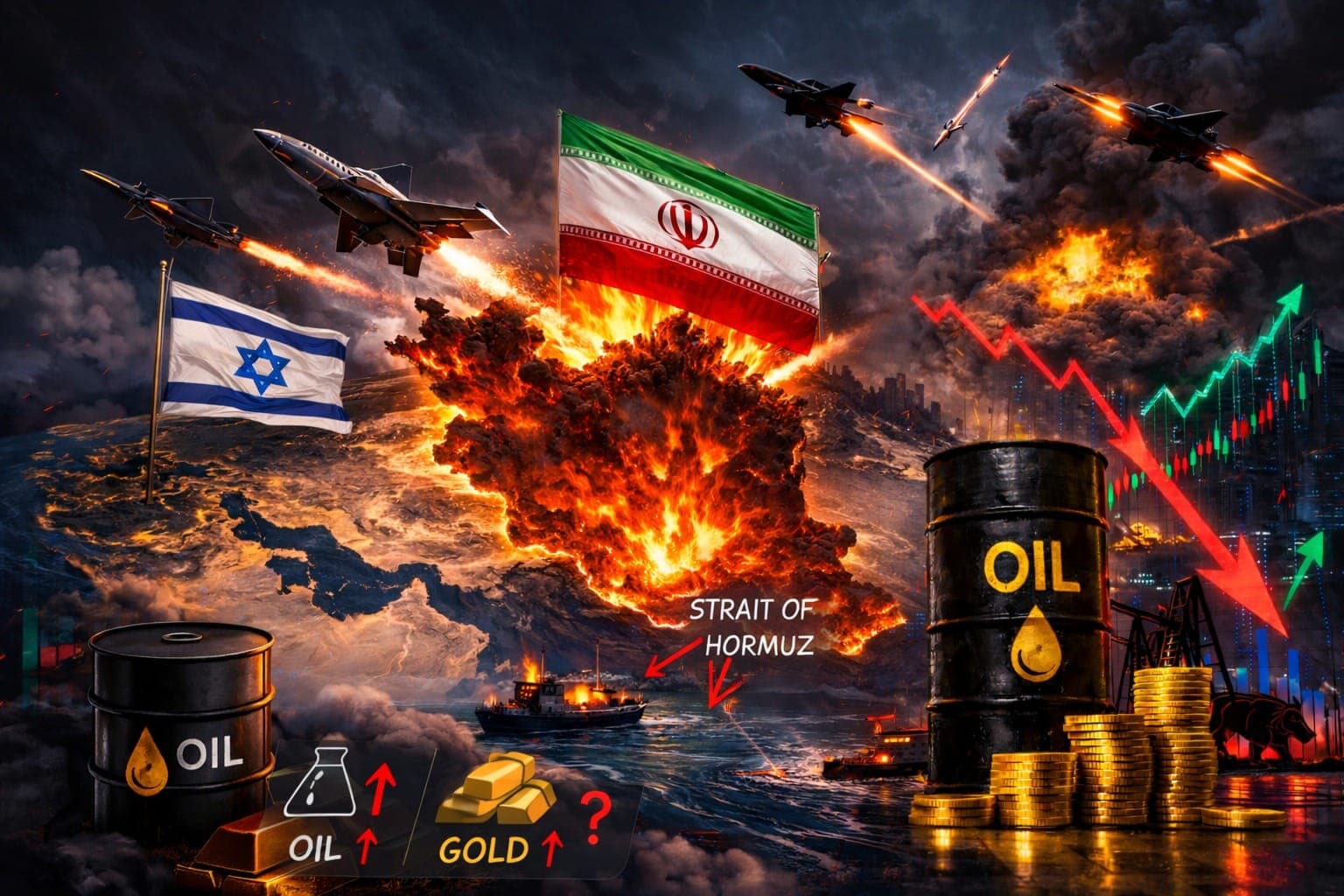
Iran’s Supreme Leader Ayatollah Ali Khamenei was killed in a coordinated US-Israel aerial strike targeting Iranian military and government sites.
The focus now shifts to how Tehran retaliates next and whether key oil routes remain safe.
Nearly 20% of the world’s oil supply passes through the Strait of Hormuz. And that’s now the market’s biggest worry.
Any disruption in the Strait could choke global oil supply, spike crude prices, and push freight and logistics costs higher. That means inflation could return just when central banks were hoping to cut rates.
For India, higher crude means a weaker Rupee, higher fuel costs, and pressure on government finances.
Market view: some strategists believe crude may rise, but not spiral out of control.
Iran accounts for roughly 3% of global oil production, and supply gaps could be partly offset by Saudi Arabia and the UAE.
Expectations are that US benchmark WTI may stay below $75 per barrel and Brent below $80, unless the Strait itself is blocked.
But if Hormuz is disrupted, all bets are off.
What about commodities: whenever there is war talk, money runs to safe havens.
With tensions rising, gold and silver are expected to open higher. On global markets, gold is facing resistance near $5,300 per ounce. A breakout could push Indian gold prices towards ₹1,68,000–₹1,70,000 per 10 gm.
Silver is also heating up. If it sustains above $95 per ounce, analysts see a possible move towards the $100 mark, which could translate to nearly ₹3,00,000 per kg in India.
What to expect on Dalal Street today: expect volatility. Oil-sensitive sectors like paints, aviation, OMCs, and logistics may feel pressure if crude spikes. IT and pharma could act as defensive plays. Gold-linked stocks may see buying interest.
If oil stays contained, markets may stabilise after an initial dip. If not, brace for sharp swings.
For now, this is not just a geopolitical story, it’s an energy story. And for India, energy always hits home.