

 Newsletter


India’s largest lender SBI reported Q2 earnings that beat market estimates on almost all key parameters.
Key numbers:
- Net profit: up 14.3% at ₹23,038 cr vs ₹20,160 cr (YoY)
- Net Interest Income: up 14.3% at ₹49,143 cr vs ₹42,847 cr (YoY)
- Gross NPA: at 1.39% vs 1.47% (QoQ)
- Net NPA: at 0.36% vs 0.38% (QoQ)
FYI: both NPA measures track bad loans, with net NPA accounting for money already set aside to cover potential losses.
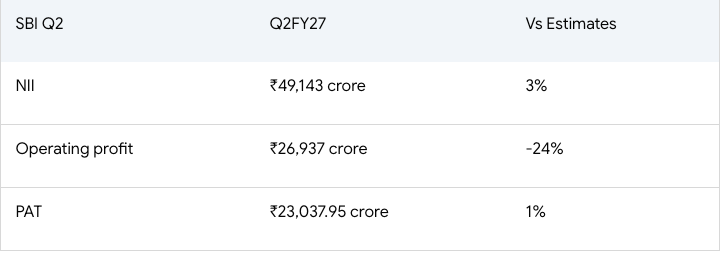
However, operating profit fell 1.4% YoY to ₹26,937 crore from ₹27,311 crore, pointing to pressure on the bank’s core business.
Reported net profit benefited from stake sales. SBI booked a ₹7,288 crore pre-tax gain from selling a 6.3% stake in SBI Funds Management. It also earned ₹2,410 crore after tax from selling shares in the National Stock Exchange (NSE) IPO.
SBI retained its loan growth forecast of 14-15% and said it aims to keep its net interest margin above 3% for FY27.
This margin measures how much the bank earns from lending and other interest-earning assets after paying its interest costs.
The bank also said its current and savings account (CASA) deposit base remains among the strongest in the industry. These deposits provide banks with a relatively low-cost source of funds.
Why did the stock fall: higher government bond yields and rising expenses added pressure on SBI’s earnings.
Banks must keep part of their deposits in assets such as government bonds. SBI and other state-owned banks generally hold more of these bonds than private banks such as HDFC Bank and ICICI Bank.
SBI’s net profit rose partly because it made money from selling stakes in other businesses. But its operating profit fell, suggesting pressure on its everyday banking business. Expenses also rose 9.6% from a year earlier and 15.6% from the previous quarter.