
 Newsletter
On August 3, the Ministry of Road Transport and Highways (MoRTH) proposed rolling out Vehicle-to-Vehicle (V2V) technology in phases. If approved, vehicles with V2V systems will need to meet the new V2V safety standard from October 2027, with mandatory fitment starting October 2028.
They had also released a consultation paper on the regulatory framework for V2X communication.
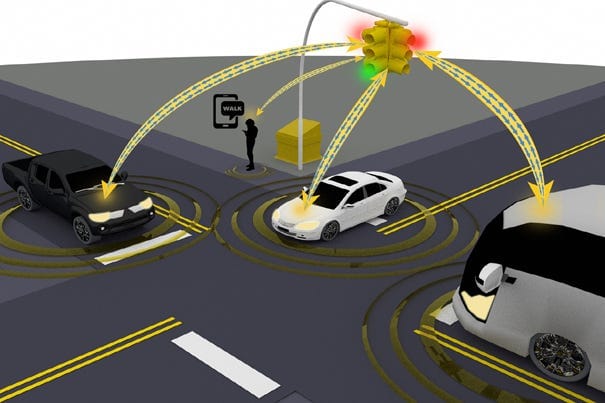
So, what is V2X: the technology lets vehicles "talk" to each other and their surroundings in real time. They can alert one another about sudden braking, blind spots or nearby pedestrians. Drivers get a warning before the danger is even visible.
Why this matters: despite years of road safety campaigns, India still records the highest number of road accident deaths in the world. The country accounts for nearly 11% of global road fatalities.
On roads where pedestrians, cyclists, two-wheelers, cars and even stray animals share the same space, V2X could help prevent accidents by warning drivers about hazards they cannot yet see.
The benefits go beyond road safety. Vehicles can communicate with traffic signals and roadside infrastructure to reduce congestion. That could shorten travel times and lower fuel consumption. Over time, V2X could also make electric vehicles smarter by giving them more information than cameras and sensors alone can capture.
The catch: the biggest challenge, however, is building the ecosystem around it. Automakers, telecom companies, road authorities and the government will all need to work together. They must build secure software, reliable communication networks and upgraded roadside infrastructure. Strong cybersecurity will also be critical.
Experts also stress that V2X cannot remain a feature only for premium cars. It must eventually reach two-wheelers and pedestrians through affordable devices or smartphone-based alerts.
Even countries like China, the US and parts of Europe haven't deployed V2X nationwide. They started with smart cities and dedicated highway corridors before expanding further. India is expected to follow a similar path. The technology is largely ready. The real challenge is building the infrastructure, finalising regulations and getting every stakeholder aligned.
What happens next: the global V2X market is expected to grow from $2.87 billion in 2025 to $18.67 billion by 2030. That reflects the growing push toward connected mobility worldwide.
India is already laying the groundwork. Companies like Reliance Jio, Tata Elxsi and Sasken are building the networks and software needed for V2X.
The rollout is expected to happen in phases. It will begin with pilot projects on select highways and in smart cities over the next couple of years. Deployment will then expand to major cities and highways before broader adoption later this decade. If India gets the regulations, infrastructure and coordination right, V2X could become one of the country's biggest road safety upgrades in the years ahead.