

 Newsletter
Quick commerce giant Zepto has filed updated IPO papers with SEBI, setting the stage for what could become one of the country's largest new-age technology listings.
Founded in 2020 by Aadit Palicha and Kaivalya Vohra, Zepto built its name by delivering groceries and daily essentials in minutes.
If all goes according to plan, the company could hit the stock market as early as July with an estimated valuation of around $10 billion, up from roughly $7 billion in its last funding round.
Breaking it down: Zepto plans to raise ₹8,010 crore through a fresh issue of shares. Existing investors will also sell part of their holdings through an offer-for-sale, taking the total IPO size to around ₹11,000 crore.
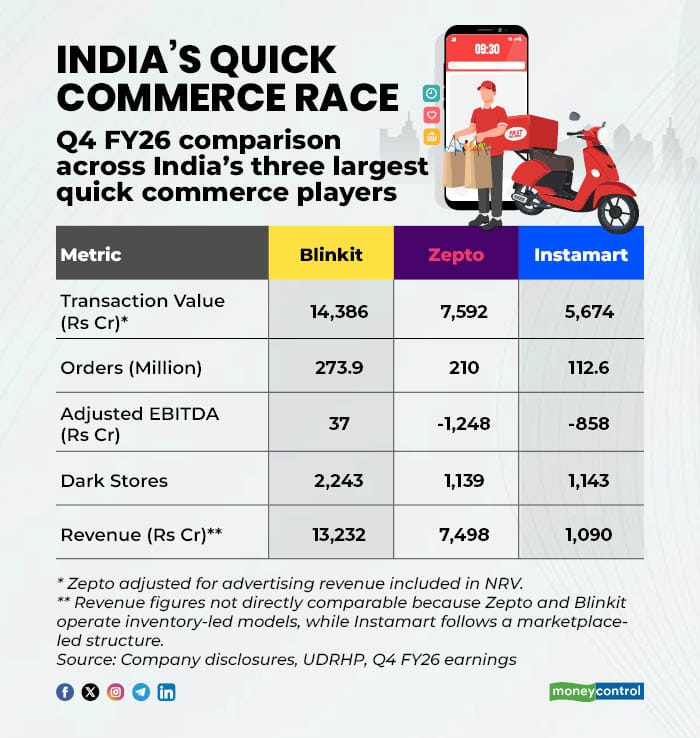
The numbers: in just two years, Zepto's revenue has increased nearly five-fold. The platform handled 21 crore orders in the March quarter alone, which works out to roughly 23 lakh orders every day. Its annual transacting user base has grown to 4.79 crore users, while its network of dark stores has expanded to 1,139 locations.
But here's where the story gets interesting.
While revenue has surged, losses have grown almost as quickly. Zepto reported a loss of ₹5,905 crore in FY26, up from ₹4,700 crore a year earlier. The company continues to spend heavily on expansion, customer acquisition and building out its delivery network.
Cash reserves are also shrinking. Cash and investments fell from ₹7,440 crore to ₹5,680 crore over the past year, while free cash flow remained deeply negative.
One bright spot is advertising.
Revenue from ads has grown more than 30 times in the last two years, with nearly 2,500 brands now advertising on the platform.
For many investors, this could become one of the most important parts of the Zepto story because advertising tends to be far more profitable than grocery deliveries.
The IPO filing also revealed that Zepto's founders received summonses from the Enforcement Directorate (ED) in April.
The agency sought information related to foreign investments in the company, its shareholding structure, and other matters linked to India's foreign exchange regulations.
The founders later appeared before the ED and submitted the requested documents and information. According to Zepto, it has not received any further communication from the agency since then.
However, the company noted that it cannot completely rule out the possibility of future inquiries, investigations, or regulatory action.
The bigger picture: Zepto is entering the public markets at a time when the quick commerce battle is heating up.
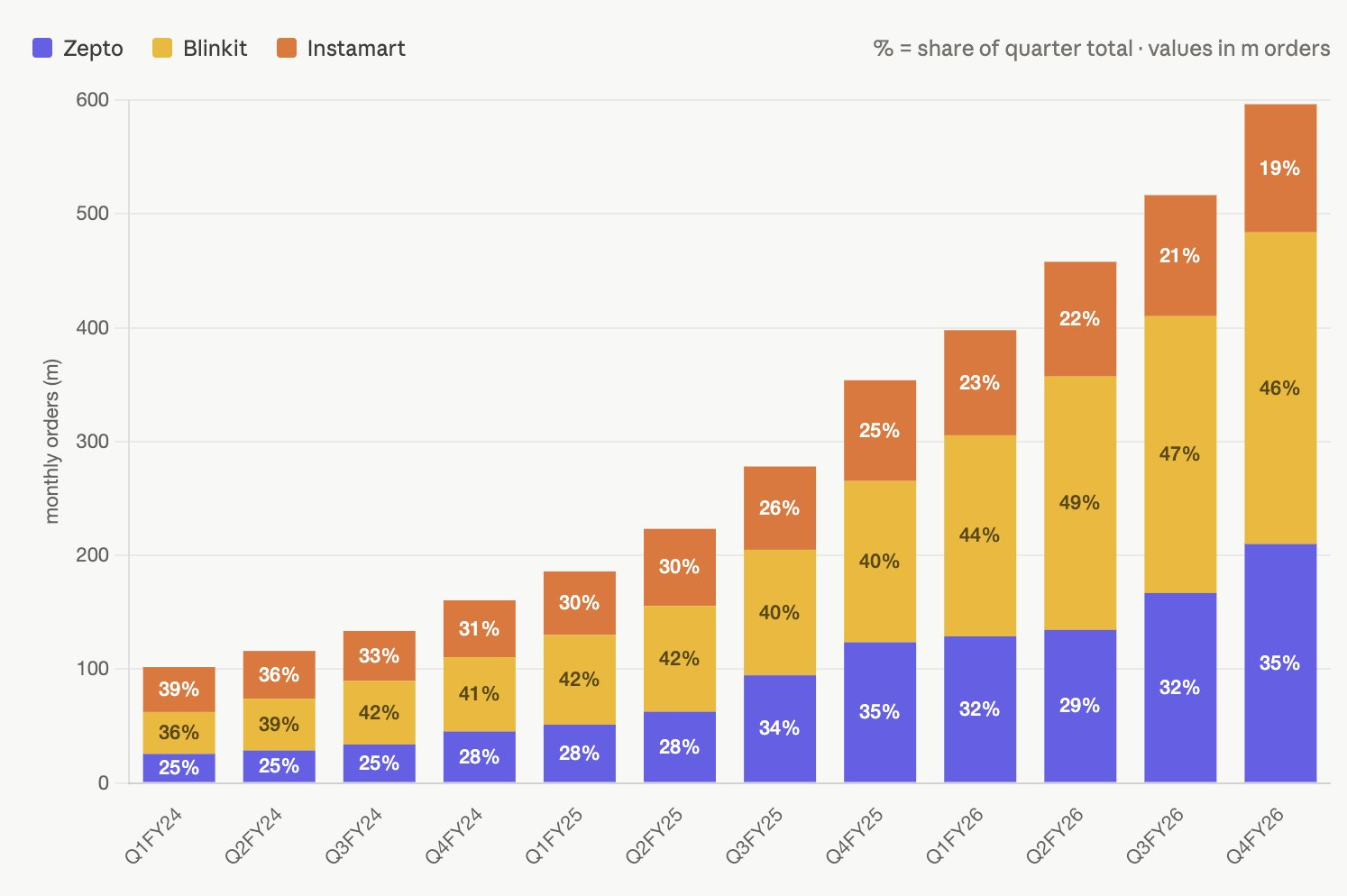
The company is locked in a fierce race with Blinkit and Instamart. Industry estimates suggest Blinkit currently controls more than 40% of the market, while Zepto and Instamart each account for over 20%.
And that's what makes this IPO so fascinating.
The question is no longer whether Indians want groceries delivered in 10 minutes. They clearly do. The real question is whether quick commerce can become a sustainably profitable business, or whether growth will continue to come at the cost of mounting losses.