
 Newsletter
Inflation heats up, BRICS finds consensus, and India-France ties deepen.
🗓️ Morning, folks! ☀️
Did you know? We’re living through an explainer epidemic.

Let us explain. No, wait. That would rather prove the point. Because these days, everything, and we mean everything, needs an explainer.
Move over, brain rot: thinkfluencers are having a moment, with creators breaking down neuroscience, psychology, fashion and business into bite-sized videos.
The appeal? people don’t just want to scroll endlessly anymore; they want to feel like they learned something while doing it.
But there’s a catch: platforms often squeeze complex ideas into 60-second explainers, sometimes with weak research or missing sources. Still, intellectual curiosity is becoming cool again, with the same apps that gave us brain rot now selling us the cure.
Back to Dalal Street now 📈,
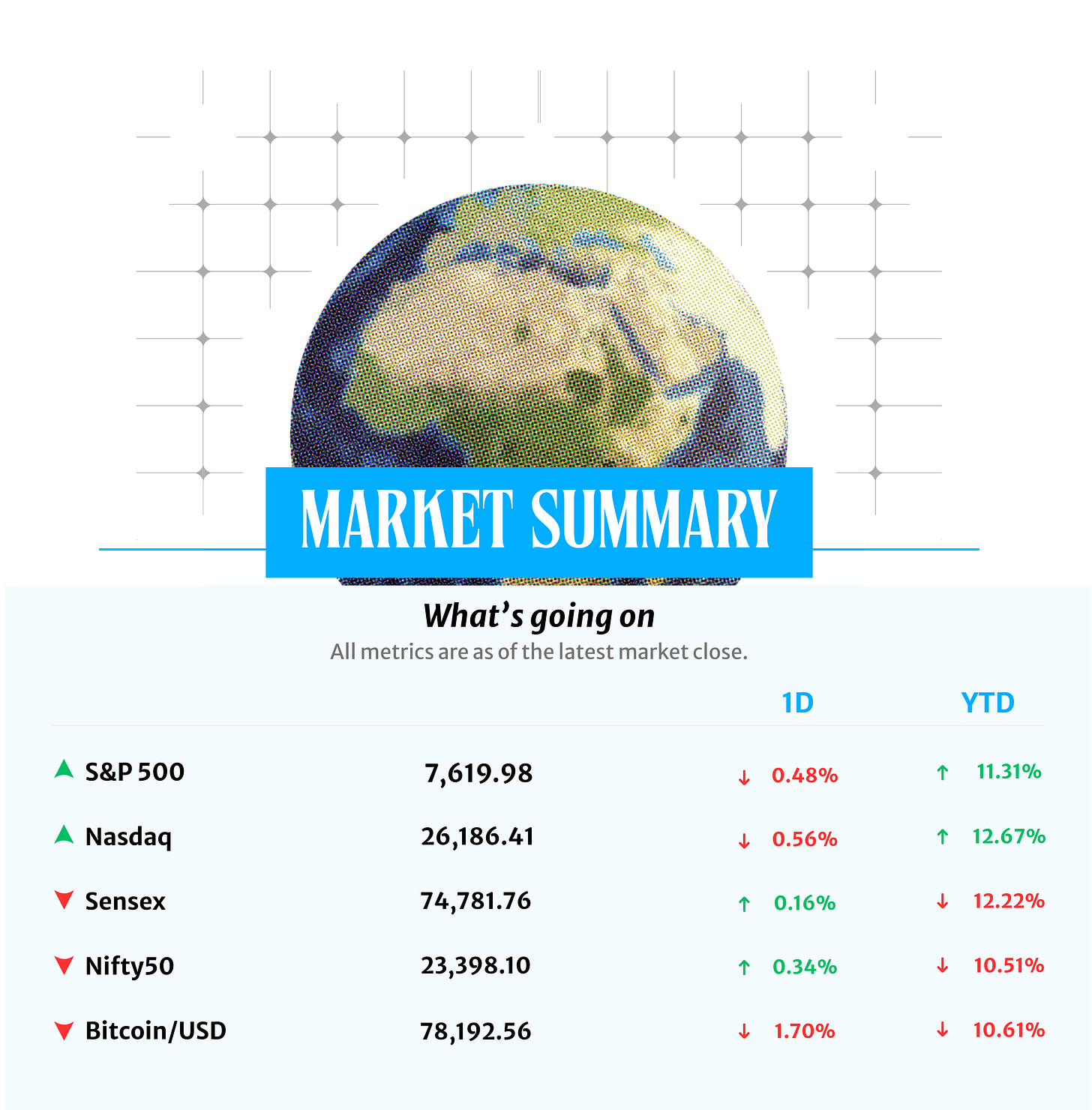
Sensex and Nifty 50 are likely to open flat amid weakness in global markets, led by a fall in AI stocks.
Middle East tensions and the upcoming US Fed meeting will also keep investors cautious.
💡 Spotlight: AI’s biggest names want to slow down 🤖
Global AI stocks came under pressure on Monday after some of the industry’s biggest names made an unusual call: AI development may be moving too fast.
It started after Anthropic researcher Jacob Coxon resigned, raising serious concerns about the risks of advanced AI.
Another Anthropic safety researcher, Evan Hubinger, then warned about the potential dangers of increasingly powerful systems.
Then came the big names: Anthropic CEO Dario Amodei called for companies to slow down how quickly they make AI models more powerful. OpenAI CEO Sam Altman broadly agreed that companies should “pace” development, while Elon Musk backed Amodei’s concerns.
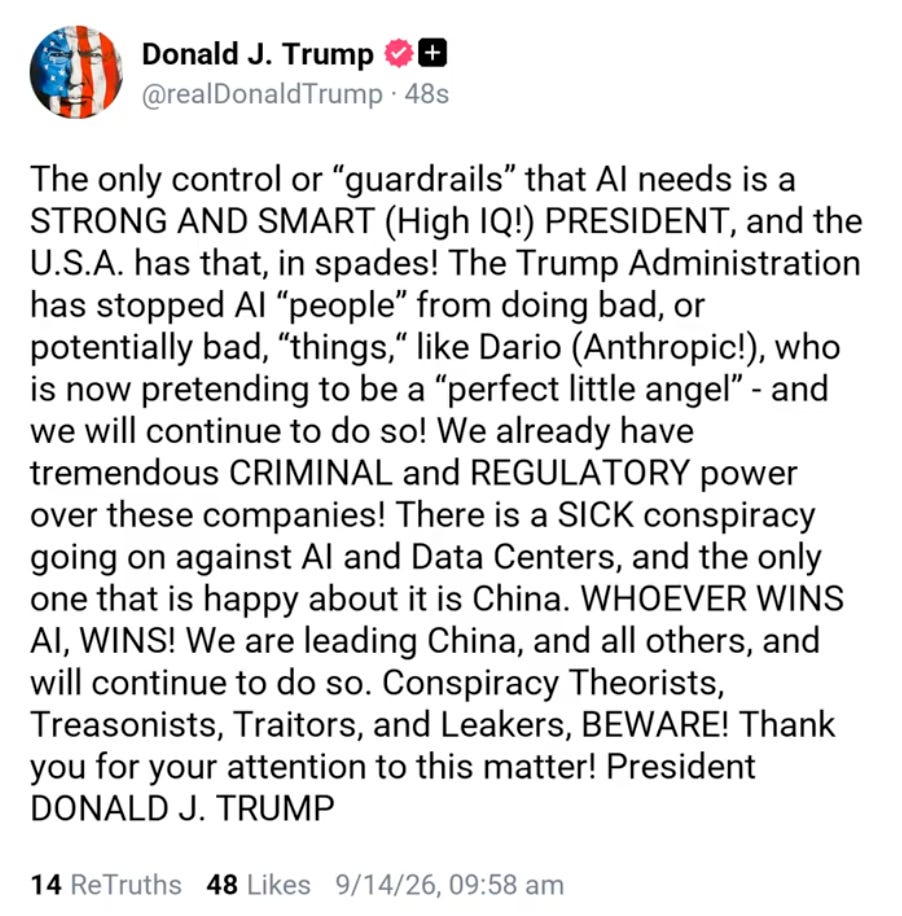
And just as AI bosses were asking everyone to slow down, Trump basically said: absolutely not.
The US President downplayed the need for tougher AI guardrails, arguing that America can’t afford to ease up while competing with China.
Now, before we dive in further, Tanvi Raut Dessai sat down with Tarun Mehta, co-founder and CEO of Ather Energy, for the latest episode of This Is Business.
They talk about how Ather went from a college project to a publicly listed company, why the team chose to build so much from scratch, and what it takes to build an EV company in India.
Full story here 👇🏻
Let’s hit it! 💪🏻
1 Big Thing: Your wallet is feeling the heat 🔥
India’s retail inflation climbed to 4.82% in August, from 4.45% in July, as everyday expenses, especially food became more expensive.
Note: this is the third straight month inflation has stayed above the RBI’s 4% target, and the highest reading in eight months.
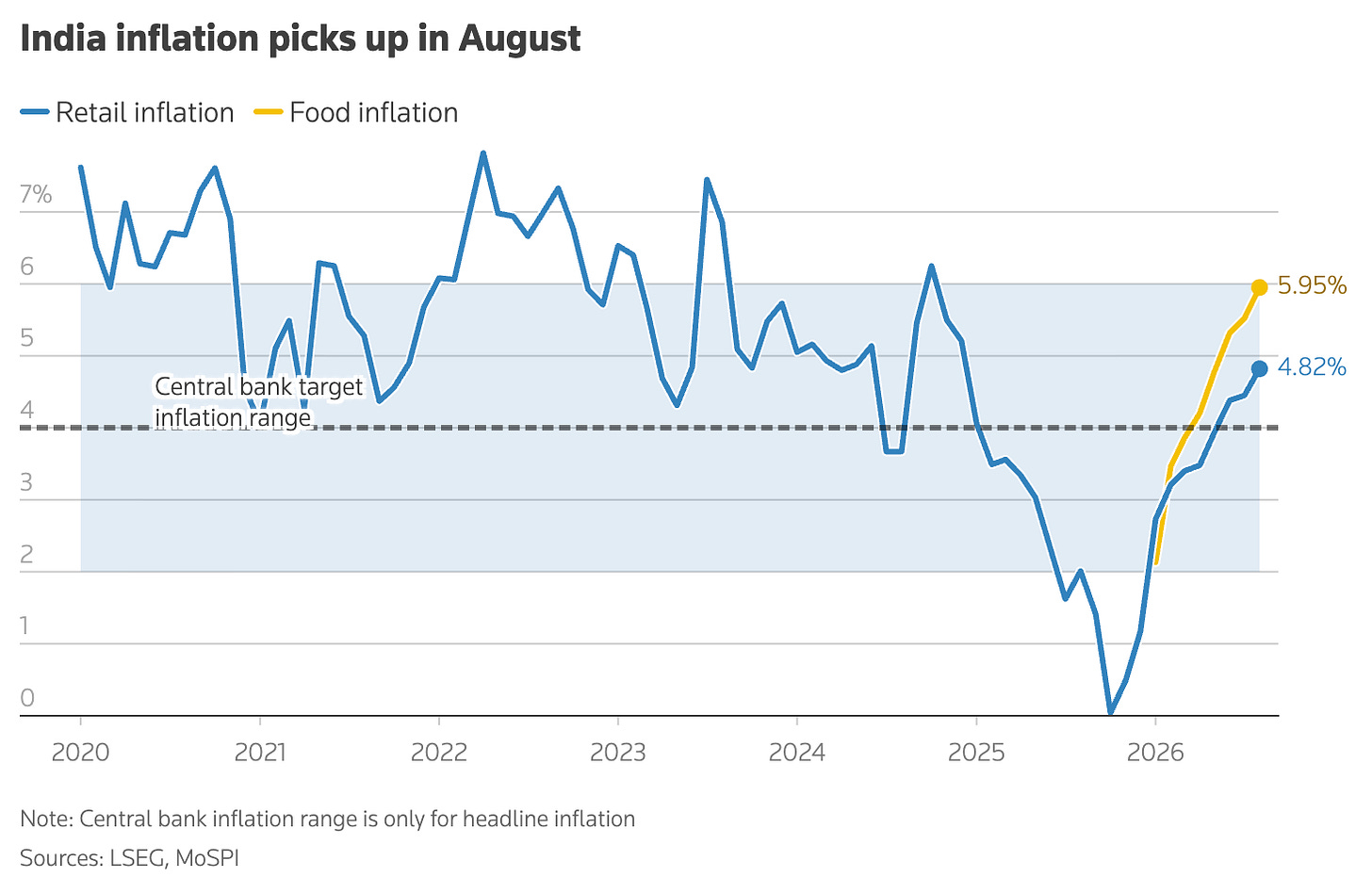
What got expensive: food inflation increased to 5.95% from 5.52% in July, with staples such as onions, ginger and garlic seeing sharp price increases after weak monsoon showers.
Transport inflation rose to 4.60%, while prices across clothing, household goods and education were also rising around or above 4%.
Core inflation, which removes volatile food and fuel prices to give a better idea of underlying price pressures rose to around 4.2% in August from 3.8% in July.
Oil problem: India imports nearly 85% of its crude oil, making expensive global oil particularly painful.
The US-Iran conflict has disrupted energy supplies from West Asia. Higher crude eventually makes transportation, manufacturing, packaging and several everyday products more expensive. That creates the risk of inflation spreading even further.
Zoom out: RBI’s job is to keep inflation around 4%, within a 2-6% tolerance band. It kept the repo rate unchanged at 5.25% in August, partly because inflation was still seen as being driven mainly by food and fuel.
But the RBI itself expects inflation to rise further: 4.7% in Q2, 5.9% in Q3 and 5.5% in Q4, with FY27 inflation projected at 5%.
While we are on inflation 💸,
Wholesale inflation (WPI) jumped to 9.92% in August from 9.78% in July, driven by higher food, fuel and manufactured-product prices.
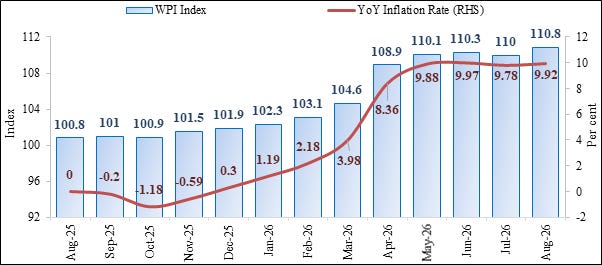
When businesses keep paying more for fuel, raw materials and other inputs, they eventually have a choice: absorb those costs and take a hit on profits or pass some of them on to you.
That is why August’s inflation number matters. Food started the problem, oil added pressure, and now the RBI is watching whether higher prices become an economy-wide problem.
2. BRICS finally got everyone to agree 🤝
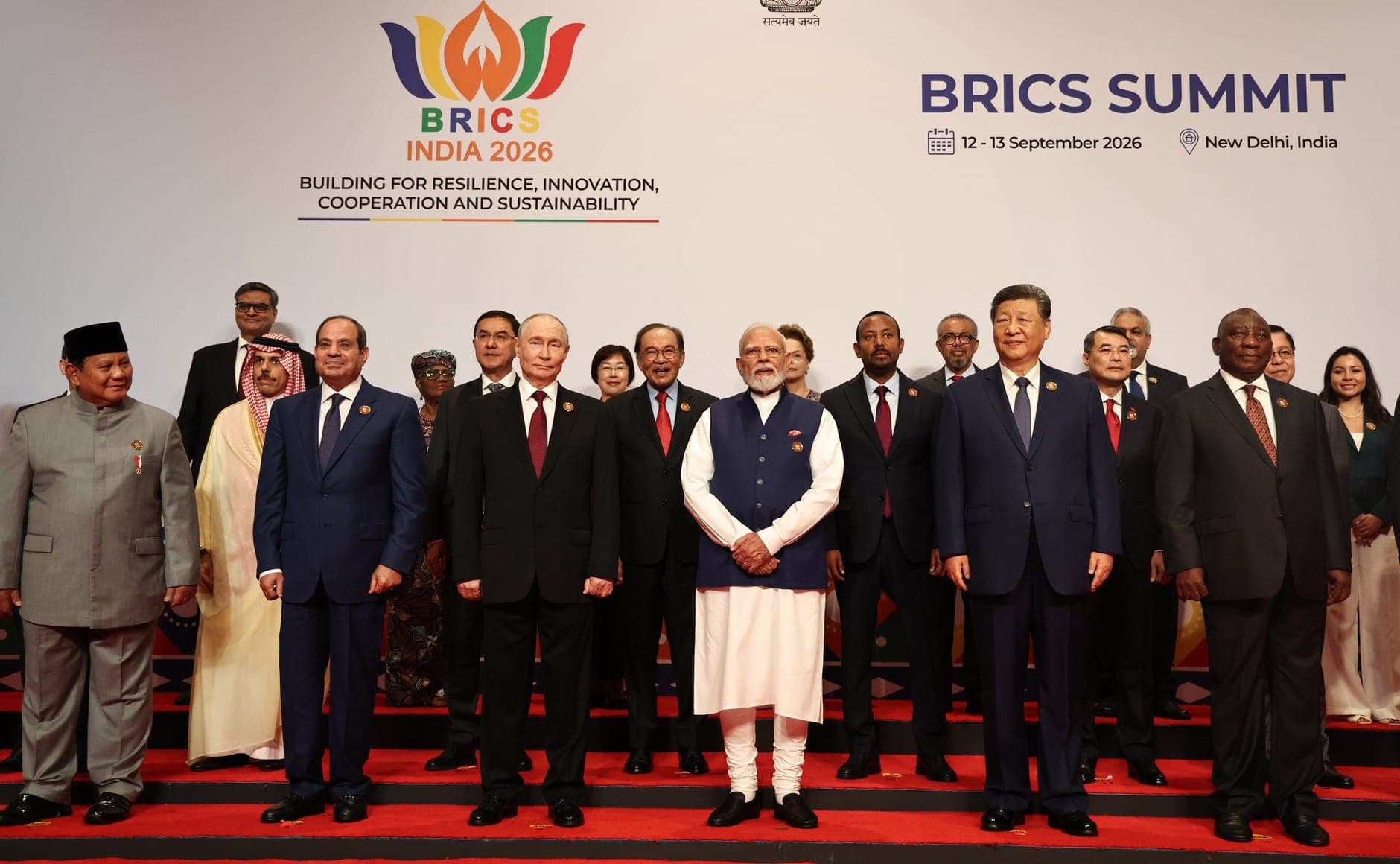
The BRICS summit ended on Sunday with several India-specific outcomes. However, the most important highlight was reaching consensus.
BRICS is a group of major emerging economies including Brazil, Russia, India, China, South Africa, Egypt, Ethiopia, Iran, the UAE, Saudi Arabia and Indonesia and this year’s summit was especially important as India hosted it.
What is ‘reaching consensus’: the group adopted the New Delhi Declaration, outlining what BRICS countries agreed on across trade, terrorism, artificial intelligence and reforms to global institutions.
Getting every BRICS member to agree was a big deal this time. In May, BRICS foreign ministers couldn’t even release a joint statement because Iran and the UAE disagreed on key issues.
Key highlights:
On trade: BRICS pushed back against countries imposing tariffs and trade restrictions on their own. While it did not name the US or announce counter-tariffs, it called for a fairer and more predictable global trading system.
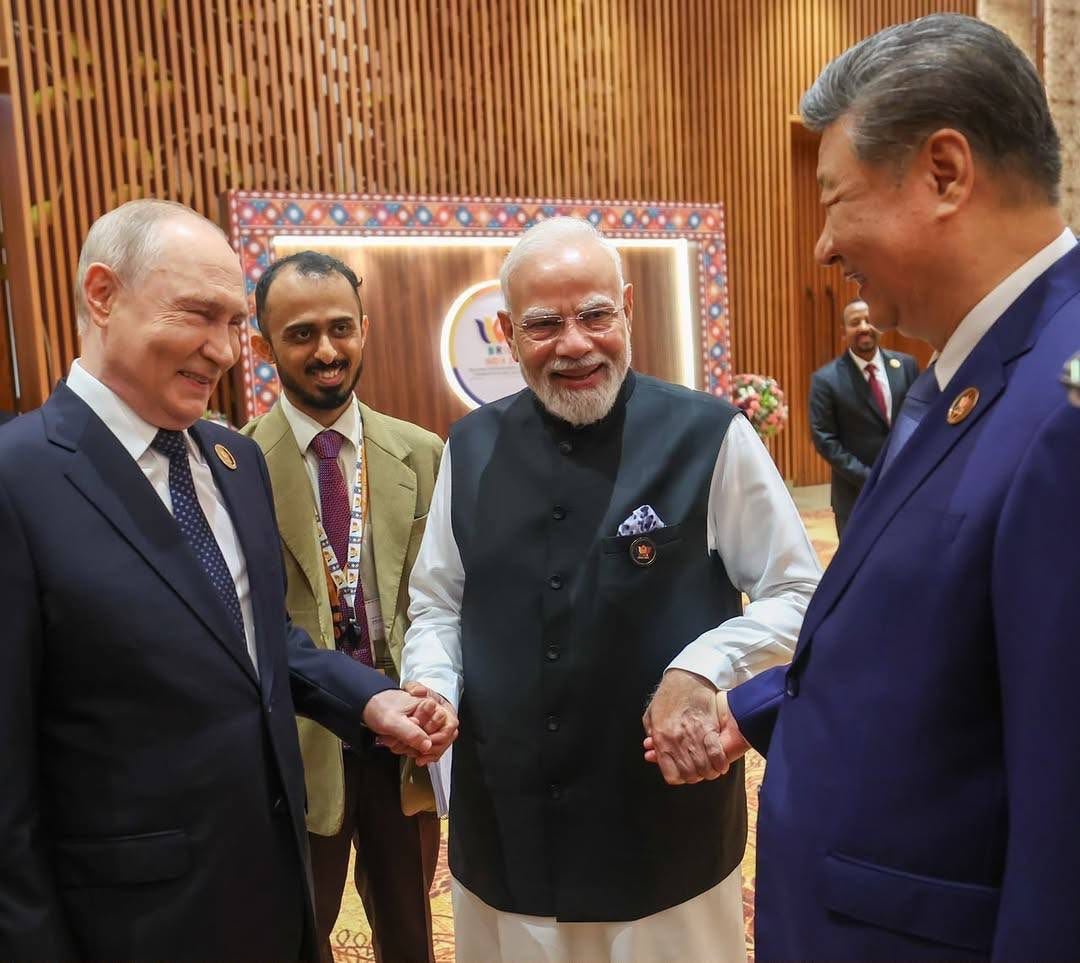
On terrorism: the group strongly condemned terrorism and specifically mentioned the 2025 Pahalgam terror attack. It also called for action against terror funding, safe havens and terrorists moving across borders.
On West Asia: it called for dialogue to reduce tensions, protection of civilians and uninterrupted energy and trade flows. It also backed humanitarian aid for Gaza and reiterated support for a two-state solution.
On money: there is no BRICS currency yet. Instead, members want to make it easier and cheaper to trade and invest using their own currencies.
On AI: BRICS wants developing countries to get better access to AI while ensuring the technology remains safe and inclusive.
India’s push: the declaration also backed Indian proposals around digital public infrastructure, healthcare, manufacturing technology and development cooperation.
3. Out-of-the world collabs. Quite literally 🧑🚀
India and France are taking their decades-old space partnership to the next level. Three new deals between companies from the two countries were announced at the International Space Summit in Paris on September 9-10.
So, what are the three India-France deals all about:
1. French company Safran Space has signed contracts worth over €5 million with Indian space company Dhruva Space.
The deal will support SBS-III, India’s planned network of 52 satellites, which is expected to be deployed between 2027 and 2030 to monitor and support activities in space.
2. French launch-services company RIDE! signed a deal with Indian startup TakeMeToSpace to launch two satellites.
TakeMeToSpace is working on what it calls orbital data centres, essentially computing and data-processing infrastructure designed to operate in space.
3. French space company U-Space and Indian engineering firm AXISCADES have agreed to work together to tap into India’s growing micro-satellite market.
The partnership will combine French space technology with India’s manufacturing and engineering capabilities.
4. Stocks that kept us interested 🚀
What went up ⬆️
💻 Select IT stocks including Tech Mahindra and Wipro gained up to 1% after IT major Oracle reported solid Q1 earnings.
What went down ⬇️
🚢 Cochin Shipyard declined 9% after the company gave cautious guidance for FY27.
🏠 Realty stocks fell sharply on Friday on rate-hike concerns, with Godrej Properties down 7%.
🌾 PI Industries fell more than 4% after Kumiai, one of the company’s biggest clients, cut its guidance.
⛏️ Metal-related stocks including NALCO, Hindustan Zinc and NMDC fell 2-3% amid pressure from soaring oil prices, rising bond yields and a stronger US dollar.
What else are we snackin’ 🍿
🔋 Battery bet: Premier Energies partnered with Germany’s RCT Group to set up a 12 GWh battery storage manufacturing facility in Telangana, starting with 6 GWh in the first phase.
🍕 Pizza money: Popo Global, which runs The Pizza Bakery, Paris Panini and Smash Guys, raised ₹532 crore from Artal Asia.
🏦 Court win: HDFC Bank won all seven cases in Bahrain filed by investors over losses on Credit Suisse AT1 bonds. The court rejected the investors’ claims against the bank and ordered them to bear the legal costs.
That’s a wrap! Don’t let the weekday blues get to you.
And if you’d like to place your brand on this newsletter, let us know.
Hit that 💚 if you liked this issue.
Disclaimer: This newsletter is for informational and research purposes only. Nothing here should be considered financial, investment, legal, or professional advice.