
 Newsletter
$360M LNG vessel breakthrough, women’s health expansion, and India’s AI power play.
🗓️ Morning, folks and Happy Fridayyyy! ☀️
It was a rough Thursday for the markets.
After a hopeful start, sentiment quickly soured as Nifty and Sensex slid 1.4% and close to 1.5% respectively.
Early gains vanished within the first hour, and the selling only intensified as the day wore on. By the final stretch, profit booking pulled the Nifty below the 25,400 mark, with the index closing near the day’s low.
💡 Spotlight: Reliance goes all-in on AI 🤖
At the India AI Summit, Mukesh Ambani made it clear that India should not “rent intelligence” from abroad. Instead, Jio and Reliance will invest ₹10 trillion over the next seven years to build India’s own sovereign compute infrastructure.
The plan is to create large-scale, domestic AI computing capacity so India doesn’t rely on foreign cloud and AI providers.
Ambani said Jio’s next decade will pivot toward AI-driven services, powered by homegrown infrastructure.

Let’s hit it! 💪🏻
1 Big thing: Cochin Shipyard lands $360M French shipping deal 🚢
Cochin Shipyard signed a $360 million (₹3,267 crore) contract with French shipping giant CMA CGM to build six LNG-fuelled container vessels.
In layman terms, the project is to build six eco-friendly cargo ships for a global French shipping company.
The deets: each vessel will have a 1,700 TEU capacity and cost about $60 million. These ships will run on LNG, which is cleaner than traditional marine fuels.
1,700 TEU capacity means the ship can carry about 1,700 standard 20-foot shipping containers, the big metal boxes you see stacked on cargo ships.
Why it matters: the order will give Cochin a revenue visibility for the next 3-5 years. With global shipping moving toward cleaner fuels, LNG-powered vessels are part of a multi-billion-dollar transition.
Zoom out: LNG vessels are a transition step before green ammonia and hydrogen become mainstream. By successfully executing this order, Cochin Shipyard strengthens its credibility in building next-gen ships.
If India can consistently deliver such complex, export-oriented projects, it could capture a larger share of the global shipbuilding market, which is currently dominated by South Korea, China and Japan.
2. HUL bets ₹2,000 crore on growth 🚀
Hindustan Unilever is planning to invest up to ₹2,000 crore over the next two years to expand manufacturing capacity, especially in beauty, wellbeing and home care liquids.
Think about the brands sitting in your kitchen or bathroom right now. Surf Excel, Rin, Domex, Vim, Comfort. HUL wants to make more of these everyday staples, but do it faster, and at a larger scale.
The why: HUL is doubling down on high-growth segments like premium skincare, haircare, personal care and liquid home care products. These are the categories where consumers are increasingly willing to spend a little more for better quality and experience.
To support this push, the company plans to upgrade factories with advanced automation and digital tools. The aim is to improve efficiency, respond quicker to shifts in demand and build a more agile supply chain.
Why now: India’s consumer market has been uneven, with inflation putting pressure on mass segments. But premium categories have held up better, backed by rising incomes, digital commerce and changing consumption habits.
There’s also a bigger shift underway. Over the next 15 years, 93% of the growth in India’s urban consumer class is expected to come from cities beyond the country’s top five metros.
3. Dr. Reddy’s expands women’s health line 💊
Dr. Reddy’s Laboratories is buying the India rights of two Hormone Replacement Therapy (HRT) medicines, Progynova and Cyclo-Progynova from UK-based Mercury Pharma Group.
The deets: the deal is worth $32.1 million and transfers ownership of the two specialty brands including their trademarks and related rights to Dr. Reddy’s Laboratories.
To put it simply, Dr. Reddy’s now owns these two medicine brands in India and can sell and market them as its own. Both of these medicines are used during or after menopause.
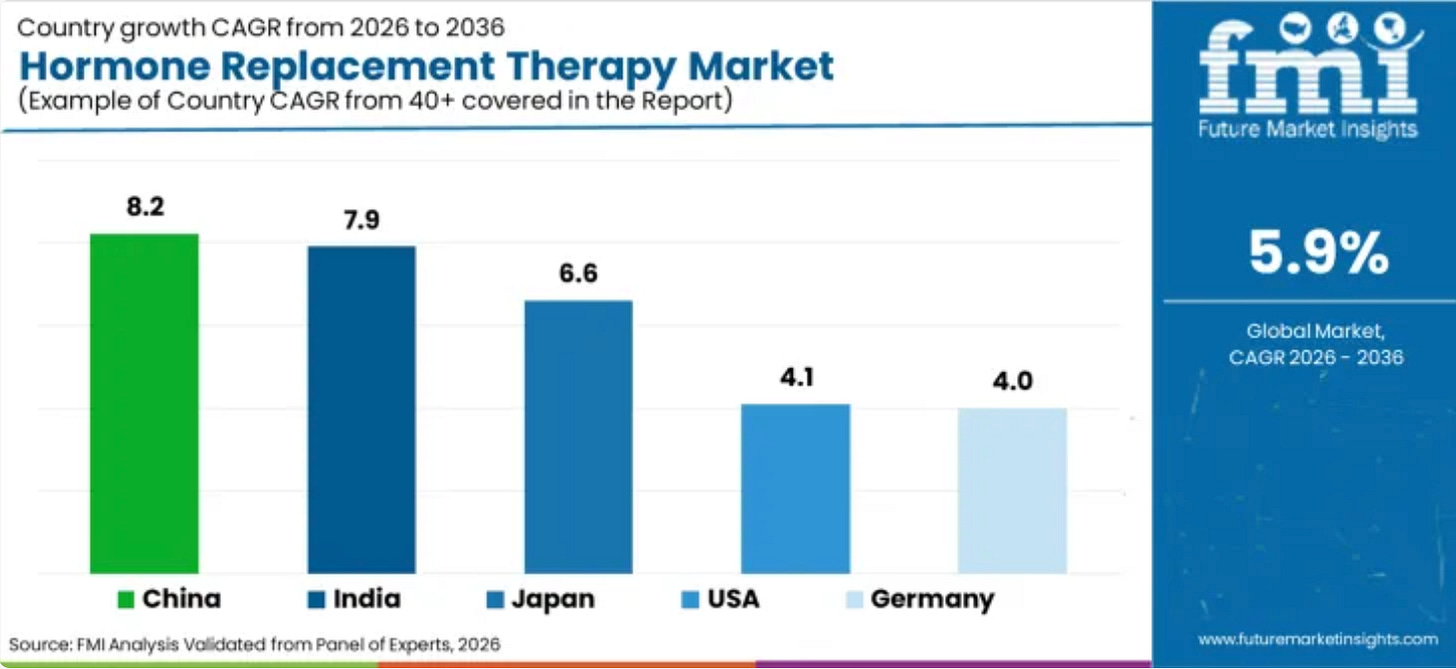
The timing: globally, the HRT market is expected to reach $33.7 billion by 2036 at an annual rate of 5.9%, driven by aging populations and rising awareness.
In India, HRT sales are projected to grow faster at 7.9% annually, supported by urbanisation, better private healthcare, and increasing awareness of women’s health.
4. Statiq’s $18M push to power EVs 💰
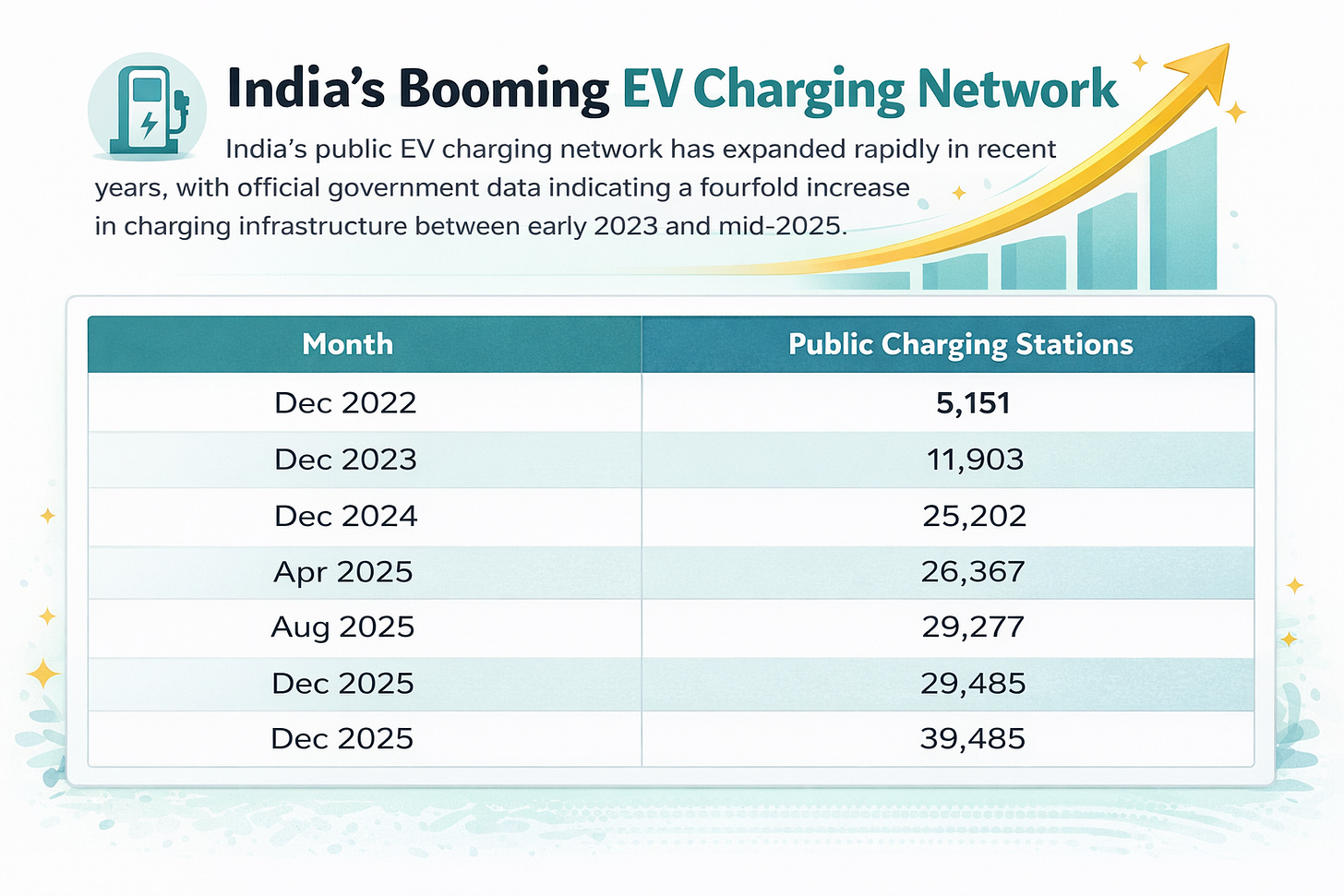
EV charging startup Statiq has raised $18 million in a funding round led by Tenacity Ventures, with backing from Y Combinator, Shell Ventures and RCD Holdings.
It builds and operates EV charging stations and runs an app that helps users find and book nearby chargers.
What’s brewing: Statiq plans to scale up its charging network, especially across Tier I and II cities. It also wants to roll out more DC fast chargers along key highways, making long-distance EV travel smoother and faster.
Today, Statiq’s app connects users not only to its own network but also to other providers like E-Fill, Sunfuel and GLIDA.
It has partnered with government bodies, automakers and hospitality brands to expand into around 100 cities, installing over 10,000 chargers so far.
5. What makes the gig economy bigger? 📦
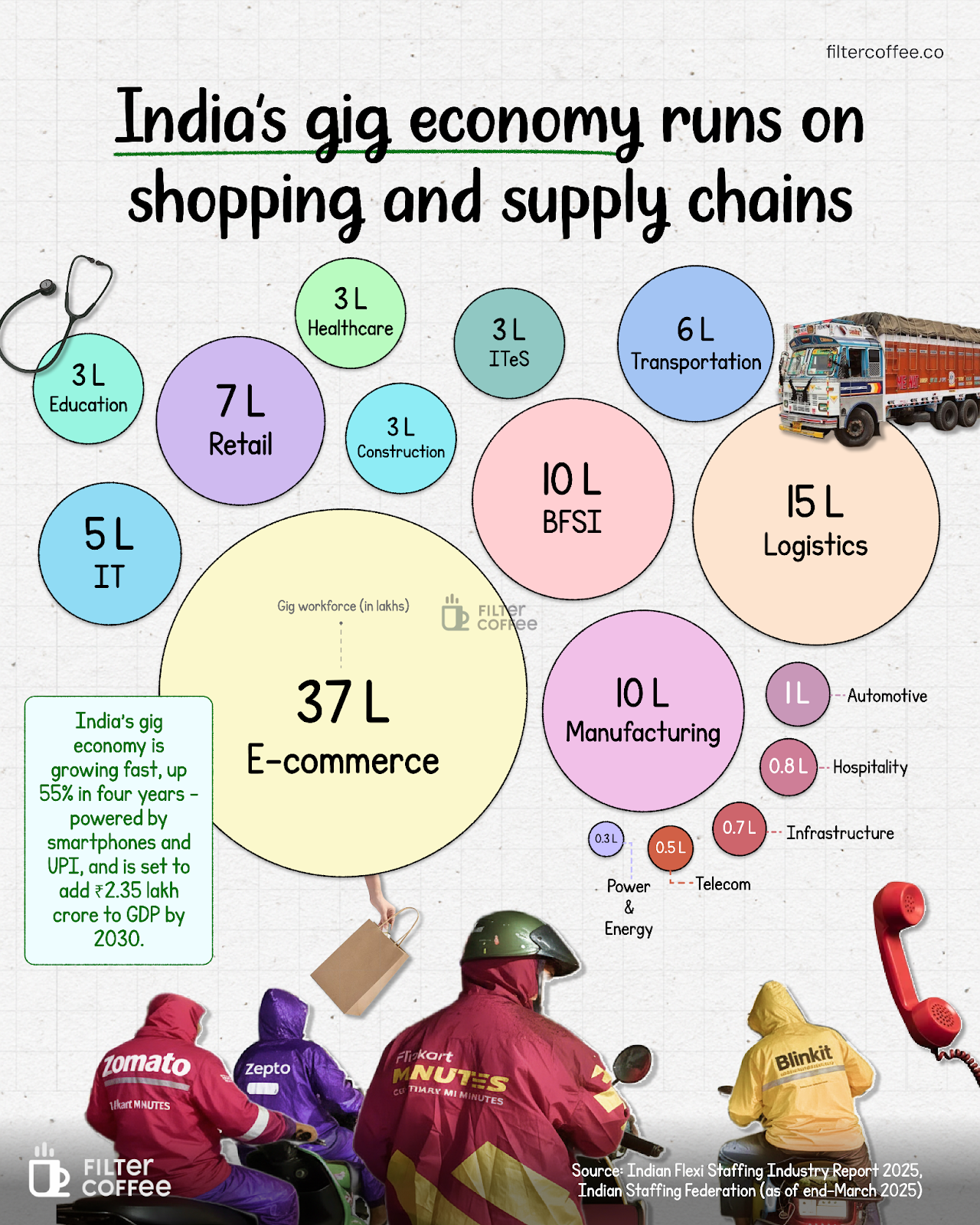
India’s gig workforce is rapidly expanding and it’s not just about food delivery. With nearly 37 lakh gig workers in e-commerce alone, the sector dominates the landscape.
Logistics (15 lakh), BFSI (10 lakh), and manufacturing (10 lakh) also employ large gig talent pools, showing how deeply flexible work is embedded across industries.
Beyond that, sectors like retail (7 lakh), transportation (6 lakh), and IT (5 lakh) are significant contributors.
The gig economy has grown 55% in four years and is projected to add ₹2.35 lakh crore to India’s GDP by 2030.
India’s growth story isn’t just about startups anymore, it’s increasingly about the workers powering them.
6. Stock that kept us interested 🚀
1. Pace Digitek arm bags $1.35M Saudi battery order 🔋
Pace Digitek’s subsidiary, Lineage Power Private has received a $1.35 million BESS order from Saudi Arabia-based Yaqin Chem.
Lineage Power Private supplies power systems for telecom towers, data centres, and industrial sites. It also provides DC power and battery storage solutions.
What is happening: the order is for four truck-mounted battery systems in 200 kW-1200 kWh and 200 kW-2500 kWh configurations, essentially large mobile power banks on trailers.
In short, these are movable mini power stations built for backup or remote power supply.

What else are we snackin’ 🍿
🤝 AI alliance: Tata Group, TCS, and OpenAI are partnering to build a 100MW AI infrastructure in India, scalable to 1GW, using OpenAI Codex to power smarter software development.
⏯️ Streaming shift: JioHotstar joined hands with OpenAI to launch ChatGPT powered voice and text search, enabling multilingual, natural language streaming discovery in India.
And that’s a wrap. Pour yourself an extra one this weekend. 🥂
We’ll be back like clockwork on Monday!
Hit that 💚 if you liked this issue.