
 Newsletter
Defence deal, fundraises up, and a boost for India’s FY27 GDP growth.
🗓️ Morning, folks! ☀️
We all know there are Gen Zs and millennials who think differently. But what is representing this divide more than anything today? Iced coffee.
There is a new discourse on the internet that has the internet divided. And it asks this one basic question: Is it OK to bring your iced coffee with you to a job interview? Recruiter Caitlin Wehniainen says no.
In a viral TikTok, she said Gen Z candidates showing up with iced coffee can make an interview seem like “a stop on your list of errands for the day.”
To her, it looks too casual, especially for buttoned-up corporate jobs. Her advice? Finish the coffee before or get one after.
Naturally, the internet had thoughts. Some agreed that a 30-minute interview isn’t the place for a Starbucks sidekick, while others wondered why coffee suddenly signals a lack of seriousness.
Recruiters are divided too, with some saying it could make a candidate seem rushed or unprepared, while others call the debate a nonissue.
Either way, the takeaway is simple: it’s less about the iced coffee and more about perception. Your caffeine run might be routine to you, but to an interviewer, it could look like just another stop on your to-do list.

Back to business 💰,
Markets finally took a breather with the Sensex and Nifty extending their early gains to close at a two-week high.
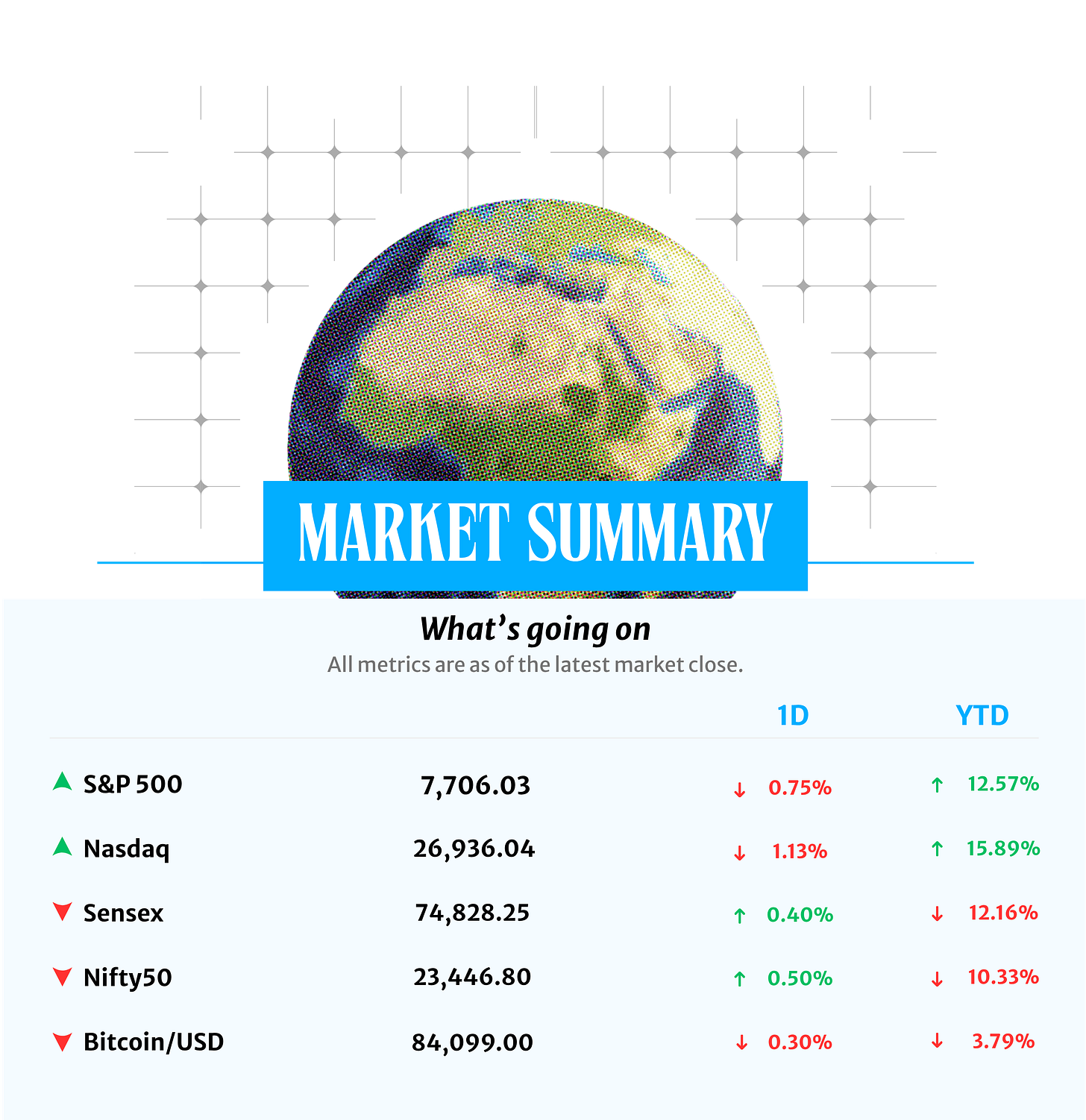
The rebound was broad-based, led by a recovery in IT, financial and capital goods stocks, which had weighed on the market a day earlier.
Buying by domestic investors helped balance out foreign selling, while easing tensions in West Asia reduced fears of another sharp rise in crude oil prices.
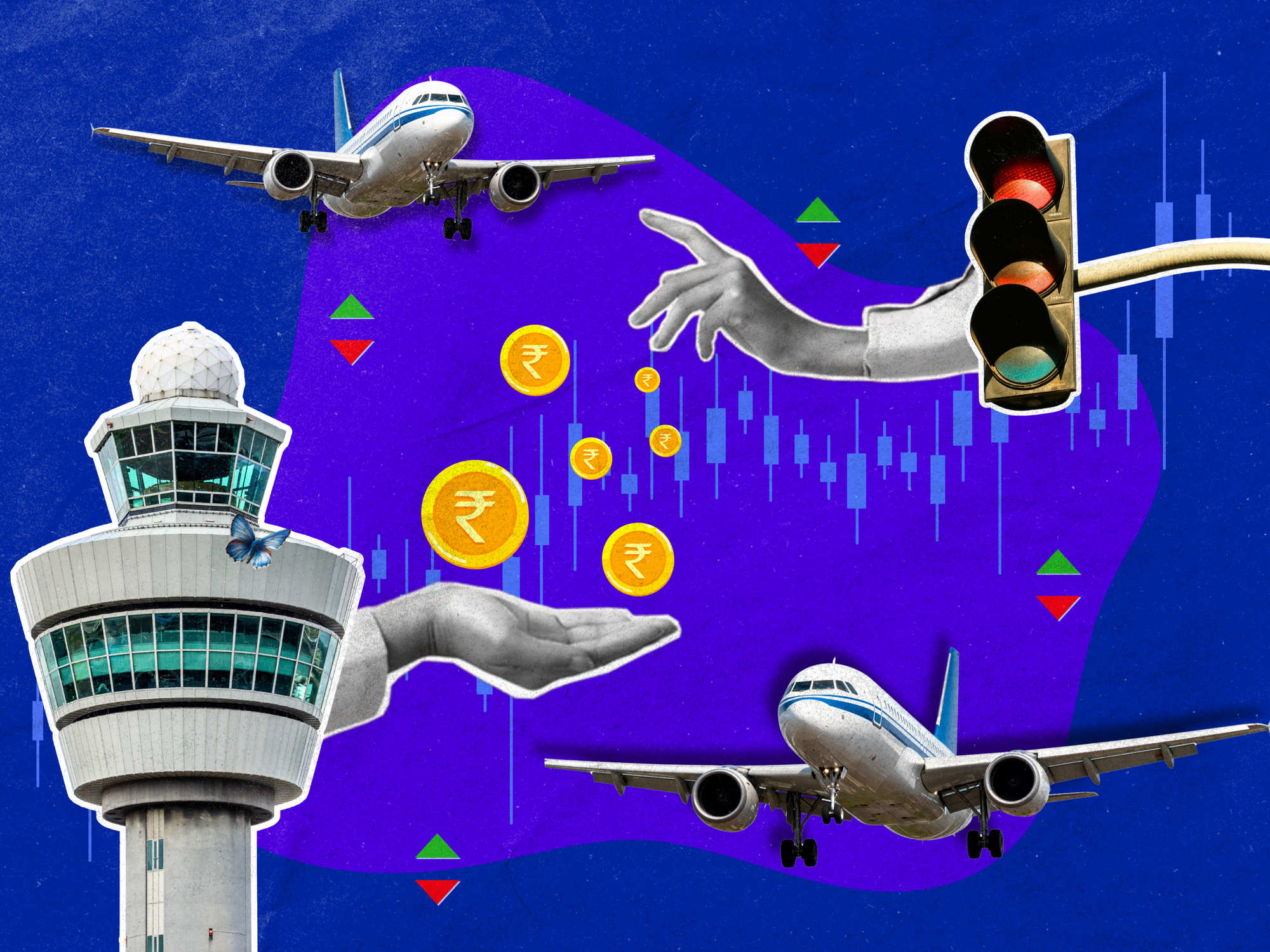
💡 Spotlight: India flew less in August ✈️
Domestic airlines carried 1.21 crore passengers during the month, down 6.34% from a year ago.
Who flew how much:
- IndiGo still dominates Indian skies. It carried 78.87 lakh passengers in August and controlled 65% of the domestic market. But its share slipped from 67.4% in July. It was also the most punctual of the five major airlines measured, with 91.5% of flights operating on time.
- Air India and Air India Express together carried 32.32 lakh passengers, giving them 26.7% of the market. Their share increased from 24% in July. Their on-time performance stood at 83.9%.
- Akasa Air held 5.5% of the market, unchanged from July. It also did pretty well on punctuality, with 90.5% of flights on time.
- SpiceJet’s market share fell to just 1.2%, from 1.6% in July. It also had the weakest on-time performance among the five airlines compared, at just 17.9%.
Let’s hit it! 💪🏻
1 Big Thing: Defence deal done ☑️
Bharat Dynamics has signed an ₹810.7 crore contract with the Ministry of Defence to supply 160 Satellite Smart Anti-Airfield Weapons (SAT-SAAW) and associated equipment to the Indian Air Force.
The details: SAT-SAAW is an air-to-ground, precision-guided glide bomb that is designed to strike enemy airfields from long stand-off ranges, allowing aircraft to engage targets from a distance.
The why: according to the defence ministry, the induction of SAT-SAAW will strengthen the IAF’s operational capabilities and India’s defence preparedness.
In August, BDL reported a more than six-fold jump in net profit to ₹118.8 crore for the quarter ended June 30, 2026, compared with ₹18.4 crore a year earlier.
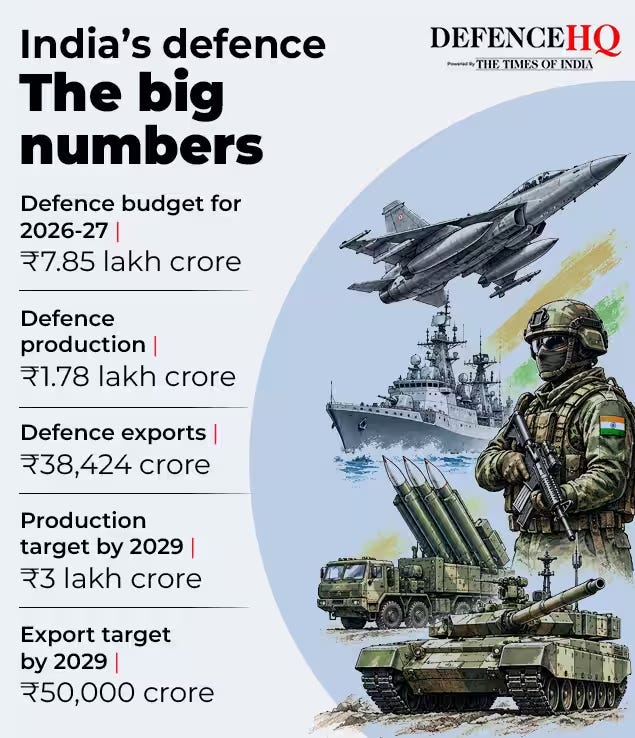
Bigger picture: India’s defence production touched a record ₹1.78 lakh crore in FY26, up 15.6% from ₹1.54 lakh crore the previous year.
That’s more than double the ₹84,643 crore recorded in FY21 and over four times the ₹43,746 crore produced in FY14.
And the government wants that number to climb further. The Centre has set a target of ₹3 lakh crore in annual defence production and ₹50,000 crore in exports by 2029.
2. $$$ in the kitty 🤑
Enterprise AI company Brahma AI has raised $150 million by issuing preferred shares. Of this, $100 million came from Multiples Alternate Asset Management, valuing the company at $2 billion.

Some context: Brahma AI comes from the wider Prime Focus ecosystem and was built using technology developed across DNEG, Metaphysic and Prime Focus Technologies.
So, what does it do: Brahma AI helps businesses use AI to manage, understand and create content. Its technology can be used for everything from AI-generated visuals and voices to multilingual content and digital humans.
The bigger picture: Prime Focus, traditionally known for its VFX and media businesses through DNEG, is making a much bigger push into enterprise AI.
For Prime Focus, Brahma AI could become another major business alongside DNEG. And despite bringing in new investors, Prime Focus will continue to have significant exposure to its growth, retaining around 66% economic ownership through DNEG after the fundraise.
While we are on fundraises 💸,
Ultraviolette has raised $85 million in a funding round led by Yali Capital’s Deep Tech Fund and TDK Ventures.
Expansion plans: Ultraviolette currently sells its motorcycles in India and 20 European countries, including Germany, France, Spain, Portugal, the UK, Belgium, the Netherlands, Italy, Switzerland and Hungary.
Now, the company plans to enter the US market in 2027, while also expanding into Latin America and Southeast Asia.
3. Robots vs humans? 🤔

Your first encounter with a humanoid robot might not be in a factory. It could be at a show.
Entertainment and performance accounted for 33.6% of global humanoid robot shipments between January and June 2026. That’s almost twice the combined share of manufacturing, warehousing and logistics, which stood at 17.7%.
Another 27% of shipments went towards data production and research. Part of that involves collecting real-world data to teach robots how to perform physical tasks.
In other words, the industry is using robots to train the next generation of robots.
4. Stocks that kept us interested 🚀
What went up ⬆️
⚡️Aditya Infotech jumped 5% to hit the upper circuit after the CP Plus maker launched a QIP to raise funds.
😮💨 360 ONE WAM rose 3% after appointing Jefferies India head Aashish Agarwal as CEO, effective February 15, 2027.
🥳 Arvind SmartSpaces gained nearly 8% after it recorded ₹500+ crore bookings for Arvind Sylva on Sarjapur Road, one of Bengaluru’s key residential and commercial growth corridors, within 30 days.
👀 ITC and Godfrey Phillips went up to 2% after reports said ITC hiked Gold Flake Premium cigarette prices.
What went down ⬇️
🤒 IT remained under pressure, with HCLTech, TCS and Infosys slipping 1% and ranking among the four biggest losers on the Nifty.
🫤 Ather Energy fell nearly 3%, extending its weekly decline to 9% amid continued selling pressure in the stock.
What else are we snackin’ 🍿
📈 Rating upgrade: S&P Global Ratings have raised India’s FY27 GDP growth forecast to 7% from 6.6%, citing stronger industrial activity, consumption, exports and government spending.
🤖 Affordable AI: OpenAI and Anthropic have rolled out lower-cost AI models, as the rivals compete to make advanced AI cheaper for developers and businesses to use.
🏭 Manufacturing boost: India’s private-sector activity strengthened in September, with the HSBC Flash Composite PMI rising to 56.5 from 54.3 in August, led by stronger manufacturing and services activity.
🤖 AI upskilling: Jindal Stainless has partnered with Nasscom to train its employees in technologies including AI, cloud computing and cybersecurity, as it looks to build a more tech-ready workforce.
🎮 Gaming reset: Microsoft is cutting 268 jobs across its Xbox business, as its restructuring reaches individual gaming studios.
That’s a wrap! Don’t let the weekday blues get to you.
And if you’d like to place your brand on this newsletter, let us know.
Hit that 💚 if you liked this issue.
Disclaimer: This newsletter is for informational and research purposes only. Nothing here should be considered financial, investment, legal, or professional advice.