
 Newsletter
Gas giant wins, a niche defence win, and the UPI puzzle debunked.
🗓️ Morning, folks! ☀️
Fighting counter-surveillance ain’t easy, but someone’s gotta do it. A new app is turning smart-glasses paranoia into a phone notification.

Called ZuckOff, the free app uses Bluetooth signals to detect whether certain smart glasses, including Ray-Ban Meta, Oakley Meta and Snap Spectacles, are nearby.
Since launching in August, it has reportedly crossed 5,000 downloads on Apple’s App Store, with another 1,000 on Google Play.
The app comes amid growing concerns around people being filmed without their consent using smart glasses.
But there’s a catch: ZuckOff can’t tell you if the glasses are actually recording or who is wearing them. It only estimates how close they are. Its creator essentially turned an invisible privacy concern into something your phone can flag.
Back to Dalal Street 📈,
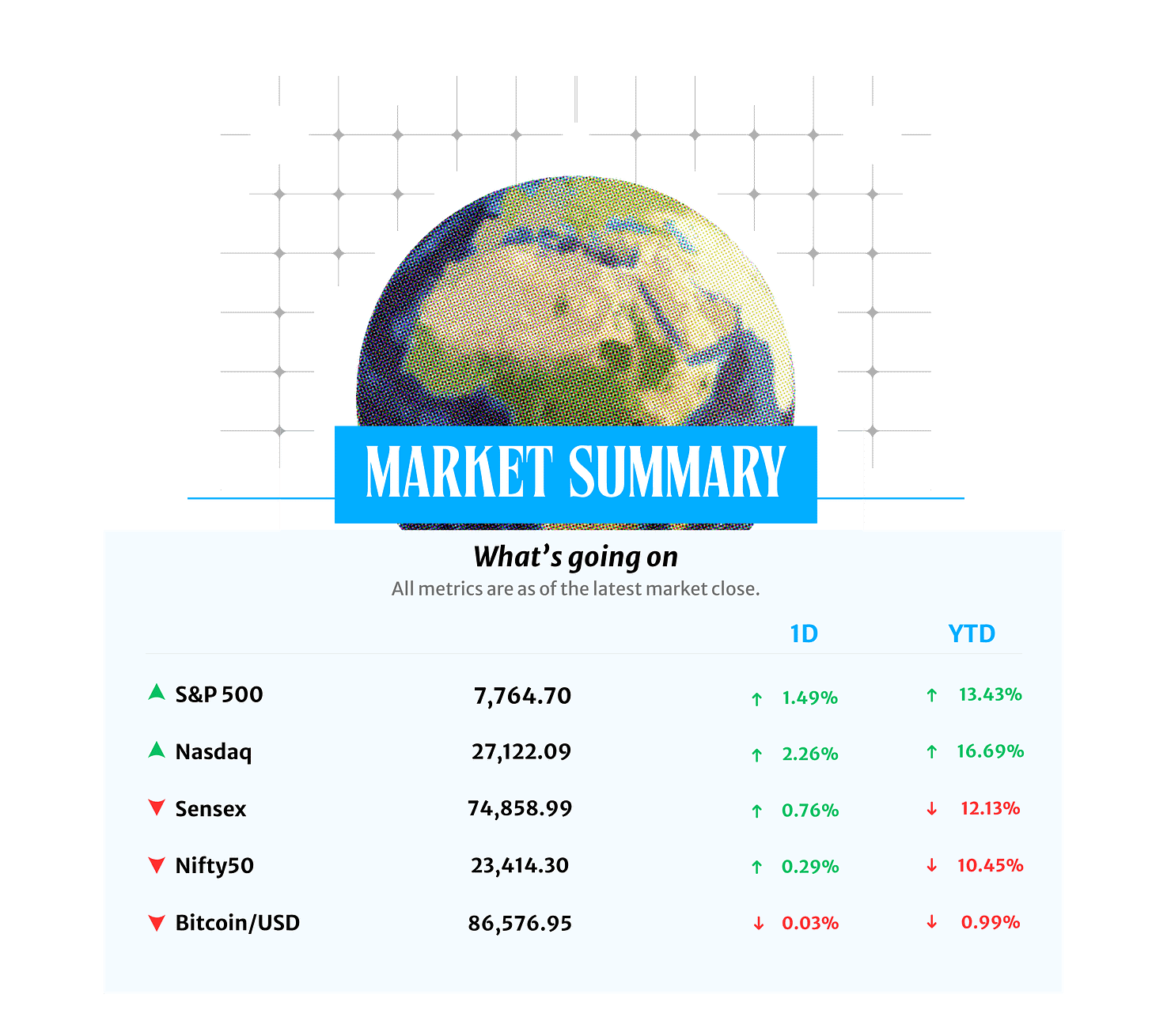
Markets started the week on a positive note, with Sensex and Nifty ending with minor gains.
Heavyweights Reliance, ITC and HDFC Bank did much of the lifting, while pharma stocks also had a good day. However, midcaps ended lower, capital-market stocks remained under pressure and textile stocks slipped.
💡 Spotlight: Why are textile stocks worried about Trump tariffs? 🧵
Indian textile stocks including Gokaldas Exports, Vardhman Textiles, Arvind fell up to 4% on Monday after US President Donald Trump signed a Russia sanctions bill into law giving him the power to impose 100% tariffs on India.
The US is a huge customer for Indian clothes and textiles. In FY26, it bought roughly one-third of India’s readymade garment exports. Home-textile companies can be even more dependent on the US.
So, if Washington eventually imposes another large tariff on Indian goods, Indian clothes, bedsheets and other textile products could become more expensive for American buyers.
US retailers could then buy more from competing manufacturing hubs instead, or Indian exporters may have to absorb part of the tariff themselves, squeezing margins.
Let’s hit it! 💪🏻
1 Big Thing: South India’s next gas route 🫡
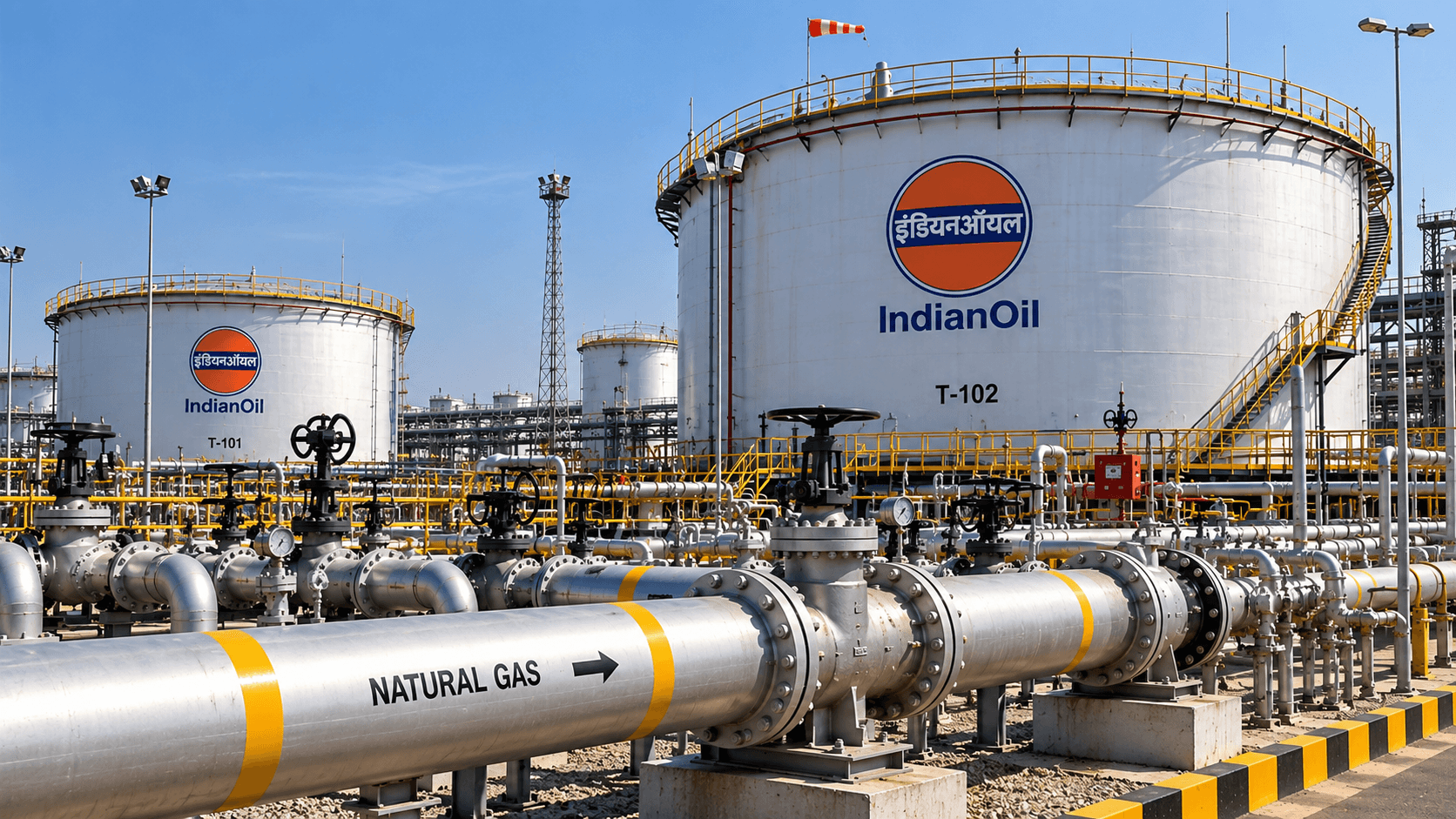
Indian Oil Corporation (IOCL) is betting ₹2,448.7 crore on a new natural gas pipeline connecting Kerala and Tamil Nadu.
The deets: the 424.65-km pipeline will connect Kochi in Kerala with Thoothukudi in Tamil Nadu and will have a capacity of 6.84 million metric standard cubic metres per day (MMSCMD), including common carrier capacity.
What matters: the pipeline will transport re-gasified LNG from the Kochi LNG Terminal to key demand centres across Kerala and southern Tamil Nadu, supporting industries, power plants and the expansion of City Gas Distribution (CGD) networks. It will also strengthen southern India’s existing natural gas network.
Big picture: India wants to increase natural gas’ share in its energy mix from around 6% to 15% by 2030.
To get there, the country plans to expand its gas pipeline network from 25,429 km to 33,475 km, while LNG capacity is expected to grow from 52.7 MMTPA to 66.7 MMTPA by 2030.
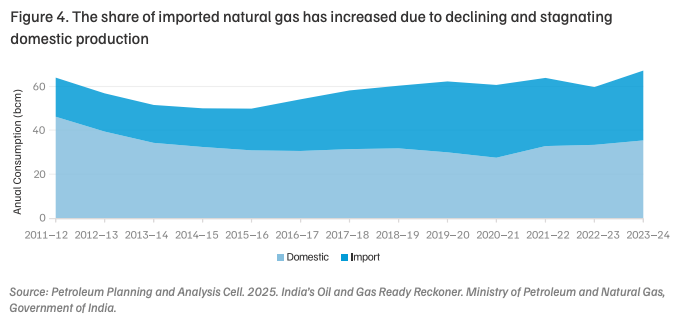
The catch: India’s gas ambitions also come with growing import dependence. As domestic production has struggled to keep pace, imported gas has taken up a larger share of India’s consumption over the years.
2. A homegrown defence collab 🤝
Automotive components manufacturer Samvardhana Motherson International is buying a 50.1% stake in Rotary Connectors for ₹500 crore. The deal will be made through Motherson’s wholly owned subsidiary, SMAST.
Rotary Connectors makes specialised military-grade connectors that transfer power and signals between different parts of machines. Think of them as high-performance plugs and sockets used in fighter jets, helicopters, missiles, radars and other defence equipment.
The company earned ₹123.5 crore in revenue in FY26 and has three manufacturing plants in Bengaluru.
Why it matters: the acquisition will help Motherson grow its aerospace and defence business, especially in electrical wiring and connectivity systems.
Motherson also expects its global network and customer base to help Rotary expand into new markets and win more business. The deal is expected to be completed by Q4 FY27.
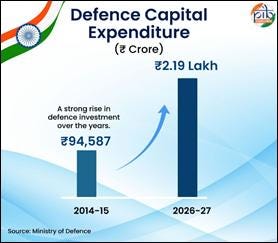
The bigger picture: the deal comes at a time when India is significantly increasing its defence spending. The country’s defence budget has grown from ₹2.53 lakh crore in 2013-14 to ₹7.85 lakh crore in 2026-27.
Spending on defence equipment has also more than doubled, with capital expenditure rising from ₹94,588 crore in 2014-15 to ₹2.19 lakh crore in 2026-27.
Private companies are becoming a bigger part of this ecosystem too, contributing 24% of India’s defence production, while public-sector companies accounted for the remaining 76%.
3. The money maths of UPI 🤔
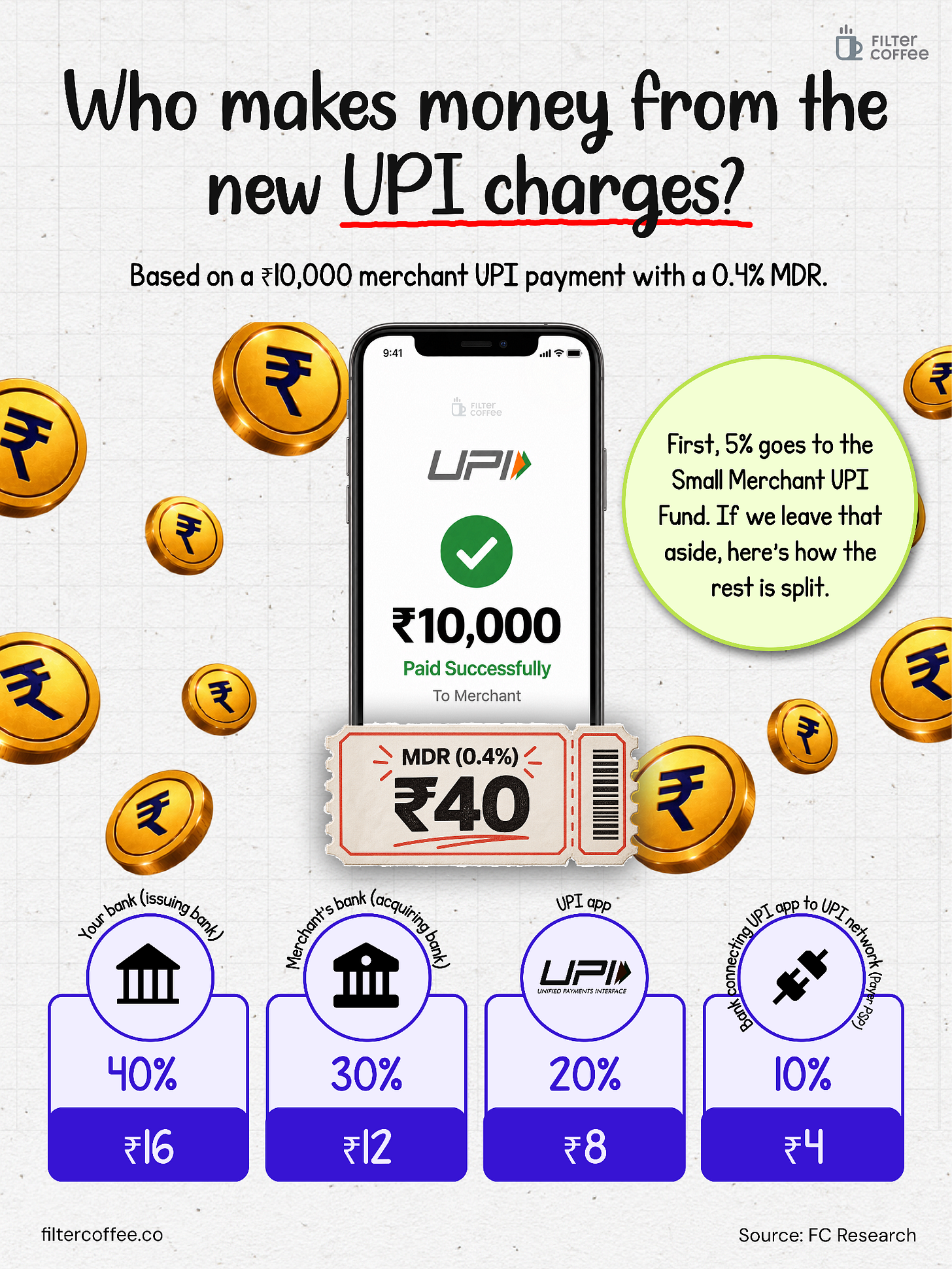
UPI was free for 6 years. Starting October 15, that changes.
On a ₹10,000 UPI payment, a 0.4% MDR splits ₹16 to your bank, ₹12 to the merchant’s bank, ₹8 to the UPI app, and ₹4 to the connecting PSP bank.
The charge only kicks in above ₹2,000 and is capped at ₹300 for transactions of ₹75,000+, consumers never see it on their bill; it’s the merchant who pays.
Brokerages estimate this could add ₹15,000-20,600 cr in annual revenue across banks and fintechs, finally giving UPI’s operators a real reason to invest in the rails they’ve run for free since 2020.
4. Stocks that kept us interested 🚀
What went up ⬆️
⚡ JP Power jumped 10% after agreeing to pay ₹511 crore to settle its claim, potentially ending its bankruptcy proceedings.
🔋 GK Energy rose more than 5% after receiving LoA from MSEDCL to set up a 150 MW/300 MWh battery energy storage system.
🛢️Welspun Corp gained nearly 4% after the company’s unit bagged a ₹2,000 crore order from Saudi Aramco.
⚙️ HEG surged nearly 5% after its arm, Replus Engitech, secured ₹217.5 crore worth of orders from Indus Towers.
💉 Biocon’s Pertuzumab became the first biosimilar to receive a positive recommendation from the European Medicines Agency’s Committee for Medicinal Products for Human Use (CHMP), sending the stock up nearly 3%.
✈️ Hindustan Aeronautics ended nearly 1% higher as Citi and Goldman Sachs retained their ‘Buy’ calls, citing improving execution.
What went down ⬇️
📉 Lenskart fell more than 3% after a ₹2,468-crore block deal in which a 2.07% equity stake was sold.
🧪 Anupam Rasayan slipped nearly 4% following large trades through block deals.
What else are we snackin’ 🍿
💪🏻 Slow growth: India’s infrastructure output grew 4.8% YoY in August, driven by strong cement and electricity production despite weakness in energy sectors.
💰 Deep pockets: the Ministry of Defence signed a ₹586 crore contract with Accurate Industrial Controls to supply indigenous power units for the Army’s T-72 and T-90 tanks.
🚚 Logistics play: Samara Capital has invested nearly ₹1,200 crore to build a new logistics platform by acquiring stakes in road transporter ARC and Chennai-based container freight operator Calyx.
⚡ Power push: Adani Power will invest ₹48,000 crore to build a 3,200 MW thermal power project in Assam.
☕ Tech brew: Starbucks is setting up its first global capability centre in India in Chennai, expected to create around 800 technology jobs supporting its global business.
That’s a wrap! Don’t let the weekday blues get to you.
And if you’d like to place your brand on this newsletter, let us know.
Hit that 💚 if you liked this issue.
Disclaimer: This newsletter is for informational and research purposes only. Nothing here should be considered financial, investment, legal, or professional advice.