

 Newsletter

Wholesale inflation climbs, Rare earth push, and India gets AI startup boost.
🗓️ Morning, folks! ☀️
Markets bounced back after a choppy session, snapping a three-day losing streak. The rebound came after early volatility, with investors stepping in to buy beaten-down stocks and sentiment stabilising through the afternoon.
Not everything joined the party though. Oil marketing companies took a hit, with HPCL, BPCL, and IOC falling over 4% each after a downgrade from HSBC.
💡 Spotlight: wholesale inflation climbs again 📈
Wholesale Price Index (WPI) inflation rose to 2.13% in February, the highest level in 11 months, up from 1.81% in January.
The move mirrors what we’re already seeing on the consumer side, where retail inflation (CPI) climbed to 3.2%, up from 2.7% last week, largely driven by rising food prices.
Now here’s where it gets interesting. Economists believe inflation pressures may rise further in the coming months, especially with global tensions pushing up energy prices.
Remember, wholesale inflation reacts faster to global commodity shocks because it tracks industrial inputs like fuel, metals, and chemicals.
Let’s hit it!
1 Big Thing: upGrad goes all-stock for Unacademy 🤝
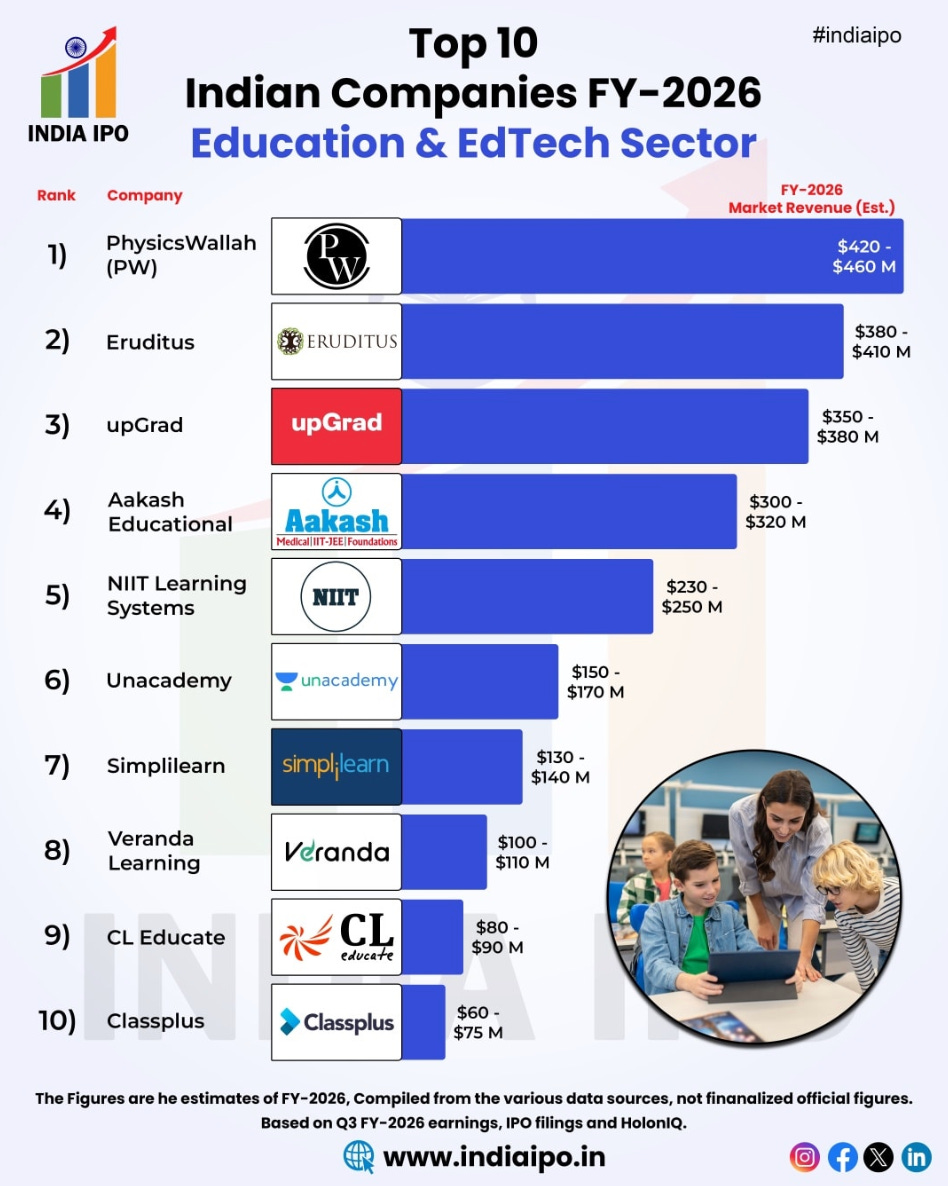
upGrad has signed a term sheet to acquire rival Unacademy in an all-stock deal, bringing two of India’s biggest edtech players under one umbrella.
The breakdown: the proposed deal will be structured as a 100% share swap, meaning no cash changes hands, Unacademy’s shareholders will receive upGrad shares instead.
The final valuation will be disclosed only after regulatory filings and deal closure.
Initial discussions had valued Unacademy at around $300 million, a sharp fall from its $3.4 billion peak valuation during the edtech boom. Earlier talks between the two companies had stalled over valuation differences.
Under the proposed structure, Unacademy co-founder Gaurav Munjal will continue as CEO, focusing on building online learning products while operating within the combined ecosystem.
Background: over the past year, Unacademy has been restructuring its business.
The company has consolidated its offline centres through franchise partners, completed a ₹50 crore ESOP buyback, and expanded its language-learning app Airlearn. It also currently holds over $100 million in cash reserves.
Deeper analysis: India’s edtech sector has gone through a dramatic cycle. During the pandemic, startups raised billions as online learning exploded. But once schools reopened, demand cooled sharply.
2. India steps up rare earth hunt 🪨
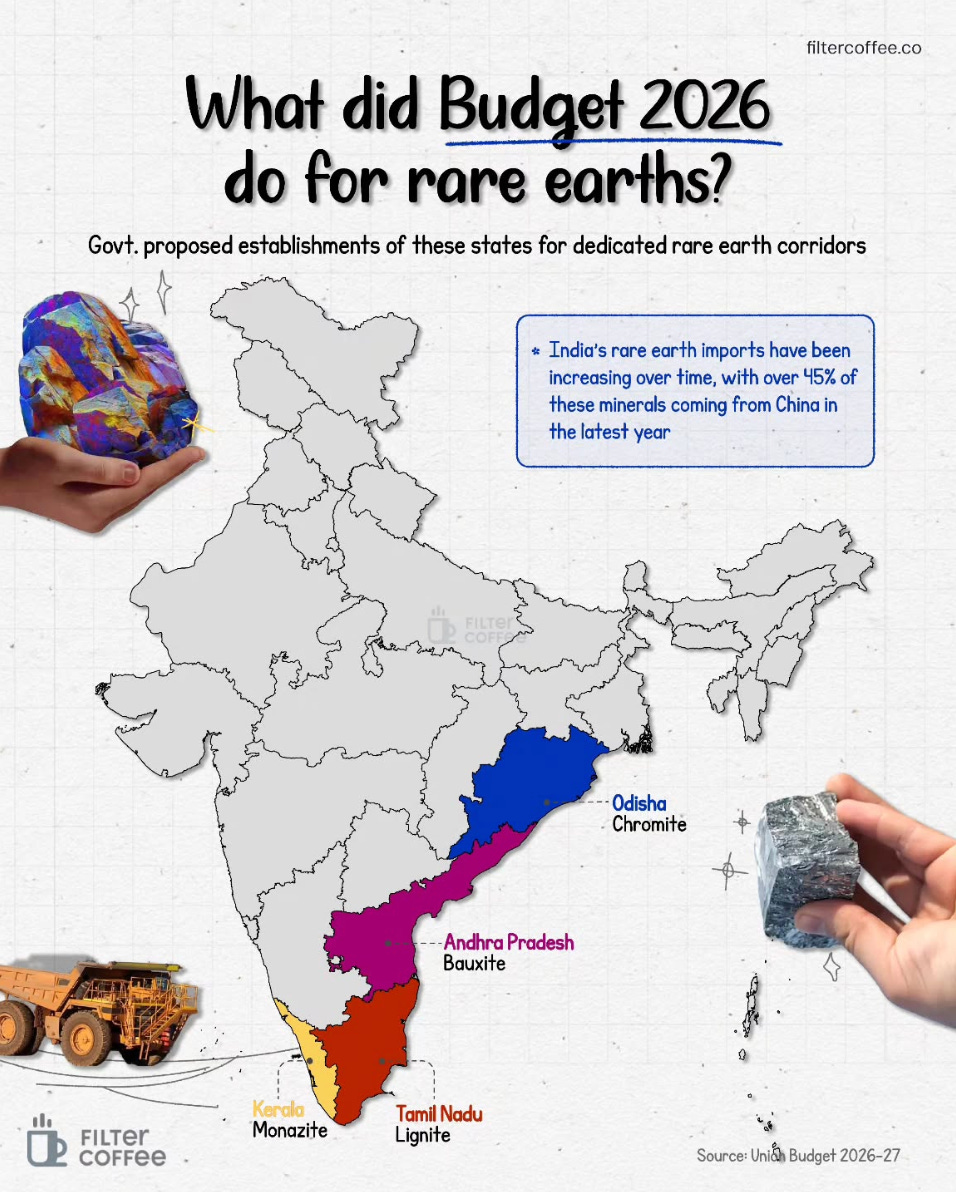
Gujarat Mineral Development Corporation (GMDC) has partnered with NMDC to explore and develop rare earth minerals in Gujarat.
What’s going on: the two state-run companies will study the potential of building a complete rare earth supply chain around GMDC’s Ambadungar deposit. That means everything from exploration and mining to processing and downstream applications.
Why it matters: rare earth elements are critical for electric vehicles, wind turbines, defence tech, semiconductors and advanced electronics.
Right now, much of the world depends heavily on China for rare earth supply, making domestic sources strategically important.
Zoom out: India is stepping up efforts to secure critical minerals like lithium, cobalt and rare earths.
State-run firms like NMDC, Coal India and Indian Rare Earths Ltd are increasingly being tasked with exploring strategic minerals both in India and overseas.
3. Google & Accel back 5 Indian AI startups 🤖
Accel India and Google’s AI Futures Fund announced five startups selected for the 2026 Atoms AI cohort, building solutions in enterprise, voice, and industrial AI.
The deets: these startups will receive up to $2 million in funding from Accel and Google’s AI Futures Fund, plus up to $350,000 in cloud and AI credits from Google. The program also saw nearly four times more applications this year, many from first-time founders.
This year’s selected startups include:
• K-Dense, building an AI “co-scientist” for research in life sciences and chemistry
• Dodge.ai, developing AI agents for enterprise ERP systems
• Persistence Labs, focused on voice AI for call centres
• Zingroll, creating a platform for AI-generated films and shows
• Level Plane, using AI for industrial automation in automotive and aerospace manufacturing
What the programme is about: the AI Futures Fund backs cutting-edge AI startups globally, offering funding along with early access to technology, infrastructure, and mentorship from Google and DeepMind teams.
The India factor: India offers strong advantages for AI investment, a skilled tech workforce, a large digital user base, a growing startup ecosystem, and government support. Together, these factors are turning the country into a major hub for AI innovation.
4. Where India’s millionaires live 💰

Turns out, India’s wealth map has a clear leader.
Mumbai tops the list with about 1,42,000 millionaire households, more than double New Delhi’s 68,200. The financial capital continues to attract entrepreneurs, investors, and high-paying corporate jobs, keeping it firmly at the top of India’s wealth ladder.
After the top two, the numbers start to spread out.
Bengaluru (31,600) comes next, powered by its booming tech startup ecosystem, followed by Ahmedabad (26,800) and Kolkata (26,600).
Even emerging business hubs like Gurugram (10,100) and Surat (5,700) are quietly adding more millionaires as India’s economy expands.
5. Stock that kept us interested 🚀
1. Adani bags long-term power deal in Maharashtra 🔌
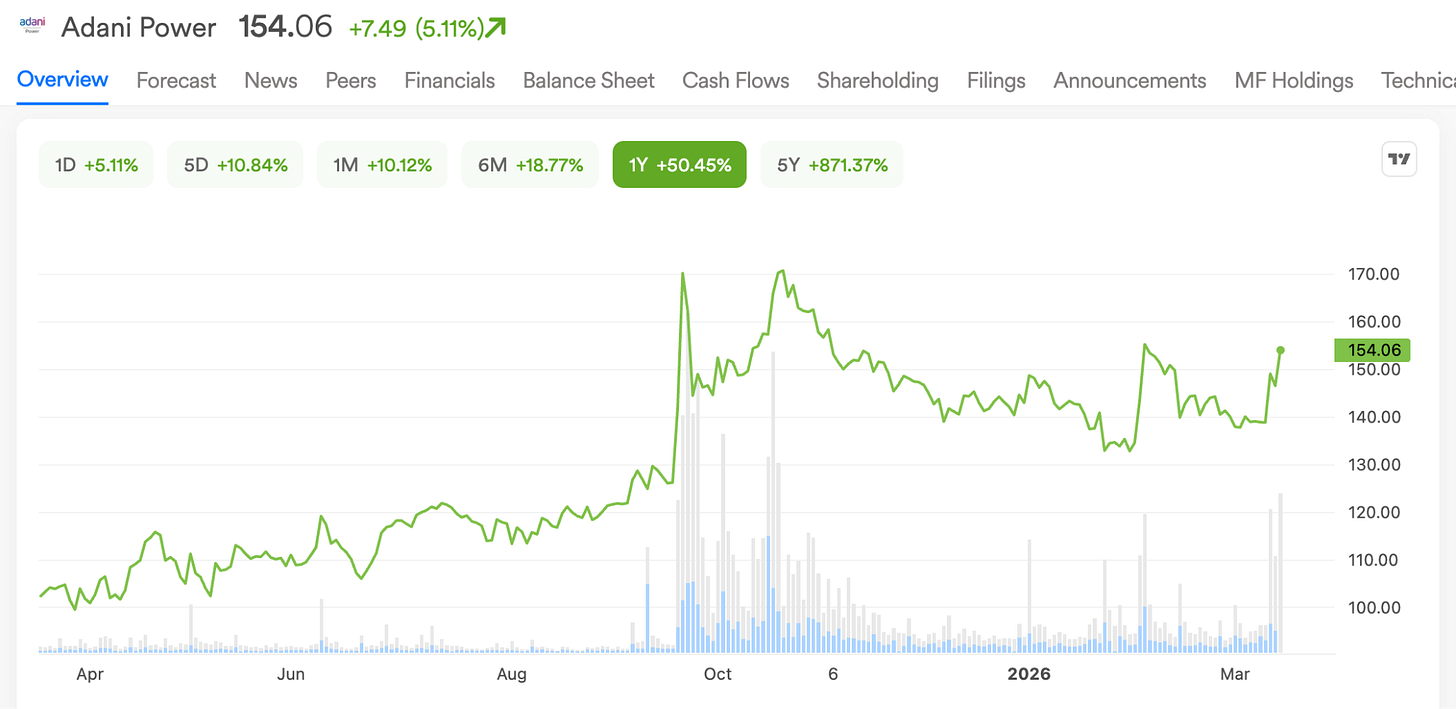
Adani Power won a contract to supply 1,600 MW of electricity to Maharashtra under a long-term power agreement.
The deets: the company will supply power from one of its upcoming ultra-supercritical thermal power plants.
What this means: Adani Power is building new power plants that will produce 23.8 gigawatts of electricity in total once completed.
Out of this planned capacity, it has already signed long-term agreements to sell 13.3 gigawatts of that power to customers like state electricity boards.
Big picture: Adani Power is executing one of the largest private thermal power expansions in India, planning to scale capacity from 18.15 GW today to nearly 42 GW by FY32, with investments of roughly ₹2 lakh crore.
2. Here’s why Tejas Networks’ shares jumped yesterday 📡
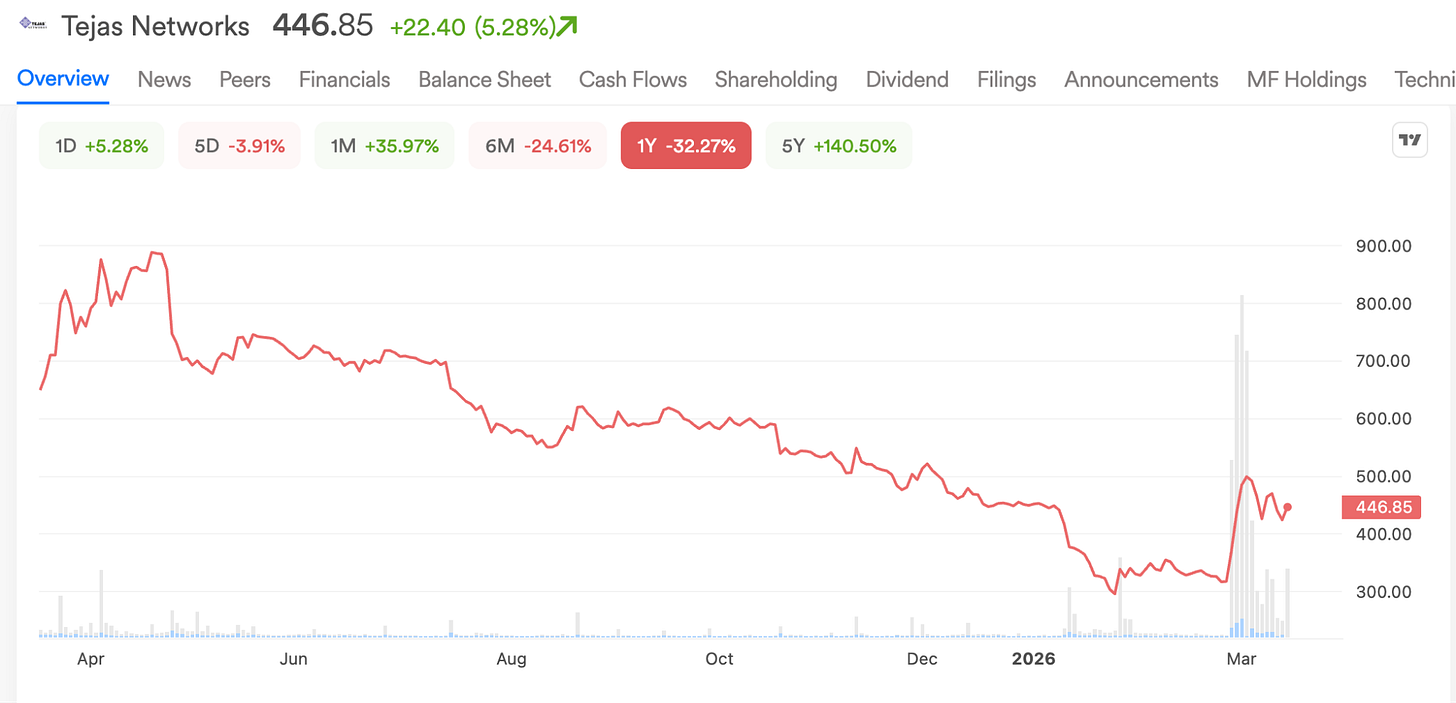
Tejas Networks shares jumped after the company secured an order for its 4G Radio Access Network (RAN) solutions from a mobile operator in South Asia.
What’s cooking: the company will supply its multiband radio equipment to the telecom operator. These devices will be installed at different network locations to help improve mobile signal and internet connectivity.
These radio systems are key parts of telecom infrastructure. They connect mobile towers to users’ devices and help deliver faster and more reliable data services.
Interestingly, this order comes shortly after the company signed a partnership with Japan’s NEC Corporation to manufacture and supply 5G massive MIMO radios, a technology that allows telecom networks to handle more users and higher data speeds.
What else are we snackin’ 🍿
🤝 Trade talks: India will sign a trade deal with the US after Washington finalises a new tariff structure, the government said.
📈 SIP growth: SIP inflows rose nearly 15% year-on-year to ₹29,845 crore in February despite market volatility, showing steady retail participation in mutual funds.
That’s a wrap! Don’t let the weekday blues get to you.
And if you’d like to place your brand on this newsletter, let us know.
Hit that 💚 if you liked this issue.