
 Newsletter
Apple Pay arrives, Wind catches pace, and Inox gets a sunny side up. 🌇
🗓️ Morning, folks! ☀️
Let the AI agent wars begin.
OpenAI is jumping deeper into this race. At DevDay, it unveiled Dots, always-on AI assistants that can work across apps, remember your preferences and handle multi-step tasks with minimal hand-holding.
And yes, it’s coming for Meta’s viral Muse.
The launch had a tiny oops moment too: OpenAI CFO Sarah Friar accidentally called Dots ‘Muse’ during an interview before correcting herself.
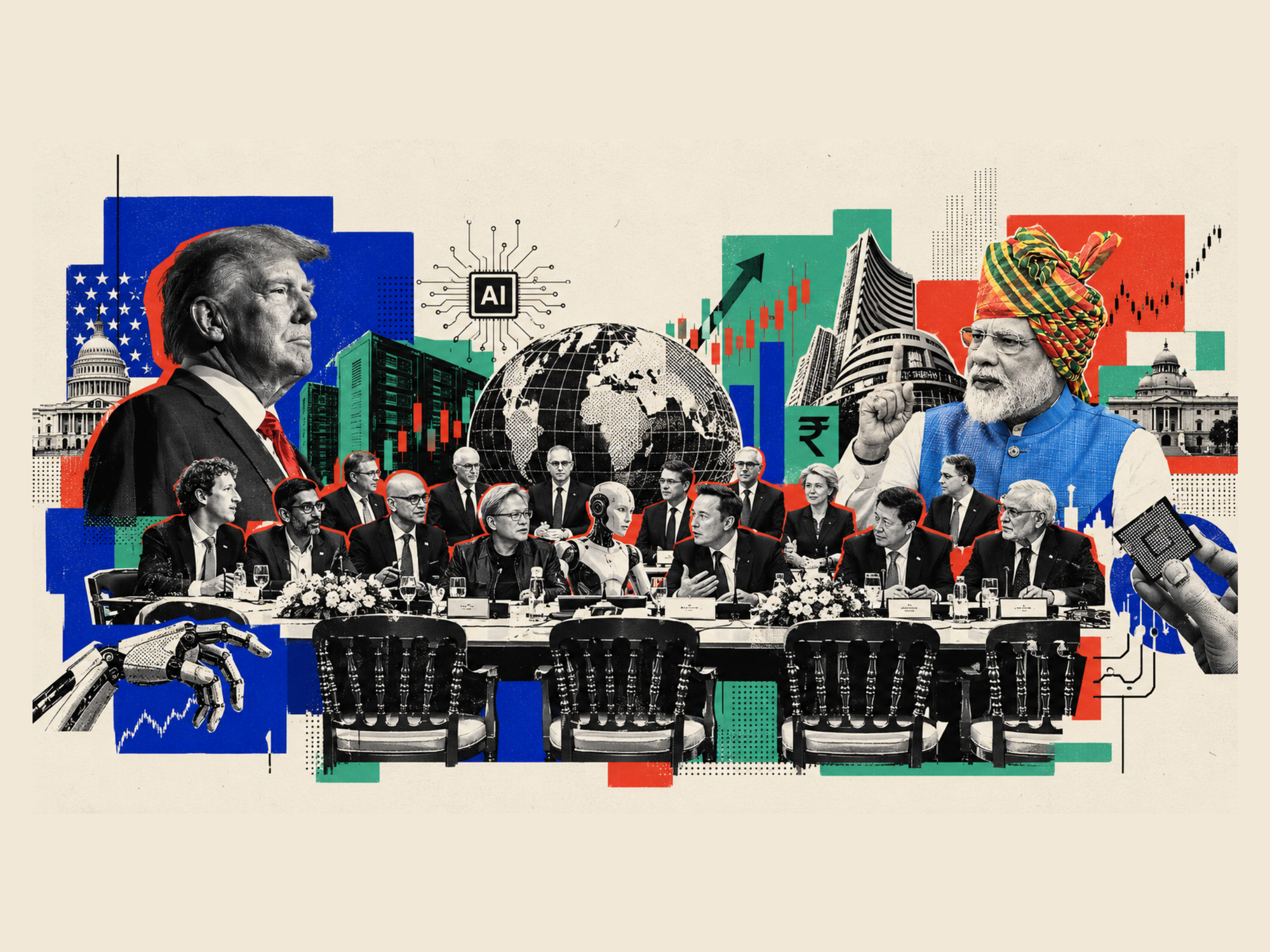
Meanwhile, US President Donald Trump invited AI leaders to Washington to discuss AI safety and self-regulation, with the industry also embracing the very futuristic term “Super-intelligence” (SI) for its technology. AI, apparently, needed a rebrand.

Back to business. The Sensex and Nifty retreated from their intraday highs amid rising crude oil prices and other pressures.
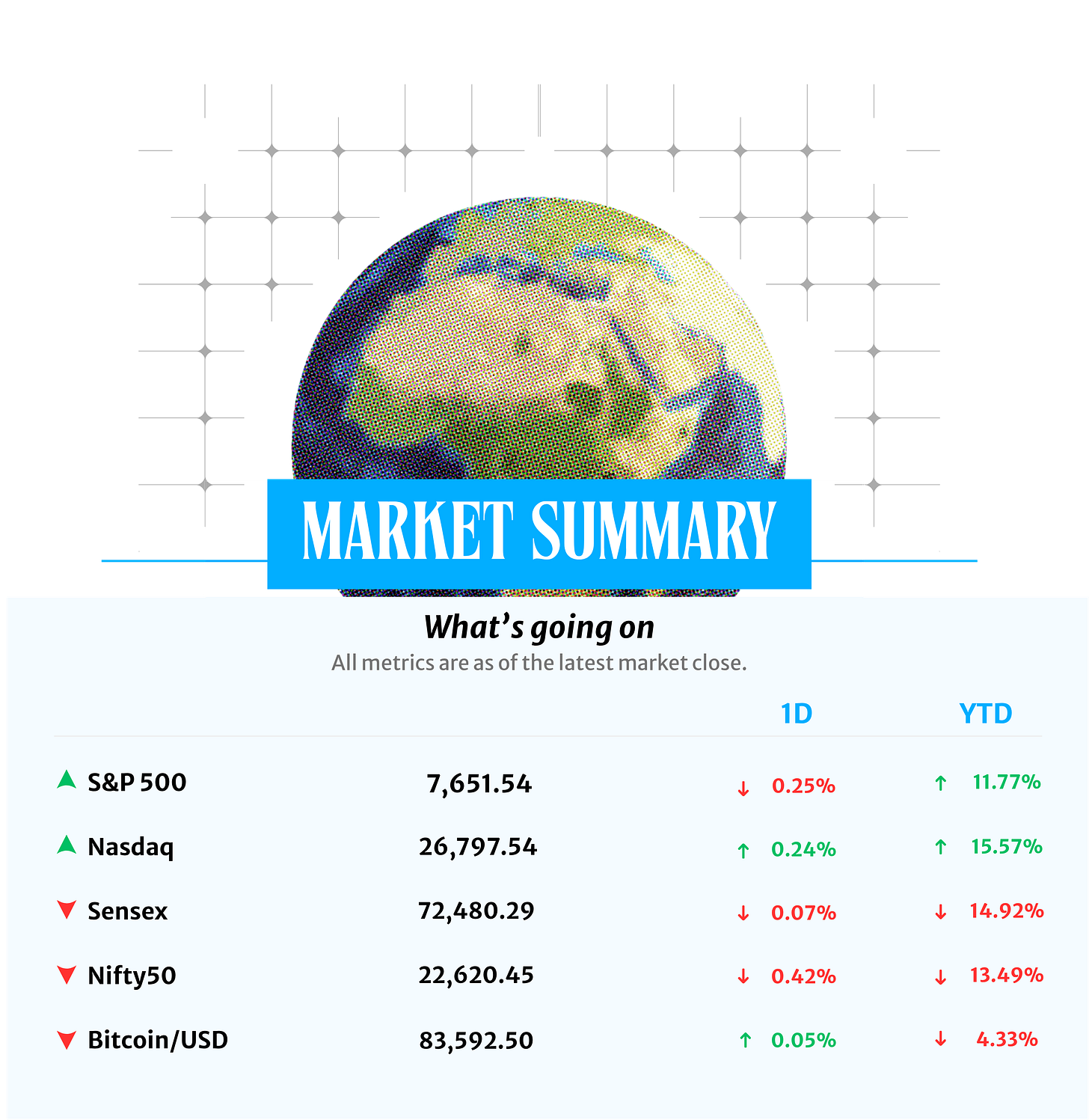
Banking stocks gained ahead of quarterly updates, with the Nifty Bank up nearly 1%.
TCS and HCLTech pared gains but closed 1-2% higher. Infosys fell over 2%, ending as the Nifty IT index’s only loser.
💡 Spotlight: Namaste, Apple Pay 👏
Nearly 12 years after its US debut, Apple Pay has launched in India with Axis Bank, initially for its Visa and Mastercard credit card holders.

Why now: Apple’s presence in India has grown. Its smartphone market share has risen to about 8% since 2022, according to Counterpoint Research.
The competition: India has developed a payments ecosystem quite different from the card-heavy markets where Apple Pay first became popular.
UPI accounts for about 84% of India’s digital payment volume and also offers tap-and-pay.
The key difference is where the money comes from. Apple Pay’s initial Indian rollout uses linked credit cards, while UPI primarily transfers money directly between bank accounts.
Let’s hit it! 💪🏻
1 Big Thing: One call, and everyone’s watching 📞
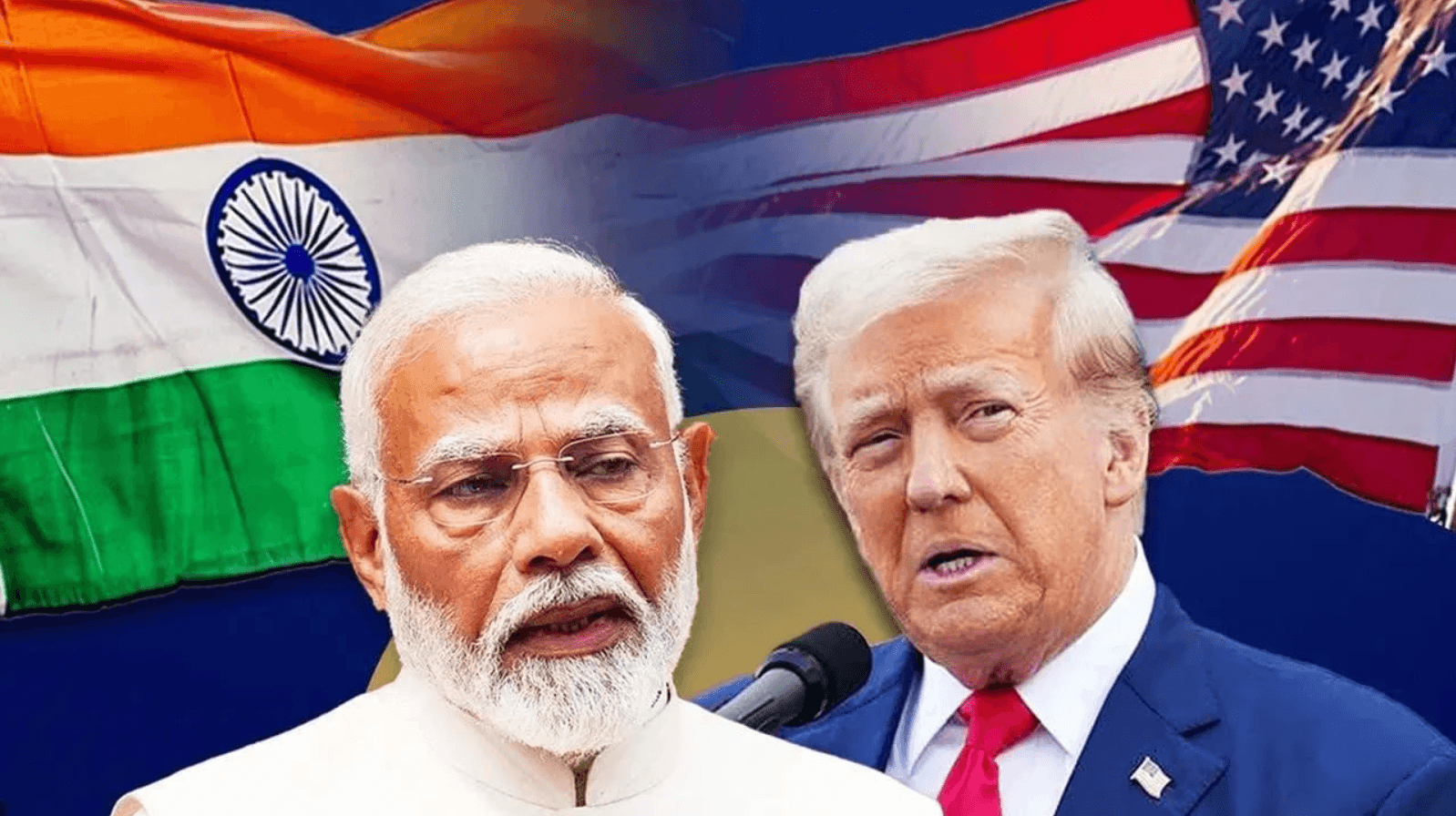
Anything involving PM Modi and President Trump is getting extra attention these days. And the reason is obviously - tariffs.
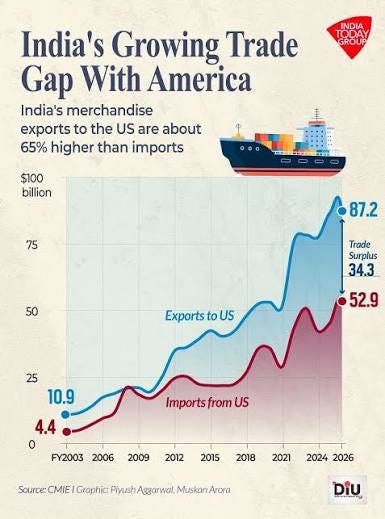
For India, these conversations matter beyond diplomacy. The US is India’s biggest merchandise trading partner, and changes in tariffs can affect Indian markets and eventually, the prices businesses and consumers pay.
Why are we talking about this: on Wednesday evening, PM Modi said he had spoken with President Trump, with the conversation covering everything from trade and defence to energy and critical technologies.
So, on the surface, this was a broad diplomatic conversation. But the timing makes the trade and energy parts particularly important.
Elephant in the room: the conversation comes less than two weeks after Trump signed the Sanctioning Russia and Iran Act of 2026, which expands Washington’s powers to target Russia and Iran economically.
The legislation gives the US President the authority to impose tariffs of up to 100% on countries that continue significant purchases of Russian oil and gas. India matters here because it remains one of the world’s major buyers of Russian crude.
Zoom out: External Affairs Minister S Jaishankar recently met US Secretary of State Marco Rubio on the sidelines of the UN General Assembly in New York, where India’s concerns around the new sanctions law came up in discussions.
India has also warned Washington that measures targeting buyers of Russian energy could affect India-US relations as well as the broader global energy market.
Commerce and Industry Minister Piyush Goyal is currently in the United States, where he is expected to meet US Trade Representative Jamieson Greer on the sidelines of the G20 trade ministers’ meeting.
Big theme: Indian goods entering the US currently face an additional 10% tariff under a Section 301 action, linked by the US to concerns over forced labour.
India’s merchandise exports to the US jumped 21.83% year-on-year to $8.4 billion in August, while imports from the US surged 65.78% to $5.97 billion.
During April-August FY27, India’s exports to the US grew 6.17% to $42.8 billion, while imports increased 29.6% to $28 billion.
So when Modi and Trump talk about trade and energy, markets pay attention for a reason.
2. KPI Green Energy catches a ₹2,410 cr windfall 🎐
KPI Green Energy shares rose 4% intraday, after the company acquired 100% of Alfanar Energy and Netra Wind.
The deets: the proposed cash deal values the two businesses at an enterprise value of ₹2,410 crore.
The deal will add 507.9 MW of wind power capacity to KPI Green Energy’s portfolio. Alfanar Energy owns a 301.4 MW wind project, while Netra Wind owns a 206.5 MW project.
Think of 507.9 MW as enough wind power to generate roughly 1.3-1.6 billion units a year, about the annual electricity use of a mid-sized Indian city like Jaipur, Lucknow, and Nagpur.
Both assets are located in Bhuj, Gujarat.
3. Inox wants Dalal Street to fund the sun ☀️
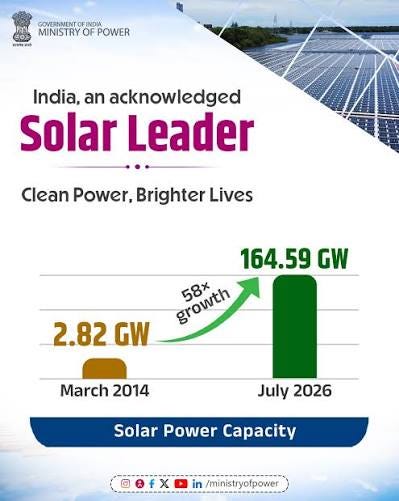
Inox Clean Energy is heading to stock markets with a ₹10,000 crore IPO.
This will potentially be the biggest public issue yet by a privately held Indian renewable-energy company.
What’s going on: the IPO will have two parts: ₹8,000 crore of fresh shares issued by the company and up to ₹2,000 crore worth of shares sold by promoter Devansh Jain.
Where is the money going: the company plans to use ₹6,000 crore of the fresh-issue proceeds to repay debt. Its consolidated borrowings stood at about ₹16,782 crore in August 2026.
The numbers: the business is growing quickly, although it remains relatively small on reported FY26 revenue compared with the size of the proposed IPO.
Revenue from operations jumped from ₹47.2 crore in FY25 to ₹178.1 crore in FY26. Profit rose from about ₹1.5 crore to ₹30.9 crore over the same period.
4. India’s hotels draw investors 🔥
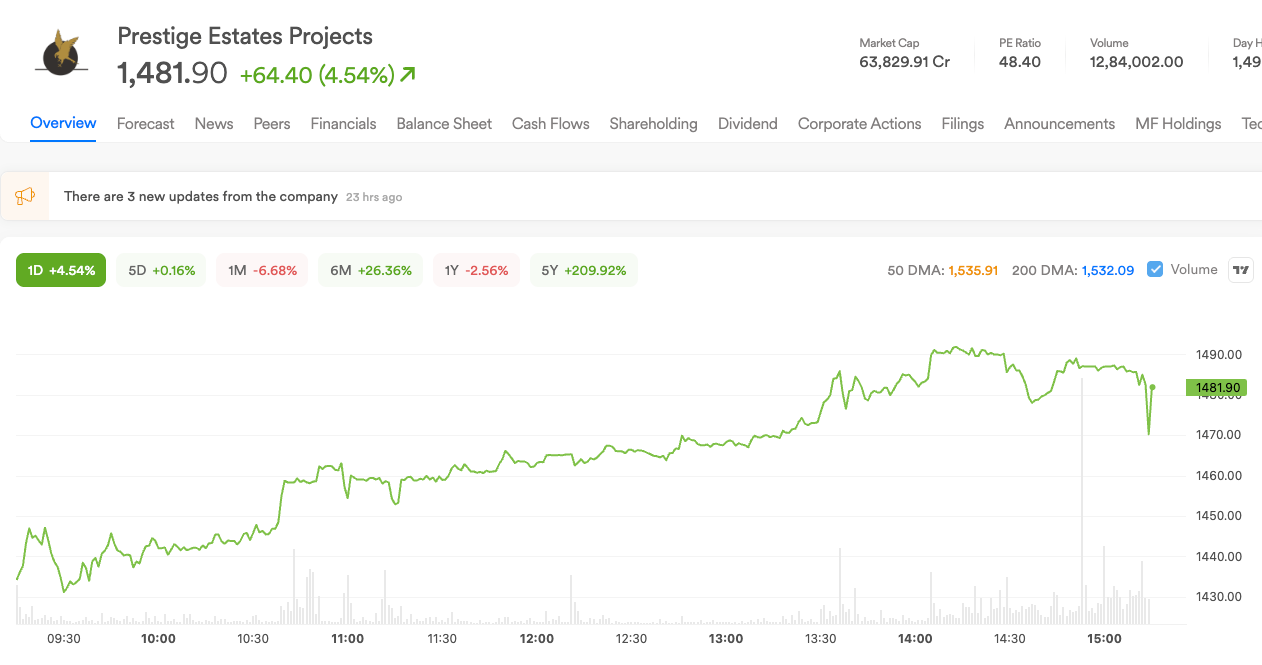
Prestige Estates gained 4.5% after its hospitality arm, Prestige Hospitality Ventures (PHVL), raised ₹3,000 crore from Canada Pension Plan Investment Board (CPP Investments) in exchange for a 27% stake.
PHVL owns luxury and premium hotels across India and is developing properties in Bengaluru, Chennai, Delhi, Goa, Hyderabad and Mumbai.
The details: PHVL shelved its IPO plans amid uncertain market conditions and will now use most of the capital raised to fund its expansion.
FYI: this is CPP Investments’ first direct investment in India’s hospitality sector.
5. SIP fever is real 🫠
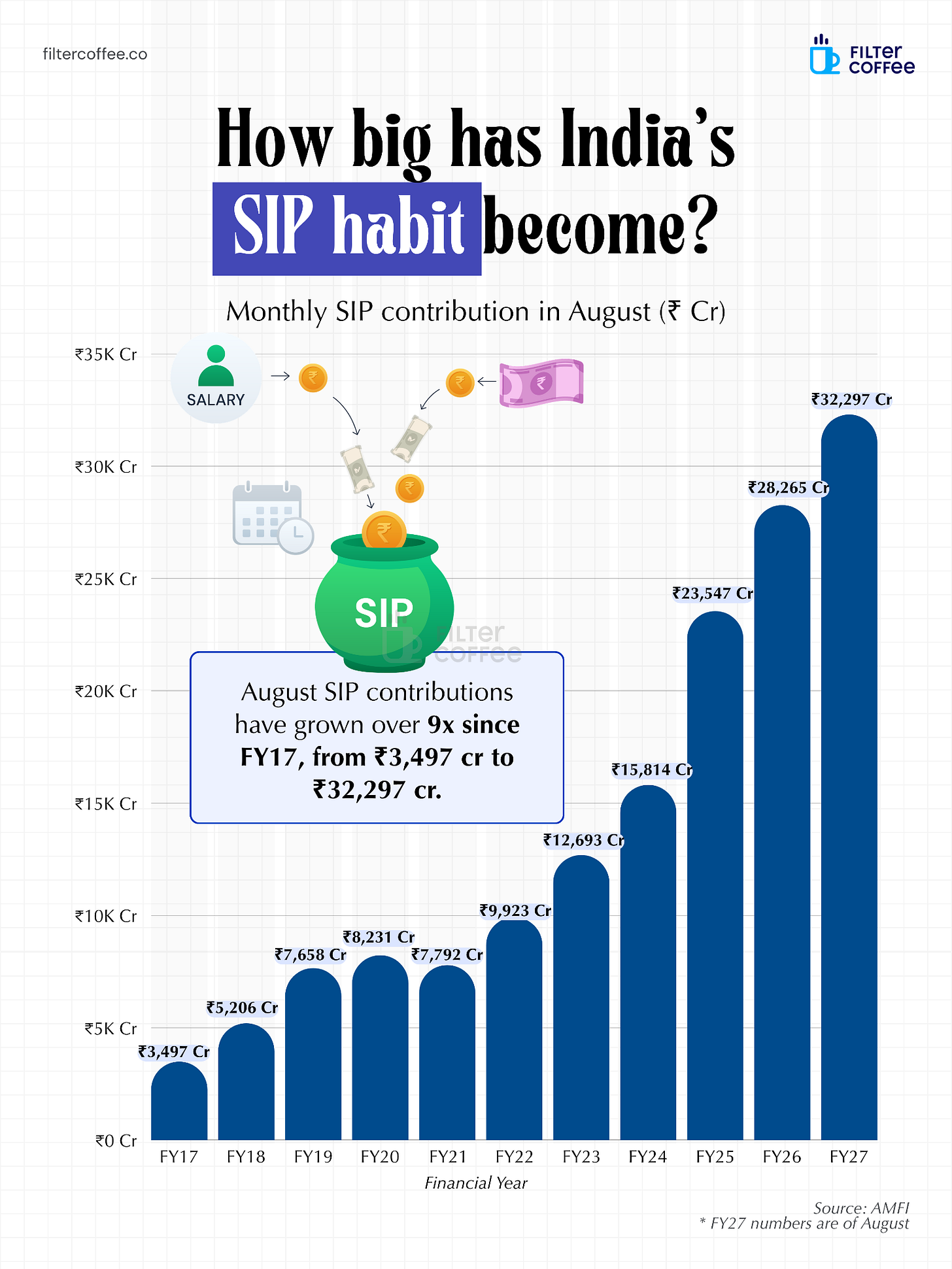
Salary comes in, SIP goes out.
India’s monthly SIP contributions have risen from ₹3,497 crore in FY17 to ₹32,297 crore in August 2026, more than ninefold.
The pace has picked up recently, with contributions more than doubling from the FY24 monthly average of ₹15,814 crore. Small, regular investments are adding up to some seriously big money.
6. Stocks that kept us interested 🚀
What went up ⬆️
📈 ICICI Lombard surged 5% after outlining plans to grow premiums faster than the industry and achieve a 17-20% return on equity by FY29.
🏦 Banking stocks saw buying ahead of quarterly updates. ICICI Bank and Kotak Mahindra Bank gained around 2% each, supporting the market.
🚜 Action Construction Equipment gained more than 2% after receiving an order from the Ministry of Defence.
What went down ⬇️
📉 Hospital stocks fell as much as 7% after the Supreme Court questioned steep mark-ups on medicines. Pharma stocks also declined, with Glenmark down 4%.
What else are we snackin’ 🍿
⚖️ Trust dispute: Venu Srinivasan has reportedly sought an inquiry into Tata Trusts’ governance, questioning Noel Tata’s trustee status and Neville Tata’s appointment.
💍 IPO delayed: Oura postponed its planned $2.2 billion IPO indefinitely, citing uncertainty in the IPO market.
🚛 Logistics bet: KKR will take a majority stake in Cisternina Logistics to build a pan-India liquid storage and logistics platform.
💰 Deep pockets: Simple Energy raised ₹1,750 crore in Series C funding led by existing investors, taking total capital raised past ₹2,530 crore.
And that’s a wrap on this edition of our newsletter.
With Gandhi Jayanti on October 2, we’re taking a short break. We’ll see you on Monday with everything that brews over the long weekend.

Until then, pour yourself an extra cup. Hit that 💚 if you liked this issue.
Disclaimer: This newsletter is for informational and research purposes only. Nothing here should be considered financial, investment, legal, or professional advice.