
 Newsletter
Manufacturing activity boom, Battery bet, and Zydus goes global.
🗓 Morning, folks!
Indian markets started the new month on a strong footing, with the Nifty and Sensex rising nearly 1%.
The market’s upbeat mood was lifted by stronger-than-expected GDP data, igniting rallies in auto stocks on robust sales, along with energy and IT stocks. Optimism was further fueled by anticipation of this week’s GST Council meeting and key geopolitical moves around the SCO summit.
💡 Spotlight: India’s manufacturing activity booms 📈
India’s manufacturing activity surged in August to a 17-year high, even in the face of higher U.S. tariffs.
The Purchasing Managers’ Index rose to 59.3, edging past July’s 16-month peak of 59.1. A key driver may have been US President Donald Trump’s 50% tariff announcement on Indian goods.
Just for context, a reading above 50 signals growth, while anything below that level points to contraction.
To beat the deadline, businesses accelerated production and exports to the U.S., giving output a significant lift. New orders also climbed to their highest in nearly five years, with production expanding at the fastest pace since the pandemic.
1 Big thing: Ashok Leyland’s ₹5,000 crore EV battery bet ⚡
Ashok Leyland, flagship of the Hinduja Group, has announced plans to invest over ₹5,000 crore in battery manufacturing and localization over the next 7-10 years.
What’s happening: the move is aimed at powering its EV arm Switch Mobility and meeting rising demand for energy storage systems in India. The company has signed an exclusive long-term partnership with China’s CALB Group to co-develop and produce next-generation batteries for automotive and non-automotive uses. The deal, linked in the presence of Hinduja Group leadership, is designed to build a localized supply chain for batteries at scale.
Why it matters: this investment signals a strong push into EV infrastructure at a time when India is racing to cut dependence on imported cells. For Ashok Leyland, it not only strengthens its own electric vehicle roadmap but also positions it as a supplier for the wider mobility and energy storage market.
Zoom out: Indian automakers are increasingly ramping up EV-related investments. Tata Motors has already been building its EV battery play, and Mahindra & Mahindra has been expanding EV production partnerships. By betting big on localization, Ashok Leyland is ensuring it doesn’t get left behind in India’s rapid pivot toward clean mobility.
2. Zydus Wellness goes global with Comfort Click deal 💊
Zydus Wellness has announced its first-ever overseas acquisition, buying UK-based Comfort Click in a deal worth £239 million. Investors cheered the move, sending the stock soaring 10% in Monday’s session.
The deets: Comfort Click, a UK-based wellness company, sells vitamins, supplements, and pet care products under brands like WeightWorld, MaxMedix, and Animigo. In short, the company operates in the vitamins, minerals and supplements - VMS segment, a market in Europe estimated to be worth about £11 billion.
The why: the deal helps Zydus expand globally by using Comfort Click’s strong online sales model and presence in the UK and US, while also bringing Comfort Click’s supplement products to India. In simple terms, it opens new markets, strengthens digital sales, and allows both companies to cross-sell products.
Big picture: the global digital VMS market is projected to grow at a CAGR of 7-9% through 2030, reaching an estimated $50-60 billion by decade-end. This growth is driven by rising health awareness, greater adoption of preventive healthcare, and the rapid expansion of e-commerce and digital health platforms.
3. Indian travel to US falls after decades ✈️
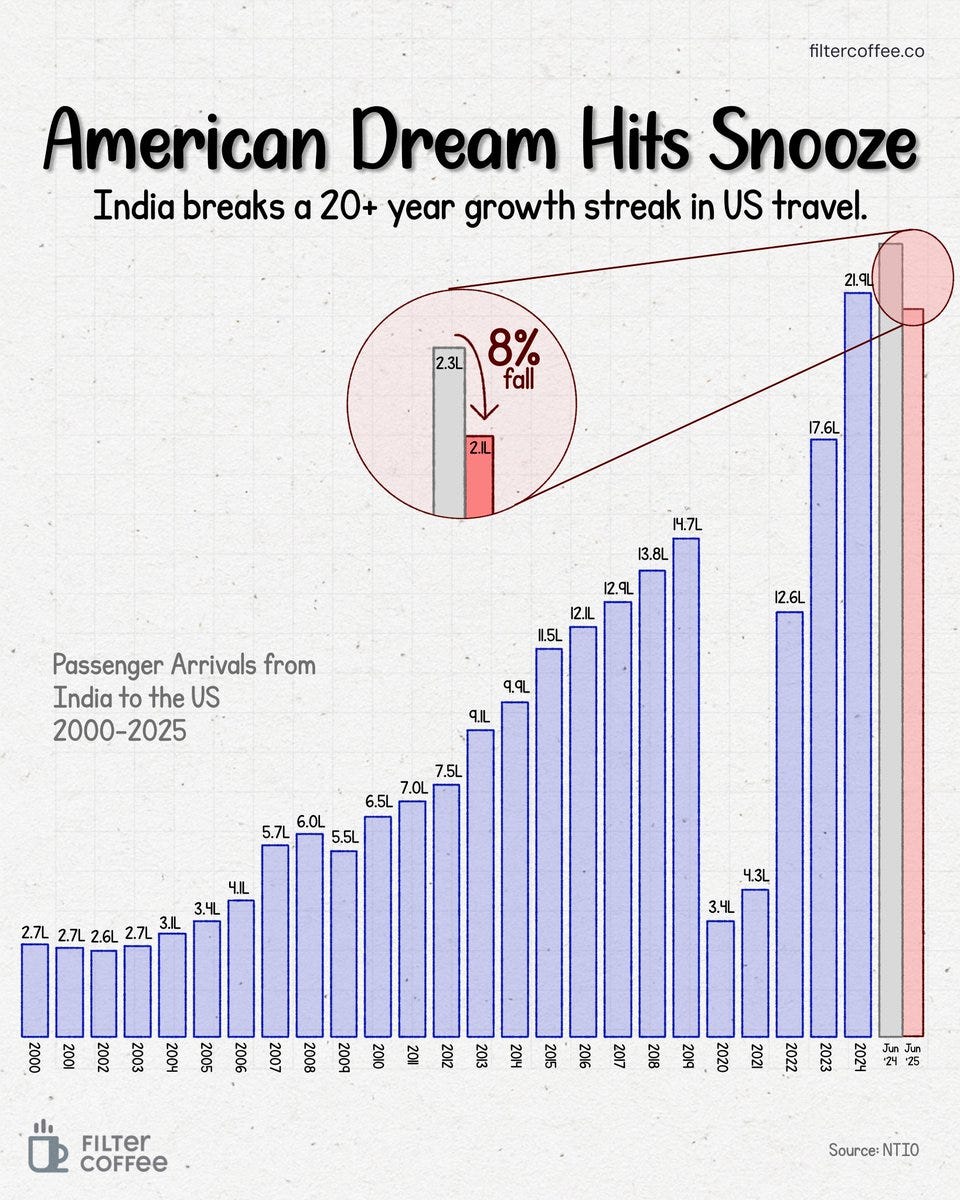
For the first time since 2001 (excluding covid years), fewer Indians flew to the US this June.
What’s going on: arrivals dropped 8% year-on-year to 2.1 lakh, while provisional July numbers point to another 5.5% fall. The slowdown mirrors a broader slump in international travel to the US, where overall visitor arrivals have been sliding for months.
Industry watchers say visa delays are hitting students the hardest, and if bottlenecks persist, the impact could spill over to business and family travel too.
The why: industry players say it’s too early to pin the drop entirely on stricter Trump-era visa norms, though delays are clearly hurting students the most.
With a 50 lakh-strong diaspora and steady business and visiting friends & relatives traffic, India’s demand is resilient, but visa bottlenecks could make the slowdown worse.
4. Stocks that kept us interested 🚀
1. BHEL gets DRDO tech boost 🚀
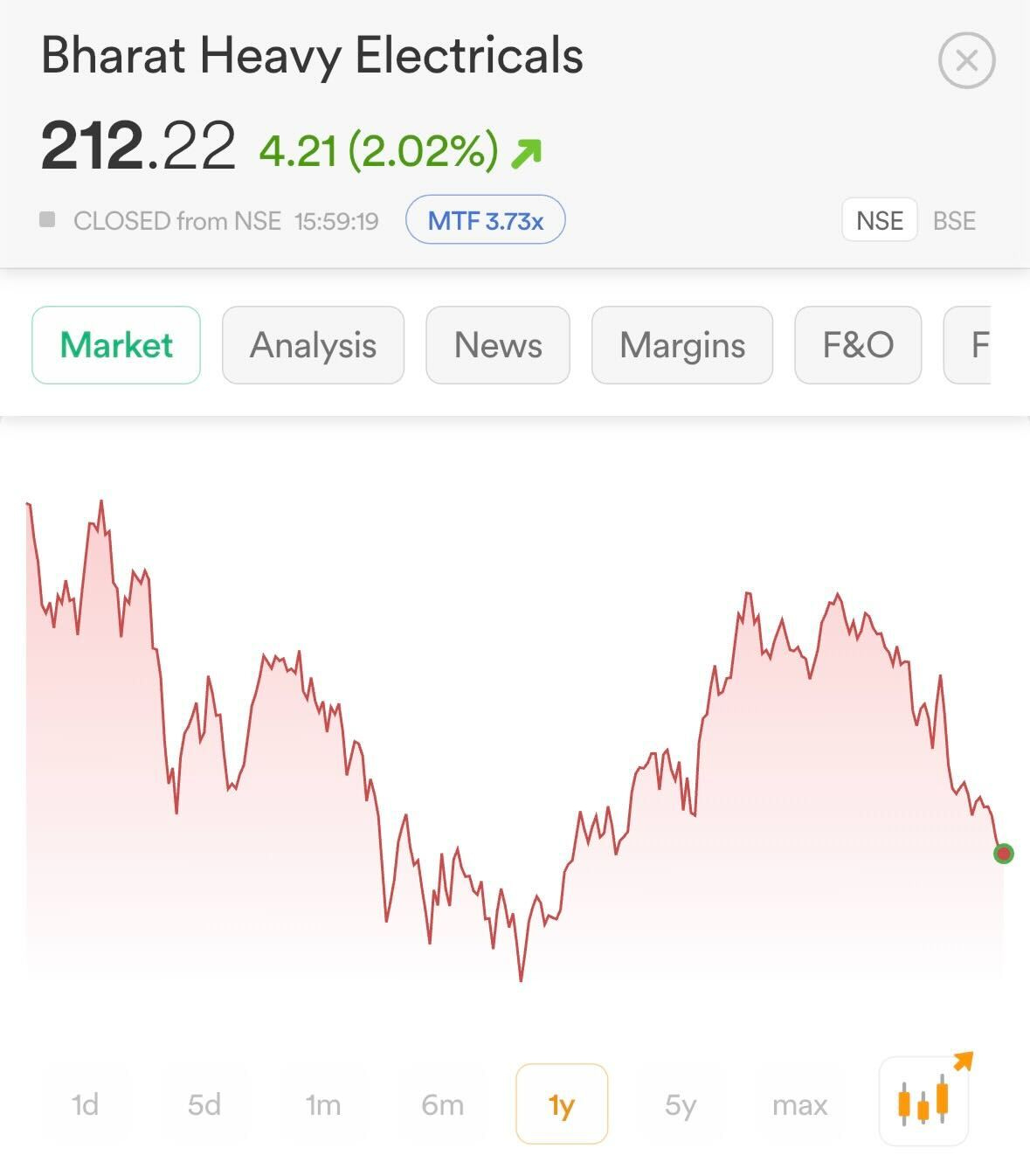
BHEL gained more than 2% after signing a key tech pact with DRDO’s research wing.
The deets: the deal is a License Agreement for Transfer of Technology (LAToT) with Defence Metallurgical Research Laboratory (DMRL), Hyderabad. It covers the manufacturing of fused silica radar domes through cold isostatic pressing and sintering.
It means BHEL can now make the protective glass nose covers for missile radars right here in India. These covers keep the radar safe in flight while letting it “see” targets clearly.
Why it matters: radar domes may look like just glass covers, but they’re vital for missiles and fighter jets to function. They protect the radar inside from heat and pressure while keeping its “eyes” clear.
India earlier depended on imports for this niche tech, but with DRDO transferring it to BHEL, the country can now make them at home. This strengthens India’s self-reliance in defence systems.
Zoom out: fused silica radar domes may sound niche, but the opportunity is sizable. India’s defence modernisation is missile-heavy, with projects like Akash, Astra, and BrahMos creating recurring demand.
2. Torrent bags ₹22,000 crore coal power project ⚡
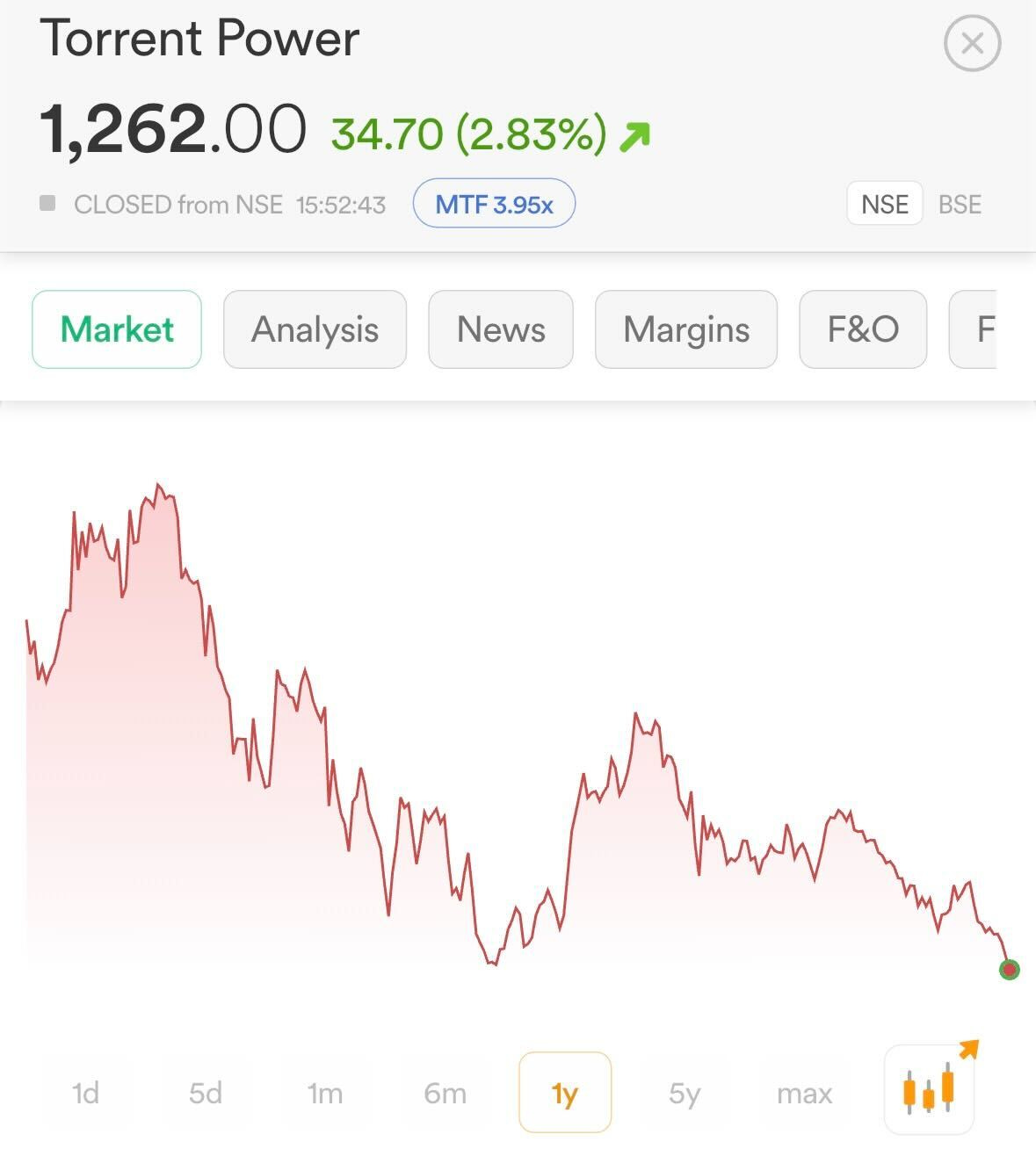
Torrent Power ended nearly 3% higher after bagging a ₹22,000 crore project to set up a 1,600 MW coal plant in Madhya Pradesh.
A 1,600 MW coal plant can power nearly 16 lakh homes, giving steady electricity round the clock when solar or wind can’t.
The deets: the plant will use 2x800 MW ultra-supercritical technology and follow the Design, Build, Finance, Own, and Operate model. Coal supply will come from MPPMCL under the Centre’s SHAKTI policy.
Why it matters: India’s power demand is hitting record highs, with peak load crossing 250 GW this summer. Solar and wind are growing fast, but they can’t guarantee supply at night or during low-wind hours. A 1,600 MW ultra-supercritical coal plant gives stable, round-the-clock base load power to keep the grid balanced, prevent blackouts, and back up renewables.
It’s also a strategic move for Madhya Pradesh, which has faced frequent power shortages and needs reliable capacity to support industries.
3. PG Electroplast to build ₹1,000 crore facility ⚙️
Shares of PG Electroplast jumped over 4% after its arm, Next Generation Manufacturers, signed an MoU with Maharashtra to set up a ₹1,000 crore plant at Kamargaon in Ahilyanagar.
The greenfield facility will make air conditioners, washing machines, refrigerators, and related products.
The plant will be highly vertically integrated, boosting the local components ecosystem and strengthening the consumer electronics supply chain in western India.
The announcement comes on the back of a weak run for PG Electroplast’s stock. The shares had slid nearly 35% in recent weeks after the company lowered its FY26 revenue growth outlook to 17-19% from 30.3% and trimmed its profit goal to ₹300-310 crore versus the earlier ₹405 crore.

4. RPP Infra jumps 20% on ₹1,126 cr BHEL deal 🚀
RPP Infra soared 20% after winning a ₹1,126 crore contract from BHEL to supply factory-finished structures across India.
What’s up: the deal covers setting up a modern fabrication shop and delivering high-quality steel structures for BHEL’s projects nationwide.
The how: a dedicated fabrication shop means steel is cut, welded, and shaped under strict quality checks before it ever reaches a site. That way, BHEL gets ready-to-install structures that are precise, durable, and consistent.
For mega projects, this reduces delays, avoids on-site errors, and keeps construction running smoothly.
Why it matters: BHEL runs some of India’s biggest power and industrial projects, which need massive, precision-built steel structures. By tapping RPP Infra for factory-finished supplies, BHEL can speed up project timelines, secure quality output, and free up capacity to focus on execution.

What else are we snackin’ 🍿
🚀 AI surge: OpenAI is planning a 1-gigawatt data center in India, seeking local partners to advance its Stargate AI infrastructure agenda.
🛵 Smooth commutes: Electric scooter manufacturer Ather Energy has announced a feature that alerts the users of potholes in advance. The company has already mapped the data across major cities like Pune and Bangalore.
⬆️ Numbers up: The month of August recorded 20 billion transactions in UPI, valued at ₹25 lakh crore, up from ₹19.47 lakh crore in July.
That’s a wrap! Don’t let the weekday blues get to you.
And if you’d like to place your brand on this newsletter, let us know.
Hit that 💚 if you liked this issue.