
 Newsletter
Eli Lilly bets big on India, hospitals get a policy upgrade, and AI exports keep rising.
🗓 Morning, folks!
Markets kicked off the week on a high, logging their third straight day of gains on Monday.
The Nifty and Sensex jumped nearly 1%, with Nifty reclaiming the 25,000 milestone.
IT stocks stole the show ahead of the earnings season, as the Nifty IT index surged over 2%, making it the day’s top performer and setting an upbeat tone for the week.
💡 Spotlight: Policy boost powers hospitals ⚙️
Hospital stocks like Apollo Hospitals, Max Healthcare & Fortis Health got a healthy boost, rising 3-8%, after the government finally revised rates for nearly 2,000 medical procedures under the Central Government Health Services Scheme (CGHS) scheme.
It’s the first major update since 2014, when outdated pricing often forced hospitals to deny cashless treatment, leaving patients to pay upfront and wait months for reimbursement.
The new rates, effective October 13, bring a fairer structure based on hospital type, accreditation, and city category. For hospitals, it means better margins and smoother cash flow; for patients, it’s a long-overdue dose of relief and easier access to care.
Let’s hit it!
1 Big thing: Eli Lilly’s $1B bet on India’s pharma sector 💊
Eli Lilly is all set to invest more than $1 billion in India in the coming years to boost manufacturing and supply through local drugmakers.
The company is a global pharmaceutical giant which was recently in the news for its drug Mounjaro in India.
Note: Mounjaro is the brand name for the injectable prescription drug Tirzepatide, used along with diet and exercise to treat adults with type 2 diabetes.
What’s brewing: this comes as it seeks to tap into India’s skilled workforce to bolster its global manufacturing expansion. The move also aims to increase the availability of Lilly’s key drugs, including those of diabetes, Alzheimer’s, and autoimmune conditions.
FYI: the company doesn’t have its own factory here. Instead, it relies on Indian companies that make complex medicines, vials, and injections for big global drugmakers on a contract basis.
Why it matters: Lilly’s investment plans in India come at a time when global drugmakers are ramping up manufacturing in the US. This follows the Trump administration’s move to impose a 100% tariff on imported branded and patented drugs from October 1.
Big theme: India is drawing massive investments from global pharma giants seeking to diversify beyond China, the country already supplies over 20% of the world’s generic medicines and exports drugs to more than 200 nations.
With its low production costs and expanding manufacturing base, India is cementing its role as a key player in the global healthcare supply chain.
2. Singapore’s Mapletree plans $700M India data centre push 💾
Singapore-based property giant Mapletree is making its India data centre debut, planning to invest $500-700 million in a 400 MW facility in Mumbai.
A 400 MW data centre in Mumbai is like powering an entire small city just to run servers.
Mapletree runs real estate like offices, warehouses and now data centres. These properties are grouped into Real Estate Investment Trusts (REITs), which are like mutual funds for real estate.
The deets: the first project will come up in Mumbai, with plans to expand to Hyderabad, Pune, and Bengaluru.
Mapletree recently tied up with Ivanhoe Cambridge to launch a ₹15,000 crore platform for building tech-focused offices and data infrastructure.
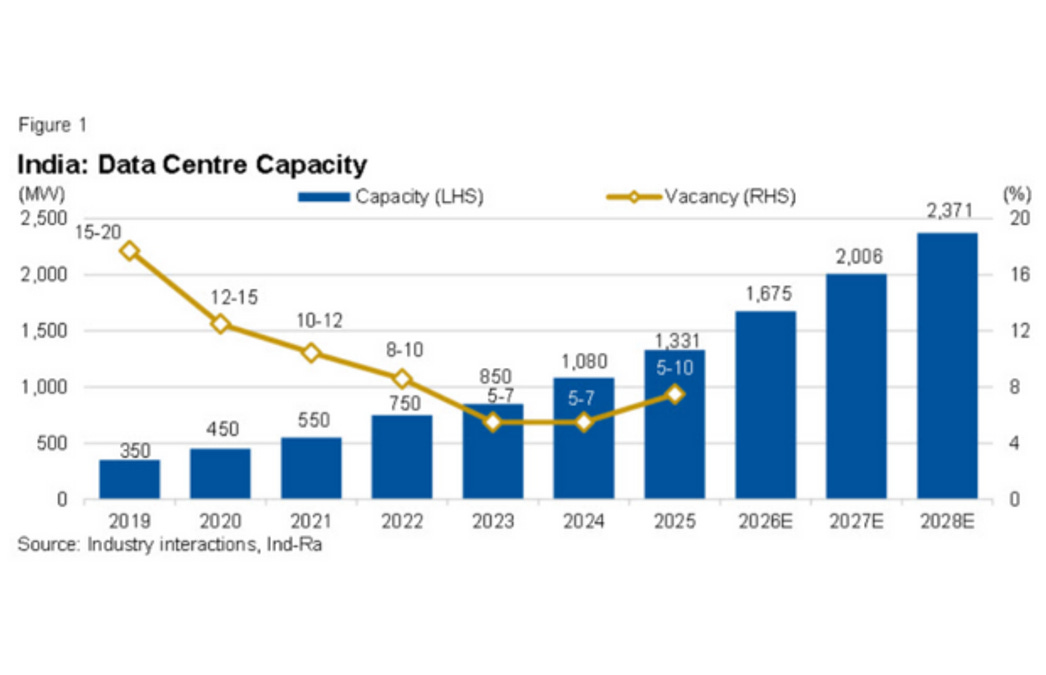
Zoom out: India’s data centre capacity is set to soar from just 350 MW in 2019 to nearly 2,400 MW by 2028. The surge reflects booming demand from AI, cloud computing, fintech, and 5G players.
What’s notable is that even as capacity grows sixfold, vacancy rates are expected to stay low (5-10%), showing how quickly this new infrastructure is being absorbed.
3. Ola Electric becomes first to get nod for rare-earth-free motor ⚙️
Ola Electric got certification for its rare-earth-free ferrite motor, a major move in reducing dependence on critical minerals.
Context: rare earth magnets (like neodymium) are central to many EV motors but their supply is dominated by China, putting automakers at risk. Ola’s new ferrite design avoids that.
The deets: the motor was unveiled at Ola’s Sankalp 2025 event, with plans to roll it out in phases starting Q3 FY26. The company also continues to develop its in-house 4680 Bharat Cell battery alongside this motor push.
Ola’s new rare-earth-free ferrite motor replaces those with ferrite magnets, which are cheaper, more abundant, and easier to source.
Why it matters: while ferrite magnets are typically less powerful, Ola’s design and motor architecture compensate through smarter engineering and efficiency tweaks. This means EVs can still deliver strong performance without relying on costly rare-earth imports, reducing both production costs and dependence on China-dominated supply chains.
It shields the company from magnet export curbs and commoditised imports, and could also cut costs over the long run.
China controls over 70% of rare earth production and 90% of refining so alternatives like ferrite motors could shift the balance of power in the auto sector.
4. GreyLabs AI eyes ₹85 cr boost to scale voice tech 🤖
GreyLabs AI, a Mumbai-based voice AI startup has raised ₹85 crore in Series A funding led by Elevation Capital.
GreyLabs builds AI-powered voice agents that help financial institutions automate customer calls and contact centre operations.
The deets: the company already works with 50+ BFSI clients including RBL Bank, AU Bank, IDFC FIRST Bank, Axis Finance, SBI Life, ICICI Prudential, and Groww.
The why: GreyLabs is raising funds to scale its newly launched Agentic Voice AI platform, which automates customer conversations for banks and insurers.
The company plans to double down on R&D, strengthen its Bengaluru innovation centre, and expand offices in Delhi and Mumbai. The goal is to grow its client base from 50 to 300 financial institutions.
5. India’s computer services market shoots up post AI-frenzy 🤖
India’s computer services exports have grown 30% since OpenAI launched ChatGPT in November 2022, as per World Bank.
Breaking it down: India’s software export was $36.2 billion in July-September 2022, right before ChatGPT was launched in India. That number now stands at $47.3 billion in April-July quarter of 2025, growing nearly 13% YoY.
Zoom out: India has been a frontrunner in the BPO (Business Process Outsourcing) sector since decades. With the emergence of generative AI, the demand for AI-related services have also shot up, placing India in a sweet-spot to cash in from the rally.
Of all the BPO-related job postings, 12% are related to AI. This further proves that AI is going to be a major demand driver in the sector.
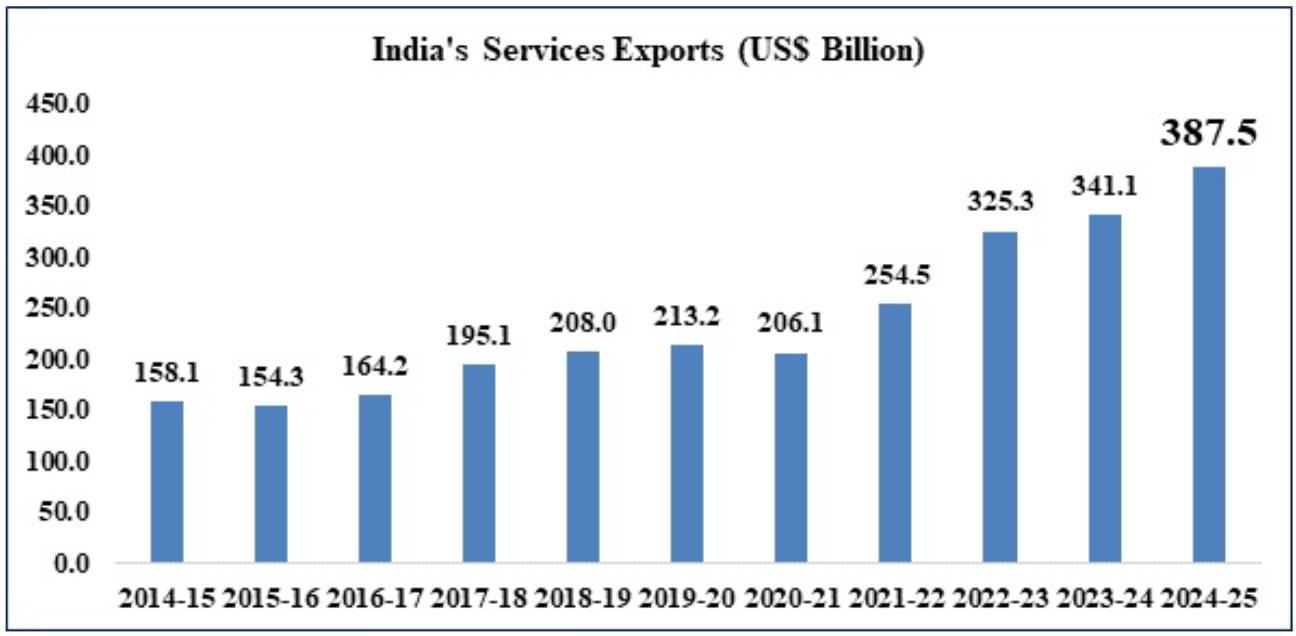
Big theme: India’s services exports are already at a historic high of $387.5 billion in 2024-25, which grew at the rate of 13.6%.
Now, with AI set to disrupt every industry, India can bank on its massive skilled labour pool to chart this territory and emerge as a key player.
6. Stocks that kept us interested
1. Ceigall India shines bright with ₹712 cr solar win ☀️
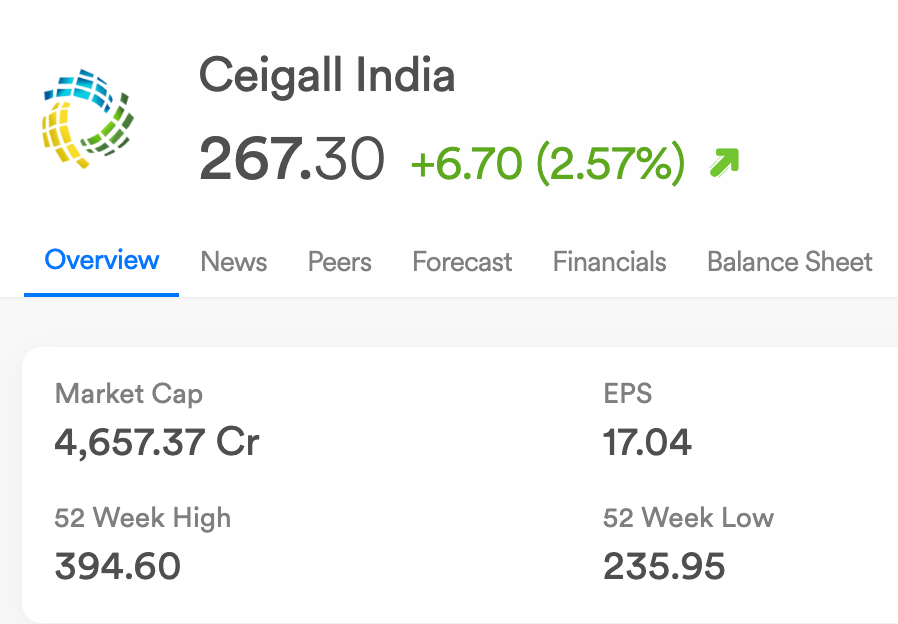
Ceigall India has secured ₹712 crore worth of contracts from the Maharashtra State Electricity Board to set up solar power projects across two districts. The stock gained 2.6% following the announcement.
Ceigall India is a construction company that builds roads, bridges, tunnels, highways, and runways through different types of government project contracts.
The deets: Ceigall India has been selected to build solar power plants with a total capacity of 147 MW. Basically, it can generate roughly 220-250 million units of clean electricity each year, enough to power over 1.5 lakh rural homes or thousands of irrigation pumps.
During this time, Ceigall will supply the generated electricity to the Maharashtra State Electricity Distribution Company (MSEDCL) under a long-term power supply deal.
Big picture: Maharashtra is emerging as one of India’s leading solar power hubs, with 250-300 sunny days every year. The state’s strong sunlight can generate 1.5-2.5 million units of electricity per megawatt annually.
With this deal, Ceigall is not only diversifying beyond roads and highways but also positioning itself in the fast-expanding renewable energy market.
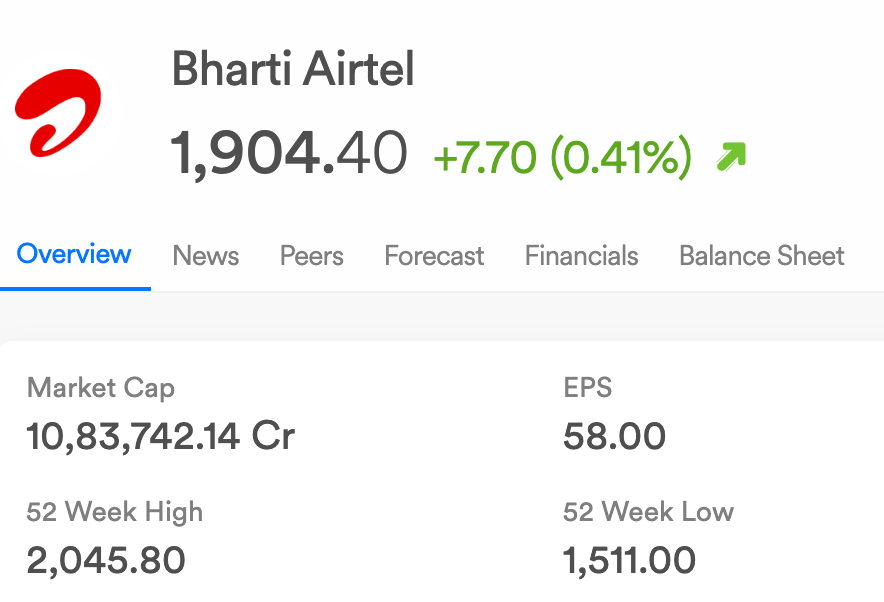
2. Bharti Airtel bags multi-year contract from Indian Railways 🚂
Bharti Airtel recently announced that they have secured a multi-year contract from the Indian Railway Operation Security Centre.
The deets: under the contract, the company will design, develop and implement a digital ecosystem that will protect the IT infrastructure of the Indian Railways.
These would protect digital processes like online ticketing, payments, train tracking, and more.
Why it matters: India witnessed a 46% surge in cybercrime cases last year making it the second-highest affected region in the Asia-Pacific.
89% of train reservations in the country happen online. Thus, investments like these would help safeguard India’s digital ecosystem and help strengthen its online defence barrier.
What else are we snackin’ 🍿
💨 Soft surge: India’s services engine still roaring at 60.9, but export gears slipped a bit amid global traffic and price brakes.
🚀 Green light: after 7 years, SEBI clears IHH Healthcare ₹3,300 crore open offer to buy another 26% in Fortis, sending the stock up 6%.
💊 Pharma debut: Rubicon Research, a pharma formulations maker, launched ₹1,377.5 crore IPO, ₹500 crore fresh issue and ₹877.5 crore OFS by General Atlantic.
💰Crypto rally: Bitcoin hit a new high of above $125,000 as the US government shutdown pushed investors toward safe-haven assets like cryptocurrencies.
That’s a wrap! Don’t let the weekday blues get to you.
And if you’d like to place your brand on this newsletter, let us know.
Hit that 💚 if you liked this issue.