
 Newsletter
Zetwerk eyes IPO, Trump's push for AI, and Apple's rare layoffs.
🗓 Morning, folks!☀️
Dalal Street couldn’t hold on to its early rebound, slipping into the red after a sharp last-hour sell-off.
Nifty and Sensex both closed with cuts, dragged down by banks that faced heavy pressure right at the finish.
Market swings increased as the rupee fell and foreign investors kept pulling out money, which shook overall confidence.
Caution ruled the day, with investors waiting for clarity on a potential FOMC rate cut and any movement on the Indo-US trade deal.
💡Spotlight: India’s $4 trillion economy push ⚡️
India’s Chief Economic Advisor V. Anantha Nageswaran says the economy is on track to cross the $4 trillion milestone in the current fiscal, FY2026.
He noted that with global geopolitics in a ‘huge state of flux,’ sustaining strong economic growth is crucial for India to maintain its strategic weight and global leverage.
He also stressed that the country is fully aware of the far-reaching risks of global warming and climate change, especially for agriculture, ecosystems, and vulnerable coastlines, and must navigate growth with these challenges in mind.
Right now, India stands as the world’s fifth-largest economy, with a GDP hovering around $3.9 trillion.

Let’s hit it!
1 Big Thing: Zetwerk eyes $750 million IPO 💸
Contract manufacturer Zetwerk is gearing up to file for an IPO to raise as much as $750 million.
For context: Zetwerk is a global manufacturing platform that connects businesses with factories, streamlining production, sourcing, and supply chains across industries with digital efficiency.
The deets: the company plans to quietly file its IPO paperwork early next year.
A share sale is basically when a company sells pieces of itself to the public to bring in money or let early investors cash out.
The Bengaluru-based company has recently brought on board Kotak Mahindra Capital, JM Financial Services, Avendus Capital, and the Indian units of HSBC Holdings, Morgan Stanley, and Goldman Sachs to manage the share sale.
Worth noting: if this goes through, it would be one of the biggest stock-market launches by an Indian manufacturing company.
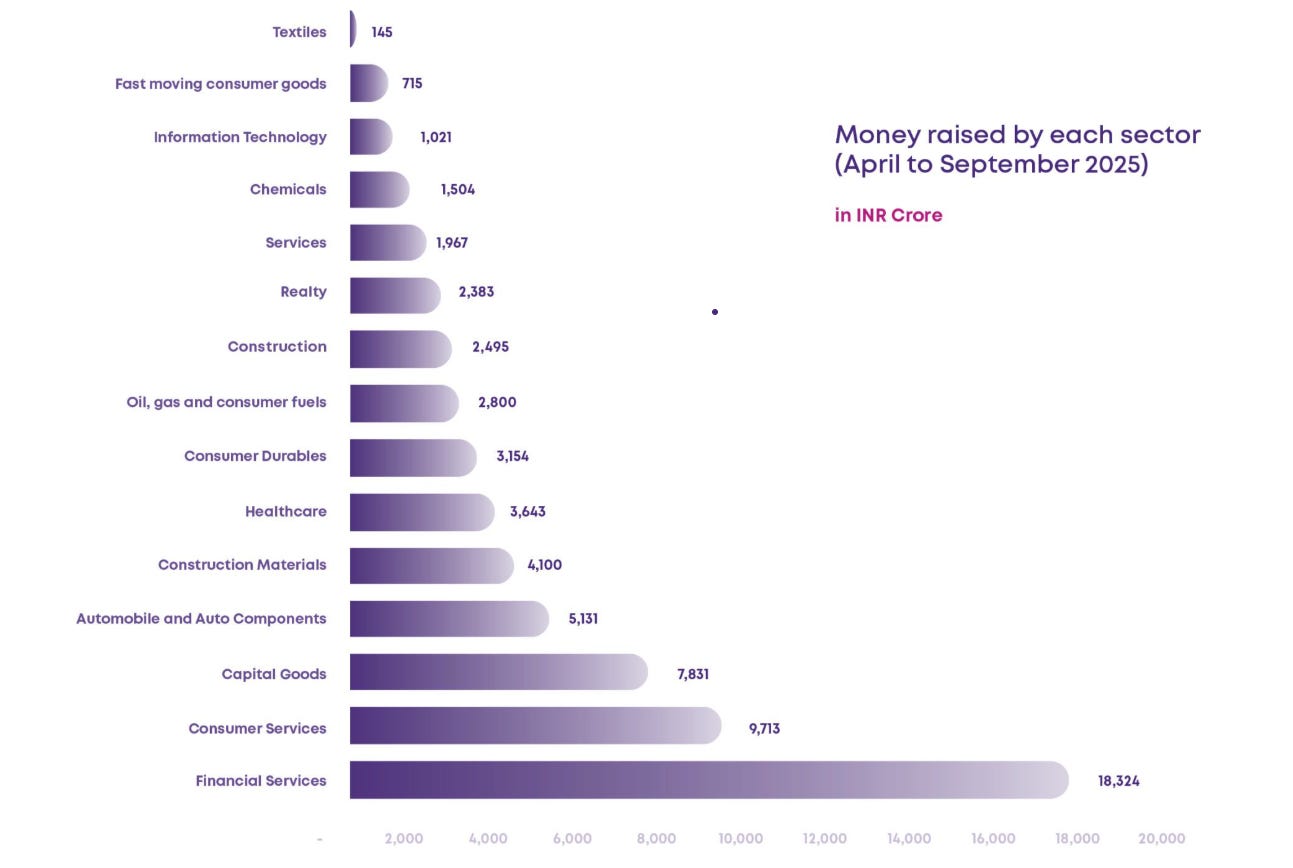
It would also join the long list of companies rushing to go public this year, with businesses in India already raising about $19.5 billion through IPOs so far.
2. HCLTech-AWS team up for AI 💼
HCLTech has entered into a collaboration with Amazon Web Services (AWS) to roll out autonomous, AI-powered solutions for banks, wealth managers and insurers.
The deets: HCLTech is rolling out ready-made tools that banks and insurance companies can start using right away. These tools will help modernise contact centres, make digital services smoother and upgrade the main systems used across banking, wealth and insurance.
Why this is big: the partnership strengthens the long-standing HCLTech-AWS relationship and gives financial institutions ready-to-deploy AI solutions at scale.
With rising pressure to digitise, meet regulatory norms and improve service quality, the tie-up gives HCLTech a stronger foothold in one of the fastest-growing parts of tech transformation.
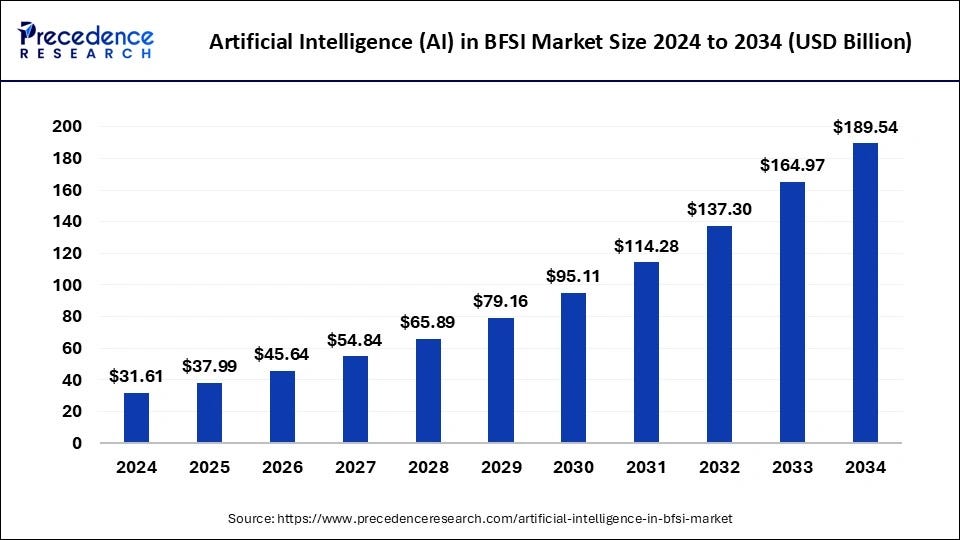
The big picture: AI spending in the BFSI sector is set to explode over the next decade, rising from $31.6 billion in 2024 to nearly $190 billion by 2034.
Banks, insurers and wealth firms are rapidly turning to AI to automate processes, modernise core systems and improve customer experience, and the pace of adoption is only accelerating. With nearly a six-fold jump expected, financial institutions are under pressure to move faster on cloud and AI.
3. Trump’s Genesis Mission to boost AI 🇺🇸
US President Donald Trump has signed an executive order launching the Genesis Mission, a major federal push to boost AI-driven research across the country.
What’s poppin’: the programme aims to boost coordination on AI efforts across government and bring advanced computing tools into the day-to-day work of federal agencies.
The mission will tap into the massive computing power of the Department of Energy’s national labs, turning federal data into fuel for AI experiments and breakthroughs.
It also invites private companies and universities to bring their AI muscle to help solve big engineering, energy and national security challenges.
FYI: tech giants like Nvidia, Dell, HPE and AMD are set to help expand supercomputing capacity.
What’s the hype: Genesis will create a unified AI platform built on the world’s largest collection of scientific datasets. The goal is to train powerful foundation models and build AI agents that can test new ideas, automate research, and speed up scientific discovery.
The order also opens the door for a wave of public-private partnerships.

4. Google-Accel to fund India’s early-stage AI startups 🚀
Google has partnered with Accel to invest in India’s youngest AI startups. Through Accel’s Atoms program, the two will put up to $2 million into each startup, with both contributing $1 million each.
The deets: startups chosen for the program will get $350,000 worth of compute credits, early access to Google Cloud, Gemini and DeepMind models, and regular mentorship from both Google and Accel teams.
Why this is big: this is Google’s first partnership of this kind anywhere in the world, and it chose India because of its massive user base and strong engineering talent.
With global AI firms entering the country and more investors backing early AI ideas, India is quickly becoming a serious place to build next-gen AI products.
5. Stocks that kept us interested 🚀
1. BEL-Safran team up to make HAMMER weapon in India ✅
Bharat Electronics and France’s Safran Electronics & Defence have inked a joint venture to manufacture the cutting-edge Highly Agile Modular Munition Extended Range (HAMMER) precision-guided air-to-ground weapon right here in India.
BEL’s shares soared on the back of this development.
In simple terms, HAMMER is a flexible, customisable long-range weapon system designed to adapt quickly for different missions and deliver precise strikes from far away.
Breaking it down: India’s Rafale fighter jets are armed with HAMMER, which was also used for Operation Sindoor.
The new joint venture will create a 50:50 company in India that will locally build, supply, and support HAMMER weapons for both the Indian Air Force and the Navy.
Indigenisation will steadily grow to nearly 60%, with crucial sub-assemblies, electronics, and mechanical parts built in India. The production shift will roll out in phases, with BEL spearheading the final assembly, testing, and quality checks, giving India stronger control over a key combat capability.
2. Zen Tech gets ₹108 crore defence order boost 💪🏻
Zen Technologies shares jumped after it won an order worth ₹108 crore from the Defence Ministry.
Zen Technologies provides defence training and anti-drone solutions. It builds training systems for imparting defense training and measuring combat readiness of security forces.
What’s going on: the contract is for the supply of simulators and will be executed within a year.
In simple terms, simulators are used to train personnel safely, cut costs, replicate real combat scenarios, improve decision-making, and enhance readiness without using live equipment.
The silver lining: this comes as a breather for the company after a weak second-quarter performance last month, a slump largely caused by procurement delays as military priorities shifted under Operation Sindoor.
FYI: earlier this month, it won two orders, collectively worth ₹289 crore, from the ministry for the upgradation of its anti-drone systems.

What else are we snackin’ 🍿
🧠 AI push: Amazon plans to spend $50 billion to expand AI services for US government agencies, offering models from Anthropic and chips from Nvidia and its own in-house team.
🍎 Pink slips: Apple has laid off dozens in its global sales teams, a rare move aimed at streamlining how it serves businesses, schools and governments.
🚀 Market chase: Alphabet is on track to hit a $4 trillion market valuation, driven by a powerful year-long rally as its AI strategy gained momentum.
💪🏻 Strengthening ties: Canada is close to supplying India with $2.8 billion worth of uranium over ten years, strengthening long-term nuclear cooperation between both nations.
That’s a wrap! Don’t let the weekday blues get to you.
And if you’d like to place your brand on this newsletter, let us know.
Hit that 💚 if you liked this issue.