
 Newsletter
Indigo goes green, venture town hot, and US fed pulls the trigger.
🗓 Morning, folks!
Markets stretched their winning streak to a second day, with Nifty closing at a 3-month high on Wednesday.
Kotak Mahindra Bank and SBI led the charge in banking, while the Nifty PSU index ticked up 1% on strong buying interest. Midcaps and smallcaps joined in too, hinting at a steady risk appetite across the board.
The Fed finally pulled the trigger. On Wednesday, policymakers cut interest rates by 0.25 percentage points, the first move since December, and signaled more cuts are coming this year. The decision, backed by most of Trump’s appointees, reflects growing worries about a cooling job market and rising unemployment.
💡 Spotlight: the Nifty India Defence index climbed another 2% on Wednesday, capping a 7.3% surge in last four sessions. Garden Reach Shipbuilders jumped 7%, while Cochin Shipyard and BEL added up to 2% each.
The rally came after the government cleared the Defence Procurement Manual 2025, a fresh playbook to speed up arms buys, pull in domestic manufacturers, and prepare for modern warfare needs.
Let’s hit it!
1 Big thing: India gets its first 2nm ARM chip design hub 🖥️
ARM just opened a new Bengaluru unit that will design 2nm chips, making it only the second player in India after Renesas to hit this milestone.
ARM is a UK-based tech company that designs the blueprint for most of the world’s smartphone and gadget chips.
A 2nm chip is an ultra-tiny, super-efficient processor that packs more power into devices while using less energy.
Why it matters: 2nm is bleeding-edge tech. Smaller nodes mean faster, more efficient chips, vital for everything from AI to smartphones. Having this capability in India is a big signal that the country is moving up the semiconductor value chain.
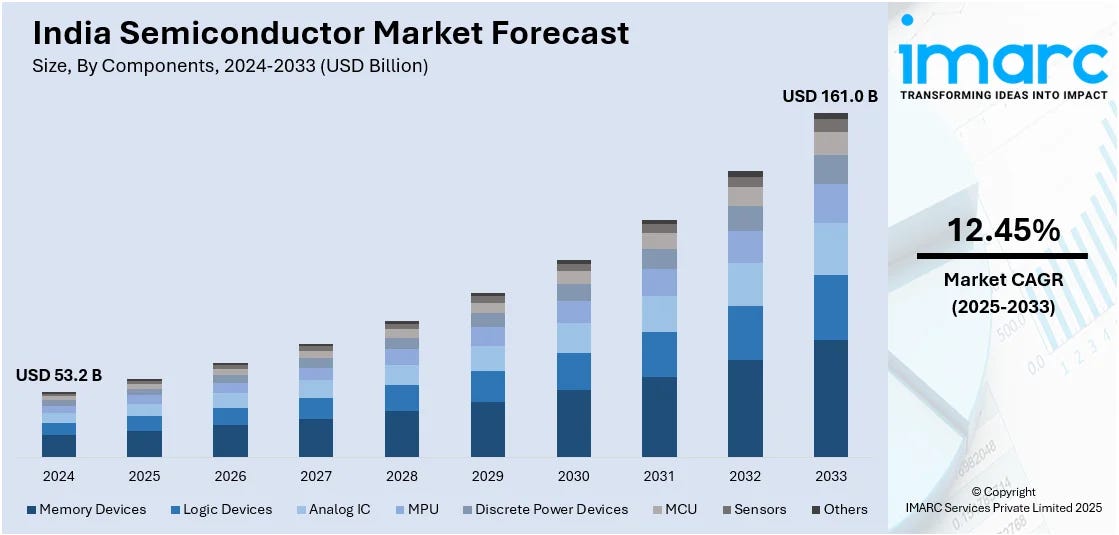
Zoom out: India’s chip ecosystem is buzzing. Ten semiconductor units are under development. Companies like CG Semi have started pilot production, and supply chains for 500+ specialty chemicals and 50 gases needed in fabs are now being sourced domestically.
Add in the government’s new $1B India Deep Tech Fund, and the mission is clear which is to not just chip design but a full-stack ecosystem.
2. Jindal Steel eyes Thyssenkrupp’s steel arm 🏭
Jindal Steel International has made an offer to buy Thyssenkrupp AG’s steel division, sending the German company’s stock to a 4.5-year high in Frankfurt.
Thyssenkrupp is the 200-year-old German industrial group which runs businesses from elevators to submarines, but its Steel Europe arm is the largest flat steelmaker in the region. The division clocked $10.5B revenue in FY25, nearly 28% of group sales.
What’s going on: the steel unit has been under review as Thyssenkrupp struggles with weak demand, rising costs, and heavy decarbonisation investments. Jindal’s surprise bid injected optimism that a deal could revive the division’s fortunes, sparking the stock surge.
The why: Jindal is chasing green steel leadership. Europe is under pressure to decarbonise heavy industries, with governments rolling out subsidies and stricter carbon rules.
Thyssenkrupp’s steel arm, though weighed down by high costs and weak demand, sits at the heart of this transition with deep German industrial roots and a $10.5B revenue base.
For Jindal, which already runs a €12B global steel business with healthy margins, the bet is to combine financial strength with Thyssenkrupp’s footprint to create Europe’s largest low-emission steelmaker.
While we are on deals,
Retail stock broker Angel One Limited just announced a joint venture with Singapore-based LivWell Holding Company Pte. Ltd. to establish a digital-first insurance company.
LivWell is an insurtech company that combines an entire wellness ecosystem of physical, emotional, mental wellness, into a unified platform.
The deets: the newly incorporated company will be called Angel One LivWell Life Insurance Ltd.
The why: the deal will enable Angel One to step into the insurance market of India. Currently, the company has crucial investments in sectors like stock broking and associated financial services. It will also allow LivWell to expand its market from Singapore and Vietnam to India.
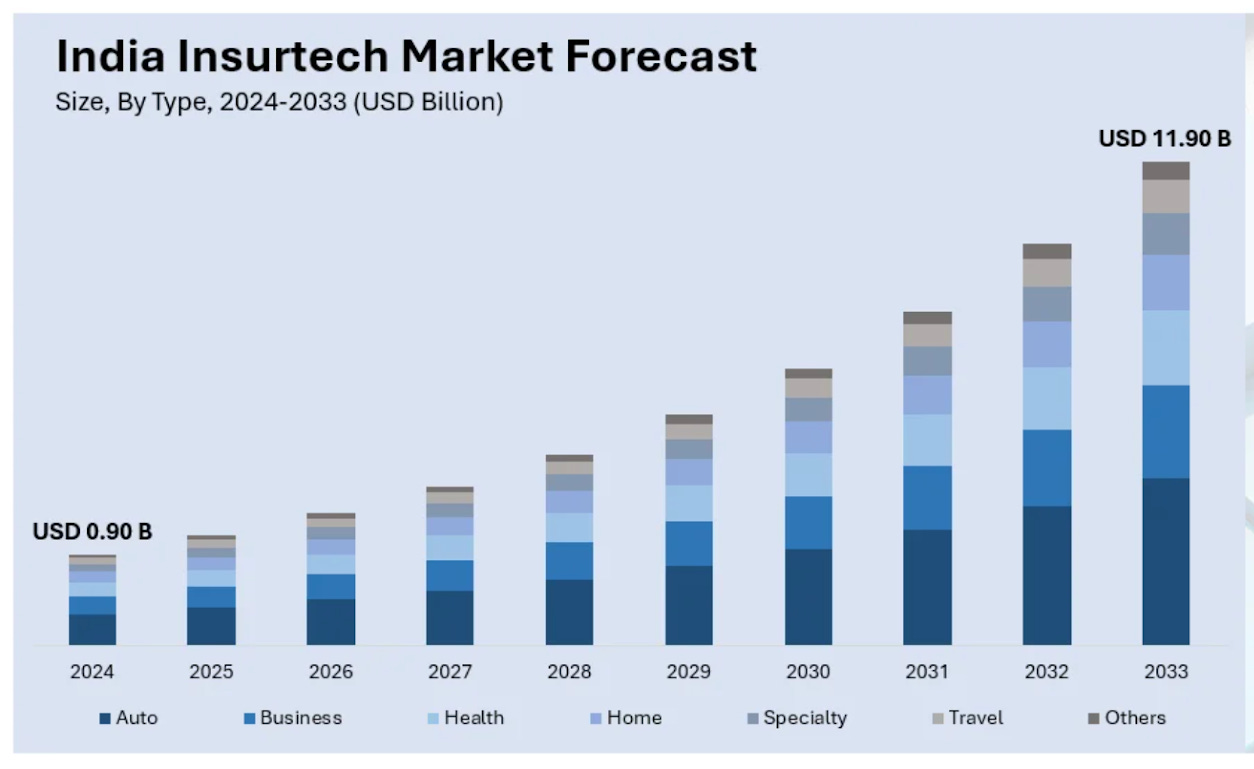
Big Picture: India’s Insurtech market in 2024 was valued at $0.9 billion which is poised to grow at a CAGR of 29.1% and reach a valuation of $11.90 billion in 2033.
3. Nothing raises $200M Series C 💰
London-based Nothing has bagged $200 million in Series C funding at a valuation of $1.3 billion.
Context: the company has already crossed $1B in sales and grown 150% last year. Its quirky smartphones, earbuds, and wearables have carved a niche in the crowded consumer tech market.
The deets: this series was led by Tiger Global, with participation from existing backers like GV, Highland Europe & EQT. New investors on board include Qualcomm Ventures and Nikhil Kamath. The round pegs the company’s valuation at $1.3 billion.
Why it matters: with Big Tech racing to bake AI into everyday gadgets, Nothing wants to stand out with hyper-personalised operating systems. The raise gives it firepower to scale distribution and keep pace with giants like Apple and Samsung.
Big theme: India is one of Nothing’s biggest markets. Its Phone (2a) was among the top-selling models in the mid-premium segment in 2024, and the company has built a strong community-driven brand here.
While we are on fundraises,
FinBox has secured $40 million in Series B funding led by WestBridge Capital, with A91 Partners and Aditya Birla Ventures doubling down. The round also included a $5 million secondary, giving early backers partial exits.
FinBox builds credit infrastructure for banks, NBFCs, and fintechs. Its modular platform powers digital loan origination, underwriting, fraud detection, and embedded lending.
FinBox is betting big on its Sentinel BRE digital lending platform, Prism partnership stack, and fraud intelligence tools, while strengthening BankConnect, DeviceConnect, and its KYC API suite.
4. Power Grid wins big transmission project ⚡
Power Grid Corporation has bagged the bid to set up a new inter-state transmission system across Uttar Pradesh and Madhya Pradesh.
What’s happening: the project includes building a 765 kV sub-station in Prayagraj and transmission lines linking UP and MP, easing load on the busy Vindhyachal–Varanasi line.
Think of the inter-state transmission system as super-highways for electricity, they move power from one state to another so homes, factories, and offices never run short.
The deets: a 765 kV sub-station is like a giant voltage hub. It takes electricity at very high voltage, steps it down safely, and sends it across long distances. This makes the power supply more reliable and efficient.
Why this matters: India’s power demand is soaring, but existing lines are congested. The new Prayagraj system will reduce pressure on old routes, cut outages, and ensure a steadier supply for households and industries in both the states.
5. Stocks that kept us interested 🚀
1. L&T boosts presence with ₹5,000 crore orders 🌍
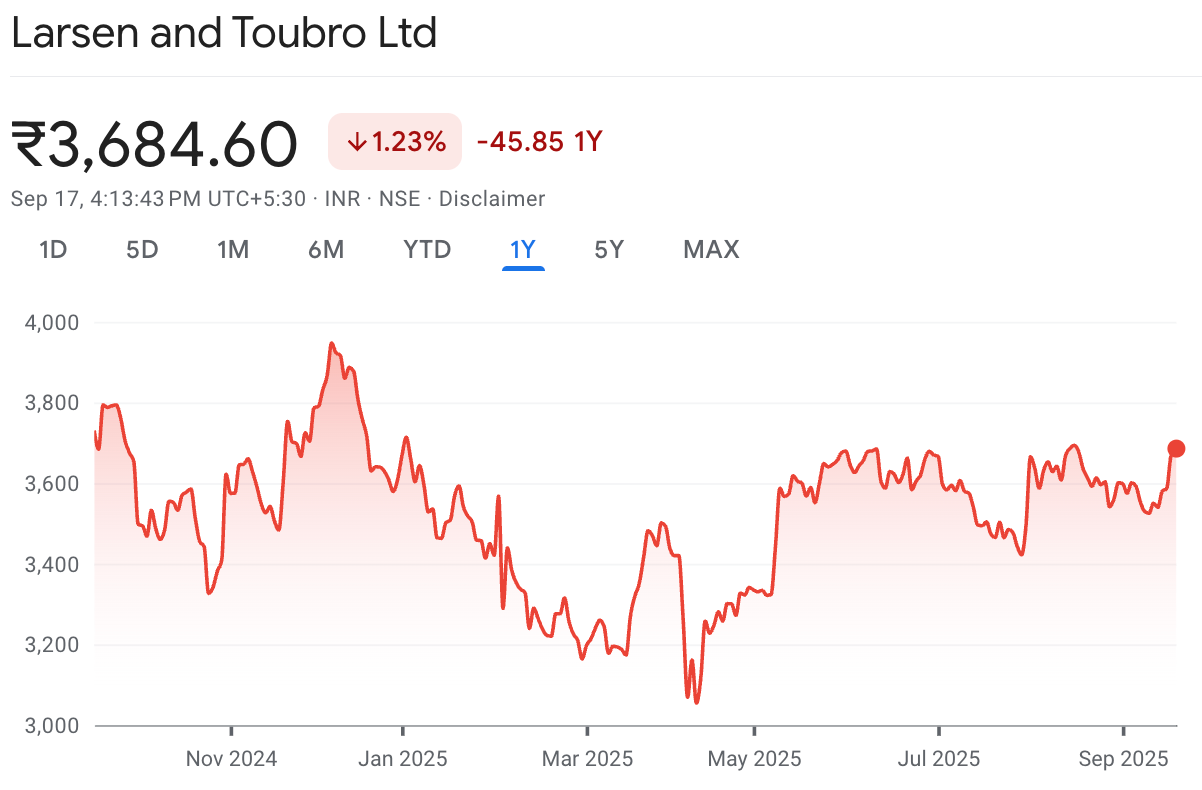
L&T’s Power Transmission & Distribution arm has bagged multiple grid infrastructure projects, both in India and abroad, valued between ₹2,500-5,000 crore.
The deets: the Indian projects involve upgrading power supply systems in two towns by adding smart technology for better monitoring and control. The work also includes setting up transformer stations and replacing old overhead power lines with safer underground cables.
L&T has also won a project in Oman to build a major power grid station and transmission line, boosting its footprint in the Middle East.
Why it matters: these wins not only highlight L&T’s strong global footprint but also underscore its growing role in building smarter, safer, and more reliable power networks—both in India and overseas.
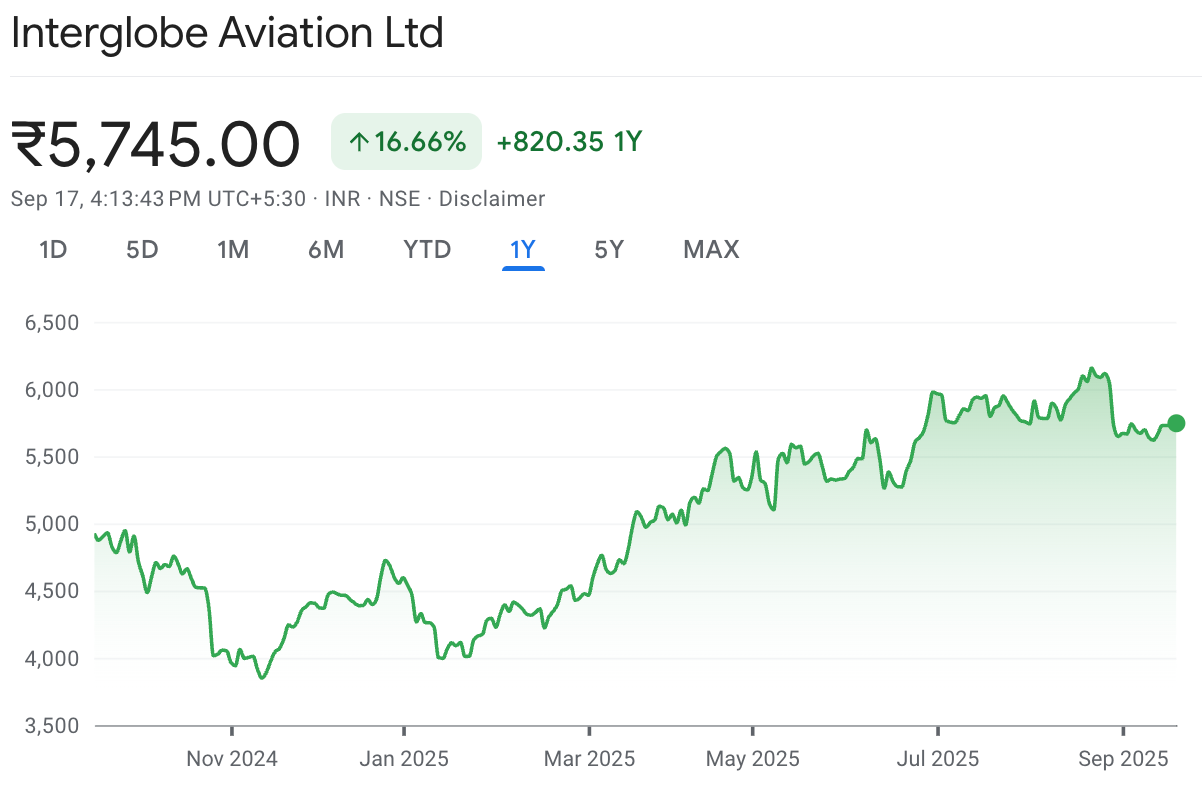
2. Thales, IndiGo team up for fleet maintenance ✈️
Domestic airline IndiGo has signed a long-term maintenance agreement with global aerospace company Thales to support its expanding fleet.
What’s happening: the 11-year maintenance contract covers IndiGo’s current Airbus A320 fleet of 430 aircraft and a future order of over 800 A32X aircraft. Under the agreement, Thales will provide repair services for avionics components through its Avionics-By-The-Hour and Repair-By-The-Hour programmes.
Not only that, IndiGo has also signed a five-year contract with AvioBook, a Thales company, to extend the use of its AvioBook Flight Electronic Flight Bag across the entire fleet.
The why: these programmes will ensure the availability of critical components and timely maintenance, helping to reduce aircraft downtime. Repairs will be carried out at Thales’s new MRO (Maintenance, Repair & Overhaul) facility in Gurugram, India, near Delhi airport. The facility is designed to handle increasing demand for avionics support.
Why it matters: this partnership boosts IndiGo’s efficiency, cuts delays, supports greener operations, and strengthens India’s aviation infrastructure.
What else are we snackin’ 🍿
⚖️ Tariff truce: India said trade talks with the US are “positive” and efforts will be stepped up to clinch a deal soon, after Washington slapped back-to-back 25% tariffs on Indian goods and oil purchases from Russia.a
🚗 Record deal: Hyundai Motor India stock hits record high after agreeing a new wage pact with the United Union of Hyundai Employees (UUHE) covering 2024-2027.
That’s a wrap! Don’t let the weekday blues get to you.
And if you’d like to place your brand on this newsletter, let us know.
Hit that 💚 if you liked this issue.