
 Newsletter
BEL-Indian Army tie up, WeWork's IPO, and Vascon Engineers’ rally.
🗓 Morning, folks!
The markets couldn’t shake off the Monday blues as the Nifty 50 slipped for a seventh straight session, stretching its losing streak.
Sectoral action kept investors on their toes as realty, energy, and metal stocks sparkled, while auto and FMCG hit the brakes.
What’s next: lingering uncertainty over the US-India trade deal and continued pressure on IT and pharma could weigh on sentiment. All eyes now turn to the RBI policy this week, with the central bank likely to hold rates steady to curb Rupee volatility.
💡 Spotlight: Industrial output steadies at 4% ⚙️
India’s factory output, measured by the Index of Industrial Production (IIP), grew 4% in August, up from 3.5% in July.
IIP is a monthly scorecard that shows how much factories, mines, and power plants in India are producing.
The lift came mainly from mining (+6%), while manufacturing (+3.8%) and electricity (+4.1%) also chipped in.
The standouts: basic metals (+12.2%), motor vehicles (+9.8%), and petroleum products (+5.4%).
On a use-basis, construction goods surged 10.6%, signalling strong infra demand, while consumer non-durables slipped -6.3%, showing household spending is still wobbly.
Let’s hit it!
1 Big thing: BEL to supply ₹30,000 cr Anant Shastra missile systems 🚀
The Indian Army has floated a ₹30,000 crore tender with BEL to buy five to six regiments of the Anant Shastra air defence system. The DRDO-made missile shield will help guard India’s borders with Pakistan and China. The stock ended more than 1% higher following the order.
The Anant Shastra is a new Indian missile system that can quickly shoot down enemy aircraft and drones.
The deets: once cleared, these regiments will be deployed along the western and northern borders, complementing existing missile systems like Akash and MRSAM.
The system can lock onto and hit six targets at once, even under electronic jamming, giving the Army a modern shield against drones, aircraft, and missiles.
Why it matters: this deal is a win for self-reliance in defence. Instead of depending on imported missile systems, India is deploying homegrown technology built by DRDO and BEL.
Zoom out: India today runs one of the world’s largest defence forces, backed by a mix of imported and indigenous systems. The arsenal spans everything from S-400s and Rafales to homegrown Tejas jets, Akash missiles, and Pinaka rockets.
Currently, the aim is clear & it is to cut import dependence, modernise the armed forces, and be ready to counter the enemy with gear that’s made in India for India.
2. India’s first stealth fighter gets a power trio ✈️
BEML has signed a three-way agreement with Bharat Forge and Data Patterns to back India’s Advanced Medium Combat Aircraft (AMCA) programme.
Context: the AMCA is India’s homegrown fifth-generation stealth fighter jet. The IAF plans to induct around 120 jets in phases, starting with Mark-1 powered by GE engines, and later a Mark-2 with indigenous engines.
While HAL and ADA lead design and production, companies like BEL and L&T are pitching in with radars and avionics. Meanwhile, BEML, Bharat Forge, and Data Patterns are contributing heavy engineering and electronics. It’s a consortium approach where each player contributes its expertise to make India’s most advanced fighter a reality.
The deets: the trio will jointly respond to the Aeronautical Development Agency’s (ADA) Expression of Interest for prototype development and production.
The new jet will be designed to fly faster without needing extra fuel, hide from enemy radar, carry weapons inside its body, and use high-tech systems to jam enemy signals.
India is also rolling out Akashteer, a new AI-enabled air defence network by BEL/DRDO, integrated with radar, sensors and missile units.
3. India’s precision hub gets a boost with Azad-Mitsubishi deal 🤝
Azad Engineering has signed a long-term contract with Japan’s Mitsubishi Heavy Industries for ₹651 crore. The stock gained nearly 2% on the back of this development.
Azad Engineering is a global supplier of complex and high-precision components to energy, aerospace, defense, and oil & gas industries.
The deets: the contract covers making special parts, called rotating and stationary airfoils that go inside advanced gas and thermal power turbine engines. These parts will help Mitsubishi Heavy Industries meet its growing global demand for equipment used in power generation.
Big theme: India is emerging as a global hub for high-precision manufacturing, moving beyond low-cost production to supply critical components for energy and aerospace. With power demand rising and the gas turbine market projected to reach $14.2 billion by 2033, deals like Azad-MHI highlight India’s export-led growth and engineering strength.
4. Interarch invests ₹100 crore for a new unit in Andhra Pradesh 🏗️
Interarch Building Solutions will invest ₹100 crore in a new plant in Andhra Pradesh to build pre-engineered steel structures.
Pre-engineered steel structures are ready-to-use buildings that are made with steel panels and frames. They are manufactured at a production facility and are assembled at the location using bolts.
Interarch Building Solutions is a New-Delhi based construction company that provides turnkey steel structures to clients across sectors.
Context: this plant will produce building structures that will be utilised for data centres, semiconductor plants, and manufacturing facilities.
The deets: the facility is spread across 20 acres with a built-up area of 17,000 sq.m. It will have a production capacity of 25,000 metric tonnes.
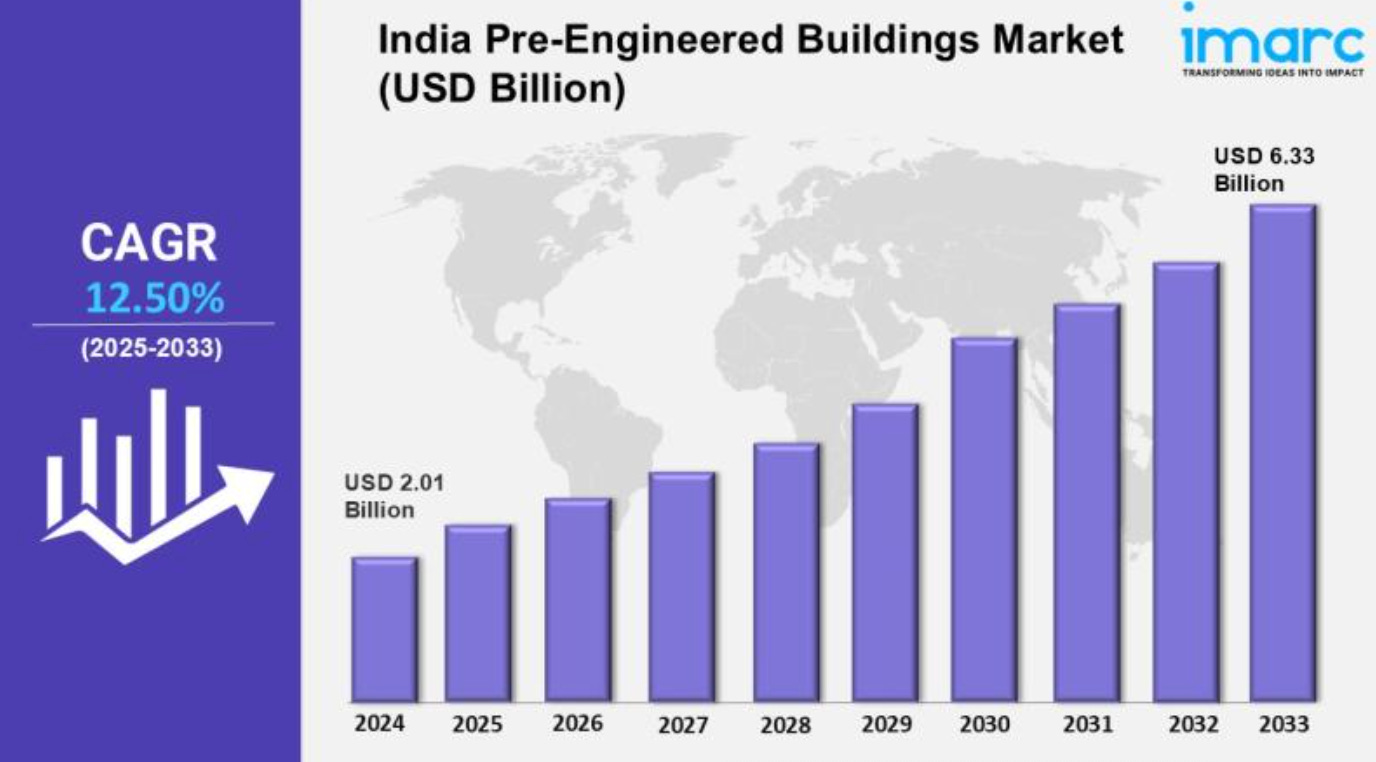
Why it matters: India is one of the largest markets for PEB construction, at 9.5% ahead of China which stands at 8.5%. The industry is expected to grow at 12.5% and reach the size of $6.33 billion by 2033.
5. Ayurveda startup Kapiva rockets ahead with $60 million 🌿
Kapiva has raised $60 million in a Series D funding round, led by 360 ONE Asset and Vertex Growth.
Kapiva is an Indian wellness brand offering Ayurveda-based products, including juices, supplements, and nutrition, focused on beauty, immunity, and weight management.
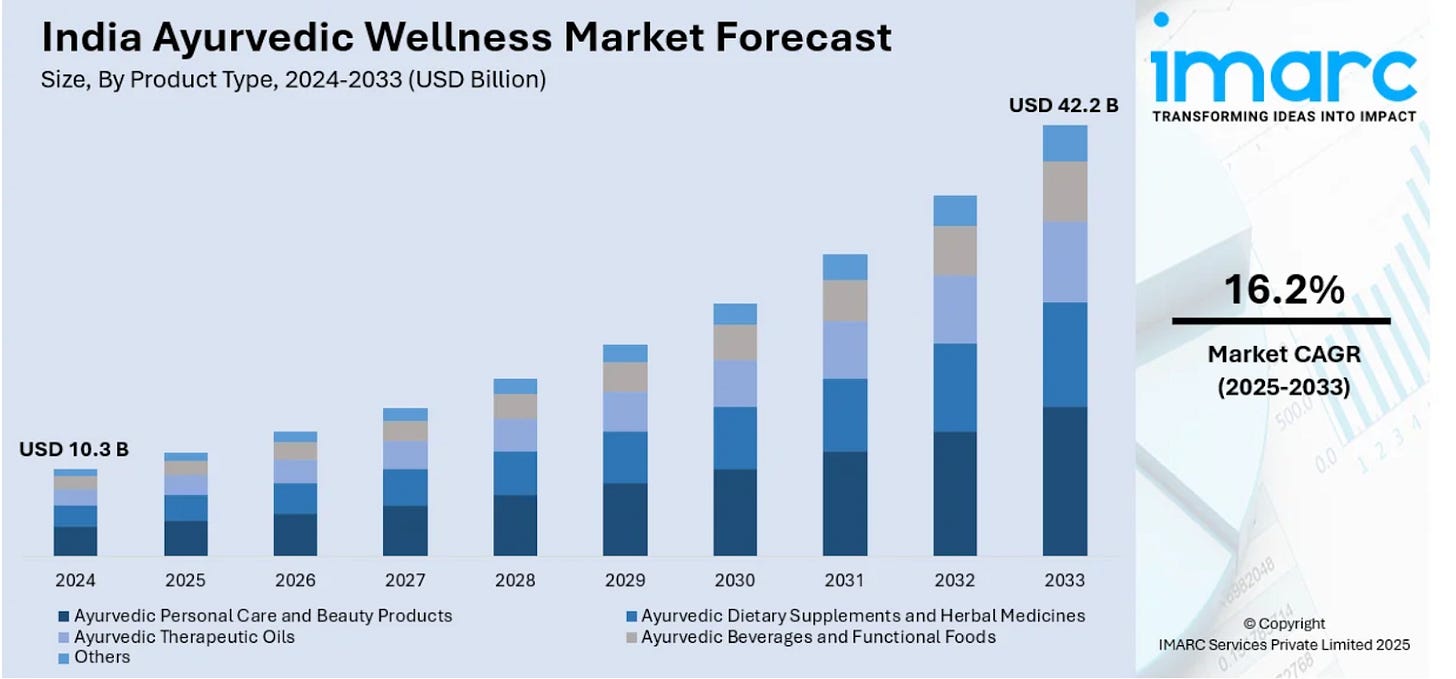
Big picture: Kapiva’s fundraise comes at a time when the Indian Ayurveda and wellness market is witnessing accelerated growth. The sector is projected to reach $42.2 billion by 2033, exhibiting a growth rate of 16.2% during 2025-2033.
Consumer preferences are shifting towards natural, preventive, and personalised healthcare, opening a large opportunity for new-age brands.
While we are on fundraises,
WeWork India is set to launch its IPO on October 3, with issue size to be nearly ₹3,000 crore.
WeWork India, launched in 2017, offers premium flexible workspace solutions, supporting enterprises, SMBs, startups, and individuals across India’s growing sector.
What’s happening: the proposed IPO is an offer for sale of up to 4.63 crore equity shares. Shares will be sold by the promoter group firm. The company had filed its draft papers for the IPO in early February.
6. Stocks that kept us interested
1. Adani Infra pact supercharges Vascon Engineers rally 🔥
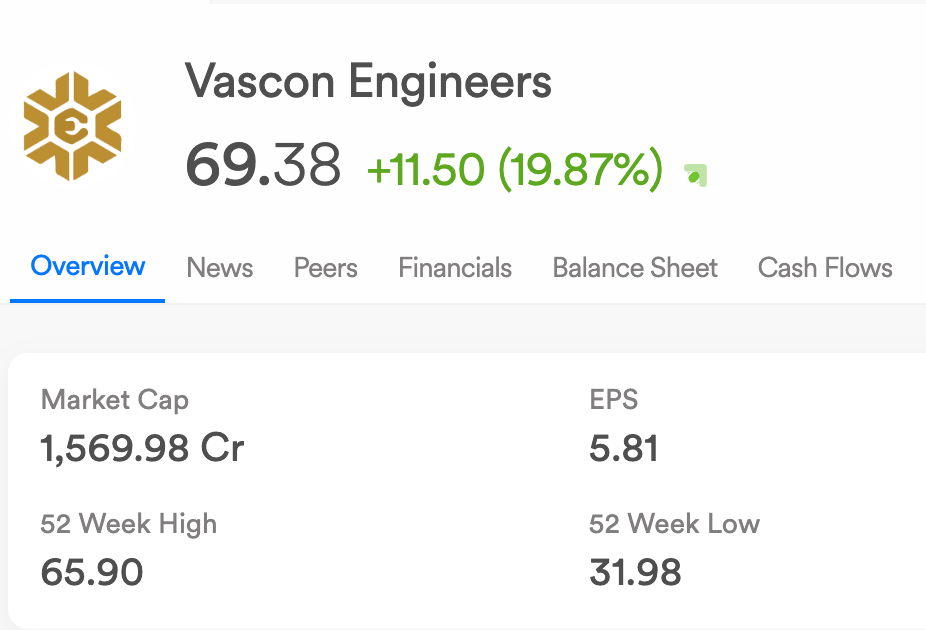
Vascon Engineers shares jumped nearly 20% after the company secured a deal with Adani Infrastructure.
Vascon Engineers provides Engineering, Procurement, and Construction (EPC) and real estate services, delivering residential, commercial, industrial, IT, malls, and hospitality projects from concept to completion.
What’s happening: the agreement makes Vascon an execution partner with Adani under an early engagement model for the next five years. Under this approach, Vascon will work on selected projects from the design stage itself, ensuring design and execution are seamlessly integrated.
So far, three projects in Mumbai totaling 13.15 million sq. ft. have been identified under this model. Looking ahead, the company is set to collaborate with Adani on projects expected to contribute up to 30% of its annual turnover.
Demand is rising as government spending and private projects surge. For firms like Vascon, partnerships with large groups such as Adani strengthen credibility, expand their project pipeline, and position them to tap into India’s infrastructure boom.
2. Premier Energies secures international order worth $19.9 million ☀️
Premier Energies has won contracts worth $19.9 million for supply and installation of solar power systems in the Republic of Benin, West Africa.
Premier Energies is a Telangana-based company that manufactures and supplies photovoltaic cells, also known as solar cells. They also provide Engineering, Procurement, and Construction (EPC) solutions to solar power plants.
The deets: under the contract, the company will install 750 rooftop solar systems, 4,400 solar streetlights, and 650 solar water heaters. These will be installed at socio-community facilities, health centres, educational institutions, and border surveillance units.
The contract is part of a broader initiative by the Government of Benin to expand clean energy access.
The growth of India’s solar exports remains modest at the rate of 26.1% to $267.6 million in the first quarter of 2025. However, with the government’s push to develop the sector, a quick turnaround could be soon expected.
What else are we snackin’ 🍿
🔥 Desi dominance: Arattai has surged to number one on the app store beating WhatsApp and Telegram after its daily sign ups jumped from 3,000 to 3,50,000 in just three days.
🎬 Movie tariffs: Donald Trump has imposed a 100% tariff on all foreign films, a move that could shrink Indian cinema’s US box office, raise ticket prices, and stoke piracy.
That’s a wrap! Don’t let the weekday blues get to you.
And if you’d like to place your brand on this newsletter, let us know.
Hit that 💚 if you liked this issue.