
 Newsletter
India’s growth outlook rises, mineral race heats up & clean energy surges.
Morning, folks!
Markets kept the momentum going for a fourth straight session on Tuesday, though a bit of profit-taking in banks and consumer names trimmed the shine.
Both Sensex and Nifty inched up 0.2%, extending the October rally as energy and banking majors lent support.
Reliance Industries continued its steady climb, adding 1% and driving most of Nifty’s gains.
In sector action, telecom and rail stocks stole the spotlight while railway stocks were also on a tear after the government cleared ₹24,000 crore worth of projects.
💡 Spotlight: India’s growth engine roars 🔥
The World Bank has raised its FY26 forecast to 6.5%, up from 6.3% earlier. This was led by domestic demand, a strong rural rebound, and the lift from recent GST cuts.
But it’s not all sunshine, the outlook for FY27 has been trimmed, as it remains cautious about the ripple effects of Trump’s tariffs on exports. After all, nearly one-fifth of India’s exports head to the U.S., accounting for around 2% of GDP.
On the brighter side, India’s energy story is just heating up. The World Bank projects that the country will overtake China as the world’s biggest source of energy demand by 2050.
Let’s hit it!
1 Big thing: OpenAI bets big on AMD in multi-billion-dollar AI pact 💥
AMD shares soared after OpenAI announced plans to take a 10% stake in the chipmaker as part of a multi-billion-dollar AI hardware partnership.
The deets: OpenAI will deploy 6 gigawatts of AMD’s Instinct GPUs over the next few years, starting with 1 GW in 2026.
In simple terms, that much computing power could train and run multiple ChatGPT-scale models at once, enough to power a nation’s worth of AI processing.
Why it matters: for OpenAI, this deal is all about reducing its heavy reliance on Nvidia, which currently dominates the AI chip market and controls much of the global GPU supply.
By partnering with AMD, OpenAI is creating a second supply line for its “Stargate” AI infrastructure. This ensures it has enough computing power to deploy the next generation of ChatGPT models without getting stuck behind Nvidia’s production limits.
For AMD, this marks a long-awaited comeback. After years of playing catch-up with Nvidia in the AI chip race, its record stock rally showed that investors finally see it as a serious contender in the generative AI boom.
Background: OpenAI is on a full-blown partnership spree. Just two weeks before the AMD announcement, it signed a $100 billion supply-and-equity pact with Nvidia for 10 gigawatts of compute power.
And only days later, it joined hands with Hitachi to collaborate on AI-driven energy and data solutions.
Back home,
HCLTech partnered with the MIT Media Lab, the innovation hub at the Massachusetts Institute of Technology (MIT), to collaborate on next-generation AI research and emerging tech like quantum computing. The stock ended more than 1% higher on Tuesday.
This collaboration puts India’s tech ecosystem firmly on the world’s AI research map. By partnering with MIT Media Lab, Indian engineers and researchers will gain access to frontline AI and quantum computing research, bridging the gap between academia and real-world innovation.
2. Coal India digs deeper into critical minerals 🔋
Coal India has partnered with the Chhattisgarh Mineral Development Corporation via an initial agreement to jointly explore and mine critical minerals & other valuable resources of mutual interest.
Critical minerals like lithium and cobalt power EVs and renewables. Coal India is expanding beyond coal, exploring and mining these resources to help India secure supplies for its clean energy transition.
The deets: the exploration of critical minerals has picked up significant pace in recent months amid rising global tensions. This surge follows the U.S. President Donald Trump’s tariff measures and China’s move to restrict the export of key minerals.
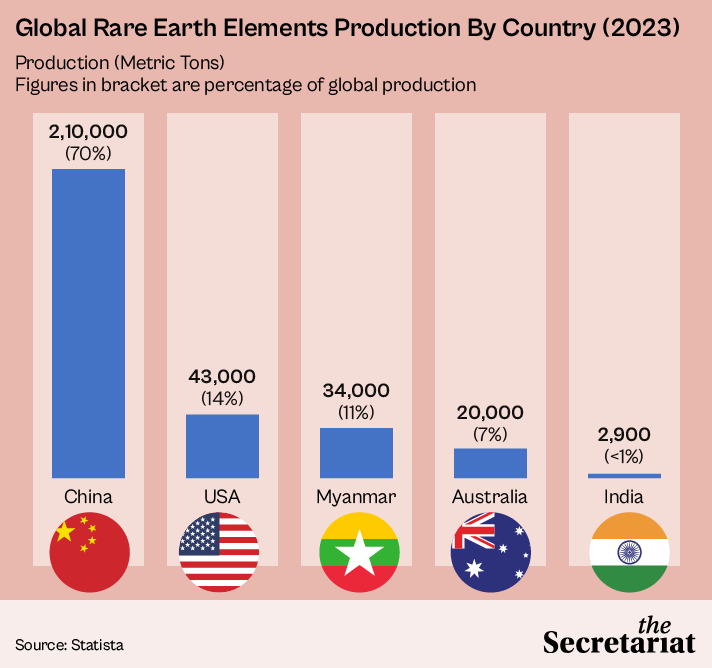
Big picture: global demand for key energy minerals has surged in recent years. Lithium demand alone jumped nearly 30% in 2024, far above the 10% annual growth seen in the 2010s.
China dominates refining for 19 of the 20 most critical minerals, holding an average 70% global share. Many of these minerals are now more volatile than oil, reflecting fragile supply chains.
Amid this, Coal India’s entry into critical minerals marks a strategic move toward self-reliance in resources that will power India’s clean energy and technology future.
3. Two gas giants ink pact for clean energy push 🌱
Oil India and Mahanagar Gas have signed a deal to explore joint opportunities across the Liquefied Natural Gas (LNG) value chain and emerging clean energy sectors.
The LNG value chain covers everything from producing and liquefying natural gas to transporting and using it, while emerging clean energy sectors include solar, wind, biofuels, and green hydrogen.
The deets: the partnership will study how practical and profitable it is to use LNG in heavy vehicles along with new clean energy projects.
The move will help Oil India accelerate the use of cleaner fuels in long-distance transportation. It will enable companies to shift to greener logistics and reduce their overall pollution footprint.
The why: the partnership comes as both companies strengthen their foothold in the natural gas sector. Oil India is ramping up gas production while pushing ahead with its clean energy roadmap.
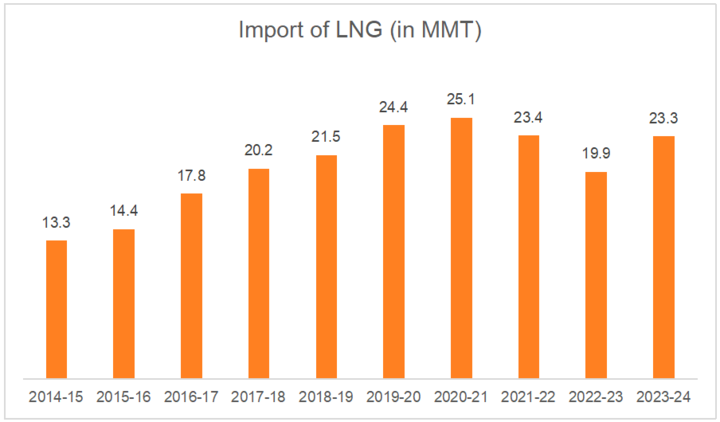
Big theme: India’s natural gas demand is projected to rise nearly 60% by 2030, bringing it closer to some of the world’s biggest energy consumers.
Already the third-largest oil consumer and importer and the fourth-largest LNG importer, India is working to balance its rapid growth with sustainable energy goals.
4. AI fleet startup Intangles raises $30 million 💸
Intangles has raised $30 million in Series B funding led by Avataar Venture Partners.
Intangles uses AI and IoT to help vehicle makers and fleet owners predict issues early, suggest repairs, and keep vehicles running efficiently.
What’s brewing: the funds will be used to scale the technology, expand into new geographies, boost predictive AI models, and grow the team.
It manages over 4 lakh vehicles across logistics, mining, construction, and transport. Its clients, big vehicle makers and fleet owners across North America, Europe, Asia, and the Middle East, save up to $10,000 per vehicle every year on maintenance.
5. Stocks that kept us interested
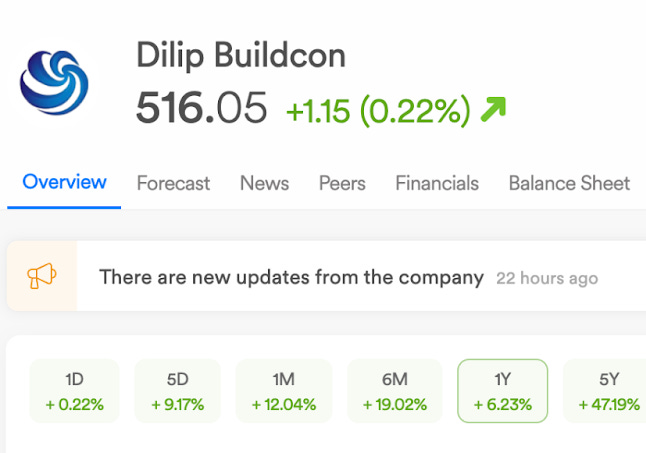
1. Dilip Buildcon bags 100 MW solar project in MP ☀️
Dilip Buildcon shares rose nearly 3% intraday on Tuesday after the company bagged a Letter of Acceptance (LoA) for developing a 100 MW solar PV power project in Madhya Pradesh.
A 100 MW solar PV power project means a large solar plant that can generate enough electricity to power around 1.5-2 lakh homes using sunlight.
Why it matters: this project marks the company’s first major step into renewable energy, signalling a strategic shift from highways and water grids to clean power.
It also helps the company align with the government’s 500 GW renewable target by 2030.
Zoom out: India has already crossed 80 GW of installed solar capacity and is targeting 280 GW by 2030 as part of its clean energy mission.
States like Madhya Pradesh, Rajasthan, and Gujarat have become solar hotspots, attracting billions in investments for large-scale projects. With falling panel costs & policy support, solar power is quickly becoming the backbone of India’s renewable energy push.
2. Gabriel India, Korean SK Enmove form lubricants joint venture 🛢️
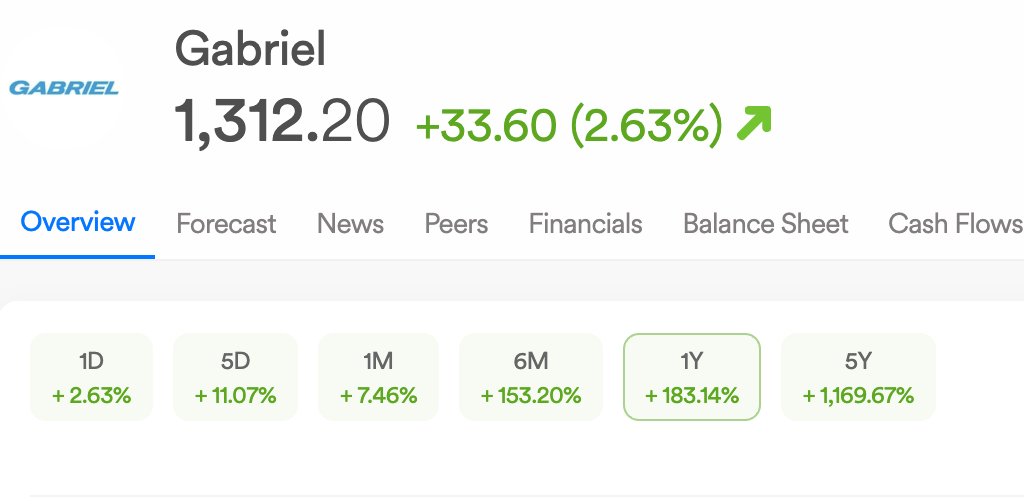
Gabriel India shares jumped nearly 3% after the company announced a joint venture with South Korea’s SK Enmove to enter the engine oil and industrial lubricants business.
Gabriel, best known for its vehicle suspension systems, is now stepping into the world of engine oils, greases, and EV fluids with a new global partner.
Meanwhile, SK Enmove is a South Korean company that makes high-performance lubricants, engine oils, and specialty fluids for vehicles and industrial machinery.
The why: for Gabriel, this marks the first big step in its diversification plan announced earlier this year. This is a pivot from being just a suspension maker to a technology-driven mobility solutions provider.
Zoom out: India’s lubricants and industrial fluids market is booming, estimated at over ₹35,000 crore and growing at 4-5% annually, powered by rising vehicle ownership, rapid industrialisation, and the EV transition.
Global brands like Castrol, Gulf Oil, and Valvoline dominate today, but demand for EV-ready fluids and thermal solutions is opening doors for new entrants.
What else are we snackin’ 🍿
🎬 Mega deal: LTIMindtree won its biggest multi-year digital transformation contract with a global entertainment major.
💹 Wealth move: IPO-bound Groww completes Fisdom acquisition after SEBI nod, posting ₹1,819 crore profit and 31% revenue growth in FY25.
📱Subscriber shift: BSNL gained 13.8 lakh users in August, leading the pack, while Vi kept losing subscribers, says TRAI.
That’s a wrap! Don’t let the weekday blues get to you.
And if you’d like to place your brand on this newsletter, let us know.
Hit that 💚 if you liked this issue.