
 Newsletter
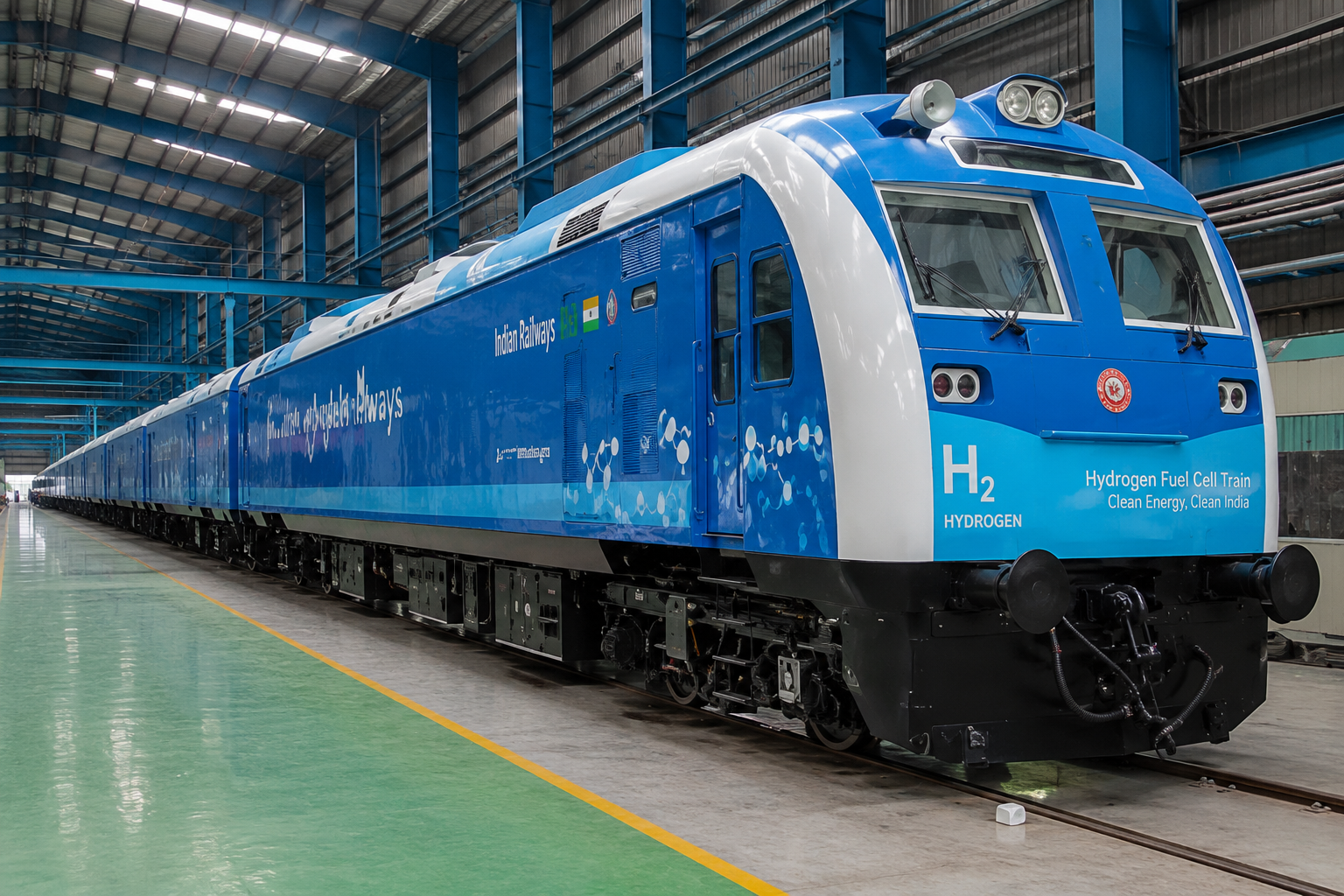
Indian Railways has launched the country's first indigenous hydrogen-powered train, with Prime Minister Narendra Modi flagging off the service from Jind Railway Station in Haryana.
🚄 Powered by clean energy and driven by innovation, Bharat's first Hydrogen Train reflects the country's commitment to sustainable mobility and world-class railway infrastructure. pic.twitter.com/jb0jWOPZuO
— Ashwini Vaishnaw (@AshwiniVaishnaw) July 17, 2026
Let's understand why this matters.
This train generates its own electricity on board. It doesn't run on diesel, and unlike electric trains, it doesn't need overhead power lines. Instead, it runs on hydrogen.
With this launch, India joins a small group of countries, including Germany, Japan, China and the US, that operate hydrogen-powered trains.
The train will run on the Jind-Sonipat route in Haryana, connecting stations such as Jind Junction, Gohana Junction and Sonipat, along with several smaller stops in between.
It is a 10-coach train powered by a 1,200 kW hydrogen fuel cell system, approved to operate at 75 kmph with a design speed of 110 kmph, and can carry around 2,600 passengers.
To support it, Indian Railways has also built the country's largest hydrogen refuelling facility for railways at Jind. The station can store around 3,000 kilograms of hydrogen and refuel both power cars at the same time.
How does this work: think about how trains have worked over the years. Steam trains burn coal. Diesel trains burn diesel. Electric trains don't burn fuel directly, but they still rely on electricity supplied through overhead wires.
A hydrogen train works differently. Instead of carrying fuel to burn, it carries hydrogen gas. Inside the train is something called a fuel cell, which acts like a mini power plant.
Here's the simplest way to think about it.
Remember learning that water is H₂O? Two hydrogen atoms and one oxygen atom. A hydrogen train reverses that idea. It takes hydrogen stored inside the train and combines it with oxygen from the air.
When those two come together inside the fuel cell, they create electricity. That electricity powers the train's motors. And the only thing left behind? Water vapour and a little heat. No smoke. No diesel fumes. No carbon emissions coming out of the train.
Why is hydrogen exciting: Hydrogen packs a surprising amount of energy. One kilogram of hydrogen contains around 120 MJ of energy, compared to roughly 43 MJ for diesel. That means it stores much more energy for its weight while producing only water as a by-product.
It also has fewer moving mechanical parts than a diesel engine, which could mean lower maintenance over time.
Why is this a big deal: most hydrogen trains around the world are relatively small. They usually have two or three coaches and operate on short regional routes carrying a few hundred passengers.
India's version is much larger. This is a 10-coach trainset capable of carrying around 2,600 passengers, making it one of the largest hydrogen train projects in the world.
It has two power cars, one at each end, which store the hydrogen tanks and fuel cells, while the eight coaches in between are for passengers. Even more importantly, it has been built in India.
The coaches were manufactured at the Integral Coach Factory (ICF) in Chennai, marking another step in India's push towards indigenous manufacturing.
Every good thing has a catch.
Hydrogen may be clean to use, but producing it isn't always clean. To make hydrogen, you first have to separate it from water using electricity, a process called electrolysis.
If that electricity comes from coal-fired power plants, the pollution hasn't disappeared. It's simply shifted somewhere else. Hydrogen only becomes truly "green" when it's produced using renewable energy like solar or wind power.
India is investing heavily in green hydrogen, but that transition is still underway. There's another challenge too: cost. Hydrogen fuel cells, storage tanks and refuelling infrastructure are still expensive.
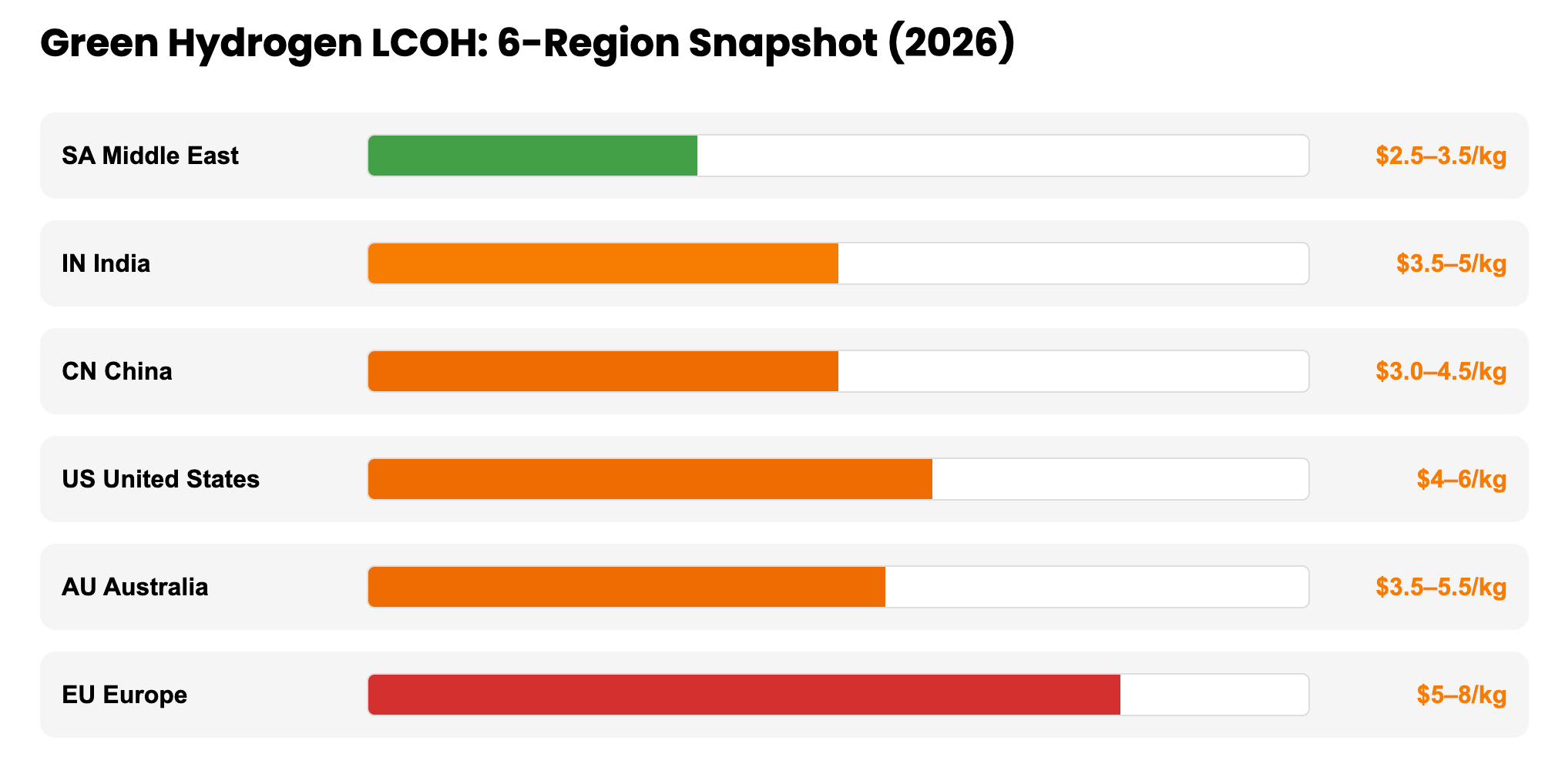
Today, producing hydrogen costs roughly:
- Grey hydrogen: $1.5-2.5/kg (made using natural gas)
- Blue hydrogen: $2-3.5/kg (natural gas with carbon capture)
- Green hydrogen: $3.5-6/kg (using renewable electricity)
In India, the estimated cost of green hydrogen was around $3.5-5 per kilogram in 2024, according to CEEW. That means hydrogen trains are currently more expensive than conventional diesel trains.
So, is this the future?
Not immediately. Hydrogen trains won't replace every train overnight. They're still costly, and India needs much more renewable energy before green hydrogen becomes widely affordable.
But this launch is about something bigger than one train. It's India testing a cleaner technology that could one day power trains without diesel, without overhead wires, and with far lower emissions.
Whether hydrogen becomes the future of railways is still uncertain. But India's first step has officially left the station.