

 Newsletter
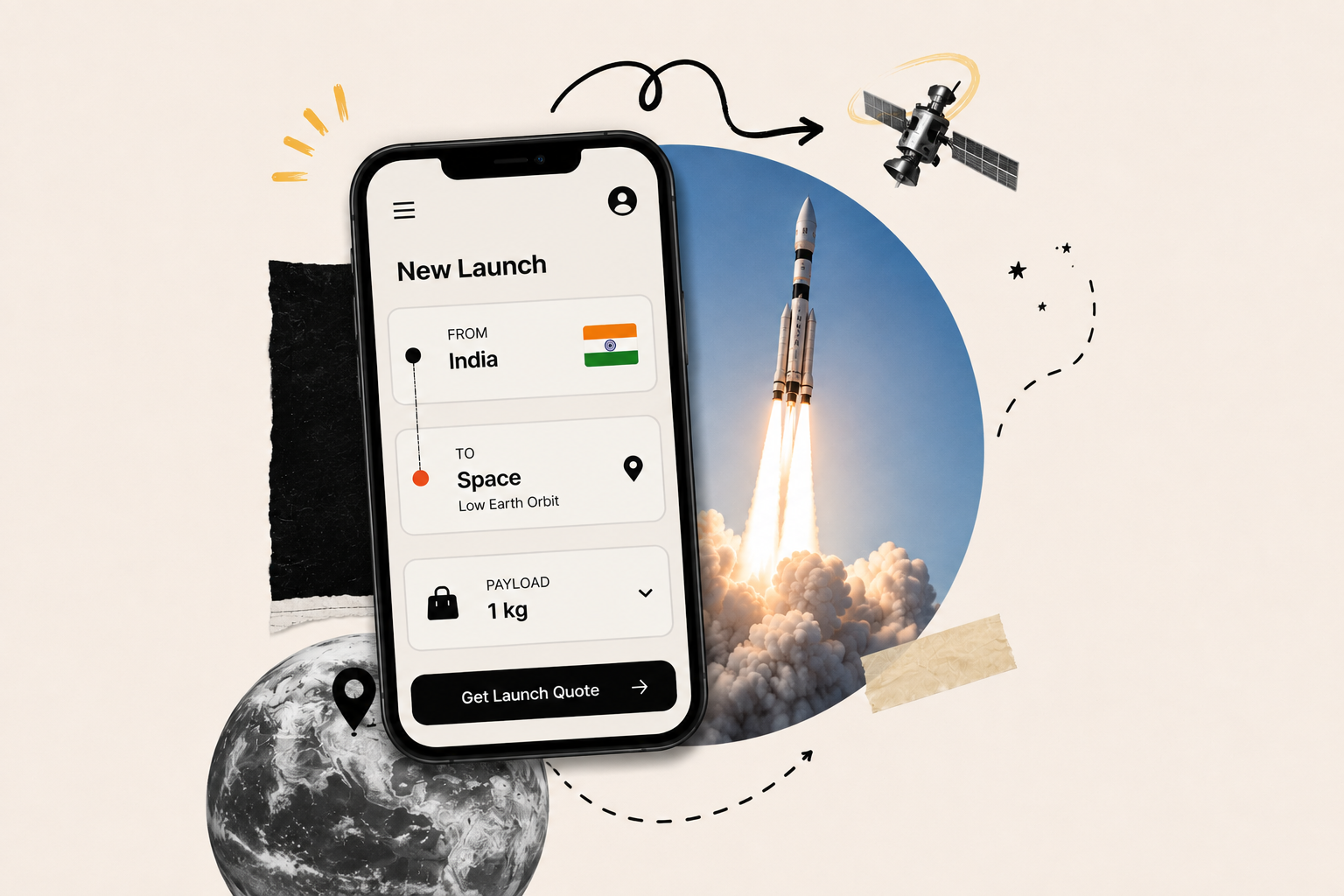
India has somehow managed to make space look cheap.
We sent a mission to Mars for less than the cost of a Hollywood movie, landed on the Moon’s south pole and built a reputation for doing things other countries spend far more money on. So there’s something oddly uncomfortable about this: when it comes to launching something into space, India may not be as cheap as we think.
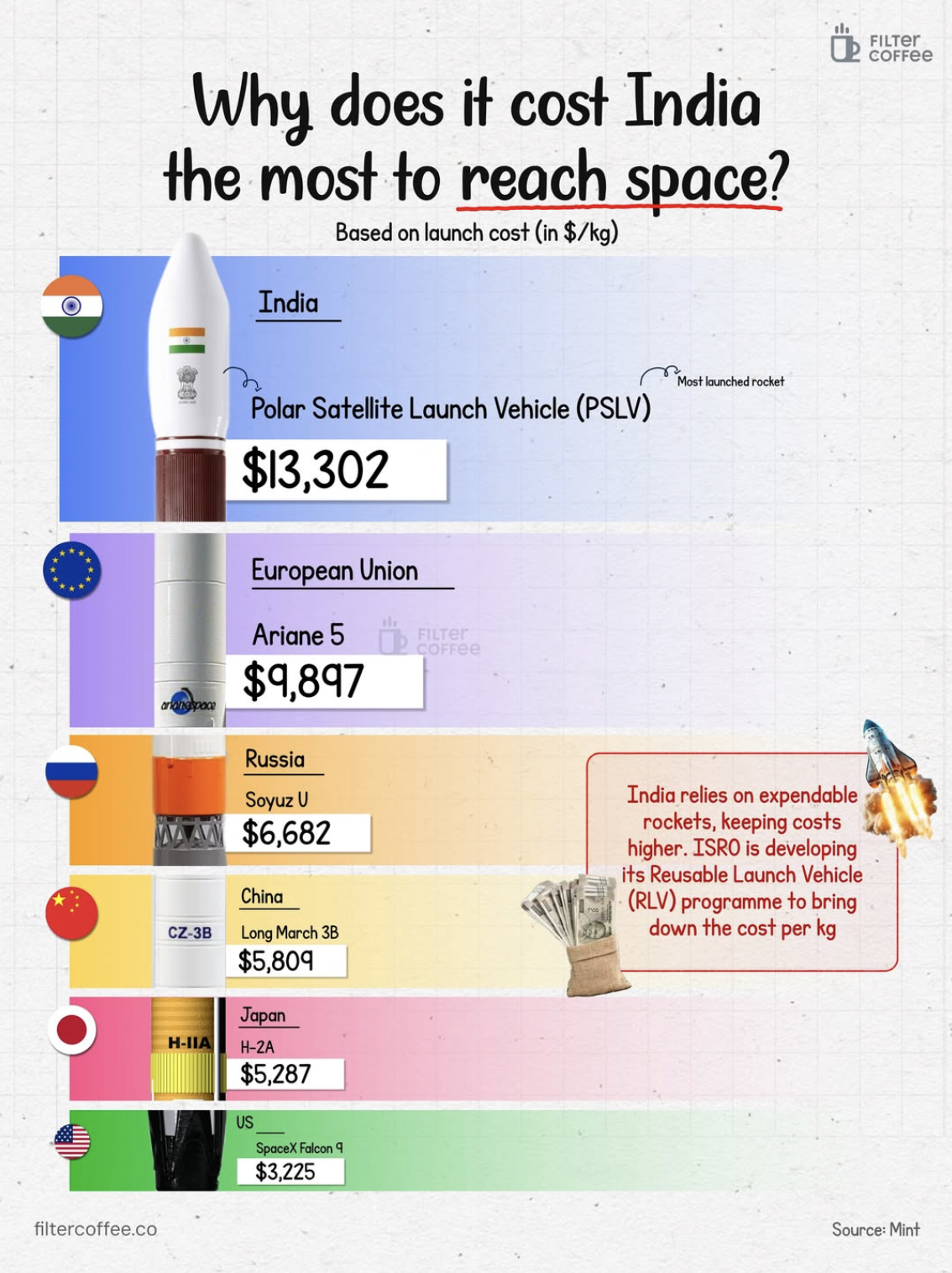
A 2026 study by researchers from the University of Cambridge and Politecnico di Torino estimates that putting 1 kg of payload into low Earth orbit from India cost about $13,302 in 2025. For the US, the estimate was $3,225. China came in at $5,809 and Japan at $5,287.
There’s an important qualifier here. The Department of Space has pushed back on the study, saying its calculations don't account for several factors in India’s launch ecosystem. So $13,302 isn't a price tag that ISRO puts on every kilogram it sends into orbit. It’s an estimate of what those launches cost economically.
Still, the comparison raises a fair question: why is the gap so large?
Part of the answer comes down to how often rockets fly and how much they carry. Building and launching a rocket involves a lot of costs that don't change much whether it carries 500 kg or several tonnes. If you fly less often and carry less, each kilogram ends up carrying a larger share of the bill.
That’s where the Indian space industry is changing.
Until recently, if you thought about an Indian rocket, you probably thought about ISRO. Now there are private companies building rockets, satellites and other space technology. The sector was opened up to private players in 2020. By early 2026, India had more than 400 space-tech startups working across areas such as launch vehicles, satellites, propulsion and space-grade electronics.
In July, Skyroot Aerospace added another milestone. Its Vikram-1 became the first privately developed Indian orbital rocket to successfully launch from Indian soil, carrying multiple payloads into low Earth orbit.
ISRO is also working on reusable launch technology. The thinking is fairly straightforward: if you can bring a rocket or parts of it back and use them again, you don't have to start from scratch for every launch. Over time, that can make frequent launches far more economical.
There is plenty riding on this. The government puts India's space economy at around $8.4 billion in 2023 and wants it to reach $44 billion by 2033.
That will need more than successful missions. Sending a rocket into orbit once is one thing. Having rockets fly regularly, companies compete for customers and launch prices fall is another. India has already shown that it can reach space without spending like the world's biggest space powers.
Now it needs to make going there affordable enough to become a business.