
 Newsletter

The next time you see someone making a Reel, look beyond the person on your screen. There’s a whole industry making money from that attention, and some of those businesses are already listed on the stock market.
The easiest way to understand this is to think about what happens after a creator hits “post”.
The content needs somewhere to live. Platforms such as YouTube, Instagram and Spotify bring creators and audiences together, while streaming platforms turn that attention into subscriptions, advertising and data. They decide what gets recommended, help brands reach specific audiences and, in many cases, share part of the revenue with the people creating the content.
Then there’s everything built around that content.
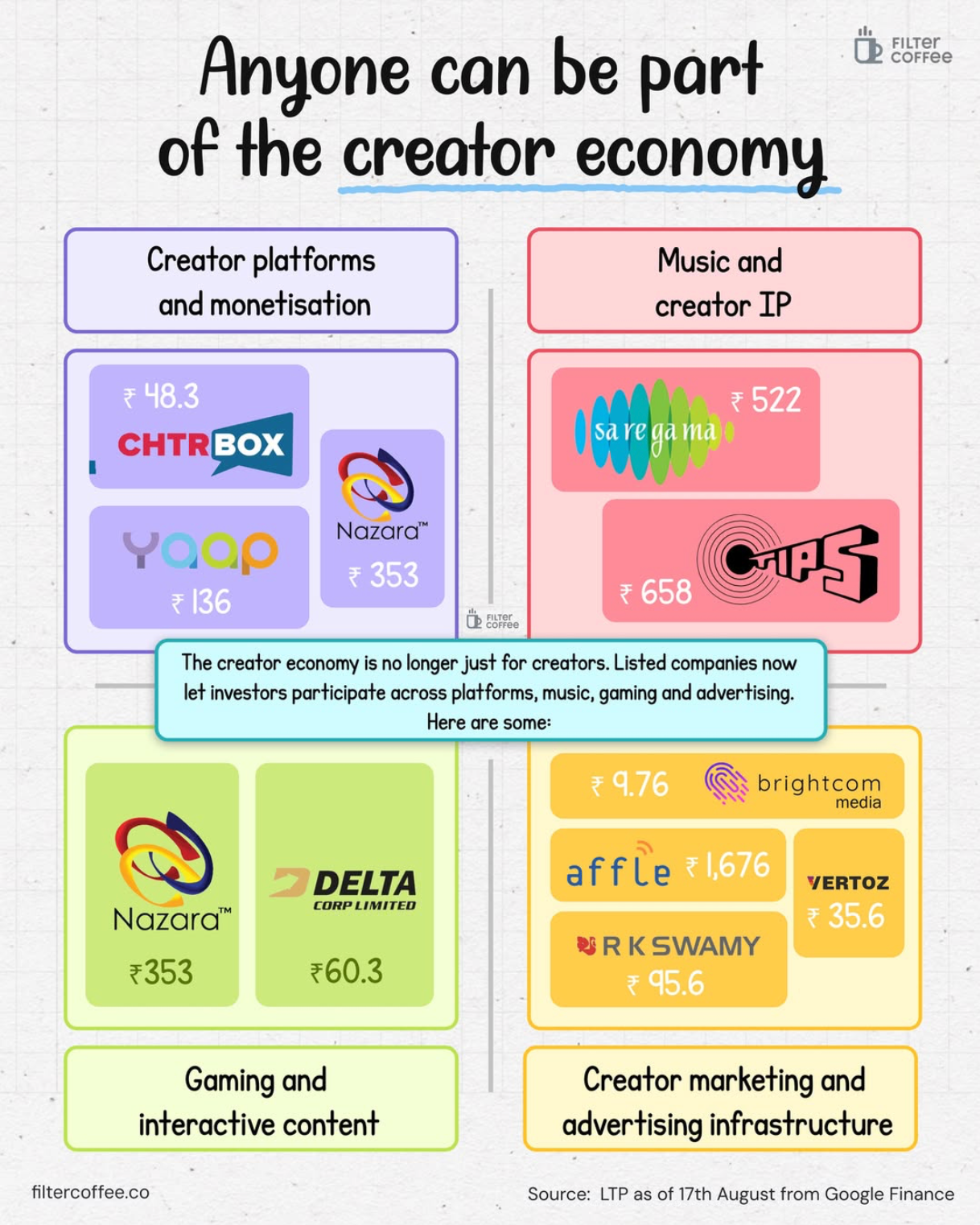
A song uploaded by an artist can generate money through streaming, licensing and advertising. A gaming creator can drive downloads, sponsorships and in-game spending. A popular video can become an advertising opportunity. A creator can turn an audience into a community, and that community can eventually become customers.
This is where the stock market gets interesting.
Nazara Technologies gives investors exposure to gaming and interactive content. Saregama and Tips Music own music catalogues and intellectual property that can earn money every time that content is used. Companies such as Affle, Brightcom Media, Vertoz and R K Swamy operate on the advertising and marketing side, helping brands find and monetise audiences.
Even the government is trying to build the industry around this. Its focus on animation, visual effects, gaming and comics, along with initiatives such as MyWAVES, shows that digital content is increasingly being treated as an industry rather than just entertainment.
For consumers, it may look like we’re simply watching a video, listening to a song or following a creator.
Behind that screen is an entire chain of businesses trying to make money from the same thing: our attention.
And that’s what makes the creator economy far bigger than influencers alone.