

 Newsletter


Hollywood has a new entertainment giant, and it comes with an enormous debt bill.
On 6 October, Paramount completed its acquisition of Warner Bros. Discovery in a deal valued at approximately $110 billion, including debt. The combined company, now called Skydance, brings HBO, CNN, CBS, Warner Bros. and Paramount under one roof.
That means Harry Potter, Game of Thrones, Mission: Impossible and SpongeBob SquarePants now belong to the same entertainment empire. David Ellison, the son of Oracle co-founder Larry Ellison, is running it.
But owning some of Hollywood's biggest franchises comes at a price. The new company has more than 53,000 employees and an estimated $84 billion in net debt. Management now wants to find at least $6 billion in annual savings within three years.
The pressure is already worrying employees, who fear the savings could mean restructuring and job losses. No company-wide layoff figure has been confirmed.
To understand why Skydance is taking on such a challenge, we need to look at what's happening to Hollywood's business.
For decades, television networks made money through advertising and fees paid by cable operators. Popular channels attracted viewers, advertisers paid to reach them, and cable subscriptions provided a relatively steady income.
Then streaming changed how people watched entertainment.
Netflix, Disney+ and other platforms gave viewers the freedom to watch shows without paying for traditional cable packages. Studios responded by launching their own streaming services and spending billions on exclusive content.
But replacing cable television revenue hasn't been easy.
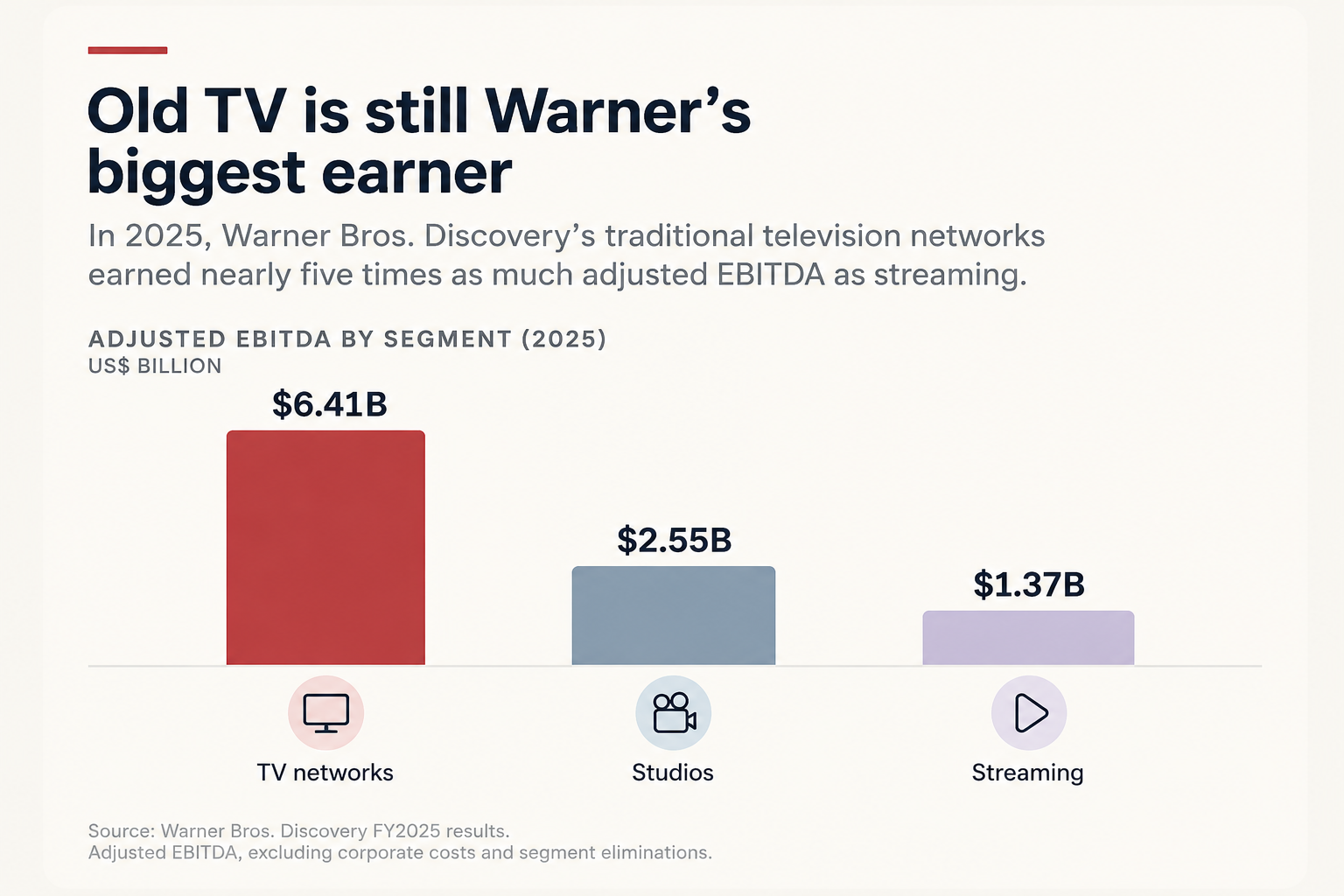
Consider Warner Bros. Discovery. In 2025, its traditional television networks generated $6.4 billion in adjusted operating earnings, compared with just $1.37 billion from streaming. Yet television network revenue had fallen 12% that year, while the networks' earnings declined 21%.
In other words, Warner was still earning much of its money from a business that was losing customers.
Paramount faced similar pressures. Combining the two gives Skydance a larger content library, more negotiating power and opportunities to eliminate overlapping expenses. It also gives the company a much bigger financial burden.
To finance the acquisition, Paramount arranged $47 billion in new equity funding and $39 billion in new debt financing. The group ultimately emerged with an estimated $89.3 billion in gross debt, according to credit research firm Debtwire.
Now comes the cost-cutting.
Skydance plans to save money by combining technology systems, negotiating better supplier contracts, reducing overlapping corporate expenses and consolidating office space.
It also intends to bring HBO Max and Paramount+ together into a single streaming service over time. Running one technology platform could reduce expenses, while a larger content library might help attract and retain subscribers.
But integrating two enormous businesses takes money and time. And although management says savings will primarily come from areas such as technology and procurement, employees remain concerned about redundancies.
There's another complication.
Skydance cannot simply reduce film production to save money.
Before approving the merger, regulators from 12 American states secured a settlement requiring the company to release at least 30 films annually for the first two years and 32 annually for the following three years.
It must also spend an additional $1.5 billion on US film production over five years. Missing its film commitments could trigger penalties of $30 million per film and potentially force it to sell Miramax.
The conditions address concerns that combining two major studios could leave filmmakers with fewer buyers for their projects and reduce the number of films reaching cinemas.
So Skydance needs to cut expenses while maintaining a substantial production pipeline.
And even if it achieves those savings, its debt problem might not disappear quickly.
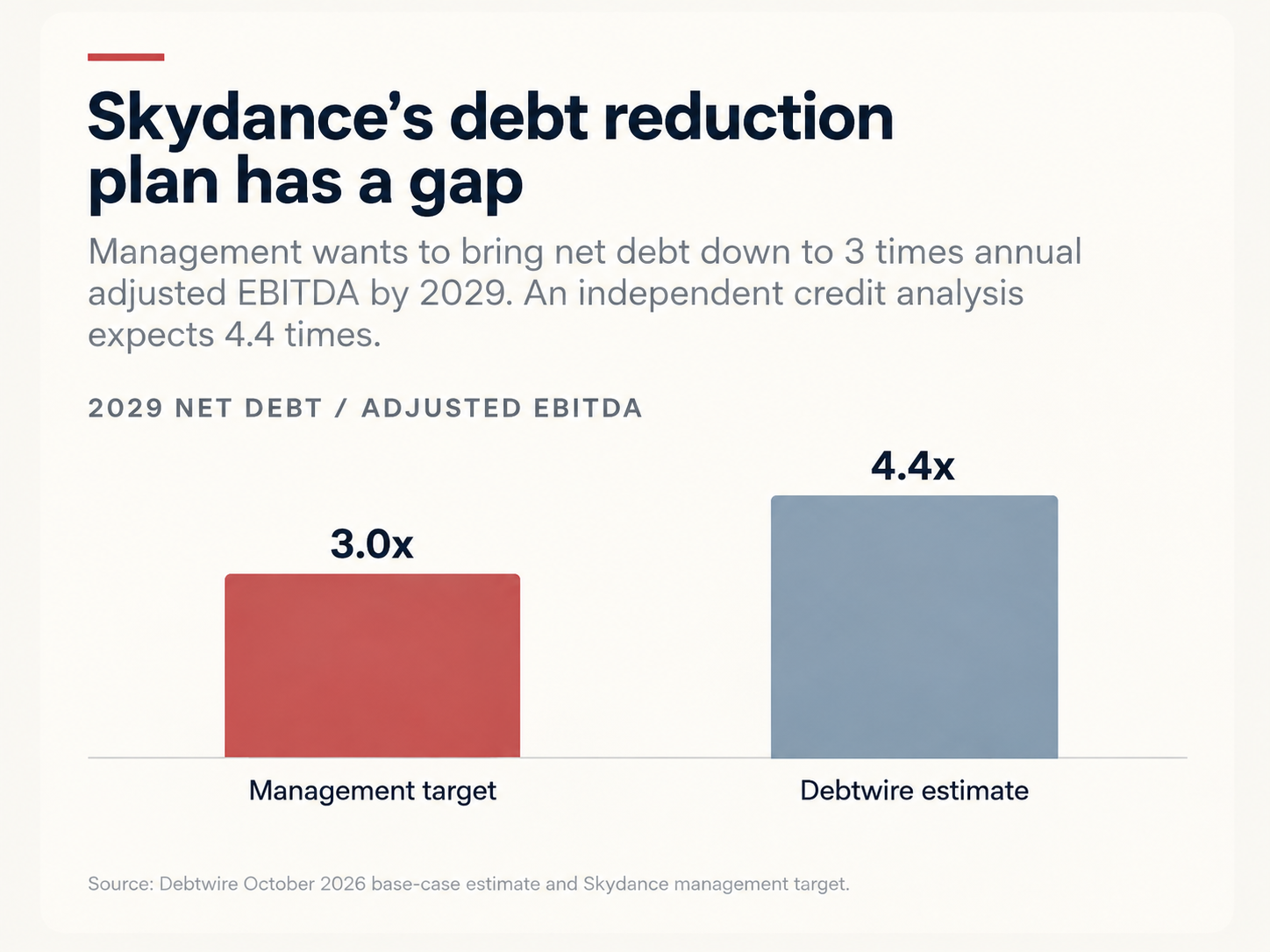
Management wants to bring net debt down to approximately three times its annual adjusted operating earnings by the end of 2029. But Debtwire estimates that ratio could remain at 4.4 times under its base-case forecast, even after accounting for substantial savings and business growth.
That doesn't mean Skydance is headed for financial trouble. Its franchises, streaming services and television businesses generate significant revenue, and the merger offers genuine opportunities to reduce costs.
But Hollywood has seen this strategy before. WarnerMedia and Discovery merged in 2022 with promises of billions in savings. Four years later, the combined business has become part of another, even larger merger.
Skydance now has to prove that bringing two entertainment giants together can deliver enough earnings and cash to support its ambitions, rather than simply creating a larger company with larger bills.
Sources
- Skydance: Official merger announcement, deal details and $6 billion savings target.
- The Guardian: Employee concerns, restructuring and the combined company's debt.
- Warner Bros. Discovery Annual Report: 2025 television, studio and streaming financial performance.
- Debtwire: Debt estimates, financial projections and the gap in Skydance's leverage-reduction plan.
- California Department of Justice: Regulatory settlement, minimum film releases, production spending and penalties.


