

 Newsletter

If gold is the metal that headlines every economic crisis, aluminum is the one silently holding up the modern world.
You won’t see people stacking aluminum bars in vaults or boasting about aluminum jewelry, but look around: your phone, your car, your laptop, the foil wrapping your snack; all of it has a bit of this grey metal in it. And right now, aluminum is having a serious moment. It’s trading near a three-year high, around $2,900 per ton. That puts it in the top 5% of prices since 1990, which is wild for a metal that was once more expensive than silver.
Fast forward a century and it’s now the lifeblood of industrial life. You can’t make aircrafts, smartphones, or EVs without it. It’s used in packaging, construction, energy transmission, and, increasingly, in replacing copper where possible because copper is getting too expensive.
The global aluminum market is worth around $300 billion a year; bigger than any other non-ferrous metal. But there’s a twist. Aluminum might be abundant in nature, but refining it is ridiculously power-hungry. It takes as much electricity to make one ton of aluminum as five German homes consume in a year. No wonder it’s called “solid electricity.”
That’s why aluminum production depends on one thing more than anything else: cheap energy. And that’s where China changed the game. Over the last 25 years, China turned itself into the world’s aluminum powerhouse by pairing its massive industrial base with cheap, coal-powered electricity.
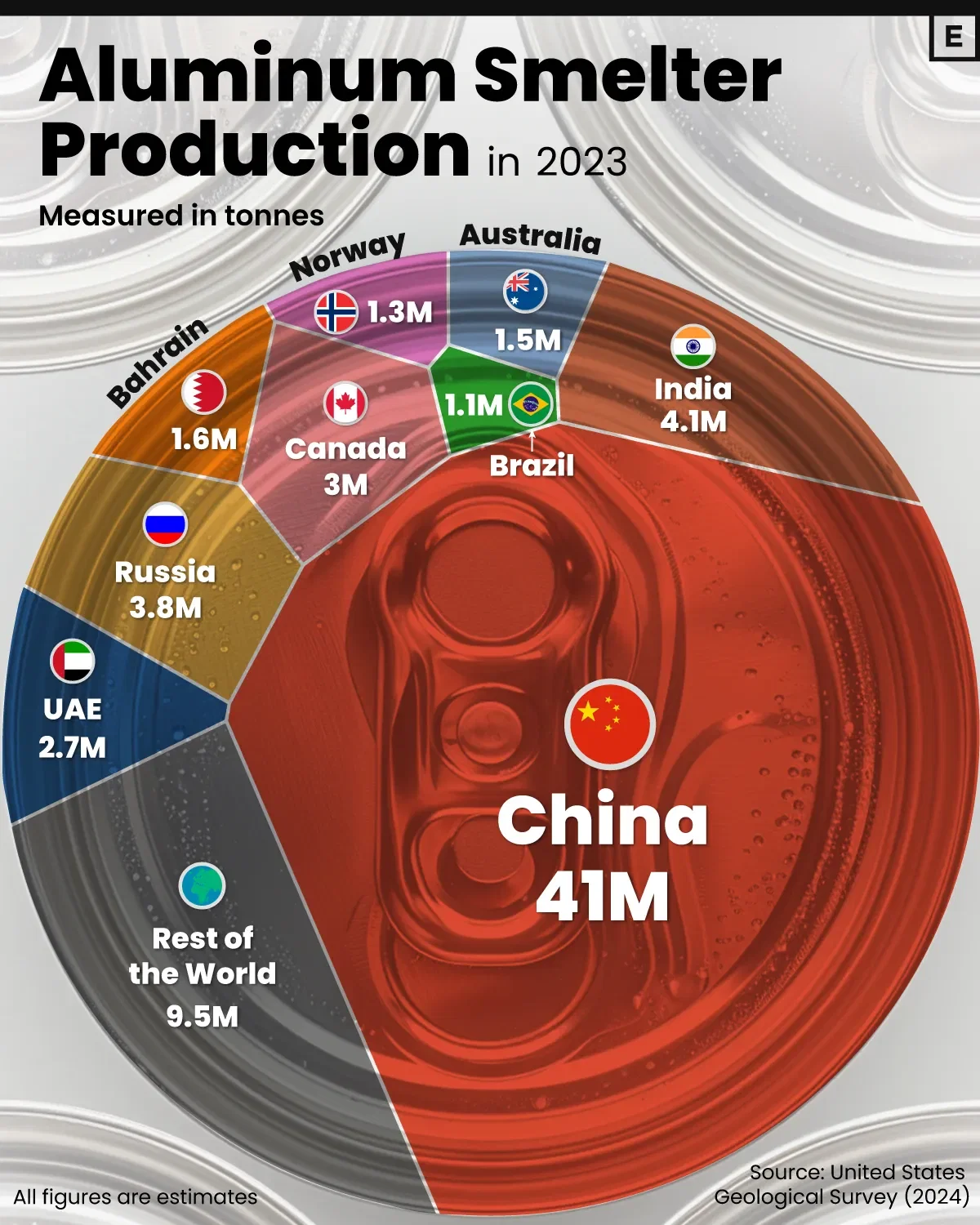
Back in the late 90s, China made around 6 million tons of aluminum a year. Today, it produces over 43 million tons; nearly 60% of global supply.
It’s insane how quickly that happened.
But now, China has hit a wall. In 2017, its government capped total aluminum output at 45 million tons to control pollution and cut energy use. In 2025, production is bumping right up against that ceiling. No more easy expansion.
So, the world’s biggest aluminum maker can’t make more. Meanwhile, demand keeps growing by around 2–3 million tons every year; thanks to EVs, renewable energy infrastructure, and just, well, everything.
You’d think other regions would step up, but Europe’s producers are actually cutting back. Why? Because electricity prices there are sky-high. Running a smelter without cheap power is basically like trying to mine Bitcoin with a toaster. Even with aluminum prices high, many European plants are shutting down as their long-term power contracts expire. And since global inventories are near historic lows, the squeeze is getting real.
This has left the aluminum market split into two camps. The bulls think we’re heading straight into a supply crunch that’ll push prices toward $4,000 a ton. The bears believe China will find a way around its own limits and keep the world supplied, pushing prices lower. And both camps might be right, in a way.
Because China’s already finding workarounds, outside its borders.
The next chapter of aluminum is being written in Indonesia. It’s the same story we saw with nickel a decade ago. When Indonesia banned nickel ore exports in 2014, Chinese companies flooded in to build processing plants locally, making Indonesia one of the world’s biggest nickel producers. Now, they’re doing it again; but with aluminum.
Chinese companies like Tsingshan, Hongqiao, and Nanshan are setting up massive smelters across Indonesia’s islands. Why Indonesia? Because it’s got cheap coal, low-cost labour, and plenty of bauxite (the raw material for aluminum). Add to that a government happy to fast-track industrial projects and fewer restrictions on emissions, and you’ve got the perfect playground for expansion.
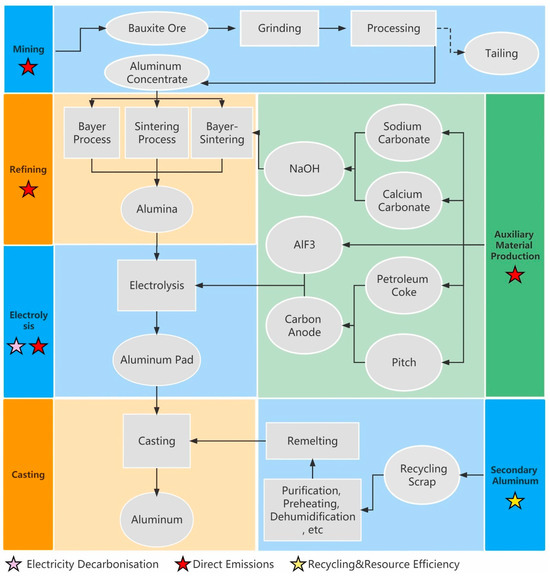
If all these new smelters go live, Indonesia’s aluminum output could increase fivefold by 2030, making it the fourth-largest producer globally; after China, India, and Russia. That would keep the world supplied for a while. But it’s not all smooth sailing.
For one, building smelters in Indonesia costs more than in China. The logistics, infrastructure, and reliability of power are still catching up. And unlike the nickel revolution, there’s no breakthrough technology here to make aluminum production drastically cheaper or cleaner.
So yes, Indonesia might become an important player, but it can’t fully replace China’s role just yet. That’s why the real suspense is in Beijing’s next move. China could “creatively” bend the rules by allowing smelters using green energy like hydropower to expand beyond the current limit.
Or it might quietly let existing plants boost capacity under the radar by ramping up efficiency. Either way, expect some clever accounting and political maneuvering.
Here’s the dilemma: if China doesn’t increase output, the world faces a supply crunch, driving prices up and making everything from EVs to packaging more expensive. But if China does lift its cap, we become even more reliant on Chinese-controlled production, either within China or via its overseas ventures in Indonesia and even Africa (where Chinese firms are also building aluminum smelters in Angola using hydropower).
In other words, we’re stuck choosing between expensive aluminum and more dependence on China. There’s probably a middle ground: prices rise moderately, supply grows a bit, but no one’s fully satisfied. That seems the most likely outcome.
Here’s the ironic part: aluminum is one of the most recycled materials on Earth. About 75% of all aluminum ever produced is still in use today because it’s infinitely recyclable. Producing recycled aluminum uses just 5% of the energy needed for new metal. If there’s ever been a poster child for circular economy, this is it. And yet, the world keeps pushing for new smelters because recycled supply just isn’t enough to meet growing demand.
We’re consuming faster than we can recover.
There’s also a geopolitical layer. The West loves talking about reducing dependence on China for critical materials, but when it comes to aluminum, that’s easier said than done. Building new smelters in Europe or North America is nearly impossible because electricity is expensive, environmental approvals take forever, and local opposition is strong. So even if Western leaders talk about “de-risking” supply chains, in practice, they’re still buying aluminum that’s either made in China or by Chinese companies overseas.
And don’t forget the climate angle. Aluminum smelting is one of the most carbon-intensive industrial processes out there. If it were a country, global aluminum production would be among the top emitters. So as countries try to hit their net-zero goals, they’re in a bind—how do you electrify the world (which needs more aluminum) without increasing carbon emissions from making it? That’s why there’s so much interest in “green aluminum,” produced using renewable power. Norway, Canada, and Iceland are early leaders here thanks to hydropower. But their combined production barely makes a dent in global demand.
Meanwhile, China’s smelters are still largely powered by coal. And Indonesia’s new plants? Same story: mostly coal-fed. So even if the world’s aluminum needs are met, it’ll come with a heavier carbon footprint.
The result is a weird paradox. Aluminum is essential for the clean-energy transition used in EVs, solar panels, and wind turbines but making it is anything but clean. The world’s trying to green its energy future using one of the dirtiest supply chains around.
What happens next depends on a few key triggers: whether China lifts its production cap, how fast Indonesia’s new capacity ramps up, and whether Western producers can revive their smelters using renewable energy. If prices keep climbing, recycling rates might rise too, giving the market some breathing room.
But for now, aluminum is the quiet giant of the commodity world: everywhere, essential, and yet, oddly under-discussed. While gold headlines every financial panic and copper gets all the buzz in the EV boom, aluminum just works behind the scenes, holding the economy together one soda can, one airplane wing, and one iPhone frame at a time.
The irony? It might just be aluminum and not gold that decides the next big chapter of global trade and energy politics. Because as demand keeps rising, and China keeps calling the shots, the rest of the world may find itself paying more for a metal that’s everywhere but controlled by a few.
FAQs
Why is aluminum suddenly becoming so important in 2025?
Aluminum is essential for modern industries like EVs, smartphones, packaging, and renewable energy. With global prices touching a three-year high near $2,900 per ton, it’s become the backbone of the world’s electrification and clean energy push.
What is causing the aluminum price rise in 2025?
Prices are rising because global demand is growing while supply is tightening. China, which produces about 60% of the world’s aluminum, has hit its production cap. Meanwhile, European smelters are shutting down due to expensive electricity, leading to supply shortages.
How much aluminum does China produce?
China currently produces around 43 million tons of aluminum every year, nearly 60% of the world’s total supply. However, production is capped at 45 million tons under government policy, limiting future growth.
Why is aluminum called “solid electricity”?
Aluminum earns that nickname because making it requires huge amounts of power. Producing one ton of aluminum uses as much electricity as five German homes consume in a year.
How is Indonesia becoming a major aluminum hub?
Chinese companies like Tsingshan, Hongqiao, and Nanshan are building aluminum smelters in Indonesia, which has cheap coal, labor, and raw materials. If all projects succeed, Indonesia could become the world’s fourth-largest aluminum producer by 2030.
What are the environmental concerns around aluminum production?
Aluminum smelting is highly carbon-intensive, especially in countries that rely on coal. China and Indonesia’s coal-powered plants add to global emissions, even though aluminum is crucial for renewable energy infrastructure.
What is green aluminum, and why is it gaining attention?
Green aluminum is produced using renewable power sources like hydropower instead of coal. It emits far less carbon and is seen as key to balancing aluminum’s high environmental cost. Countries like Norway and Canada are leading this shift.
Is there a global aluminum shortage expected?
Analysts are divided. Bulls predict a supply shortage and prices near $4,000 per ton, while bears believe China’s overseas expansion, especially in Indonesia, will prevent a major shortfall. The reality might be a middle ground—moderately higher prices with limited supply growth.
Can recycled aluminum solve the global supply problem?
Recycling helps but can’t fully close the gap. Aluminum is one of the most recycled materials—about 75% of all aluminum ever made is still in use—but rising global demand far outpaces recycled supply.
How does aluminum affect the clean energy transition?
Aluminum is crucial for building EVs, solar panels, wind turbines, and power grids. But making it still relies heavily on fossil fuels, creating a paradox where a metal vital to green energy also adds to carbon emissions.