
 Newsletter

Everybody is talking about weight-loss injections these days.
From Hollywood celebrities to Indian fitness influencers, the name that keeps popping up is Ozempic. It was originally meant for Type 2 diabetes, but its “side effect” of double-digit weight loss has made it one of the hottest drugs on the planet. Last year alone, Ozempic and its sister brand Wegovy brought in $26 billion for Novo Nordisk, the Danish company that makes them.
But here’s the twist: the patents that protect these drugs are about to run out in key countries like India, Brazil, Canada and China starting 2026. And that expiry could set off a multi-billion-dollar scramble — with India right in the middle of the action.
Why is India so important in this story? Because India is the world’s pharmacy. From life-saving HIV medicines to affordable cancer drugs, Indian manufacturers dominate the global generics business. Once a drug goes off-patent, it’s Indian firms that usually step up to produce cheaper versions for global markets.
And this time, the stakes are huge. Analysts estimate that the global market for semaglutide, the active ingredient in Ozempic and Wegovy, could touch $94 billion by 2035.
For India’s pharma sector, this is nothing short of the next big gold rush.
Here are the key Indian pharmaceutical companies with publicly announced semaglutide manufacturing and launch plans for 2026:
Source: Company Announcements
Companies have already started preparing. Dr Reddy’s Laboratories has invested in a new peptide facility with capacity to make 550 kilograms of active ingredients every year. Granules India has floated a new unit, Ascelis Peptides, to specialise in this segment. Macleods is also positioning itself for entry.
Even smaller players are rushing in; a Surat-based manufacturer run by Vasu Jindal has started selling small batches of semaglutide to bigger generic firms for their R&D. He expects demand to shoot up from 10 kilograms this year to 240 kilograms annually from 2026, showing just how massive the appetite could be.
But it won’t be easy.
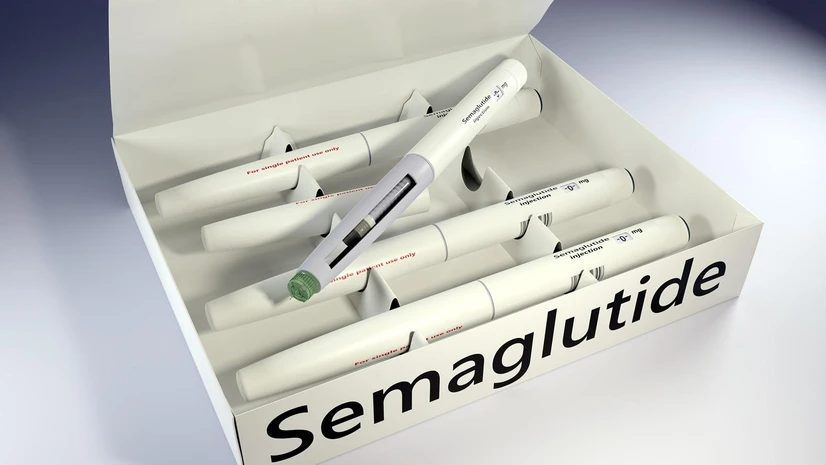
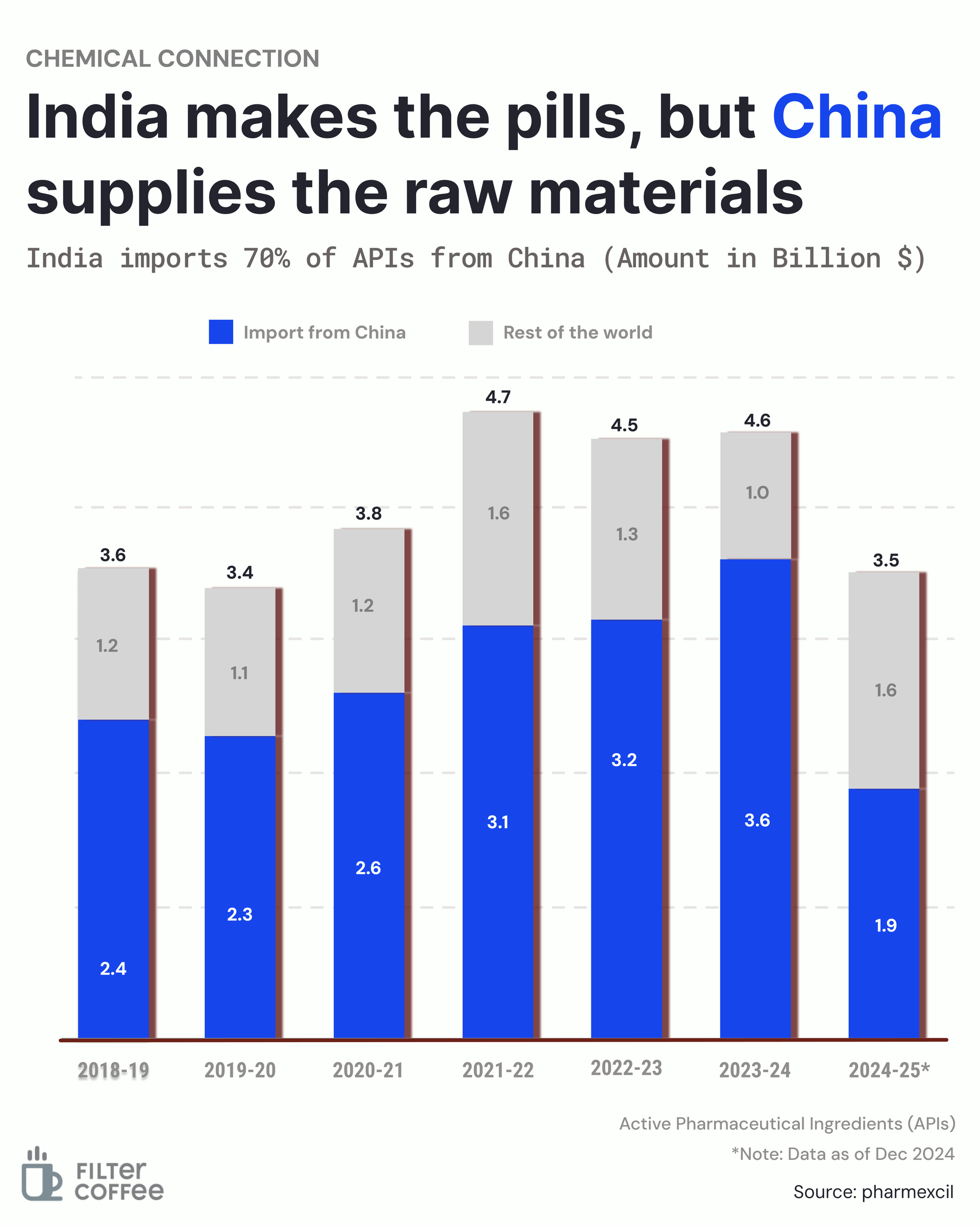
China controls around 80% of the world’s bulk drug supply chain. Even Indian companies rely on Chinese imports for key starting materials. And semaglutide isn’t a simple molecule — it’s a peptide, a complex chain of amino acids that’s much harder to replicate than your everyday painkiller or antibiotic.
Scaling up production requires advanced purification, reliable raw materials, and strict quality control. That’s why Indian players are moving early, betting that if they build capabilities now, they can hit the ground running once the patents lapse.
The Indian government’s policies could give them an extra push. Under the Production-Linked Incentive (PLI) scheme, domestic pharma manufacturers get support to build local capacity for APIs. That matters because one of the sector’s biggest weaknesses has been over-reliance on Chinese imports.
If India can secure its own supply chain for semaglutide, it won’t just serve the local market but also emerge as a trusted exporter at a time when global demand is exploding.
The opportunity isn’t just about making copies of injections. Over ten Indian companies have already filed requests to conduct late-stage trials for semaglutide in India, and interestingly, seven of them are focusing on oral formulations.
That means pills instead of injections; a way to stand out in a crowded market. Biocon has already tied up with Brazil’s Biomm to take its version international, showing how Indian firms are looking at not just domestic sales but also export opportunities in obesity-hit countries.
For patients in India, the patent expiry could be a turning point. Today, GLP-1 drugs like Ozempic or Wegovy cost tens of thousands of rupees per month, far beyond the reach of most. When generics arrive, prices will drop and access could widen dramatically. Obesity is a growing concern in India, with over 100 million adults classified as overweight or obese. Lower-cost options could bring weight-loss treatments into mainstream healthcare, especially in urban private markets where patients often pay out-of-pocket.
Also read: The Ozempic empire is wobbling. What happens if it falls?
Globally, too, the dynamics will shift. In price-sensitive countries like India and China, cheaper generics could explode demand. In Canada and parts of Europe, insurers may even consider reimbursing off-patent semaglutide at discounted rates. That would make it the first widely accessible anti-obesity drug in public health systems. At the same time, newer drugs like Eli Lilly’s Mounjaro and oral orforglipron will keep raising the bar, forcing generics to fight on cost and scale.
Of course, risks remain. With so many players entering, aggressive price wars could squeeze margins. Quality lapses or counterfeit products could damage trust, a real danger when millions are expected to use these drugs.
And if Chinese manufacturers flood the market with cheaper APIs, Indian firms will need to prove they can compete not just on price, but on reliability and global regulatory standards.
Still, the writing is clear. The 2026 expiry of Ozempic’s patents is more than a pharma milestone — it’s a global business event. And India, with its scale, experience, and ambition, is gearing up to play a starring role.
For the pharma industry, it could be the next big wave after HIV generics and Covid-19 vaccines. For patients, it might mean that the world’s most talked-about weight-loss drug is finally within reach.
Everybody is waiting for Ozempic’s patent to expire. For India, that wait could translate into one of the biggest opportunities in the country’s pharmaceutical story.
Also read: Ozempic is so big that India’s pharma giants want in
FAQs
What is Ozempic and why is it so popular?
Ozempic is a diabetes drug developed by Novo Nordisk that uses the active ingredient semaglutide. While originally approved for type 2 diabetes, its strong effect on weight loss made it hugely popular worldwide, with demand spreading from Hollywood celebrities to Indian fitness influencers.
When do Ozempic patents expire in India?
In India, patents on semaglutide are set to expire in 2026. Litigation is ongoing, but generic pharmaceutical companies are already preparing to launch their own versions once the patents lapse.
Why is India crucial to the global Ozempic story?
India is known as the “pharmacy of the world” because it dominates the global generics market. Once patents expire, Indian drugmakers typically lead in producing cheaper, high-quality versions for both domestic use and export markets.
Which Indian companies are planning to launch generic semaglutide?
Several Indian pharma giants including Dr Reddy’s, Biocon, Zydus Lifesciences, Cipla, Lupin, Torrent Pharma, Aurobindo Pharma, Granules India, Macleods, and Divi’s Laboratories have announced plans to produce semaglutide APIs and formulations.
How big is the market opportunity for semaglutide?
Analysts estimate that the global semaglutide market could reach $94 billion by 2035, making it one of the largest opportunities ever for Indian pharmaceutical companies.
Will semaglutide generics make weight-loss drugs affordable in India?
Yes. Currently, GLP-1 drugs like Ozempic cost tens of thousands of rupees per month. With generics, prices are expected to fall sharply, making weight-loss treatments accessible to a much larger population.
What challenges do Indian pharma companies face in producing semaglutide?
Semaglutide is a complex peptide drug that requires advanced purification and quality control. Indian companies also rely heavily on China, which controls around 80% of the global bulk drug supply chain.
How is the Indian government supporting local semaglutide production?
Through the Production-Linked Incentive (PLI) scheme, the government is encouraging Indian manufacturers to build domestic capacity for key APIs. This is aimed at reducing dependency on China and strengthening local production.
Are Indian companies also working on oral semaglutide?
Yes. Over ten Indian firms have filed for late-stage trials of semaglutide in India, with seven of them focusing on oral formulations. Pills could offer a major edge over injectables in terms of convenience and adoption.
What impact will Ozempic generics have on global healthcare?
The arrival of generics could make weight-loss drugs widely available in price-sensitive countries like India and China, and even push insurers in Canada and Europe to reimburse them. This could mark the first time anti-obesity drugs become part of mainstream public health systems.