
 Newsletter

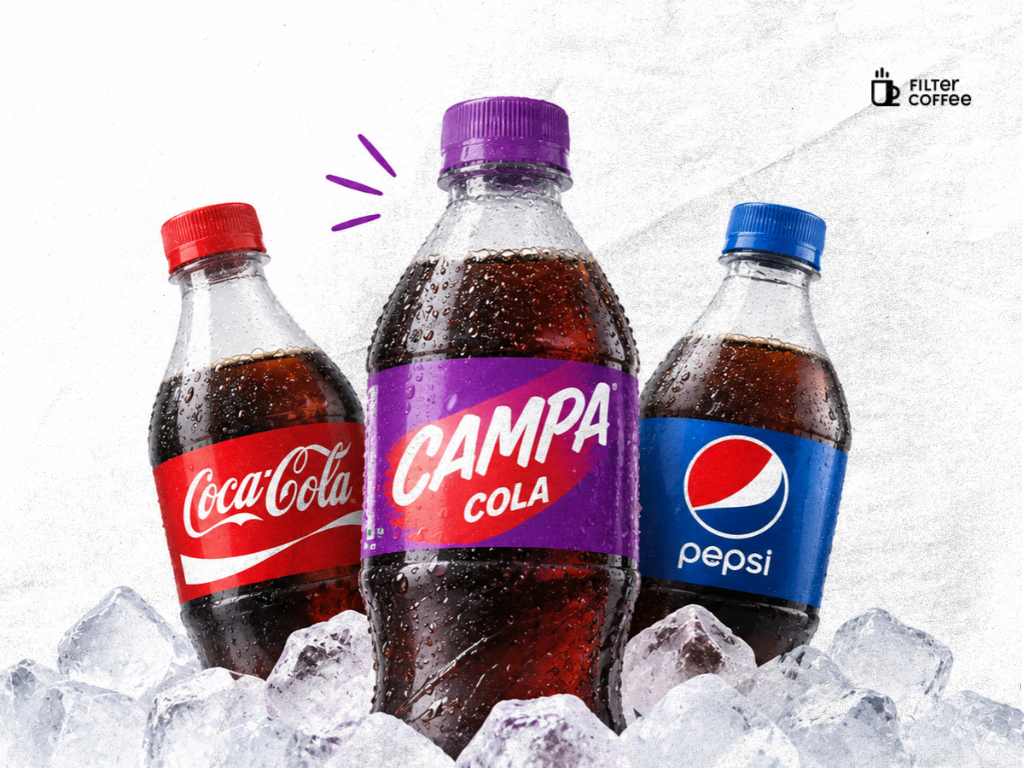
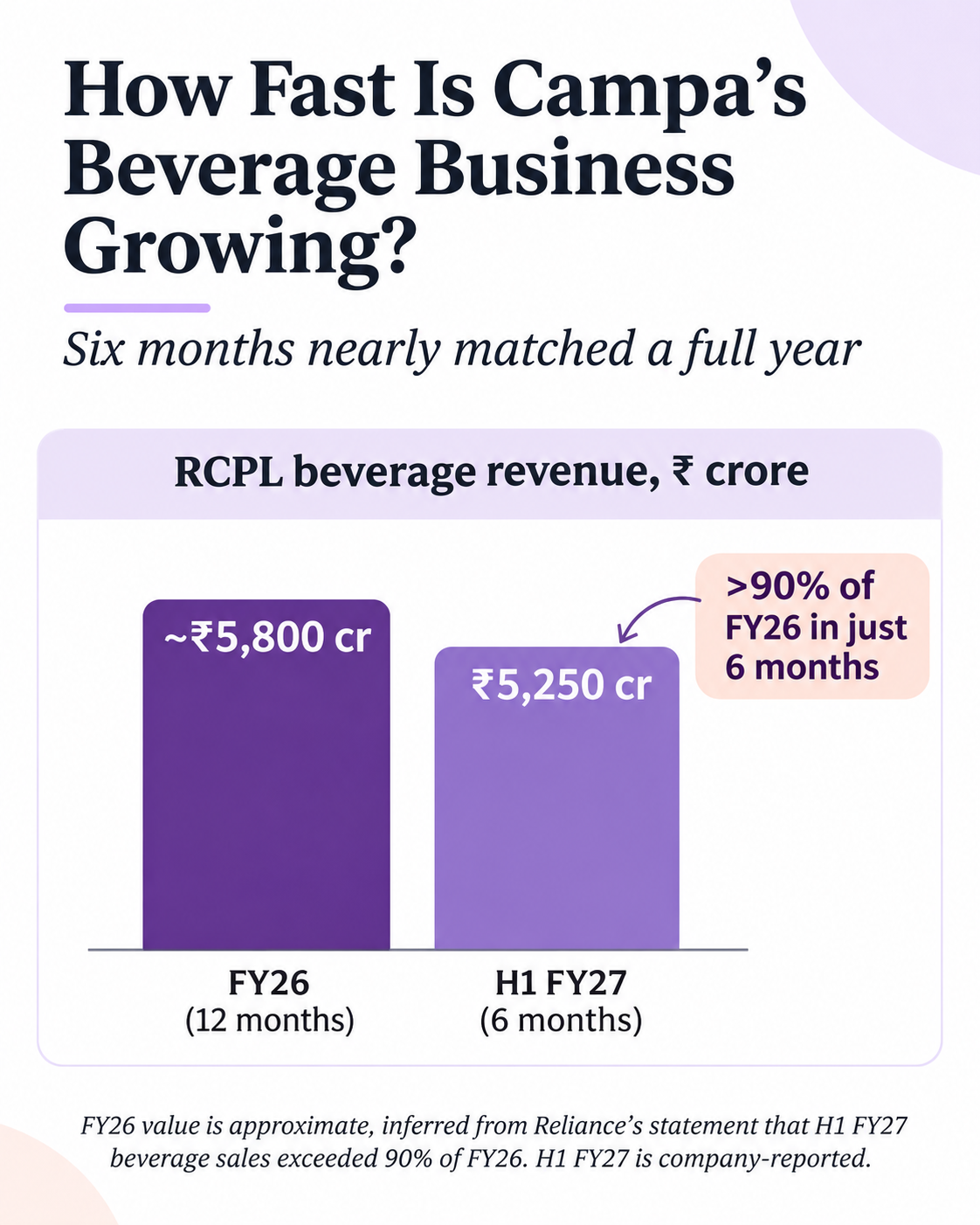
Reliance's Campa-led beverage business brought in ₹5,250 crore in the first half of FY27, more than 90% of its entire FY26 beverage revenue. Sales grew 2.1 times year-on-year, while Reliance Consumer Products (RCPL) reported ₹16,900 crore across all categories in the same six months.
These are Reliance's figures, and the ₹5,250 crore includes beverages beyond Campa Cola. Still, a brand that had nearly disappeared from shops is now forcing India's biggest soft drink companies to compete harder.
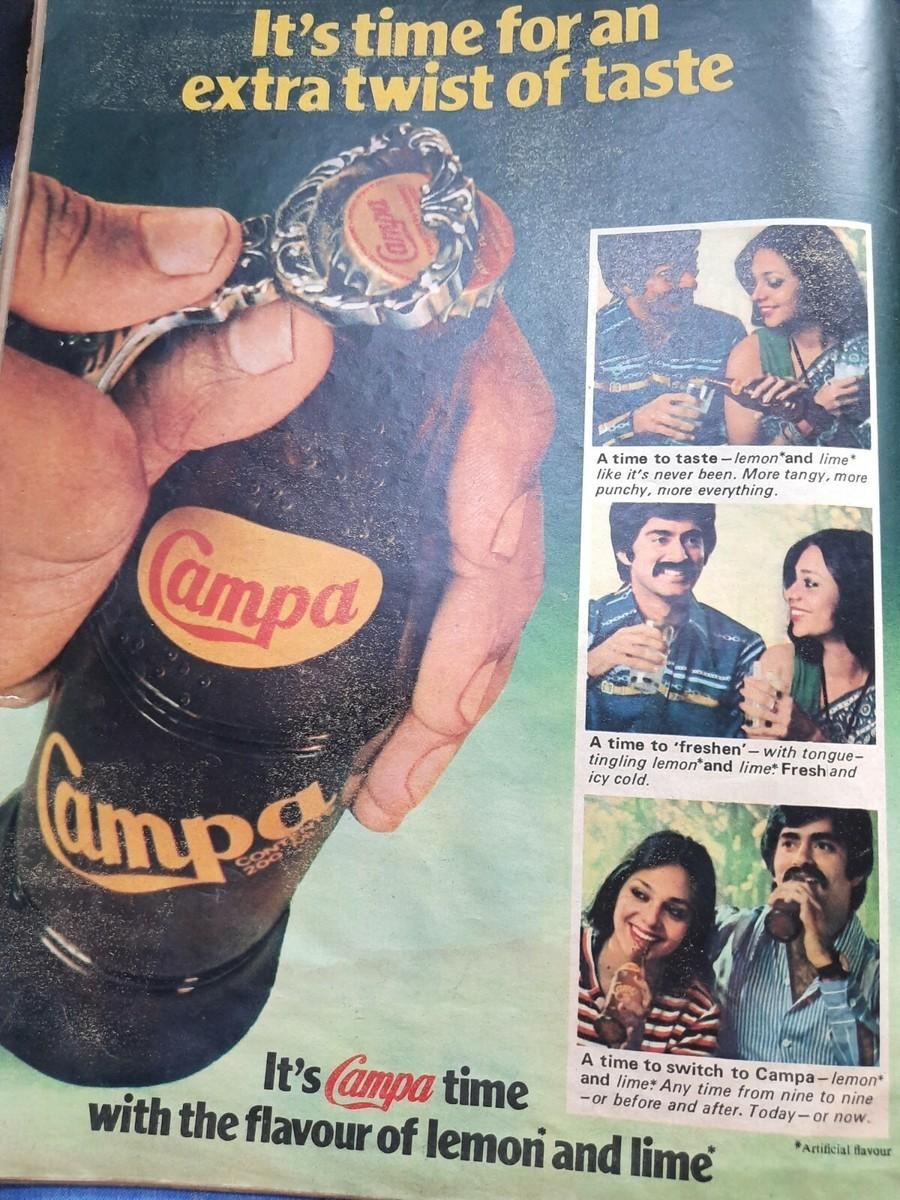
Campa's original owner, Pure Drinks, once bottled Coca-Cola in India. When Coca-Cola exited in 1977 amid a dispute over foreign ownership rules, Pure Drinks used its factories to launch Campa. The cola grew popular in the 1980s but lost ground after Pepsi entered India in 1989 and Coca-Cola returned in 1993.
Reliance acquired the fading brand for a reported ₹22 crore in 2022 and relaunched it the following year, armed with a far bigger distribution network and budget.
Its first move was to compete for the ₹10 in a customer's pocket. Campa's 200 ml plastic bottle was priced at ₹10 when 250 ml bottles of Coke and Pepsi commonly cost ₹20. At a kirana, a shopper looking for a quick drink often has a fixed amount to spend. A cheaper entry-level pack makes it easier to try a brand without giving up much money or an established preference.
Reliance also gave shopkeepers an incentive to stock Campa. According to Mint's interviews with beverage traders in 2025, retailers in some markets were offered margins of up to 25-30%, compared with the usual 10-15% for beverages.
At a 25% margin, a ₹10 Campa bottle leaves ₹2.50 for the shop. A ₹20 rival bottle sold at a 10% margin leaves ₹2. A cheaper drink can therefore be more rewarding for the retailer to sell. These were reported offers in specific markets, not a uniform national margin.
Getting into a shop, though, is different from staying in its refrigerator. Coca-Cola and Pepsi have spent decades building bottling networks, placing coolers and ensuring that a chilled bottle is available when someone wants one. RCPL says its wider FMCG business now reaches over 30 lakh outlets through more than 5,000 distributors, although those numbers are not Campa-specific.
Reliance has also established beverage bottling lines across 12 states. Such investment addresses a real weakness: in 2025, some Campa distributors told Mint they faced delayed supplies and too few refrigerators during peak demand.
The incumbents are responding. In 2025, Coca-Cola and PepsiCo introduced ₹10 packs of selected zero-sugar drinks rather than broadly cutting their flagship colas' prices. Their portfolios also extend far beyond Coke and Pepsi: Coca-Cola owns Thums Up, Sprite and Maaza, while PepsiCo sells Mountain Dew, 7UP and Sting.
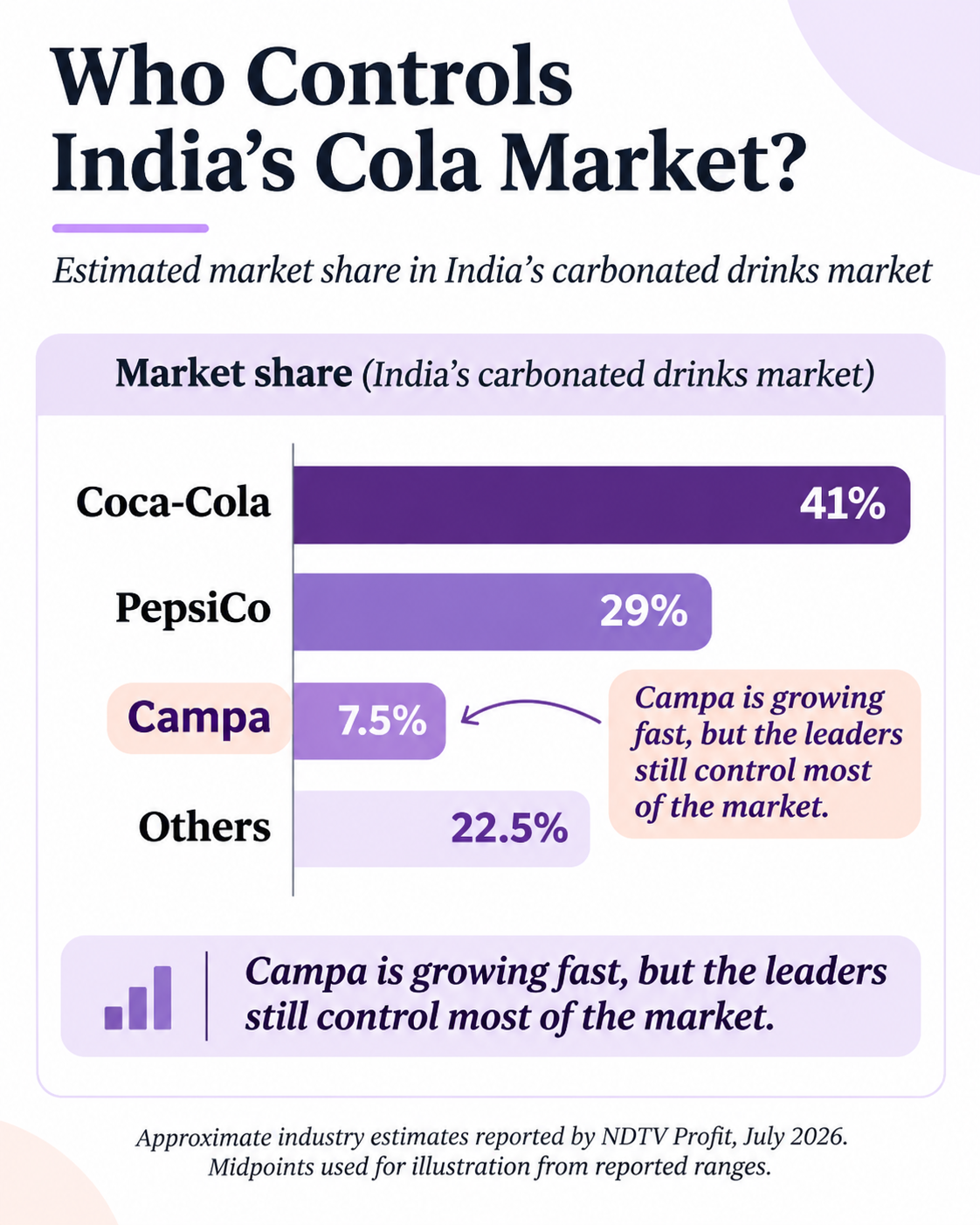
Industry estimates profit in July 2026 put Coca-Cola's share of carbonated soft drinks at 40-42%, PepsiCo's at 28-30% and Campa's at 7-8%. Campa is gaining ground, but the gap remains substantial.
Varun Beverages, PepsiCo's main Indian bottling partner, reported 22.5% volume growth in India during the September 2026 quarter. Its consolidated gross margin fell by 334 basis points, largely because packaging materials became costlier. That illustrates the pressure facing any company trying to sell low-priced drinks while paying for bottles, transport and refrigeration.
Reliance has since expanded into Campa Energy and Campa Sure packaged water, but it has not disclosed a standalone profit figure for Campa. Its low prices and generous trade incentives have helped win shelf space and new customers. Keeping bottles cold, customers coming back and margins healthy will determine how much of India's cola market it can hold on to.
Sources
- Reliance Industries - Q2 FY27 analyst presentation and management commentary, October 2026.
- Reliance FY26 Annual Report - Campa sales, distribution, manufacturing and portfolio expansion.
- Mint - Historical pricing, retailer margins, refrigeration and supply problems.
- NDTV Profit - July 2026 market-share estimates.
- Varun Beverages - Q3 CY2026 volume growth and gross margin performance.
- PTI via The Times of India - Campa's acquisition and historical background.