

 Newsletter

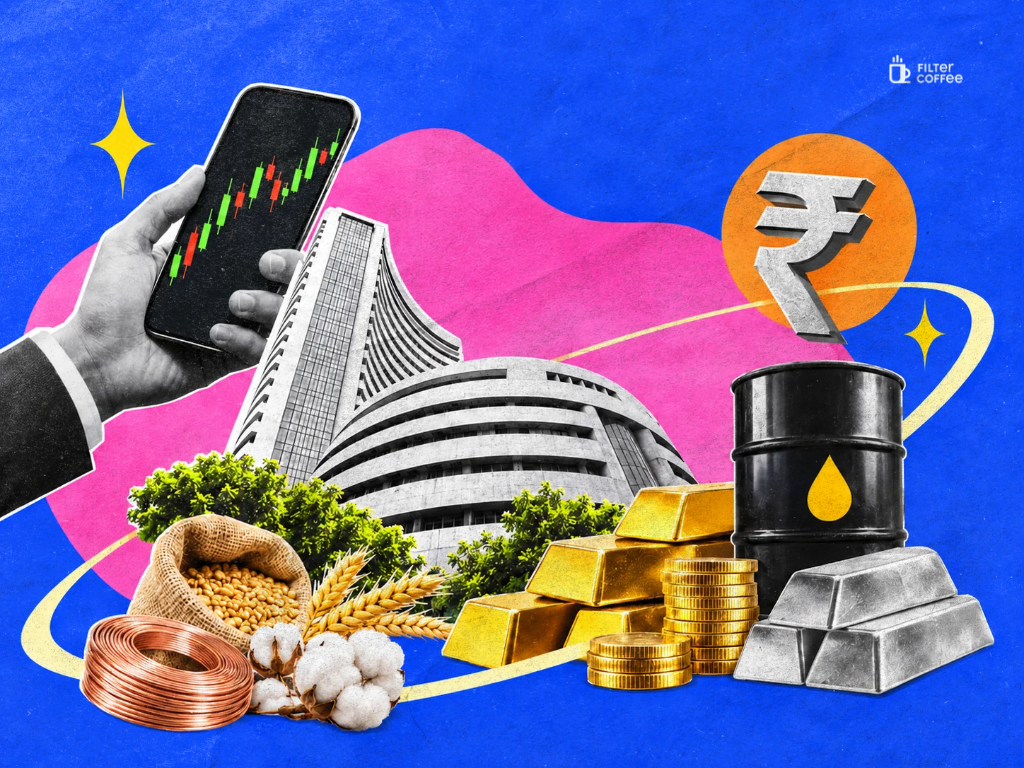
India's largest commodity exchange is having a remarkable year. Multi Commodity Exchange of India (MCX) reported a 130% jump in consolidated net profit to ₹454.57 crore for the July–September quarter of FY27, compared with ₹197.47 crore a year earlier. Its operating revenue more than doubled to nearly ₹800 crore, while its EBITDA margin climbed to 78%.
The company isn't manufacturing anything or selling commodities itself. It operates the marketplace where people trade contracts linked to gold, silver, crude oil, natural gas and other commodities. And the more actively people trade, the more opportunities MCX has to earn fees.
So, how does a company make hundreds of crores simply by facilitating trades?
MCX has been operating since 2003 and holds more than 98% of India's commodity futures market by traded value, according to its latest financial disclosures. It provides a regulated platform where buyers and sellers can trade commodity derivatives, essentially contracts whose values depend on the prices of underlying commodities.
These contracts serve two broad purposes. A jewellery manufacturer, for instance, might use gold futures to protect itself against rising prices. Meanwhile, a trader might buy a gold option hoping to profit from short-term price movements.
MCX facilitates both transactions, but it doesn't need to predict where gold prices are going. Its principal business is collecting transaction fees whenever trading takes place.
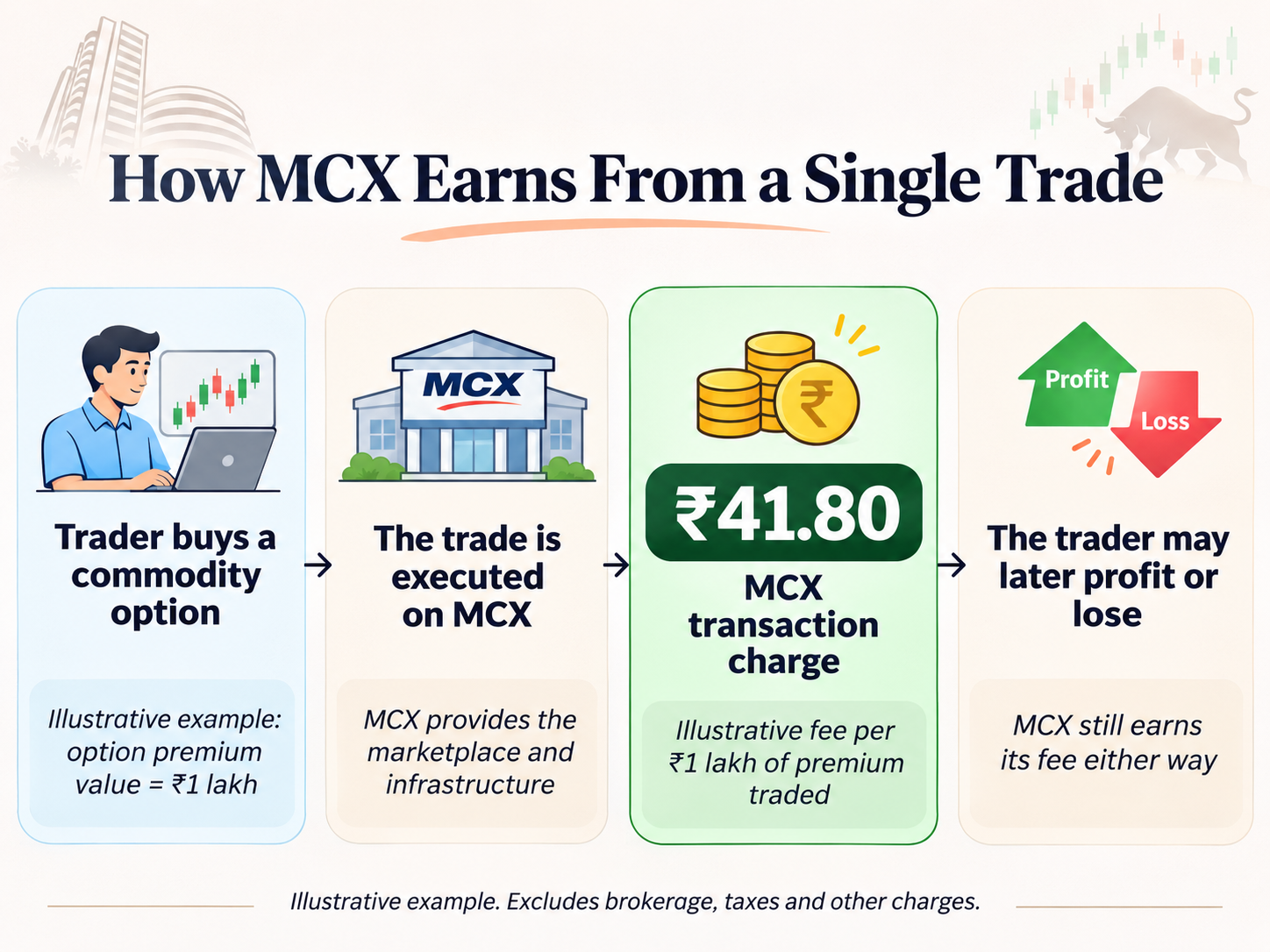
Consider a trader buying commodity options with a total premium value of ₹1 lakh. At a transaction charge of ₹41.80 per lakh of premium traded, MCX earns a fee from that purchase. The trader's broker separately collects brokerage, while taxes and other applicable charges are added to the bill. The exchange collects its transaction fee regardless of whether the trader eventually makes a profit or suffers a loss.
And with lakhs of participants trading regularly, those relatively small fees accumulate into substantial revenue.
The business becomes particularly attractive when trading activity increases faster than operating costs. An exchange needs sophisticated technology, surveillance systems, clearing arrangements and regulatory compliance. But once that infrastructure is established, handling additional trades doesn't necessarily require a proportional increase in expenditure.
MCX's latest results demonstrate this advantage. While operating revenue increased approximately 114%, its total expenses rose around 38%. Consequently, EBITDA jumped nearly 146% to ₹664 crore.
A major contributor to this growth has been the rapid expansion of commodity options trading.
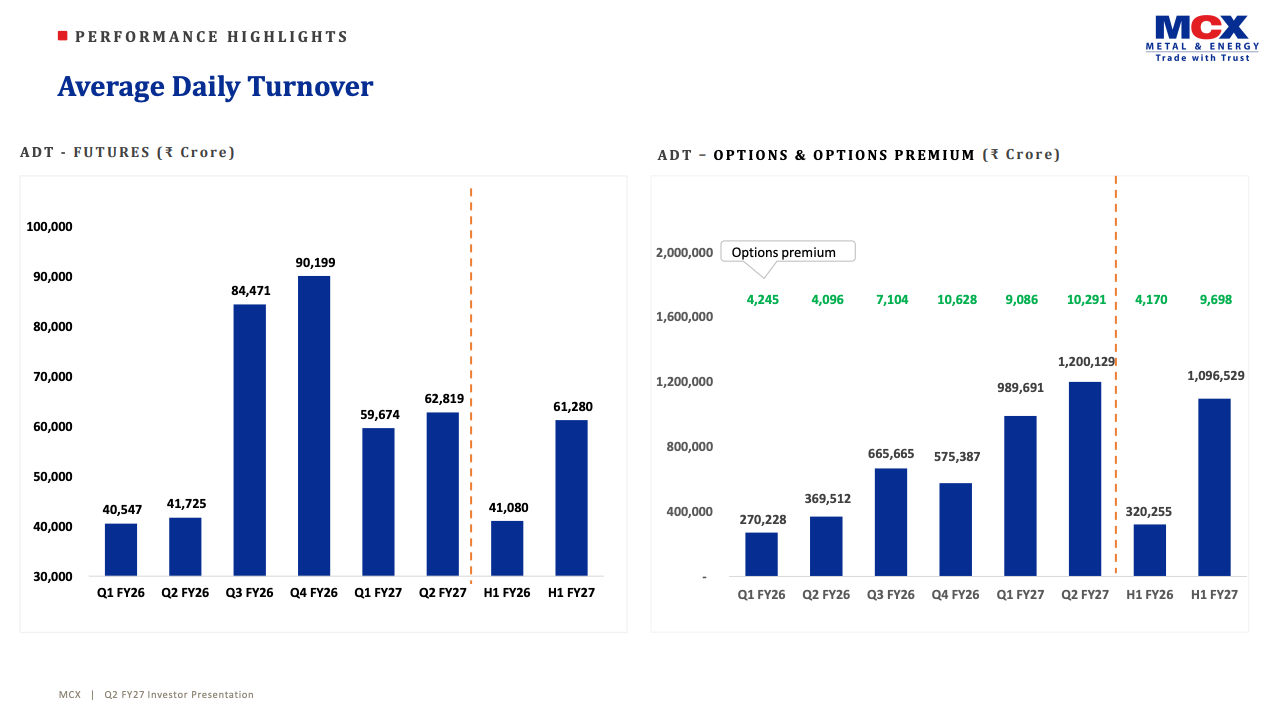
In the September quarter, MCX's average daily futures turnover reached ₹62,819 crore, an increase of approximately 51% from a year earlier. However, average daily options turnover surged nearly 225% to ₹12 lakh crore. The number of clients who traded futures and options also increased from 7.9 lakh to nearly 15 lakh.
That ₹12 lakh crore figure needs some explanation. MCX reports options turnover using the notional value of contracts, meaning the value of the commodities those contracts represent. It doesn't mean traders actually paid ₹12 lakh crore in option premiums every day, or that MCX earned fees on that entire amount. Options transaction charges are generally calculated on premiums, which are considerably smaller.
Still, the rapid growth in trading activity is significant. And there are reasons behind it.
Gold, silver and energy prices have experienced considerable volatility, creating more opportunities for traders to speculate on price movements. Commodity options also offer extended trading hours and a different tax structure from equity options.
An October Mint report highlighted how retail traders were increasingly exploring commodity options. During the September quarter, average daily premium turnover in MCX metals and energy options rose 15% sequentially, while index options premium turnover on NSE and BSE declined 27%.
That doesn't necessarily mean every equity trader is moving to commodities, but it shows how trading interest is developing differently across the two markets.
MCX's growth also benefits from its dominant market position. Traders generally prefer exchanges with plenty of buyers and sellers because transactions can be executed more easily. MCX's existing liquidity attracts participants, whose activity further strengthens that liquidity. This gives competitors such as NSE a difficult market to break into.
The momentum has been building for some time. In FY26, MCX's consolidated profit more than doubled to ₹1,332 crore. On 28 August 2026, the exchange even recorded a single-day turnover of ₹62.93 lakh crore, with options accounting for almost all of it.
But a booming derivatives market doesn't necessarily mean traders are becoming wealthier.
SEBI's August 2026 study found that 87.7% of individual equity derivatives traders lost money in FY26, with aggregate net losses of ₹91,685 crore. These figures concern equity derivatives, not MCX commodity traders, but they illustrate the financial risks of speculative trading.
For an exchange, traders' individual profits and losses aren't the primary drivers of transaction-fee revenue. Trading activity is. However, consistently poor outcomes can eventually discourage participation, while regulators can intervene if speculative activity becomes excessive.
MCX also faces competition, technology expenses and the possibility that unusually high commodity volatility eventually subsides. Its shares fell nearly 7% intraday on 4 November, despite the strong quarterly results, indicating that investors were already weighing the sustainability of its growth.
Ultimately, MCX's business depends on the continued willingness of participants to trade commodities. As India's commodity derivatives market expands, the exchange can earn more from the transactions flowing through its platform. But keeping those volumes growing, without compromising market integrity or the genuine purpose of commodity derivatives, will determine how durable its profitability becomes.
Sources
1. MCX, Q2 FY27 Financial Results and Press Release
2. MCX, Quarterly Earnings Release Archives.
4. Zerodha, Exchange Transaction Charges Explained.
5. Mint, Volatility and Tax Push Retail Traders Towards Commodities
6. Moneycontrol, MCX Records All-Time High Commodity Derivatives Turnover
7. SEBI, Study on Profitability of Individual Equity Derivatives Traders
8. The Economic Times, MCX Shares Tumble Despite Strong Q2 Results