
 Newsletter
Indian Railways just pulled off something most businesses would brag about loudly.
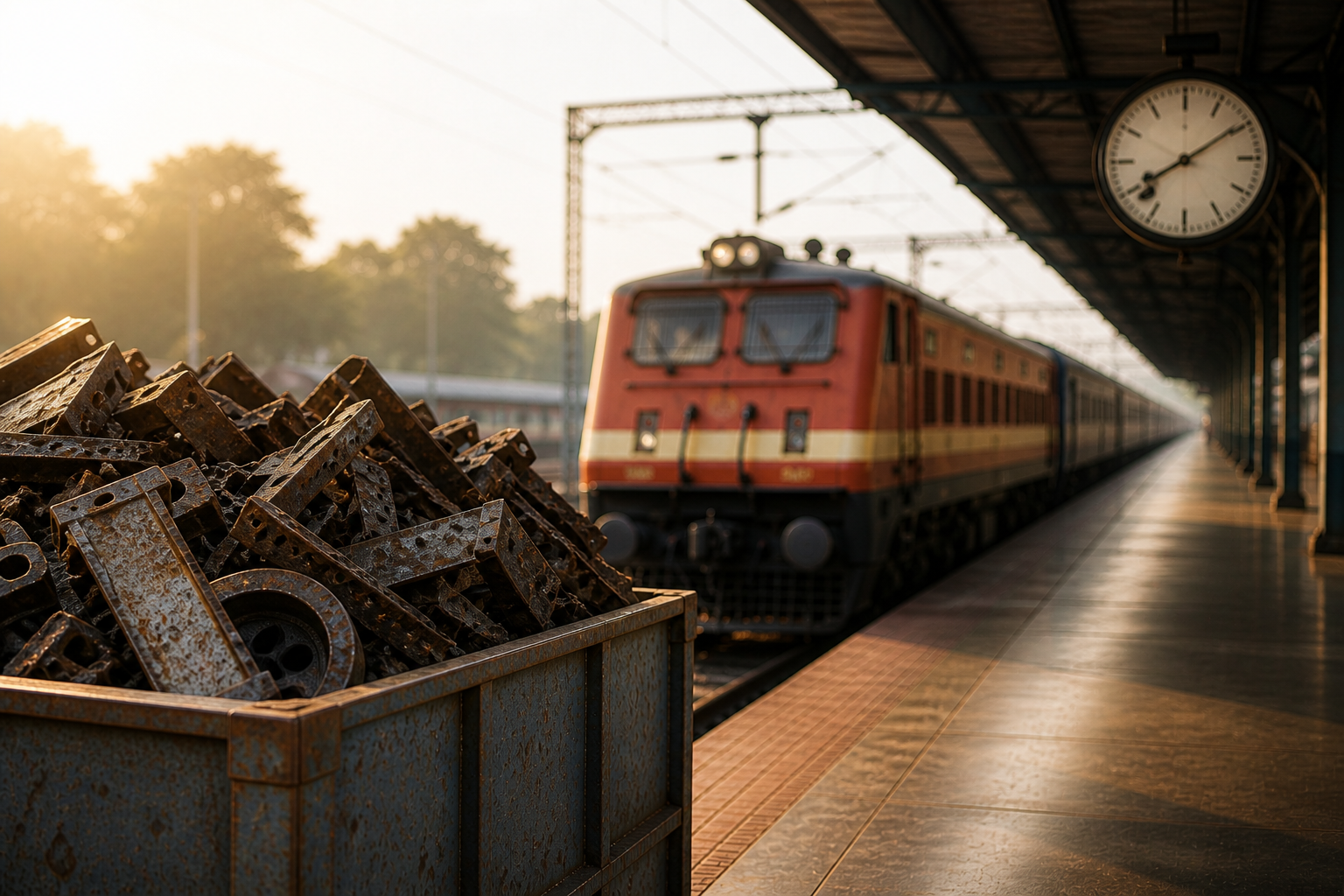
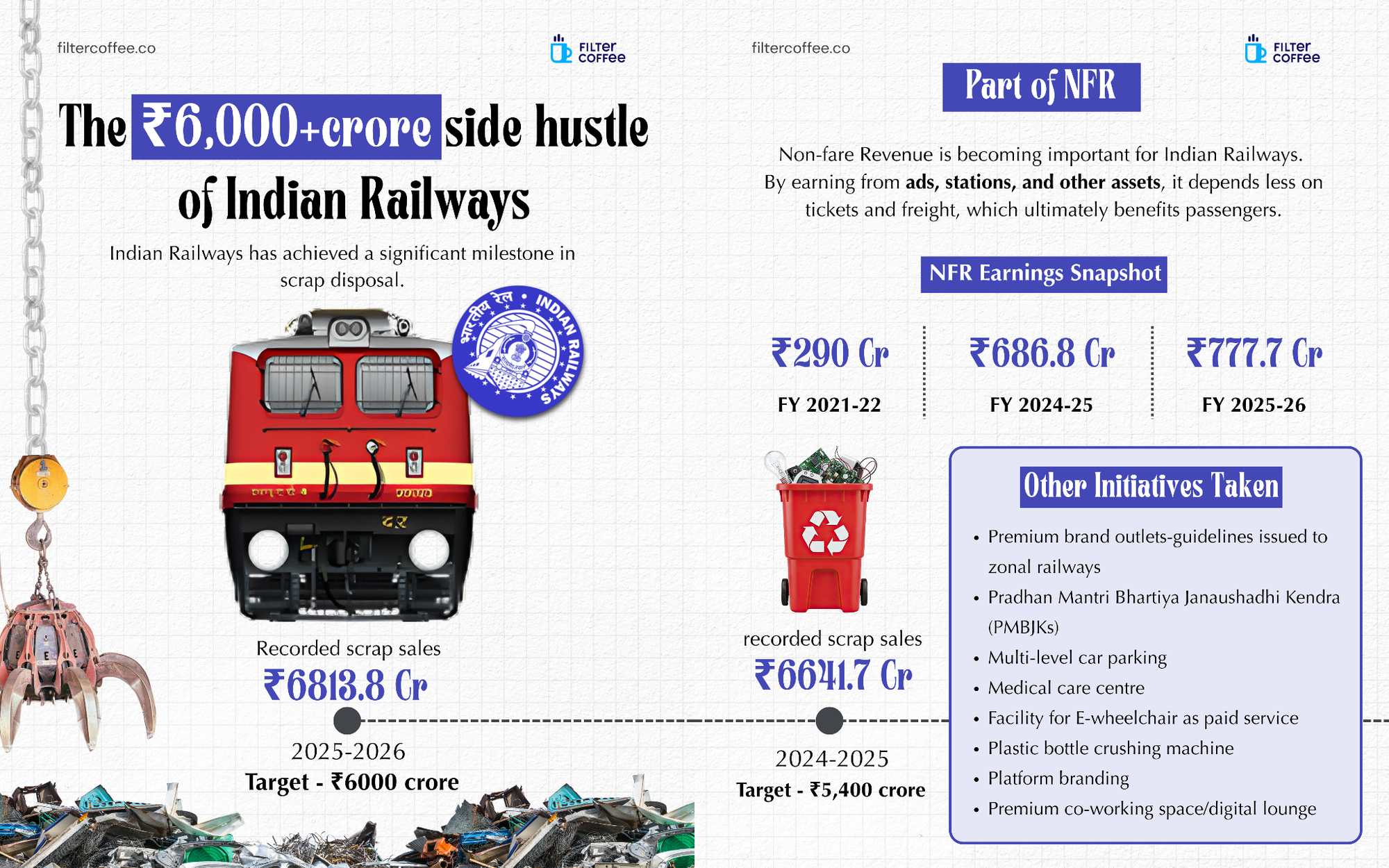
In FY 2025–26, it earned over ₹6,800 crore by selling scrap. Not tickets, not freight, but scrap like old rails, discarded coaches, unusable metal sitting in yards. That number beats the ₹6,000 crore target comfortably.
And if you zoom out, this is not a one-off spike as a year earlier, it had already crossed ₹6,600 crore against a lower target.
What looks like junk on the surface is slowly becoming one of the most reliable revenue streams for the Railways.
Scrap is just the tip of the mountain.
The bigger shift is that Indian Railways is steadily building what it calls Non-Fare Revenue (NFR), or money that doesn’t come from selling tickets or moving goods.
See, railways have always operated traditionally.
Passenger fares are politically sensitive and often subsidised. Freight revenue carries a disproportionate burden and cannot keep increasing forever without hurting competitiveness. That leaves a gap.
Railways still needs to invest heavily in infrastructure, safety, stations, trains, and modernization. So the obvious question becomes, where does the extra money come from without raising ticket prices?
That is where Non-Fare Revenue steps in.
Non-fare revenue is money a transport system earns not from ticket sales. It’s income from things like ads, shops at stations, parking fees, or renting space. Basically anything other than fares paid by passengers.
Over the last five years, this stream has grown from roughly ₹290 crore in FY22 to over ₹770 crore in FY26. That is a near threefold jump in a short span and it is coming from a patchwork of small but clever monetisation ideas.
Stations are being reimagined as commercial hubs rather than just transit points. Advertising is one piece of the puzzle. Every wall, pillar, and digital screen is now potential ad inventory.
Then there are premium retail outlets. Railways has moved toward auctioning high footfall spaces to big brands, similar to what you see in airports. Food chains, branded stores, and convenience outlets are slowly replacing generic kiosks.
This not only improves passenger experience but also brings in steady rental income.
Then there are services that did not exist earlier.
Co-working spaces inside stations are a recent addition. Mumbai Central now has a digital lounge where people can work, charge devices, attend meetings, and pay for the convenience.
Parking has gone multi level in busy stations. Medical care centres and budget pharmacies under the Janaushadhi scheme are being added. Even something as simple as paid e-wheelchairs or digital luggage lockers is now part of the monetisation strategy.
All of this points to a deeper shift.
Railways is thinking like a platform. Millions of passengers pass through its ecosystem every day. Each of them represents a monetisation opportunity beyond just buying a ticket.
If we circle back to scrap, it turns out there’s more going on.
Earlier, unused materials would pile up for years, blocking space in depots and yards. Now, systematic scrap disposal generates revenue and also frees up land and improves operational efficiency. Some railway zones have even beaten their scrap targets by double digit margins.
What makes this story powerful is how ordinary it sounds.
Selling scrap, renting space, putting ads, offering services. None of this is groundbreaking on its own, but when you combine scale with consistency, it becomes a serious business.
Indian Railways moves over 20 million passengers daily and even small revenue per passenger adds up quickly.
Hence, instead of depending entirely on fares and freight, Railways is quietly building parallel income streams that are less volatile and more scalable. It reduces pressure on ticket prices, improves services, and creates a more financially resilient system.