
 Newsletter
Building a fighter jet in India always followed a familiar script.
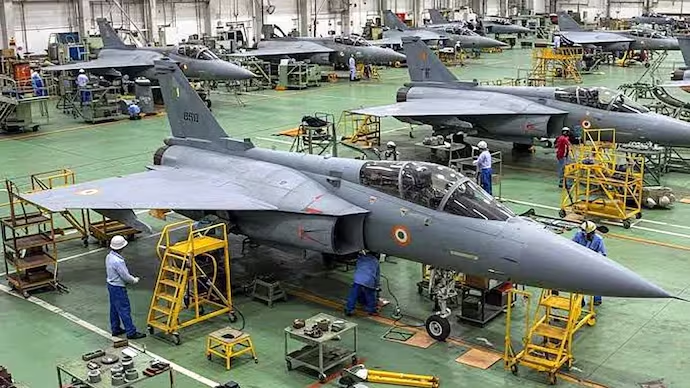
The government designed it, Hindustan Aeronautics Limited (HAL) built it, and private companies quietly supplied parts in the background. Whether it was the MiGs assembled under licence, the Jaguar, the Sukhoi-30 MKI or the indigenous Tejas, HAL remained at the centre of India's military aviation story.
That model is now facing its biggest shake-up in decades.
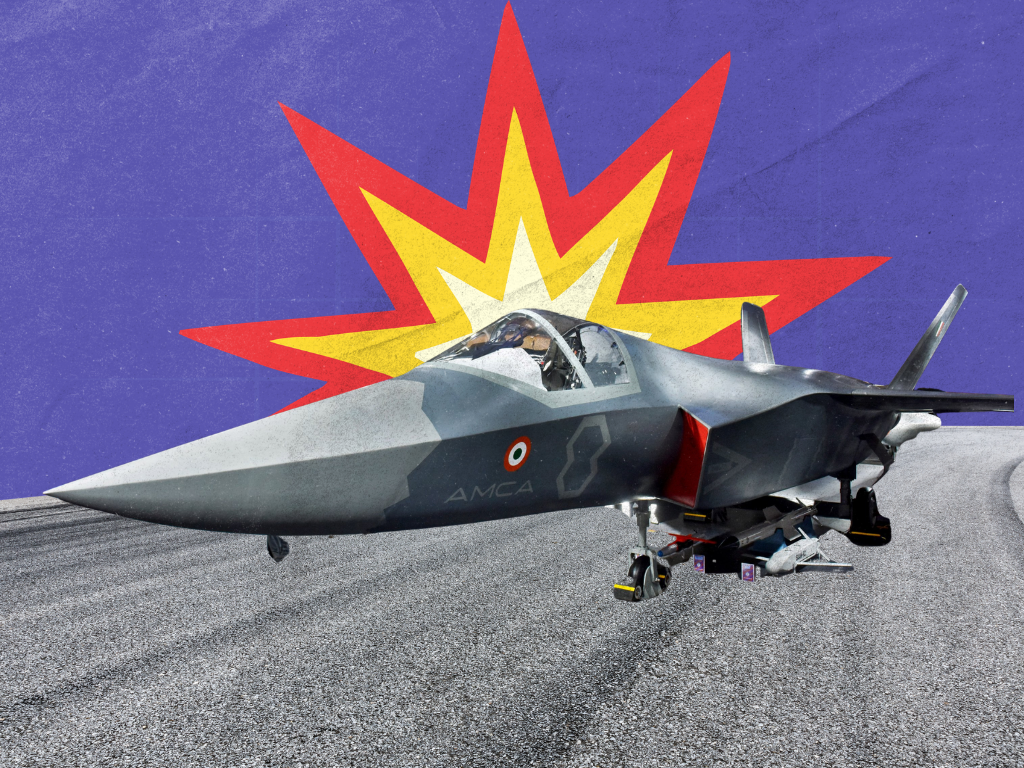
Last week, the Ministry of Defence issued a Request for Proposal (RFP) for the prototype development of the Advanced Medium Combat Aircraft (AMCA), India's ambitious fifth-generation stealth fighter. But instead of handing the project to HAL, the government has invited private industry to take the lead.
Tata Advanced Systems, an L&T-led consortium and a Bharat Forge-led consortium are now competing to build the aircraft's flying prototypes. This could mark one of the biggest changes in India's defence manufacturing ecosystem since the private sector was allowed into the industry in 2001.
Before we deep dive, let’s first understand what AMCA actually is. The aircraft is India's first planned fifth-generation stealth fighter, designed by the Aeronautical Development Agency (ADA) under the Defence Research and Development Organisation (DRDO).
Fifth-generation aircraft are not simply faster or more powerful than older fighters. They are built to avoid radar detection, carry advanced sensors that combine information from multiple systems, communicate seamlessly with other military assets and operate in highly contested environments.
Today, only a handful of countries, including the US, China and Russia, have developed or fielded aircraft in this category. For India, AMCA is expected to replace ageing fleets over the next decade while reducing dependence on foreign suppliers for one of the military's most sophisticated platforms.
The government wants five prototypes to be developed before the aircraft enters production. If everything goes according to plan, the first prototype could fly around 2029, with induction into the Indian Air Force targeted in the mid-2030s. That timeline is ambitious, but the bigger story is not when the aircraft flies. It is who gets to build it.
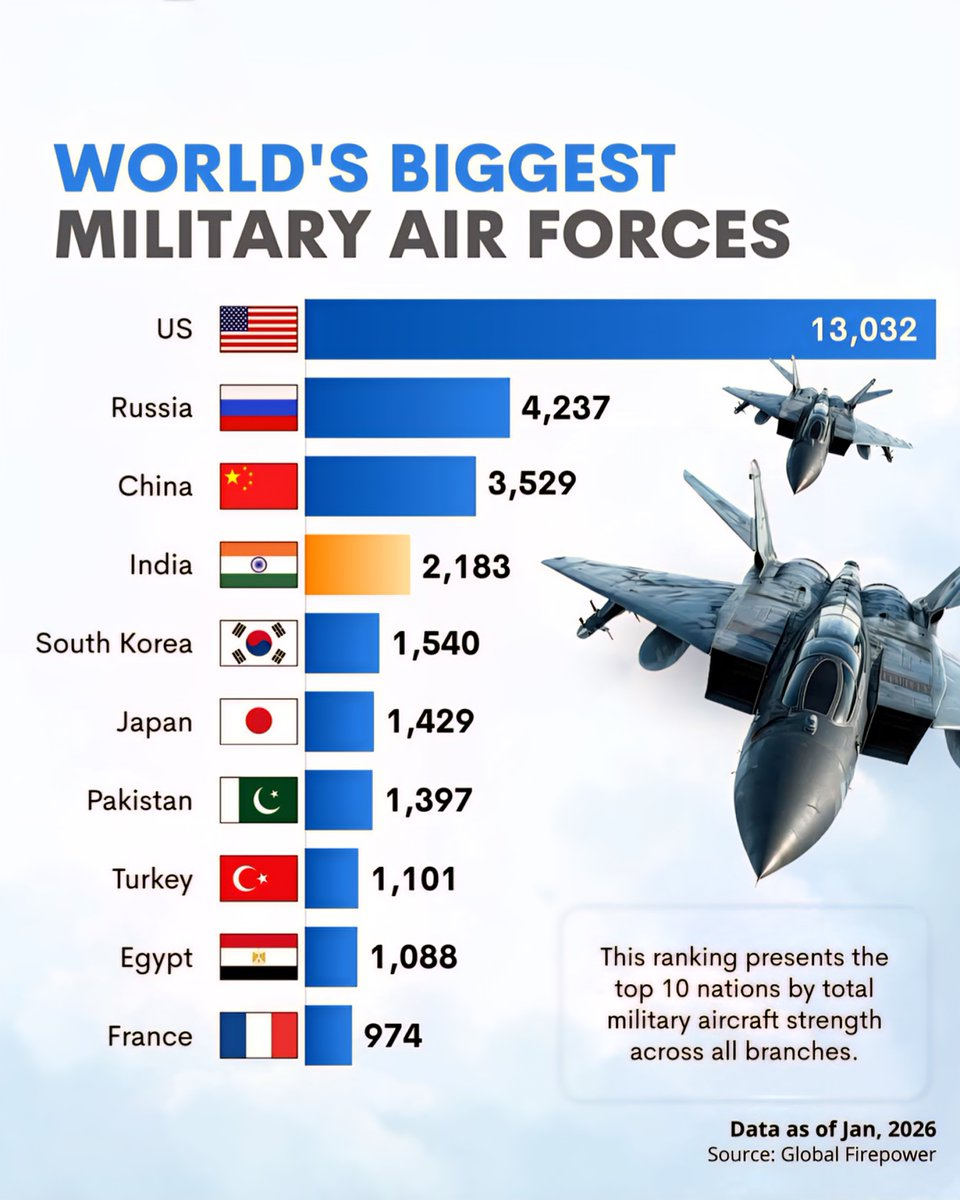
For decades, HAL was the company responsible not just for manufacturing indigenous aircraft but also for licence-producing foreign platforms and maintaining much of the Indian Air Force's fleet. That approach made sense when India's defence industry was almost entirely government-owned. Private companies lacked both the experience and the policy support needed to build military platforms. Over time, however, India's defence needs became much larger while aircraft programmes also became far more technologically demanding.
Today, HAL is simultaneously working on the Tejas Mk1A, Tejas Mk2, upgrades for the Sukhoi-30 MKI fleet, the Light Combat Helicopter, the Light Utility Helicopter, trainer aircraft and several maintenance programmes. Every one of these projects requires engineering talent, manufacturing capacity and years of testing.
Relying on a single company to execute nearly every major aerospace programme inevitably creates bottlenecks. Delays in the Tejas programme have repeatedly highlighted how difficult it is for one organisation to shoulder so many responsibilities at once. Bringing private companies into AMCA is about expanding India's industrial capacity.
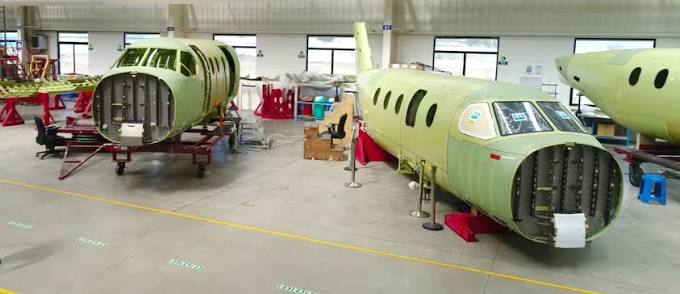
That explains why the list of bidders is so interesting. Tata Advanced Systems is no longer just another industrial conglomerate trying its hand at defence. It already manufactures fuselages for Boeing's Apache attack helicopters, produces aerostructures for Airbus, assembles the Airbus C295 military transport aircraft in Gujarat and exports aerospace components globally.
Larsen & Toubro has built a reputation for executing some of India's most complex engineering projects, from nuclear submarines and missile launch systems to strategic defence infrastructure. Bharat Forge, once known primarily as an automotive forging company, has spent the last decade building capabilities in artillery systems, armoured vehicles, drones and aerospace manufacturing. None of these companies are newcomers anymore. They have quietly spent years preparing for opportunities exactly like this.
However, this does not mean the government is privatising fighter aircraft development. The Aeronautical Development Agency will continue to own the aircraft's design and intellectual property. It remains responsible for engineering, certification standards and overall programme management.
The winning private company will industrialise the design, manufacture the prototypes, coordinate suppliers and eventually support production. In other words, the government is separating design from manufacturing rather than handing over the entire programme to private industry.
And fundamentally it alters the role private companies play in India's defence ecosystem. Earlier, they manufactured individual parts such as wings, brackets, landing gear components or electronic modules.
Building an entire fighter aircraft is a completely different challenge. It requires coordinating thousands of suppliers, integrating highly complex subsystems, maintaining extremely tight quality standards and managing one of the most sophisticated production processes in manufacturing. Successfully doing this creates expertise that extends far beyond one aircraft programme.
A fighter aircraft has the potential to create an even more specialised ecosystem. Every aircraft requires advanced composite materials, titanium machining, precision castings, avionics, flight computers, radar systems, electronic warfare equipment, hydraulic systems, software, testing infrastructure and maintenance capabilities.
Behind every aircraft manufacturer sits a network of hundreds, sometimes thousands, of specialised suppliers. If Indian private companies become capable of integrating and manufacturing a platform as complex as AMCA, many of those capabilities could eventually spill over into civilian aerospace, drones, satellites and advanced manufacturing.
Defence production in India has been steadily opening up over the past decade through initiatives such as Make in India, the Innovations for Defence Excellence (iDEX) programme and successive Positive Indigenisation Lists that restrict imports of certain defence equipment.
According to government data, India's defence production reached a record ₹1.46 lakh crore in FY25 and is estimated to cross ₹1.75 lakh crore in FY26. Private companies accounted for nearly one-fourth of this output, up from about 19% in FY17.
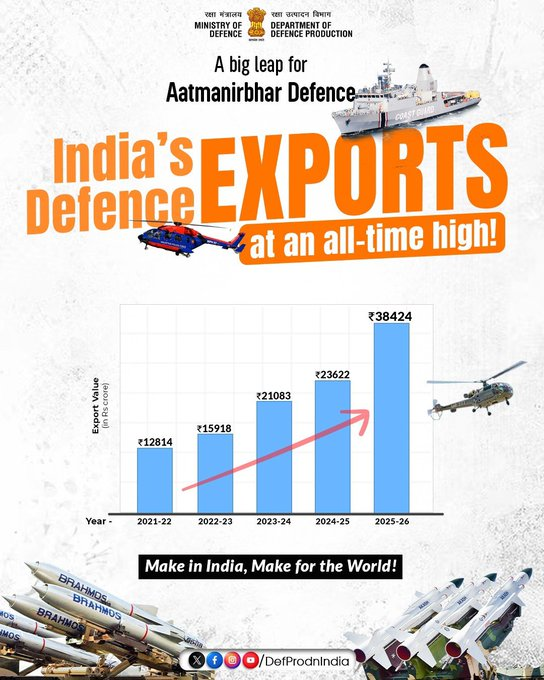
Defence exports have also grown sharply, crossing ₹23,000 crore in FY25 compared with less than ₹2,000 crore a decade ago. The government's long-term target is to increase annual defence exports to ₹50,000 crore. Achieving that goal will require far greater participation from private industry because government-owned companies alone cannot produce enough products or scale exports quickly.
That said, AMCA is far from a guaranteed success. Developing a fifth-generation fighter remains one of the most difficult engineering challenges in the world. Stealth technology demands exceptional manufacturing precision because even small imperfections can increase an aircraft's radar signature.
Flight testing typically takes years before certification is complete. India is also still dependent on foreign engines for the initial versions of AMCA, with the indigenous engine programme continuing separately. Any delays in testing, funding, engine development or supplier readiness could push the timeline further into the future, as has happened with several complex aerospace programmes around the world.
Yet even if those challenges emerge, the significance of AMCA may extend well beyond the aircraft itself. India's defence sector has spent decades building products largely within government organisations while private companies played supporting roles. The AMCA programme signals a different philosophy.
Instead of asking private industry to supply components, the government is beginning to trust it with integrating one of the country's most sophisticated defence platforms. If that experiment succeeds, India's biggest achievement may not simply be a stealth fighter flying over the skies. It could be the creation of an aerospace manufacturing ecosystem capable of designing, building and exporting advanced technologies for decades to come. In that sense, AMCA is not just about the future of the Indian Air Force. It is about the future of Indian industry itself.