

 Newsletter

Milk is one of those things we rarely stop to think about. It shows up every morning in our tea, disappears into curd by afternoon, and quietly powers everything from sweets to infant nutrition. It feels local, ordinary, almost invisible. But there’s a scale to this habit that most of us never really notice. One where India is not just feeding its own population, but quietly shaping how the world’s dairy system functions.
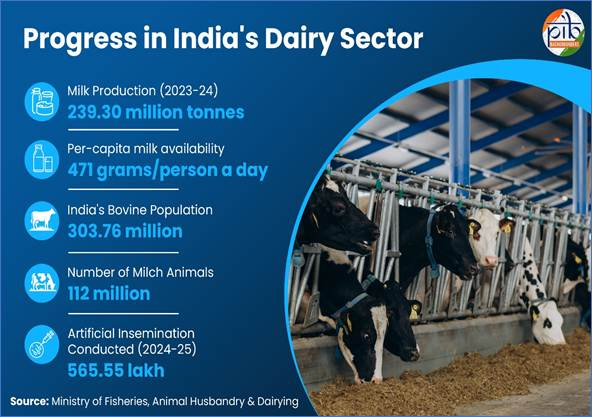
Today, India produces roughly 240 million tonnes of milk a year. That is about a quarter of all the milk produced globally. To put that into perspective, India alone produces more milk than the European Union and the United States combined. Even if India’s milk production dipped by just 1%, the absolute loss would exceed the entire annual milk output of countries like the United Kingdom. That is the scale we are dealing with.
But that wasn’t how the story began. At independence, India was a milk-deficient country, dependent on imports of milk powder. Dairy was fragmented, inefficient, and limited by poor infrastructure. The turning point came with the White Revolution, which reorganised milk production around cooperatives, rural procurement, and assured pricing for farmers. What followed over the next five decades was not just growth, but compounding.
> The White Revolution was a nationwide programme launched in the 1970s to make India self-sufficient in milk. It organised small farmers into cooperatives, built milk collection and cold storage networks, and ensured fair prices. Over time, it transformed India from a milk-deficient country into the world’s largest milk producer.
Milk production in India has grown consistently at 5-6% annually, far outpacing most global peers. Unlike large industrial dairy farms seen in the West, India’s dairy economy is powered by millions of small farmers. Most own two to four animals. Many operate on less than two hectares of land. And yet, collectively, they form the largest milk-producing system in the world.
Buffaloes play a central role in this story. India has the world’s largest buffalo population, and buffalo milk accounts for a significant share of total output. This is because buffalo milk has higher fat content, it aligns with Indian consumption preferences, and commands better realisations for farmers. It is also more resilient in certain climatic conditions, making it suitable across diverse regions.
Another reason India dominates milk is demand stability. Milk is not a discretionary product in Indian homes. It is consumed daily across income levels, geographies, and age groups. Tea, curd, paneer, ghee, sweets, infant nutrition, all depend on milk. As incomes rise, dairy consumption tends to rise too, not fall. Over the past decade, per capita milk availability in India has increased steadily, crossing 470 grams per person per day. That is well above the global average.
This domestic absorption acts as a shock absorber. While many global dairy producers depend heavily on exports and are exposed to international price cycles, India consumes most of what it produces. This insulates farmers from global volatility and allows production to scale steadily without export pressure dictating farm economics.
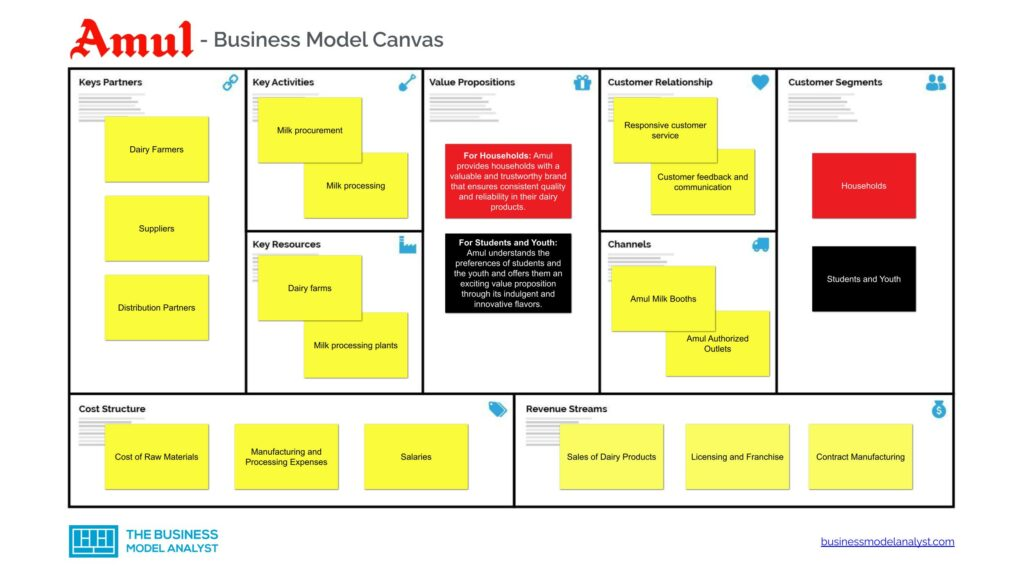
The cooperative model has been a quiet force multiplier. Organisations like Amul demonstrated that it was possible to aggregate millions of small producers into a unified supply chain, invest in processing, branding, and distribution, and still return value to farmers. This model has since been replicated across states in different forms, creating a nationwide milk grid that connects villages to urban consumers daily.
From an economic lens, dairy is one of India’s most significant rural industries. It contributes close to 5% of national GDP and supports livelihoods for over 80 million people, directly and indirectly. In many states, dairy income is more stable than crop income because it generates daily cash flow rather than seasonal returns. For small farmers, that stability matters more than profitability.
Globally, the dairy market is entering a phase of uneven growth. Production in Europe faces regulatory, environmental, and cost pressures. The US remains productive but mature. China, which drove incremental demand for years, is seeing slower growth as consumption patterns evolve and domestic production stabilises. Asia will continue to drive global dairy demand, but supply growth is increasingly concentrated in a few regions. India sits at the centre of that equation.
This concentration comes with influence. When India’s milk production rises, global supply feels abundant. When growth slows, global prices tighten. Even without being a dominant exporter, India’s sheer scale shapes global dairy economics indirectly. Food companies, nutrition brands, and commodity traders watch India closely because marginal changes here ripple outward.
That said, the model is not without stress points. Productivity per animal in India remains lower than in developed dairy economies. India produces more milk largely by having more animals, not by extracting higher yields per animal. This creates challenges related to feed availability, land use, water stress, and emissions. Scaling sustainably will require better genetics, improved fodder management, veterinary access, and mechanisation at the farm level.
There is also a human dimension. Dairy work is labour-intensive and often unpaid or underpaid, especially for women who form the backbone of animal care in rural households. As rural aspirations change and younger generations move away from agriculture, sustaining this labour base will require better income visibility, technology adoption, and value addition beyond raw milk.
The industry is already adapting. Processing capacity is expanding. Private players are investing in branded dairy, value-added products, and cold-chain logistics. Digital platforms are improving procurement transparency and payment cycles. Governments are focusing on breed improvement, animal health, and organised marketing. The next phase of growth is less about volume and more about efficiency.
What makes India’s dairy story different from many other sectors is its resilience. It is decentralised, culturally embedded, and demand-driven. It does not depend on global capital flows or export incentives to survive. It grows because people drink milk every day and farmers know there is a buyer tomorrow morning.
So while India’s rise in manufacturing, technology, and services grabs attention, its quiet dominance in milk deserves equal recognition. In a world increasingly worried about food security, supply chain fragility, and nutritional access, India is not just feeding itself. It is anchoring the global dairy system. One litre at a time.
And the most interesting part is this. It is doing so without anyone really noticing.