
 Newsletter
On a hot summer day in India, you switch on your AC thinking you’ll just cool the room for a bit. What most people don’t realise is this: that short burst of comfort is quietly consuming a shocking amount of electricity.
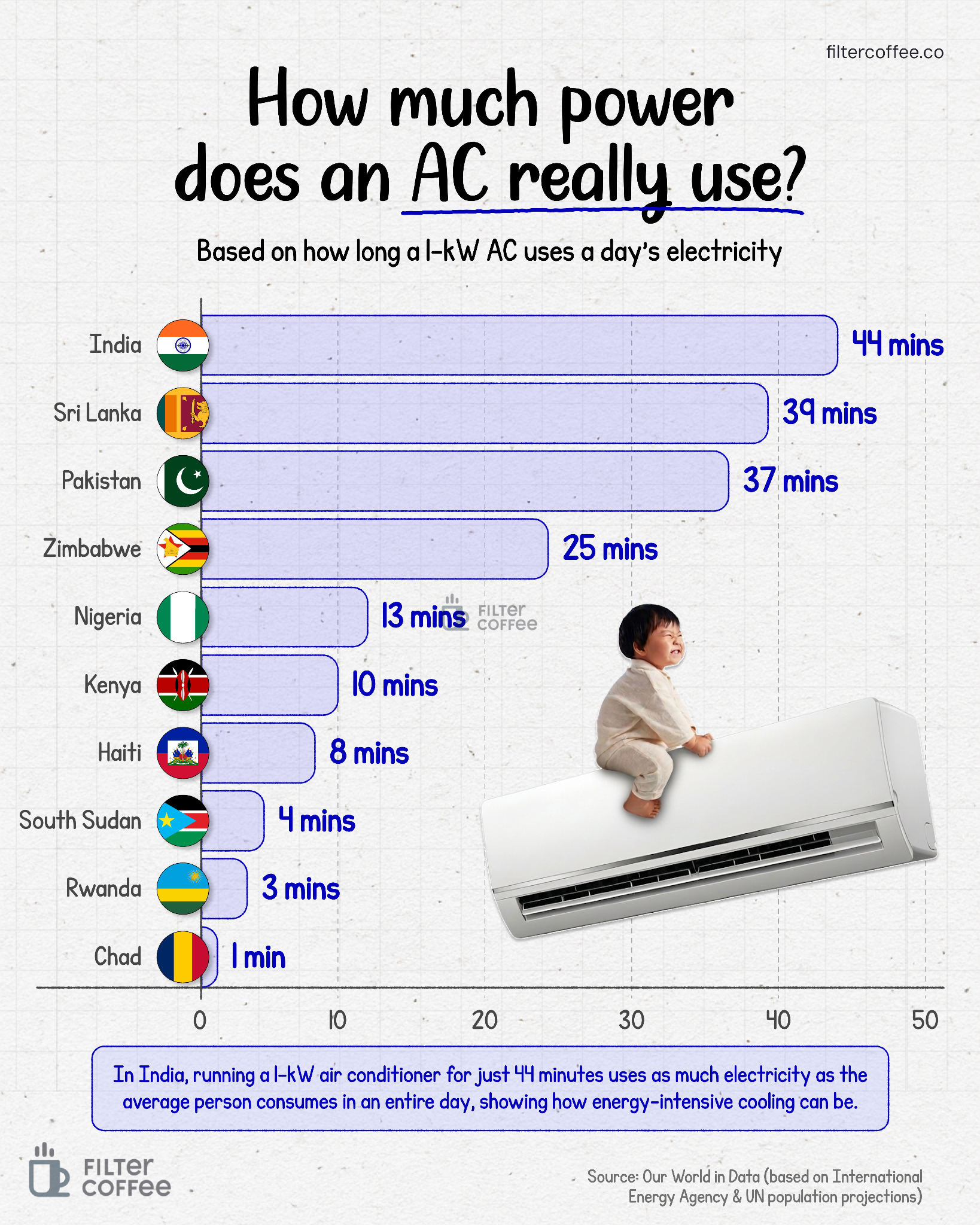
In fact, data shows that in India, running a 1-kW air conditioner for just about 44 minutes can use as much electricity as the average person consumes in an entire day. Let that sink in. Less than an hour of cooling can match a full day’s power usage for an average Indian.
This isn’t just a quirky statistic. It’s a window into a much bigger shift that’s unfolding across the country.
India’s electricity demand is going through a structural change. Over the past decade, peak power demand has jumped from around 148 gigawatts in 2014 to nearly 250 gigawatts recently. A big chunk of that rise is coming from cooling. As temperatures rise and incomes improve, more households are buying air conditioners. What used to be a luxury in urban India is now slowly becoming an aspirational necessity in Tier 2 and Tier 3 cities.
And this is just the beginning. India currently adds roughly 10 to 15 million room ACs every year. Over the next decade, estimates suggest the country could add more than 130 million new units. If that plays out without major efficiency improvements, air conditioners alone could add over 120 gigawatts to peak electricity demand by 2030. To put that into perspective, that’s like adding the entire power capacity of several large countries just to keep rooms cool.
The real twist here is how cooling demand behaves. It doesn’t spread evenly through the day. It spikes. On extremely hot days, electricity demand during peak hours has been seen to rise by nearly 25-30% compared to normal days. That means the grid isn’t just growing, it’s getting more volatile. Everyone turns on their AC at roughly the same time, and suddenly the system has to handle a surge.
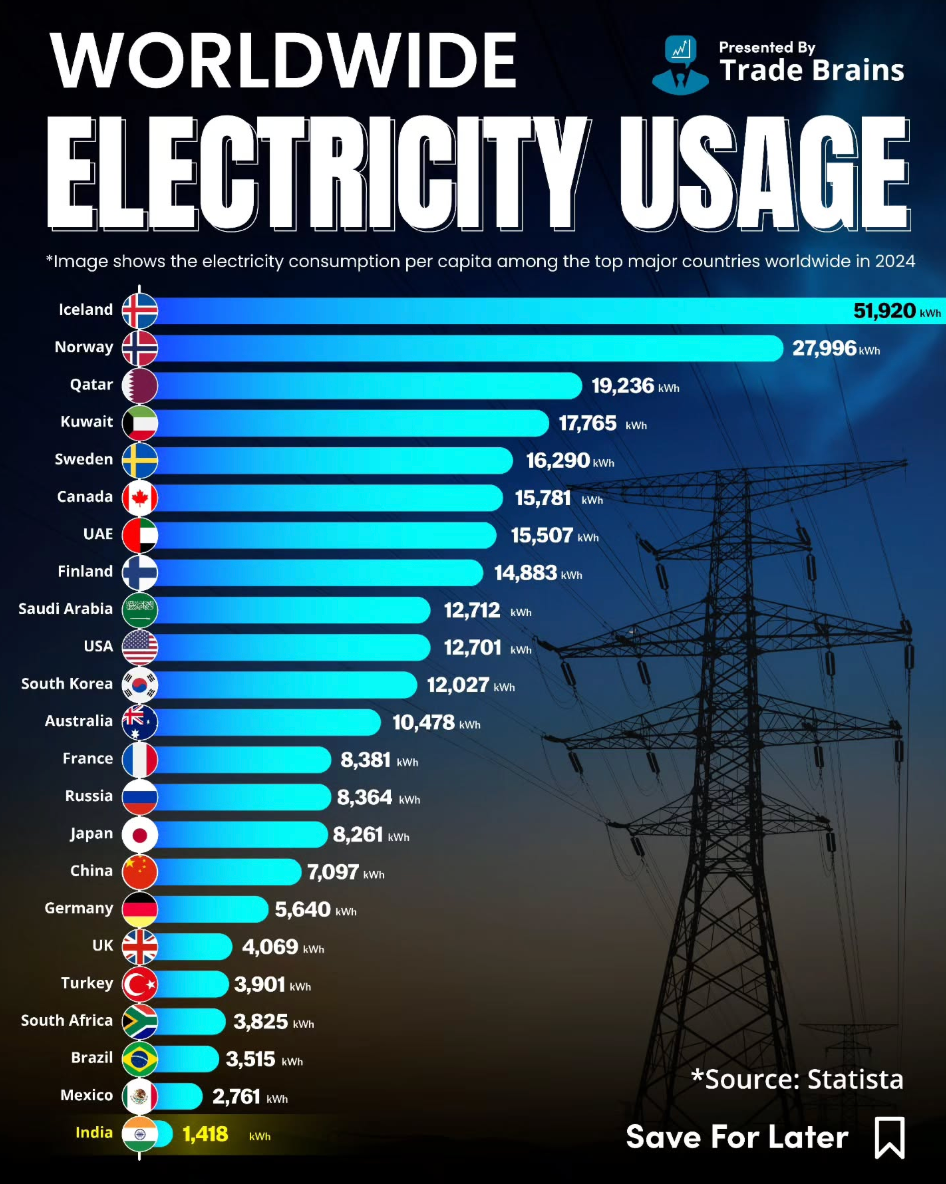
Now combine this with India’s baseline reality. Per capita electricity consumption in India is still much lower than in developed countries. So when an appliance like an AC enters the picture, it doesn’t just add to consumption, it dominates it. Cooling is not incremental consumption. It is disproportionate consumption.
Policymakers are starting to see the scale of this shift. India already has a long-term Cooling Action Plan that aims to reduce cooling demand and improve efficiency over time. Air conditioners are also regulated under the Bureau of Energy Efficiency’s star labelling system, which nudges consumers toward more efficient models. There have even been discussions around standardising temperature settings so ACs don’t go below 20°C, and ensuring default settings stay around 24°C to avoid unnecessary power use.
But here’s where it gets interesting. The technology to solve this problem already exists. Studies suggest that by doubling AC efficiency standards, India could avoid severe power shortages in the future and potentially save consumers over ₹2 lakh crore in electricity costs over the next decade. Even today, hundreds of AC models in the market already perform better than the highest efficiency standards required. The gap isn’t innovation. It’s adoption.
At the same time, this is a climate and inequality story. India is getting hotter, with more frequent and intense heatwaves. For many households, especially in urban areas, cooling is becoming less about comfort and more about survival. But as more people gain access to ACs, the pressure on the power grid intensifies. It’s a classic feedback loop. Rising temperatures drive AC adoption, and increased AC use drives higher electricity demand, which in turn stresses the system further.
The closing:
India is entering an era where cooling will define how the country builds its power infrastructure, designs its cities, and manages its energy future. The next phase of India’s growth won’t just be about adding more electricity. It will be about using it smarter, especially when it comes to something as simple, and as power-hungry, as staying cool.