

 Newsletter
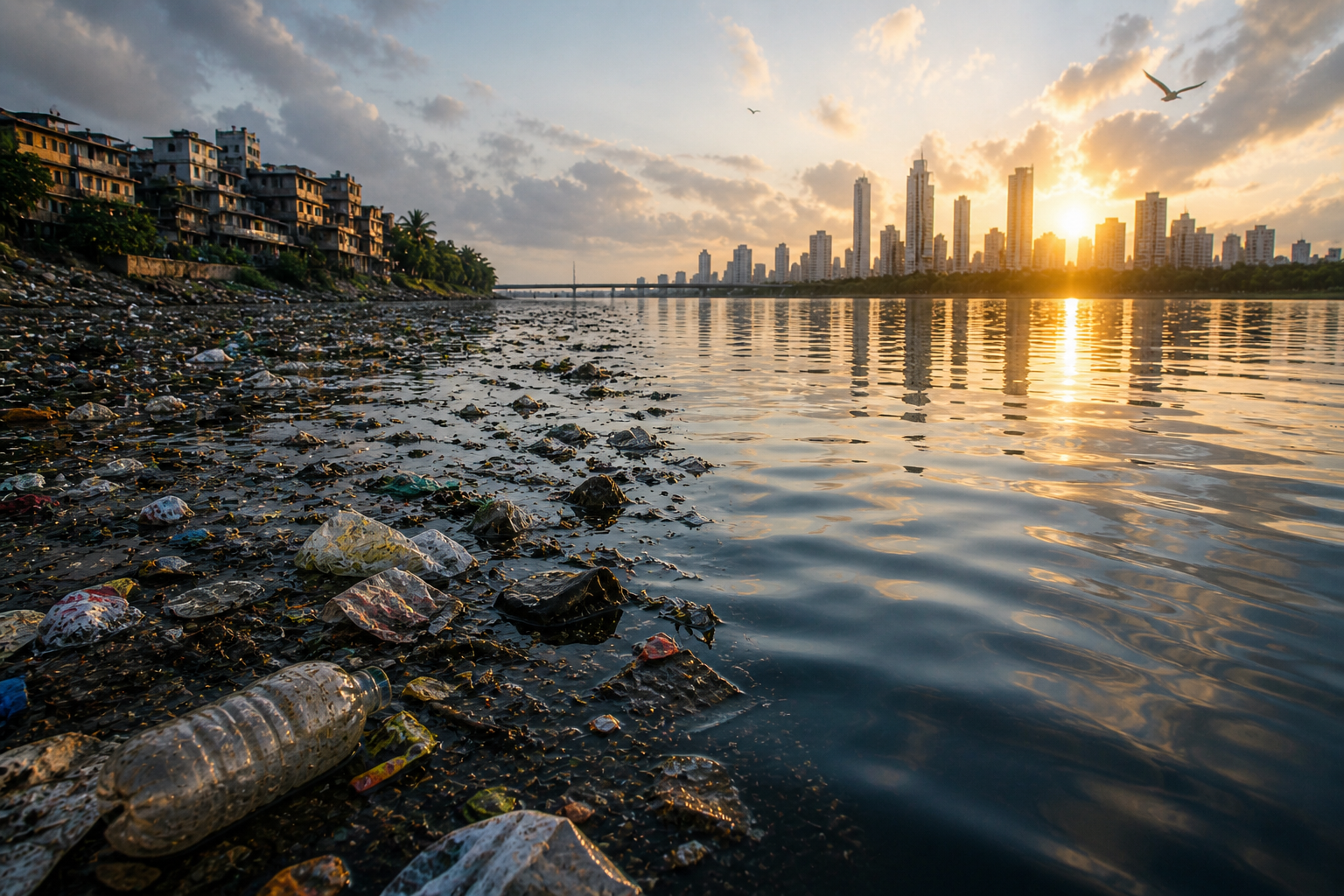
India may be inching toward cleaner rivers, but don’t celebrate just yet.
The latest Central Pollution Control Board (CPCB) assessment shows polluted river stretches have come down to about 296 across 271 rivers, from 351 in 2018.
However, it still means hundreds of river segments fail basic water quality norms in a country where demand is exploding. At the same time, groundwater reports suggest nearly 28% of sampled water sources exceed safe limits for contaminants like nitrate and fluoride.
So even as India reduces visible pollution in rivers, the invisible crisis under the ground continues to spread.
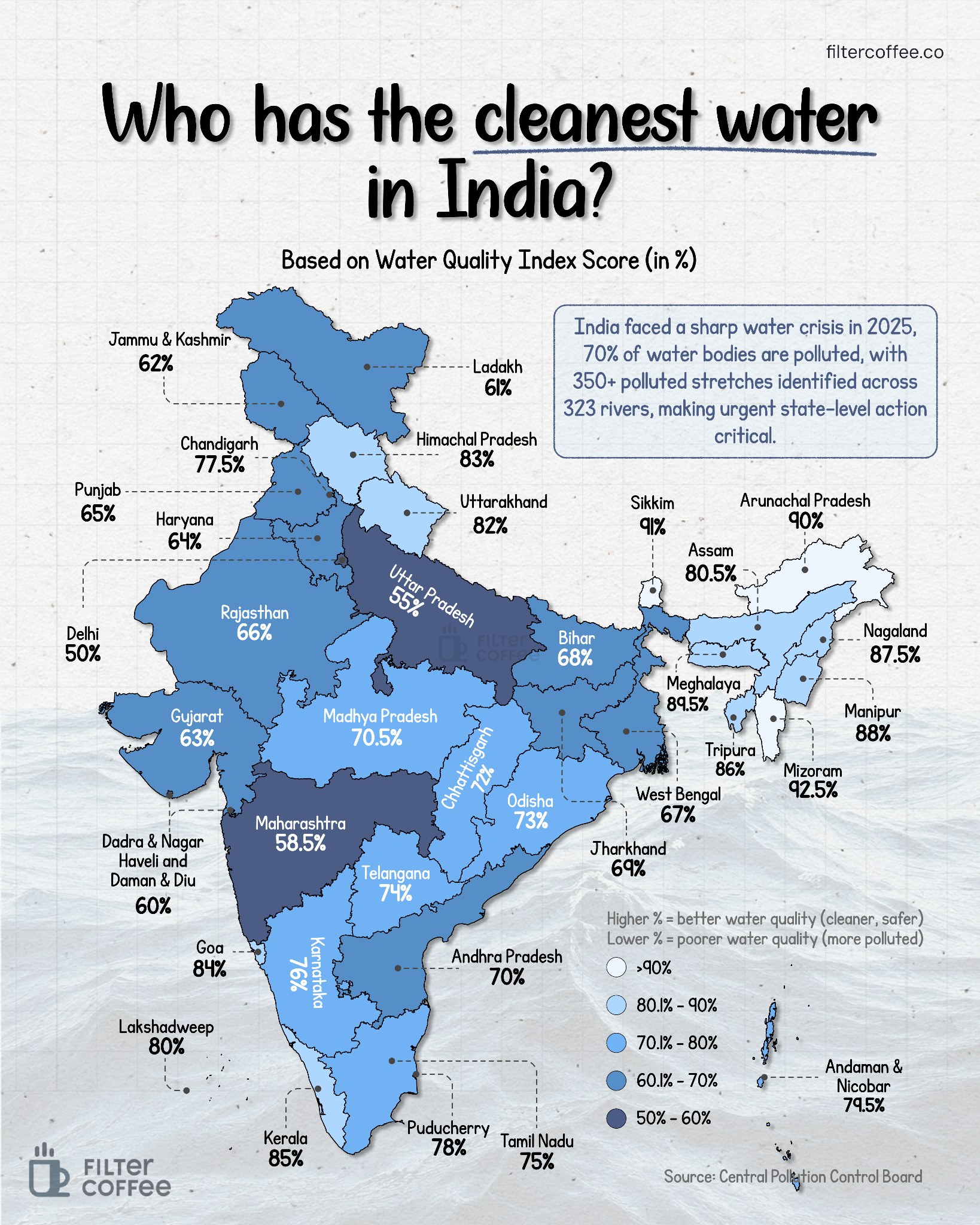
But where is India’s cleanest water?
A study suggests the North East and Himalayan belt dominate the top spots as Mizoram, Sikkim, Arunachal Pradesh, Meghalaya and Manipur all rank above 88-92% on water quality scores, while states like Kerala, Goa and Himachal Pradesh also perform relatively well.
Meanwhile, large and densely populated states like Uttar Pradesh, Delhi and Maharashtra lag behind with significantly lower scores.
At first, it seems like a simple geography story. More forests, more rain, and less industry should mean cleaner water. But the reality is more complex.
India’s water problem is not just about scarcity, but also about usable water.
The country holds roughly 4% of the world’s freshwater resources but supports nearly 18% of the global population.
That imbalance alone creates stress, but pollution turns that stress into a full-blown crisis.
Nearly 70% of India’s water is estimated to be contaminated. This means even when water exists, it often cannot be consumed without treatment, and treatment infrastructure is where things begin to break down.
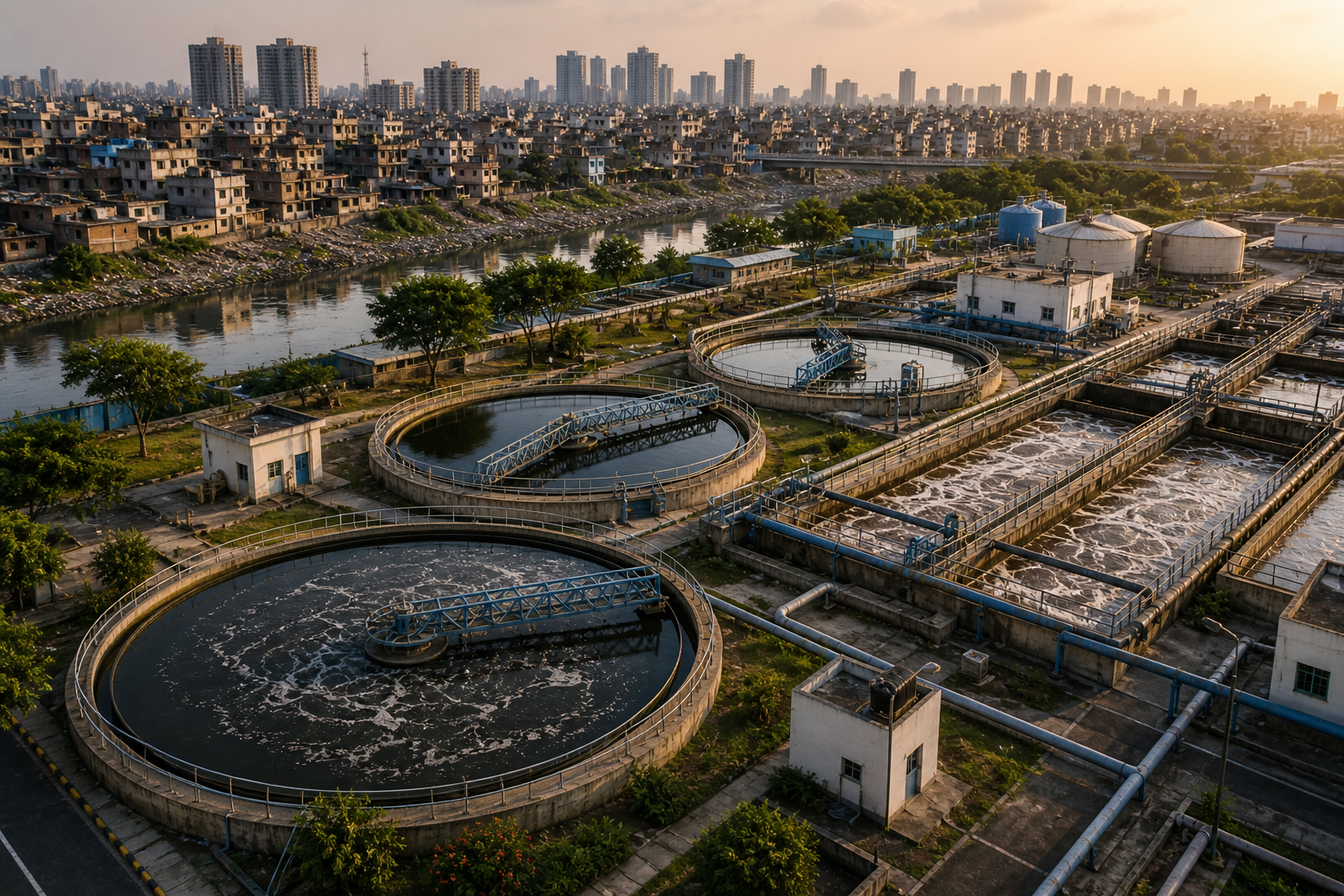
Take sewage.
Urban India generates massive volumes of wastewater every day, but treatment capacity consistently falls short. Even where sewage treatment plants exist, many are underutilised or poorly maintained.
The government has built infrastructure, but the system struggles with last-mile connectivity, electricity costs and operational inefficiencies.
This is why the Jal Shakti Ministry keeps emphasizing not just building plants, but ensuring they actually run effectively. Then there is groundwater, which quietly supports most of India’s drinking water needs and unlike rivers, groundwater pollution is harder to detect and even harder to reverse.
Excess fertilizer use contaminates groundwater with nitrates, while natural geology adds fluoride and arsenic in many regions. And once polluted, aquifers take decades to recover, if they recover at all. So even if rivers improve, groundwater remains a slower, more worrying problem.
The regional divide also says something about development patterns. States in the North East have lower industrialisation and urbanisation, which reduces pollution load. But that also means they are at an earlier stage of economic expansion.
As these regions develop, they could face the same pressures seen in more industrialised states unless they adopt better water management early on. On the other hand, states like Gujarat, Maharashtra and Uttar Pradesh illustrate what happens when population growth, industrial activity and weak enforcement collide.
Here is the uncomfortable truth.
India is not just fighting a water shortage but also a water quality collapse.
Cleaning rivers is only one piece of the puzzle. Fixing sewage systems, regulating industrial discharge, managing agriculture runoff and protecting groundwater are equally critical.
Progress is happening, but it is uneven and fragile. The gap between having water and having clean water is where India’s real challenge lies, and that gap is far from closing.


