

 Newsletter

When Mukesh Ambani and Mark Zuckerberg decide to build something together, it’s a hint that the next big thing might just be made in India. Last weekend, Reliance Industries and Meta announced a ₹855 crore joint venture to build and distribute enterprise AI services across India.
The new company, called Reliance Enterprise Intelligence Limited (REIL) will be majority-owned by Reliance with a 70% stake, while Meta’s Facebook Overseas Inc. will hold the remaining 30%. The announcement came with little fanfare but huge implications: this could very well be India’s boldest step yet toward building its own AI backbone.
Now, to most people, ₹855 crore may sound like just another corporate investment figure. But think about what’s happening around it.
India, according to the Ministry of Electronics and IT, has already crossed $20 billion in cumulative AI investments in 2025. Google, AWS, TCS, Microsoft, and now Reliance; every major player is racing to build the infrastructure that will power the next generation of computing.
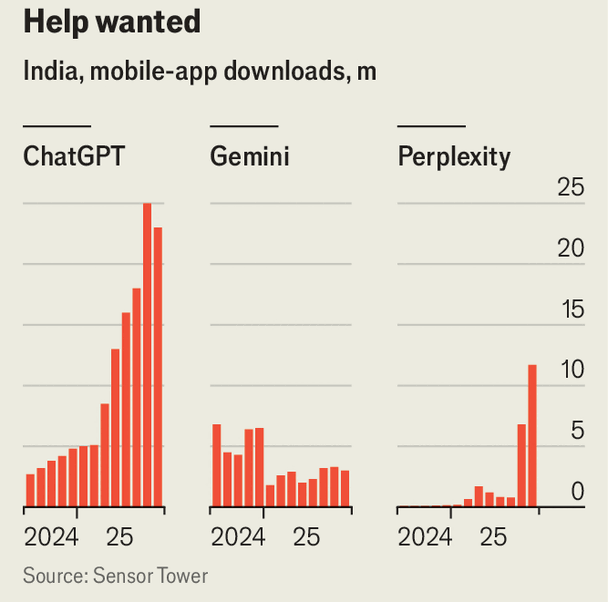
For context, Google alone has pledged $15 billion for an AI data hub in Visakhapatnam. AWS is pouring $12.7 billion into Indian cloud infrastructure by 2030. Microsoft has announced $3 billion for its AI and cloud initiatives. Add private equity and venture capital investments into Indian AI startups; another $5.3 billion till October 2025 and you start to see the size of the sandbox. So when Ambani steps in, it’s not just about keeping up; it’s about taking the lead.
Reliance has always played the long game with technology. Jio disrupted telecom, not by offering cheaper calls, but by turning data into oxygen. Now, Ambani is trying to do the same with artificial intelligence.
Earlier this year, at Reliance’s annual general meeting, he laid out an AI blueprint through a new subsidiary called Reliance Intelligence. The idea is to build India’s own AI stack from the ground up; everything from gigawatt-scale data centers to AI-powered services for sectors like healthcare, education, energy, and retail.
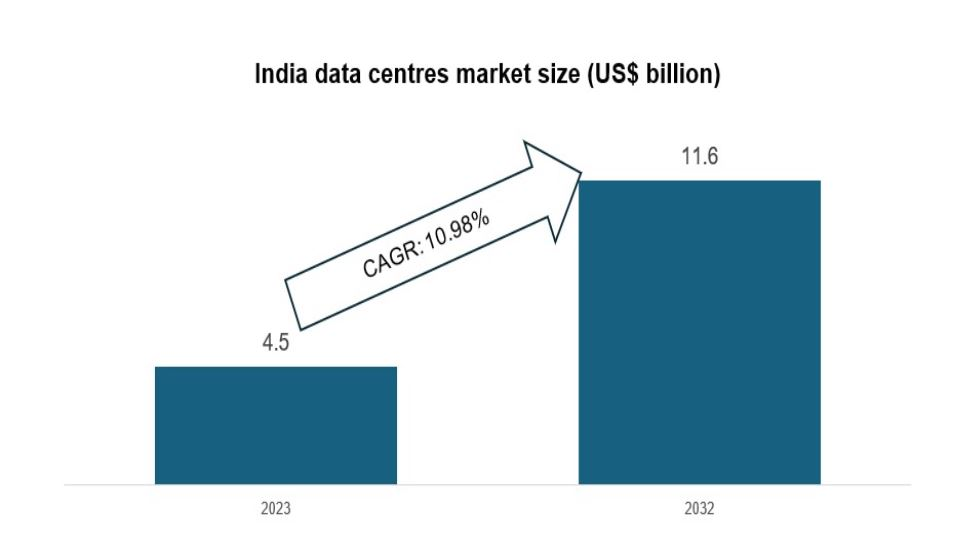
Morgan Stanley, in its recent report, estimated that Reliance could invest as much as $12–15 billion in AI infrastructure over the next few years. That includes building a 1GW data centre in Jamnagar... yes, the same Jamnagar known for the world’s largest oil refining complex; which will now house some of the world’s most advanced AI hardware.
Phase one of that data centre is already underway, and it’s not just about storage or compute capacity. It’s about creating what analysts are calling “Datacenter as a Service.” Reliance plans to underwrite roughly 25% of this capacity for itself; worth about $7 billion and lease out the rest to hyperscalers, LLM developers, and Indian enterprises.
Morgan Stanley also estimates that Reliance could generate $1.5–1.6 million per megawatt annually in revenue from this setup. And since data centers are massive energy consumers, Reliance also plans to power them using its own renewable ecosystem; over 100GW of solar capacity and 30–40GWh of battery manufacturing. In short, Reliance is building not just India’s AI infrastructure, but the energy grid that will keep it running.
But infrastructure alone doesn’t make AI useful. That’s where Meta comes in. Through this partnership, Reliance and Meta will combine their strengths: Reliance’s deep industry reach and Meta’s open-source AI models like Llama. Meta’s statement described the venture as a mission to “democratize AI for Indian enterprises.”
Translation: give businesses from large corporations to small-town startups access to generative AI tools that are cheaper, secure, and customizable. Something like, sales teams using AI chatbots that understand regional languages, hospitals deploying automated diagnosis assistants, or local manufacturers using predictive maintenance tools trained on Indian data.
For Meta, this partnership is about embedding Llama into the world’s fastest-growing enterprise market.
Mark Zuckerberg himself said, “We’re excited to deepen our partnership with Reliance to bring the power of open-source AI to Indian developers and enterprises.” In a way, Meta’s AI strategy is moving beyond social platforms and into enterprise ecosystems.
By tying up with Reliance, it gets instant access to one of the largest digital infrastructures in the world: Jio’s network, Reliance Retail’s supply chain, and the company’s massive reach across sectors. That’s millions of potential users who could start using AI without needing to rely on expensive foreign cloud services.
Reliance, meanwhile, gets what it always wants: control over the ecosystem.
REIL will build and distribute enterprise-grade AI models specifically tuned for Indian businesses, likely focusing on small language models and local datasets. The company’s focus areas will be education, healthcare, retail, agriculture, and financial services that mirror India’s own digital priorities.
Ambani’s statement called it “sovereign, enterprise-ready AI for India,” a phrase that perfectly captures the new digital nationalism shaping global tech.
If you zoom out, this is part of a global trend. The US remains the undisputed AI leader with over $470 billion in private investments, followed by China at $119 billion. But India’s acceleration is turning heads; it’s now ahead of Japan, France, and South Korea in cumulative AI funding. And unlike the West, India’s advantage lies in scale and diversity. With over a billion internet users and one of the world’s largest pools of software engineers, it’s a country uniquely positioned to train, deploy, and localize AI systems for real-world use. That’s the big opportunity Ambani and Zuckerberg are chasing.
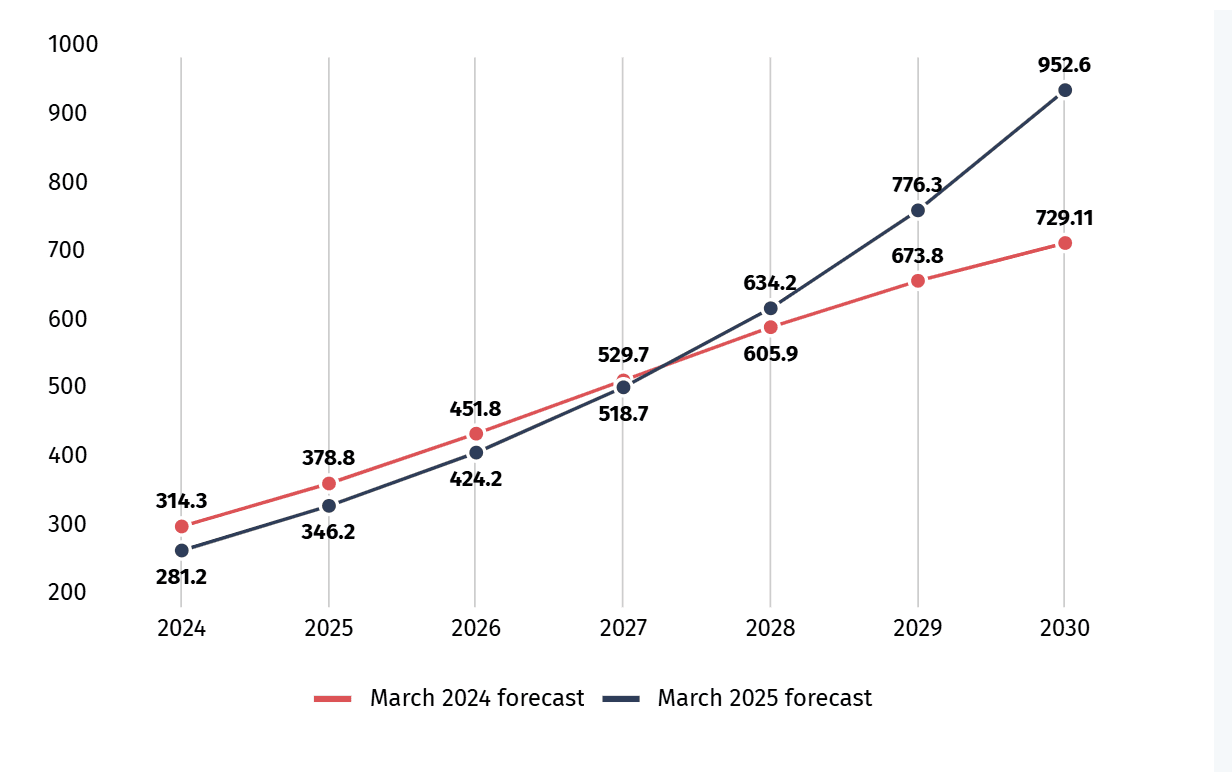
For years, AI was treated as an R&D playground; nice to talk about at conferences, tough to commercialize at scale. But now, it’s becoming a core business. TCS plans to invest up to $7 billion in AI data centers. Infosys is developing its own generative AI suite called Topaz. Startups like Sarvam AI and Krutrim are building large language models trained on Indian languages. And with government backing—like the $1.2 billion GPU initiative to support AI infrastructure—the ecosystem is beginning to look less like Silicon Valley’s shadow and more like its parallel.
Reliance’s approach is characteristically full-stack. Instead of licensing AI from others, it’s building everything in-house: data centers, chips, software, cloud, and services. The new AI division has four verticals: Infrastructure, Partnerships, Services, and Talent.
Infrastructure is where the big money is going; Partnerships bring in allies like Meta, Google, and Microsoft; Services focus on deploying AI for sectors that drive India’s GDP; and Talent is about building an AI-skilled workforce through Jio University and other education initiatives. It’s a classic Reliance play—vertical integration meets national ambition.
What’s interesting is how this partnership could spill into Reliance’s existing businesses.
Jio could roll out AI-powered network optimization, customer service bots, or vernacular voice assistants. Reliance Retail might deploy AI for supply chain prediction, personalized recommendations, and inventory automation. Even the company’s media arm could use generative tools to personalize streaming content or advertising.
In a way, AI could become the invisible thread connecting all of Reliance’s consumer and enterprise verticals.
And for Meta, the upside is equally compelling. India is already its biggest market in terms of users. The cultural timing also couldn’t be better.
Around the world, countries are pushing for digital sovereignty: controlling their own AI infrastructure instead of depending entirely on American or Chinese models. Europe has its AI Act. China has its state-backed models. India’s approach, though, is uniquely hybrid: public-private collaboration with open-source innovation at the core. Reliance and Meta’s JV fits perfectly into that narrative—global tech meets local execution.
Morgan Stanley expects an ROCE of around 11% on Reliance’s AI investments in the initial phase. That’s modest but strategic; the goal isn’t short-term profit, it’s market capture. Once the infrastructure and software layers are in place, the network effects kick in. Think Jio in 2016: cheap data first, monetization later. This time, it could be AI compute credits instead of 4G plans.
If you connect the dots, REIL is more than a joint venture—it’s a cornerstone in what could become India’s AI industrial complex. A world where the country not only consumes AI but builds, exports, and governs it. It’s no coincidence that Ambani often frames his digital ambitions as nation-building projects.
Meta, for its part, gains something equally valuable: credibility in enterprise AI. Despite its massive user base, Meta’s revenue still leans heavily on ads. The Llama-based enterprise solutions being built through this partnership could give it a new, B2B revenue line in one of the world’s most dynamic economies. It’s a strategic hedge against an uncertain global regulatory climate, and a chance to position Llama as the go-to open-source model for business use.
So what happens next? The first phase of the Jamnagar data center will likely go live within two years, powering initial enterprise clients. REIL will start with open-source language models adapted for Indian contexts; smaller, efficient systems that can run locally rather than relying on foreign cloud infrastructure. Over time, these could evolve into industry-specific AI stacks: healthcare diagnostics, retail analytics, financial fraud detection, or agri-tech forecasting. If all goes as planned, by the end of this decade, a large chunk of India’s enterprise AI could be running on the backbone built by Reliance and Meta.
In the end, that’s the essence of Reliance’s AI push. Just like Jio made the internet accessible to everyone, REIL could make AI usable by everyone—from a kirana store owner automating orders to a hospital diagnosing patients faster. The AI race isn’t just about who builds the smartest model; it’s about who builds the most inclusive one. And this time, India’s not waiting for the future to arrive—it’s building it, line by line, dataset by dataset, right here.
Also Read: Why Reliance and Adani are betting big on India’s data center boom?
FAQs
What is the Reliance and Meta AI joint venture about?
Reliance Industries and Meta Platforms have launched a ₹855 crore joint venture called Reliance Enterprise Intelligence Limited (REIL) to develop, market, and distribute enterprise AI solutions in India. The venture aims to make advanced AI tools accessible for businesses across industries using open-source Llama models from Meta and Reliance’s vast digital infrastructure.
Who owns Reliance Enterprise Intelligence Limited (REIL)?
Reliance Intelligence, a subsidiary of Reliance Industries, holds a 70% stake in REIL, while Meta’s Facebook Overseas Inc. owns the remaining 30%. The joint venture brings together Reliance’s scale and Meta’s AI expertise to create enterprise-ready AI solutions for the Indian market.
How much are Reliance and Meta investing in AI through this venture?
Both companies have jointly committed an initial investment of ₹855 crore for REIL. This marks one of the largest corporate collaborations in India’s AI ecosystem, focused on developing indigenous and enterprise-level AI technologies.
What will the Reliance-Meta AI joint venture focus on?
The joint venture will focus on building enterprise AI models, cloud infrastructure, and generative AI tools for industries such as education, healthcare, retail, energy, and agriculture. It will also help small and medium businesses adopt AI-based solutions efficiently.
Why is this partnership important for India’s AI growth?
The partnership between Reliance and Meta strengthens India’s ambition to build “sovereign AI” — technology developed and trained locally for Indian use cases. It aligns with India’s growing AI investments, which have crossed $20 billion in 2025, and positions the country as a global player in enterprise AI.
Where will Reliance build its AI infrastructure?
Reliance is setting up a massive 1GW AI-ready data centre in Jamnagar, Gujarat. The facility will power REIL’s AI operations and offer “Datacenter as a Service” to enterprises, hyperscalers, and AI developers, supported by renewable energy from Reliance’s solar and battery ecosystem.
How does Meta benefit from this collaboration with Reliance?
For Meta, the partnership helps expand its open-source Llama AI models into real-world enterprise use in India. It gives Meta access to Reliance’s vast digital network through Jio, Retail, and other verticals, allowing it to reach millions of users and businesses at scale.
How much will Reliance invest overall in AI infrastructure?
According to Morgan Stanley, Reliance may invest between $12 billion and $15 billion over the next few years to develop AI infrastructure. This includes data centres, AI chips, and partnerships to support India’s growing demand for artificial intelligence applications.
How will this joint venture impact Indian businesses and startups?
The venture will make enterprise AI tools more affordable and accessible for Indian companies, startups, and SMBs. It will enable automation, better data analytics, and local-language AI solutions that can transform sectors from retail to education and agriculture.
What is meant by “sovereign AI,” and how is Reliance contributing to it?
“Sovereign AI” refers to a country’s ability to build and control its own AI ecosystem — from data to models to infrastructure. Reliance’s AI push, through REIL, aims to create locally trained, enterprise-ready AI that reflects India’s languages, business needs, and digital values.