

 Newsletter

Reliance Industries has just signed one of the largest clean energy deals to come out of India. In March 2026, the company entered into a binding agreement with South Korea’s Samsung C&T to supply green ammonia for 15 years, with deliveries expected to begin around 2029. The deal is valued at over $3 billion and marks one of the earliest long-term supply contracts in a market that is still taking shape.
This may look like another big corporate announcement in the renewable energy space. But if you look a little closer, this deal tells you something much bigger. It shows how companies are beginning to solve the hardest problem in the green hydrogen economy, which is not technology, not funding, but certainty.
Because right now, the global green hydrogen and ammonia market is stuck in a loop. Producers are hesitant to invest billions of dollars into building large-scale facilities without knowing who will buy their output. At the same time, buyers are unwilling to commit to long-term contracts for a product that is not yet available at scale. This creates a standstill where both sides are waiting for the other to move first.
What Reliance has done is break that cycle.
By securing a long-term offtake agreement with Samsung before the project is fully operational, it has created visibility on future demand. This matters because in large infrastructure projects, predictable revenue streams make financing significantly easier. Banks and investors are more comfortable funding projects when there is a committed buyer, especially over a long horizon like 15 years. It reduces demand risk, which is often one of the biggest uncertainties in new industries.
At the same time, for Samsung, this agreement provides access to a steady supply of green fuel in the future. Countries like South Korea have limited domestic energy resources and rely heavily on imports. As they move toward reducing emissions in industries such as power generation, shipping, and manufacturing, securing reliable sources of low-carbon fuels becomes critical. Long-term contracts help reduce exposure to price volatility and supply disruptions in traditional energy markets.
To understand why this deal is significant, it helps to understand what green ammonia actually is and why it is attracting so much attention.
Ammonia has been produced and traded globally for decades, primarily for use in fertilisers. Traditionally, it is made using natural gas, which leads to significant carbon emissions. Green ammonia, on the other hand, is produced using renewable energy.
The process begins with electricity generated from renewable sources such as solar or wind. This electricity is used in electrolysers to split water into hydrogen and oxygen. The hydrogen is then combined with nitrogen from the air to produce ammonia. Since the entire process can be powered by renewable energy, the resulting product has a much lower carbon footprint compared to conventional ammonia.
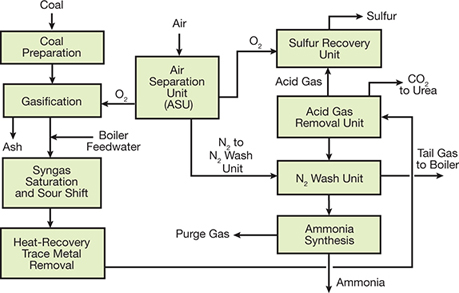
Image Source: Khatabook
What makes ammonia particularly important is its role as a carrier for hydrogen. Hydrogen is widely seen as a key fuel for the future, especially for sectors that are difficult to decarbonise, such as heavy industry and long-distance transport. However, hydrogen is challenging to store and transport due to its physical properties. It requires either very high pressure or extremely low temperatures, both of which add complexity and cost.
Ammonia offers a practical solution to this problem. It is easier to liquefy, store, and transport using existing infrastructure. This means hydrogen can be effectively converted into ammonia, shipped across long distances, and then either used directly or converted back into hydrogen at the destination. As a result, green ammonia is emerging as an important link in the global clean energy supply chain.
This is why countries like Japan and South Korea are actively exploring ammonia as part of their energy transition strategies. They are expected to be among the largest importers of green fuels, given their limited ability to produce renewable energy at scale domestically.
Now, coming back to Reliance, the company is not just building a single plant to supply ammonia. It is attempting to build an integrated clean energy ecosystem.
At its Dhirubhai Ambani Green Energy Giga Complex in Jamnagar, Gujarat, Reliance is developing a large-scale manufacturing and production hub. Spread across thousands of acres, the complex is designed to house multiple facilities, including solar module manufacturing, battery storage systems, electrolyser production, and green fuel generation.
This integrated approach is important for a few reasons.
First, it allows greater control over costs. In the green hydrogen value chain, equipment such as electrolysers and renewable power generation systems make up a significant portion of the overall cost. By manufacturing key components domestically, Reliance aims to reduce dependence on imports and bring down costs through scale.
Second, integration helps in improving efficiency and coordination. When different parts of the value chain are located within the same ecosystem, it becomes easier to manage operations, optimise processes, and reduce logistical challenges.
Third, it creates a competitive advantage over time. As the market grows, companies that control more parts of the value chain may be better positioned to scale quickly and offer more competitive pricing.
Reliance has indicated that it plans to invest around $10 billion in its new energy business. This includes not just green hydrogen and ammonia, but also related areas such as energy storage and sustainable fuels.
At a broader level, this aligns with India’s national ambitions in the green hydrogen space.
The Government of India launched the National Green Hydrogen Mission with a target of producing 5 million tonnes of green hydrogen annually by 2030. Achieving this target would require a significant expansion of renewable energy capacity, estimated at around 125 gigawatts, along with large-scale investments across the value chain.
The mission also aims to position India as a global hub for the production and export of green hydrogen and its derivatives, such as ammonia and methanol.
There has been steady progress on multiple fronts.
Production capacities have been allocated to several companies, and incentives are being provided to encourage domestic manufacturing of electrolysers. This is important because electrolysers are a critical component in hydrogen production, and global supply chains are currently concentrated in a few regions.
The government has also started creating demand through policy measures. For example, tenders have been issued for the supply of green ammonia to fertiliser plants, which could act as an anchor market in the early stages.
Another important development is the introduction of standards for green hydrogen and ammonia. In early 2026, India notified emission thresholds that products must meet to be classified as “green.” This brings clarity to the market and helps build trust among buyers and investors.
Infrastructure is also being developed to support exports. Certain ports have been identified as potential hubs for green hydrogen and ammonia, which will be important for connecting production centres with international markets.
All of this indicates that the ecosystem is gradually taking shape, moving from policy intent to actual implementation.
However, it is important to recognise that the sector is still at an early stage.
Competition is another factor to consider. Several countries, including Australia, Saudi Arabia, and countries in Europe, are investing heavily in green hydrogen and ammonia projects. Within India as well, multiple companies are entering the space with ambitious plans.
Companies like NTPC, ACME, and AM Green are developing large-scale projects, targeting both domestic and export markets. This means that while Reliance has made a strong early move, the market is likely to become increasingly competitive over time.
The global energy system is gradually shifting toward lower-carbon alternatives, and hydrogen and ammonia are expected to play a key role in that transition, especially in sectors where electrification is not easily feasible.
Securing long-term customers, investing in integrated infrastructure, aligning with policy frameworks, and focusing on cost competitiveness are all standard elements of large-scale industrial development.
For India, this also represents an opportunity.
If the country can leverage its renewable energy potential, manufacturing capabilities, and strategic location, it could emerge as a significant exporter of green fuels. This would not only support decarbonisation efforts globally but also create new economic opportunities domestically.
The road ahead will not be straightforward. There will be challenges in technology, costs, and coordination. But the pieces are slowly falling into place.
And if this momentum continues, the next decade could see the emergence of entirely new energy supply chains, connecting countries through trade in clean fuels rather than fossil resources.
That shift has already begun. This deal is just one of the early signs.