
 Newsletter
India’s sleep economy is waking up and suddenly, everyone wants a piece of it.
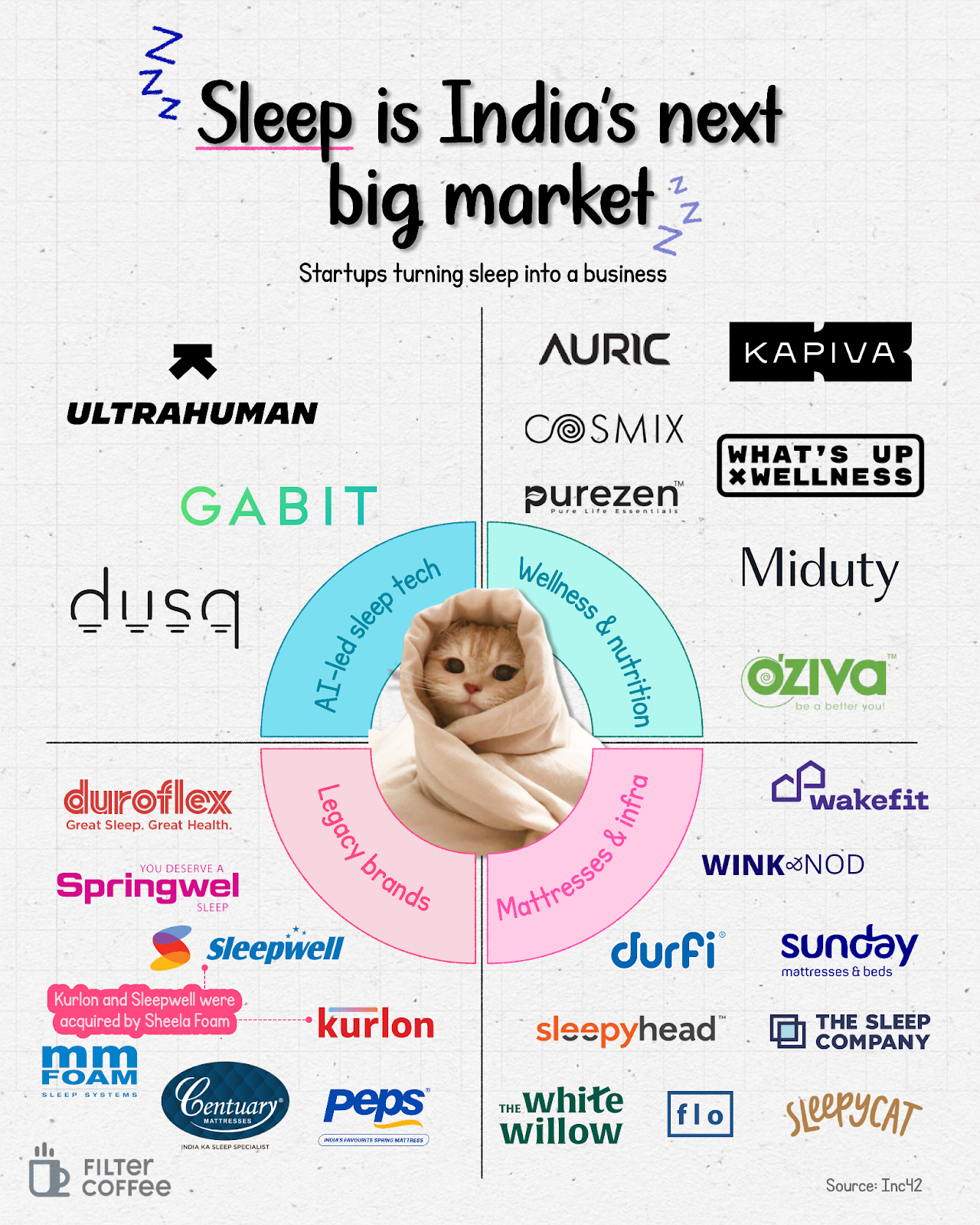
In 2025–26, this once-overlooked category saw a flurry of activity: Wakefit moved closer to its IPO after filing with SEBI, The Sleep Company raised ₹480 crore and doubled down on aggressive offline expansion, and even legacy players like Duroflex lined up public market ambitions.
At the same time, startups like DUSQ raised fresh capital to build neuroscience-backed sleep solutions, while wearable brands like Ultrahuman and Gabit pushed deeper into tracking recovery and sleep quality. What was once just about buying a mattress is now shaping up to be a full-fledged consumer and healthcare ecosystem.
To understand why this is happening, you have to start with a simple problem: India isn’t sleeping well. Surveys across the country paint a worrying picture.
A 2026 LocalCircles survey covering over 89,000 respondents across 393 districts flagged widespread sleep deprivation, while Wakefit’s own sleep scorecard based on 2,500+ responses showed that poor sleep has become a mainstream urban issue.
Add to this rising stress levels, long screen time, erratic work schedules, and increasing mental health concerns, and you get a massive, underserved problem. And where there’s a problem at scale, businesses follow.
Historically, sleep in India was a low-involvement purchase. You bought a mattress once every 8-10 years, usually from a local store, and that was it. Legacy brands like Sleepwell, Kurlon, and Duroflex dominated this space with manufacturing strength and distribution.
But the internet changed that. New-age brands like Wakefit, Sleepyhead, and The Sleep Company entered with a direct-to-consumer model, better pricing, and heavy digital marketing. They didn’t just sell mattresses, they sold the idea of “better sleep.” And that narrative clicked.
But things got interesting as the market didn’t just stop at mattresses. It expanded into what can only be described as a “sleep stack.”
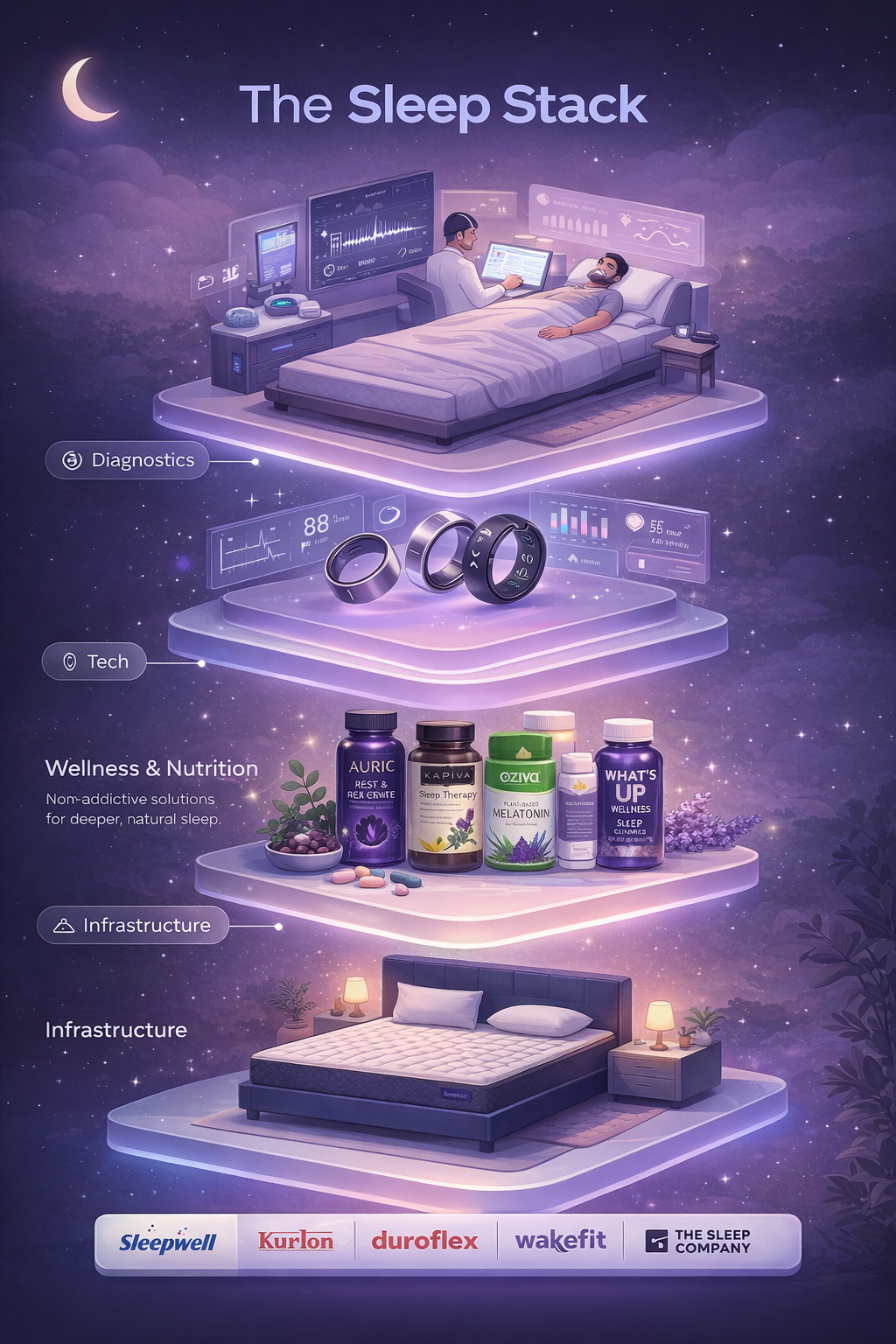
At the base, you still have infrastructure like beds, mattresses, pillows. But above that sits a rapidly growing layer of wellness and nutrition. Brands like Auric, Kapiva, Oziva, and What’s Up Wellness are now selling melatonin gummies, herbal supplements, and sleep aids, riding on the growing demand for non-addictive solutions.
Reports in 2025 highlighted a surge in melatonin consumption in India, indicating that consumers are actively trying to fix their sleep chemically but softly, through supplements rather than pharmaceuticals.
Above that sits the tech layer. Wearables like Ultrahuman’s Ring AIR and Gabit’s smart rings are turning sleep into data. They track heart rate variability, recovery cycles, and sleep stages, giving users a quantified view of how well they’re resting.
But the next wave is going a step further. Startups like DUSQ are not just tracking sleep; they’re trying to regulate and improve it using neuroscience and hardware, backed by in-house sleep labs. This signals a shift from passive observation to active intervention.
And then comes the most underappreciated layer: diagnostics. Sleep disorders like sleep apnea are massively underdiagnosed in India.
But that’s changing as new solutions like home-based polysomnography tests and affordable diagnostic devices are bringing medical-grade sleep analysis into people’s homes. This effectively turns sleep from a lifestyle concern into a healthcare category, unlocking a whole new market.
Meanwhile, distribution itself is evolving. Early D2C brands built their businesses online, but now they’re racing offline. The Sleep Company scaling to 150+ stores and targeting 200, or Duroflex planning to add 150 stores over three years, shows that sleep is an experience product. This offline push also signals maturity. The category has moved from the experimental stage to it’s entering scale mode.
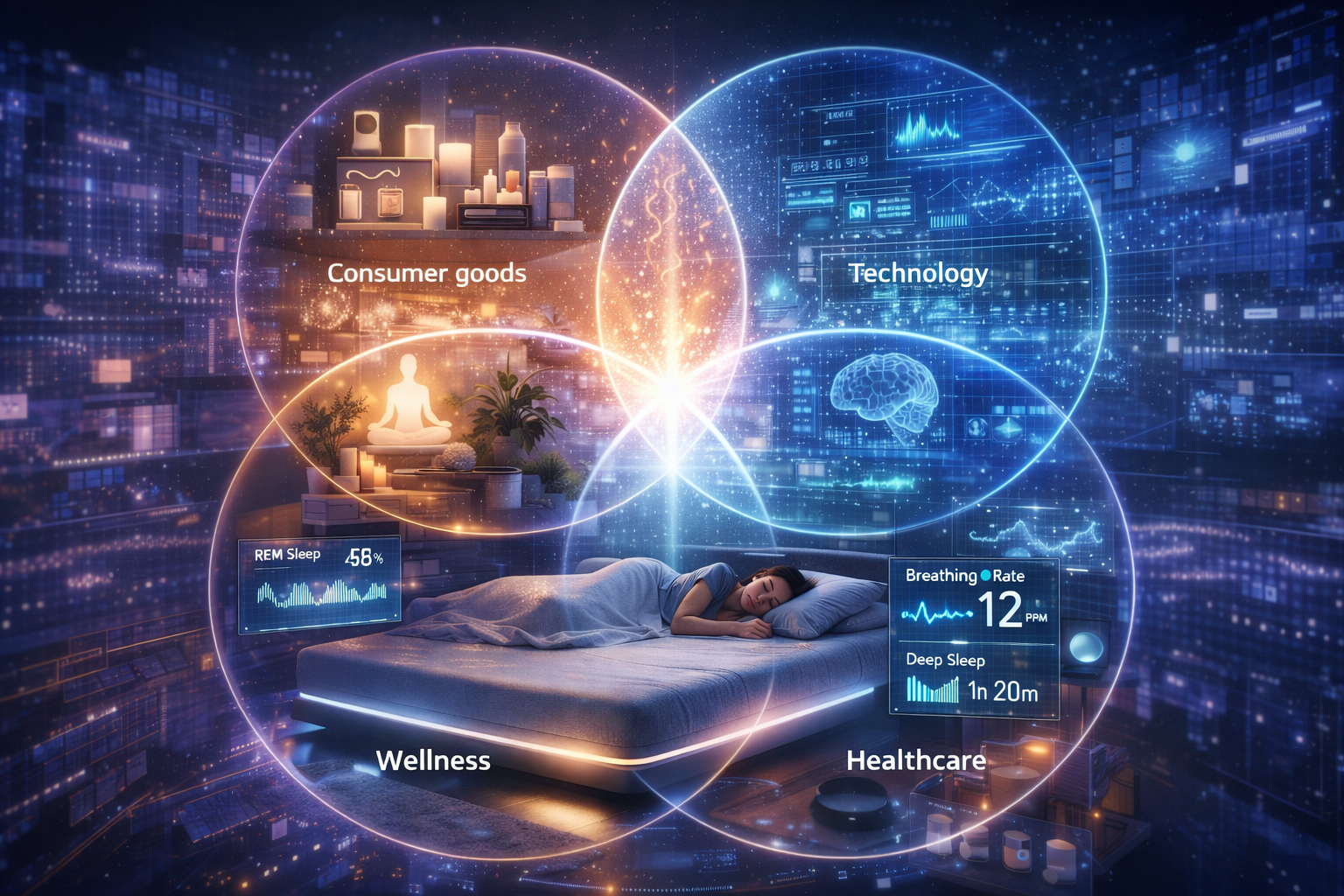
Put it all together, and what you get is a layered, fast-evolving market where multiple industries overlap: consumer goods, wellness, technology, and healthcare.
The mattress is just the entry point. The real opportunity lies in everything around it: tracking your sleep, improving it, diagnosing it, and even monetising it.
India’s sleep problem isn’t new. But what’s new is that it’s finally being treated like a business opportunity. And if the current momentum continues, sleep might just become one of the most unexpected and lucrative consumer markets of the decade.