
 Newsletter
In January 2026, Charles River Laboratories paid $507.3 million to buy assets from K.F. Cambodia, one of its key suppliers of monkeys used in drug testing.
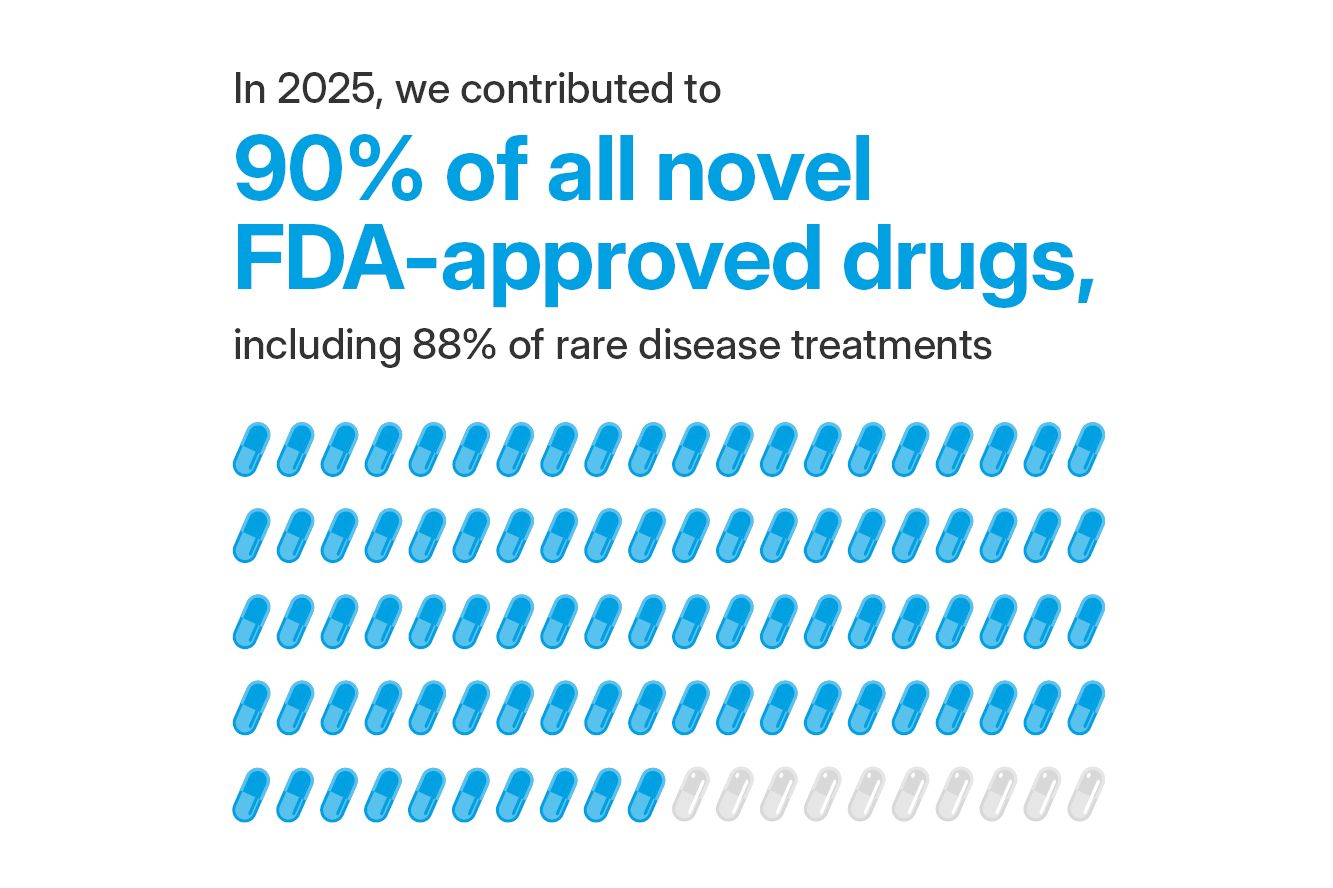
Charles River is a large company. It made $4.02 billion in revenue in 2025, and says it has worked on more than 80% of the new drugs approved by the US FDA over the past five years. Pharma companies use Charles River for different parts of drug development, including early research and safety testing before medicines are tested on humans.
And for some of that work, monkeys are still used.
Certain drugs, especially some biologics and antibody-based treatments, need to be tested on animals whose bodies react more like humans than mice or rats. Macaques are commonly used for this.
The cost can add up quickly. According to the FDA, a typical monoclonal antibody testing programme can involve more than 100 non-human primates, with costs of roughly $50,000 per animal once the full testing programme is included.
So access to enough healthy, properly documented animals is a serious business requirement for companies like Charles River.
For years, a large part of that supply came from China.
In 2019, the US imported more than 30,000 non-human primates, and around 60% came from China. Cynomolgus macaques made up most of these imports and were widely used in pharmaceutical research.
Importing them was often cheaper and easier than running huge breeding colonies inside the US, so the industry became heavily dependent on overseas suppliers.
Then Covid hit.
China restricted exports of non-human primates in early 2020, just when researchers around the world were rushing to develop vaccines and treatments.
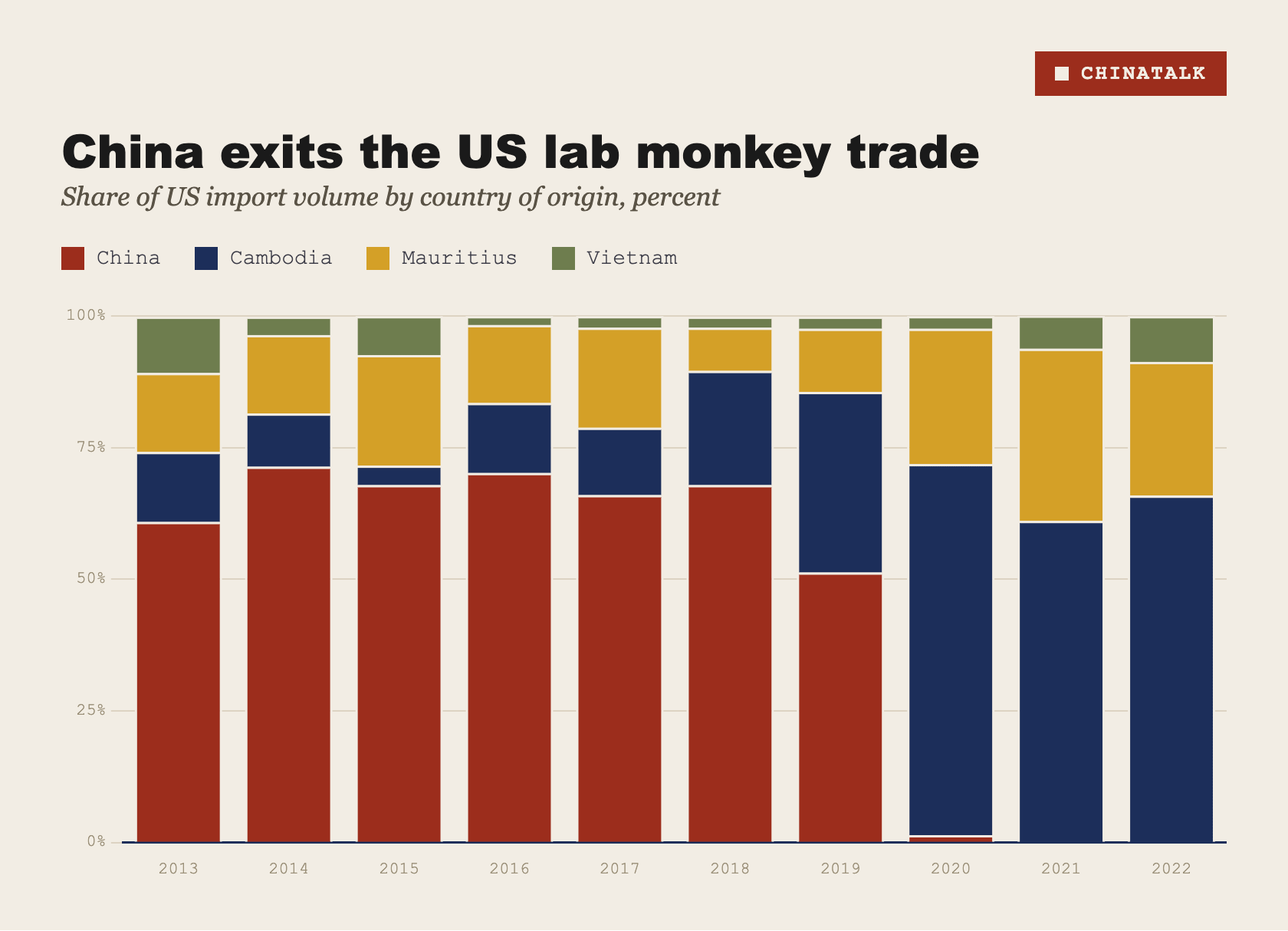
US imports of cynomolgus macaques from China dropped from 15,887 in 2019 to 360 in 2020. By 2021, imports had fallen to zero.
That created a supply problem almost overnight.
And unlike most products, you cannot simply increase monkey production when demand rises.
Breeding colonies take years to build. The animals have to be born, raised, screened for diseases, tracked properly and kept under controlled conditions before they can be used in research.
So even when buyers were willing to pay more, supply could not increase quickly.
By 2021, the shortage had become serious. Around two-thirds of requests for research-naïve macaques at US National Primate Research Centers could not be fulfilled.
Prices also rose sharply. The US National Academies found that the cost of individual primates had increased by anywhere from 10% to 200%, depending on the species and where the animals came from.
With China no longer supplying enough animals, companies started buying from other countries. Cambodia, Mauritius and Vietnam became much more important.
Cambodia, in particular, became a major supplier. It sent 10,631 cynomolgus macaques to the US in 2019. That jumped to 17,820 in 2020 and 18,586 in 2021.
Cambodia stepped in as China disappeared
US imports of cynomolgus macaques, 2019 to 2021
But this created another issue. When pharma companies buy animals for regulated research, they need to know exactly where those animals came from. Their breeding history, health records and legal origin all matter.
As scrutiny around Cambodia's primate trade increased, questions emerged around whether some wild-caught monkeys were being passed off as captive-bred animals.
For a company like Charles River, that creates a serious risk. A supplier problem can delay research. A problem with the animals' paperwork or origin can create regulatory trouble as well.
Charles River's response has been to control more of the supply itself. The company had already started moving in this direction before the K.F. Cambodia deal.
In 2022, it bought a 49% stake in Mauritius-based primate supplier Noveprim for $90 million, with additional payments possible later.
Then in 2023, Charles River increased its ownership in Noveprim to 90%.
K.F. Cambodia was even more important to its business. Charles River says K.F. had supplied slightly more than 30% of the non-human primates it sourced globally for its Discovery and Safety Assessment business during the two years before the acquisition.
By combining K.F. with Noveprim, Charles River expects to get most of the primates it needs each year from suppliers it owns. That gives it much more control over availability, costs and sourcing.
Charles River says the acquisition should lower supply costs, improve profit margins and give it more control over biosecurity, compliance and audits. After years of shortages and sourcing problems, Charles River decided it was safer to control more of the supply itself. Other industries do something similar.
Car companies invest in battery factories when batteries become too important to leave entirely in someone else's hands. Technology companies secure chip-making capacity when shortages become a threat.
Charles River is following the same business logic, except its critical input is a living animal that takes years to breed and prepare for research.
At the same time, the industry is slowly moving in another direction.
While Charles River is spending hundreds of millions of dollars securing its monkey supply, the FDA is trying to reduce how many animals pharma companies need in the first place.
In 2025, the FDA introduced a roadmap to reduce animal testing for monoclonal antibodies and other drugs.
Charles River’s slow takeover of its monkey supply
How the company gradually brought more of its primate supply in-house
The regulator wants companies to use more alternatives, including computer-based toxicity models, organoids and other methods that may predict how humans will respond to a drug without always relying on animals.
By 2026, the FDA said it had already met its first-year goals, including progress towards cutting or shortening some long-term primate studies.
The regulator also says that more than 90% of drugs that successfully pass animal studies still fail to receive FDA approval, often because safety or effectiveness problems appear later in humans.
Charles River is also investing in alternatives to animal testing. Around the same time as the K.F. Cambodia deal, it moved to buy the remaining stake in PathoQuest, which uses next-generation sequencing for non-animal testing.
So the company is doing two things at once. It is securing the monkey supply its clients still rely on today, while also putting money into methods that may reduce that need over time.
That is probably the clearest way to read the K.F. deal. Charles River is not betting that monkeys will always remain central to drug testing. It is making sure that as long as they are needed, it is less exposed to shortages and outside suppliers.
Because drug development still depends on a lot more than labs and scientists. It also depends on whether the right animals, materials and testing capacity are actually available when companies need them.