
 Newsletter
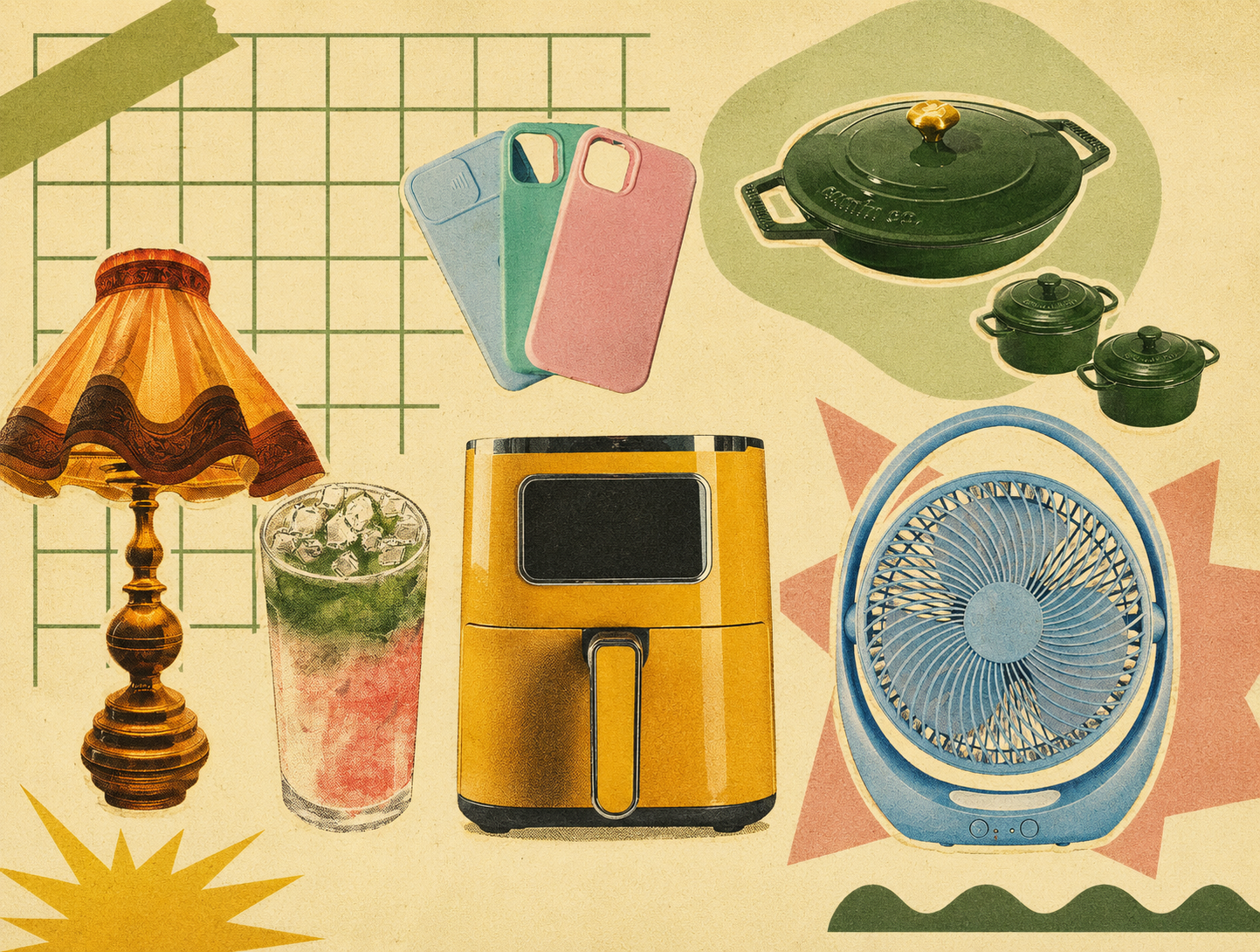
Something unusual is happening to some of the most boring products in our homes. Fans are coming to Matcha Green. Vacuum cleaners are being designed to stay out in the open. Chargers are becoming desk accessories. Even an air fryer, a machine whose entire purpose is to blast hot air at your food, is being sold partly on how nicely it fits into your kitchen.
NUUK is one of the newer Indian brands betting on this shift.
Founded in 2023, the Gurugram-based company sells fans, vacuum cleaners and kitchen appliances with softer colours, cleaner shapes and fewer of the visual cues we normally associate with appliances.
The company is still tiny compared with India's appliance giants, but its growth is worth noticing. MCA filings reported by Inc42 show that NUUK's operating revenue jumped from just ₹31.8 lakh in FY24 to ₹16 crore in FY25.
DailyObjects has been playing a version of this game for much longer.
It took products we normally bought for utility, such as phone cases, laptop sleeves, chargers and desk accessories, and made their appearance part of the buying decision. Neither company is solving an entirely new problem. Your phone needed charging before DailyObjects existed, and Indian homes certainly did not discover fans in 2023.
However, the number of consumers willing to ask a second question after "Does it work?": "Do I actually want to look at it every day?" That question matters because India's consumer durables market is getting much bigger and more premium.
IBEF expects the sector to grow at an 11% CAGR and reach roughly ₹3 lakh crore by FY29, driven partly by rising affluence, higher household penetration and premiumisation. Once consumers have more choices and more money to spend, brands cannot keep competing only on another 100 watts of power or an extra button on the remote. Design gives them another way to differentiate products whose basic jobs have existed for decades.
There is already evidence that Indian consumers are becoming comfortable paying for more than basic functionality. KPMG's 2025 consumer research found that 32% of consumers were willing to pay a premium for high-quality large appliances because they associated them with durability, performance and long-term value.
More interestingly, KPMG describes premiumisation as increasingly shifting from pure functionality towards the broader experience of owning and using a product. Its research on small appliances similarly found that consumers valued convenience, trust, ease of use and a seamless ownership experience.
Aesthetics fit neatly into that change. Imagine two table fans with broadly similar airflow and battery life. One looks like something you would put back inside a cupboard after using it. The other is cordless, compact and designed to sit beside your bed or laptop without making the room look like an electronics shop.
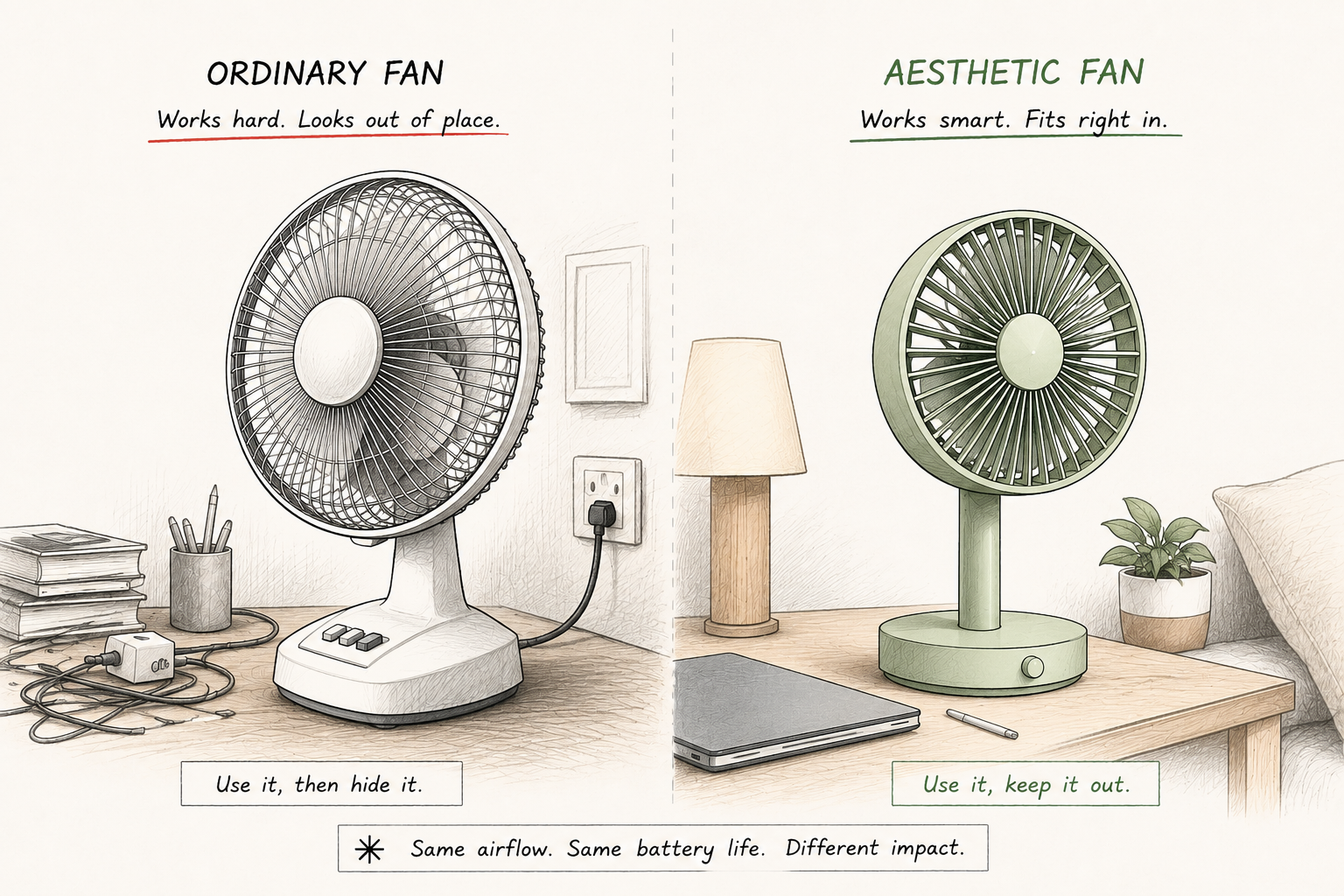
Image: AI-generated
The second product has created another reason to choose it even before its motor starts spinning. The consumer is no longer buying only airflow. They are buying something that performs a function without disrupting the space around it.
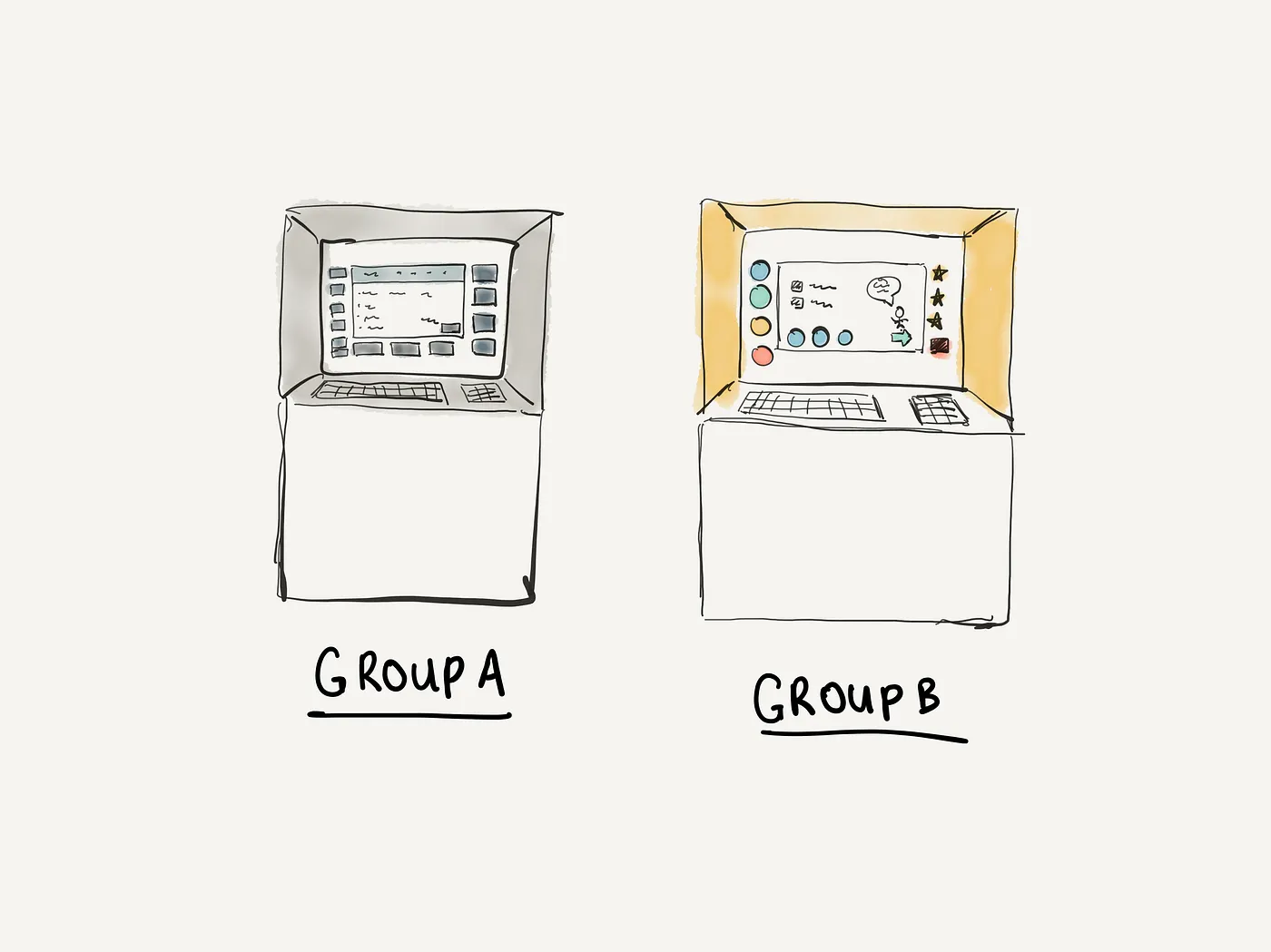
Psychologists have known for a while that appearance can influence how we experience functionality. A famous 1995 experiment by researchers Masaaki Kurosu and Kaori Kashimura found a strong relationship between how aesthetically pleasing people found an interface and how usable they believed it to be.
This later became known as the aesthetic-usability effect. It does not mean a beautiful fan secretly blows more air. It means we tend to approach well-designed products more positively, which can influence how intuitive and pleasant we expect them to feel.
But psychology alone does not explain why this is becoming more visible now. The bigger change may simply be that our homes contain far more technology than they used to. Chargers sit permanently on desks. Air fryers occupy kitchen counters. Speakers live in living rooms. Vacuums sit on charging docks. Air purifiers can run for hours.
For people working from home, the living room or bedroom may also be the office. The appliance is no longer something you use for 20 minutes and put away. Increasingly, it lives with you.
Social media has pushed this further. Instagram, Pinterest and YouTube have turned everything from kitchens to work desks into spaces people actively curate.
A ₹1 lakh modular kitchen can look carefully put together until a giant black appliance and three tangled wires arrive on the counter. That creates a strangely simple opportunity for consumer brands: if an object has to remain visible, make it something the owner does not want to hide.
And this is not necessarily going to remain a South Mumbai, Gurgaon or Bengaluru phenomenon. Unicommerce analysed more than 400 million order items processed through brand websites and found that Tier-2 and Tier-3 cities generated nearly 66% of new D2C orders in FY26.
These markets also contributed 60% of the incremental GMV, while overall D2C order volumes grew 33% during the year. In simple terms, much of the next wave of online brand consumption is already coming from outside India's biggest cities.
That matters for aesthetic products because aspiration is no longer geographically contained. Someone furnishing a new home in Indore, Jaipur or Lucknow can watch the same kitchen makeover, desk setup and home organisation content as someone in Bengaluru. E-commerce means they can increasingly buy the same products too.
India's D2C market is projected to reach about $60 billion, or roughly ₹5.6 lakh crore, by 2030, according to estimates cited by IBEF. If that happens, brands built around specific tastes rather than mass-market uniformity will have a much larger pool of consumers to chase.
There is an obvious catch. Aesthetic products still have to work. India remains a value-conscious market, and a beautiful vacuum cleaner that breaks after six months becomes an expensive piece of decor. KPMG's research makes that clear too: reliability, quality, customer service and brand trust remain important reasons consumers are willing to pay more. Newer brands therefore have a harder job than simply choosing nicer colours. They have to match the durability and after-sales experience consumers already expect from established appliance companies while simultaneously convincing them that design deserves a premium.
That is what makes this trend bigger than pretty fans or Instagram-friendly air fryers. As basic technology becomes easier to replicate, consumer brands need new ways to stand apart. Some will compete on software, some on price and some on distribution. Others are discovering that industrial design itself can become part of the product.
Smartphones have already trained us to expect this. Nobody thinks it is strange that a phone manufacturer spends enormous effort deciding how thin a device should be, how its camera bump should look or what shade of blue it should come in. Those decisions have nothing to do with whether the phone can make a call, yet they influence what millions of people buy.
The same expectation is slowly reaching the less glamorous corners of our homes. For decades, boring appliances had a simple deal with us: they would do their job, and we would tolerate how they looked.
Brands such as NUUK and DailyObjects are betting that this deal is changing. If they are right, good design will eventually stop being something consumers pay extra for. It will simply become part of what we expect a good product to be.
Disclaimer: This article is based on independent research and publicly available information from multiple sources. Brands mentioned are used only as examples to explain the broader consumer trend and do not constitute an endorsement or recommendation. Sources have been referenced wherever relevant.