

 Newsletter

India has banned the use of epichlorohydrin, a chemical classified as a potential carcinogen, in tea bags and introduced the country's first-ever quality standards for the category. The new Bureau of Indian Standards (BIS) framework goes far beyond the tea itself. It regulates everything from the paper, thread and tags to the inks and adhesives used in tea bags, while also requiring manufacturers to meet stricter safety, traceability and labelling requirements.
At one level, this looks like a routine product standard. Tea bags are hardly a controversial product, and most consumers probably never think about what they're made of. But the decision signals something much bigger.
The trigger for the new standards is a chemical called epichlorohydrin. Most people have never heard of it, but manufacturers have used it for decades because it helps paper remain strong when immersed in hot water. Tea bags need that strength. Without it, the paper can weaken, tear or fall apart during brewing.
The problem is that epichlorohydrin has been classified by the International Agency for Research on Cancer as probably carcinogenic to humans and by the US National Toxicology Program as reasonably anticipated to be a human carcinogen. India has now decided that tea bags sold in the country should not contain it.
The BIS standards also prohibit chlorine bleaching, another process commonly used to create bright white tea bag paper. While consumers often associate whiteness with cleanliness and quality, concerns around chemical residues and sustainability have pushed many international brands towards unbleached or naturally coloured materials. India's regulations appear to be moving in the same direction.
The interesting question is why regulators are paying so much attention to a product that many people view as nothing more than a small paper pouch. The answer lies in how food safety itself is changing.
Traditionally, regulators focused on what was inside the package. They tested ingredients, checked contamination levels and monitored nutritional claims. Increasingly, however, regulators are paying attention to the packaging that comes into contact with food and beverages.
Tea bags are a particularly sensitive case because they spend several minutes sitting in near-boiling water. Any material used in the bag, whether paper, thread, adhesive or ink, is exposed to heat. That creates the possibility of chemical migration, where substances from packaging move into the beverage. As a result, the new BIS framework requires tea bag components to pass migration tests that ensure materials do not leach unwanted substances into tea during brewing.
This reflects a broader global trend. Over the last decade, consumers and regulators have become increasingly concerned about what surrounds food, not just the food itself. Questions around BPA in bottles, PFAS in food packaging, microplastics in containers and chemical migration from packaging materials have moved from niche scientific discussions into mainstream consumer conversations. Tea bags are now entering that same debate.
The timing is also linked to a market that is growing rapidly. According to industry estimates, India's tea bag market is worth around $500 million, or roughly ₹4,300 crore. While India remains a loose-leaf tea nation, tea bags have carved out a significant niche among urban consumers, office workers, travellers, hotels and airlines. Green tea, herbal tea and wellness-focused beverages have also contributed to demand because tea bags offer a convenient format for premium and speciality products.
This shift may seem minor, but it reflects a larger change in consumer behaviour. Convenience has become one of the strongest forces shaping food and beverage consumption. Whether it is instant coffee, ready-to-drink beverages, protein shakes or packaged snacks, consumers are increasingly willing to pay a premium for products that save time. Tea is following the same path. The result is that a product once viewed as a simple convenience item is becoming an increasingly valuable category for manufacturers.
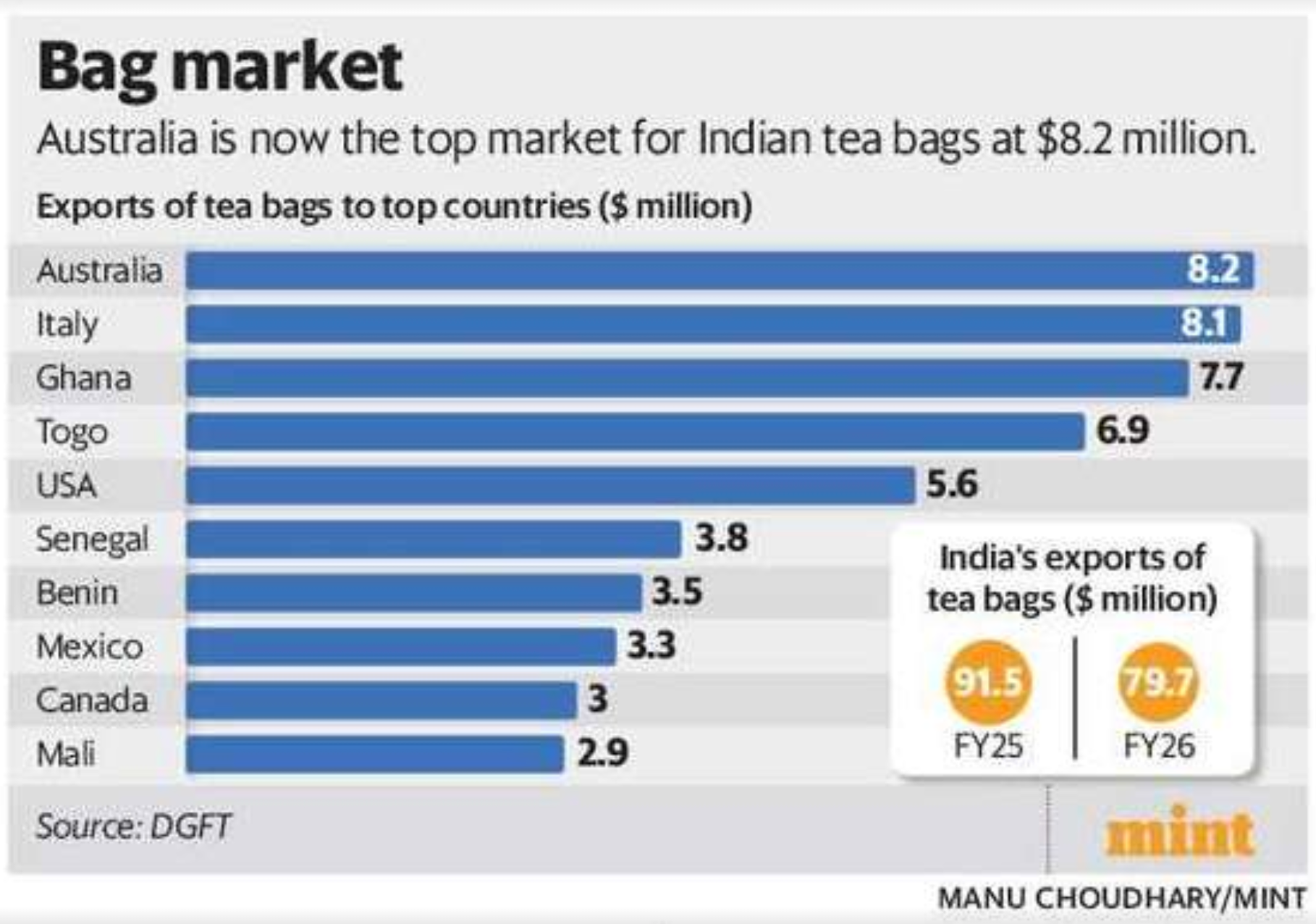
Exports are another important part of the story. India exported approximately $91.5 million worth of tea bags in FY25. Australia emerged as the largest market at $8.2 million, followed closely by Italy at $8.1 million. Other significant destinations include Ghana, Togo and the United States. These numbers are relatively small compared to India's overall tea exports, but they highlight a growing opportunity.
International buyers are becoming more demanding about quality standards, food-contact safety, traceability and sustainability. Many developed markets require detailed documentation about packaging materials and manufacturing processes before products can reach shelves. By creating a formal standard for tea bags, India is effectively giving manufacturers a framework that aligns more closely with global expectations.
That is why industry participants have generally welcomed the move. While stricter standards often increase compliance costs, they can also improve credibility and open access to premium export markets.
What makes the BIS framework noteworthy is how comprehensive it is. Tea bag paper must be made from virgin pulp and may include abaca fibre, a durable natural fibre derived from a banana-family plant that is widely used in high-quality tea bags globally. The regulations also define permissible materials for threads and establish minimum strength requirements to ensure product quality during brewing.
Even labelling requirements have been tightened. Manufacturers must provide details such as their name, address, batch number, manufacturing date and expiry date. This forms part of a larger effort to improve traceability and accountability throughout the supply chain.
The story becomes even more interesting when viewed through the lens of consumer trust. Today's consumers are far more informed than previous generations. They read ingredient labels, compare brands online, watch product reviews and increasingly question manufacturing practices. Wellness culture has amplified this behaviour. People who once focused only on calories or sugar content are now asking questions about additives, preservatives, packaging materials and sourcing practices.
Tea bags have already faced similar scrutiny in international markets, particularly around microplastics. Some studies have raised concerns about certain plastic-based tea bags releasing microscopic particles during brewing. India's new standards do not directly address microplastics, but the focus on material specifications and migration testing suggests that packaging safety is becoming a priority area for regulators.
For consumers, the impact will likely be invisible. Most people will not notice any difference when they brew their morning tea. The taste will remain the same, and the experience will feel unchanged. Behind the scenes, however, manufacturers will have to rethink materials, strengthen testing procedures and comply with more rigorous quality benchmarks.