

 Newsletter

When Meta appointed CRED founder Kunal Shah as the global head of WhatsApp last week, it added another Indian-origin name to a list that already includes Satya Nadella at Microsoft, Sundar Pichai at Alphabet, Shantanu Narayen at Adobe, Neal Mohan at YouTube and Arvind Krishna at IBM.
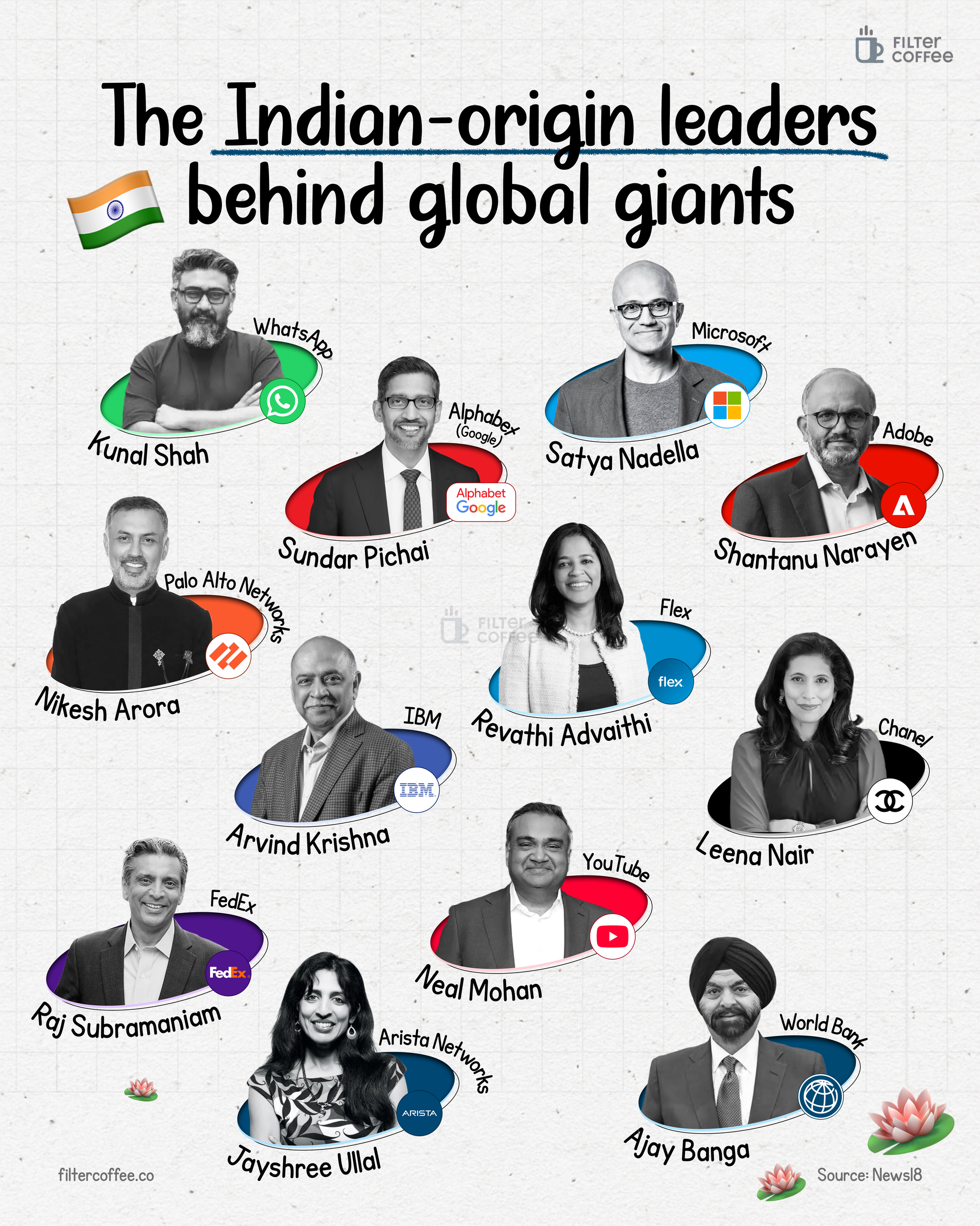
Unlike most of them, Shah didn't spend decades climbing the corporate ladder. He built companies from scratch before being tapped to lead one of the world's biggest consumer platforms.
His appointment also comes as Meta bets bigger on AI, payments and commerce, areas where India has become one of WhatsApp's most important markets.
But why do Indian-origin leaders keep ending up at the top?
Talent is only part of the answer. India produces one of the world's largest engineering workforces, but technical skills alone don't create global CEOs.
The bigger advantage is experience. Indian businesses operate in a market where competition is fierce, customers are price-sensitive and scale is everything. Leaders learn to move fast, work with constraints and build for millions of users from day one. Those skills are increasingly valuable in today's technology companies.
India has also become a proving ground for digital products. From UPI to one of the world's largest internet user bases, companies can test products at massive scale before taking them global. That gives executives with India experience an edge as businesses chase growth beyond developed markets.
And the trend is spreading beyond Silicon Valley. Procter & Gamble's appointment of Shailesh Jejurikar as CEO this year shows Indian-origin leaders are increasingly taking charge across industries.
That's what makes Kunal Shah's appointment more than just another executive change. Twenty years ago, India was known for supplying technology talent. Today, it's increasingly supplying the people making the biggest business decisions.