

 Newsletter

Imagine spending months redesigning a product because your biggest competitor managed to get it blocked from your largest market. You finally receive regulatory clearance, return to selling it, and just when business starts picking up, the same competitor takes you to court again.
That's roughly what has happened to Bengaluru-based Ultrahuman, which makes smart rings that track sleep, heart rate, recovery and other health indicators.
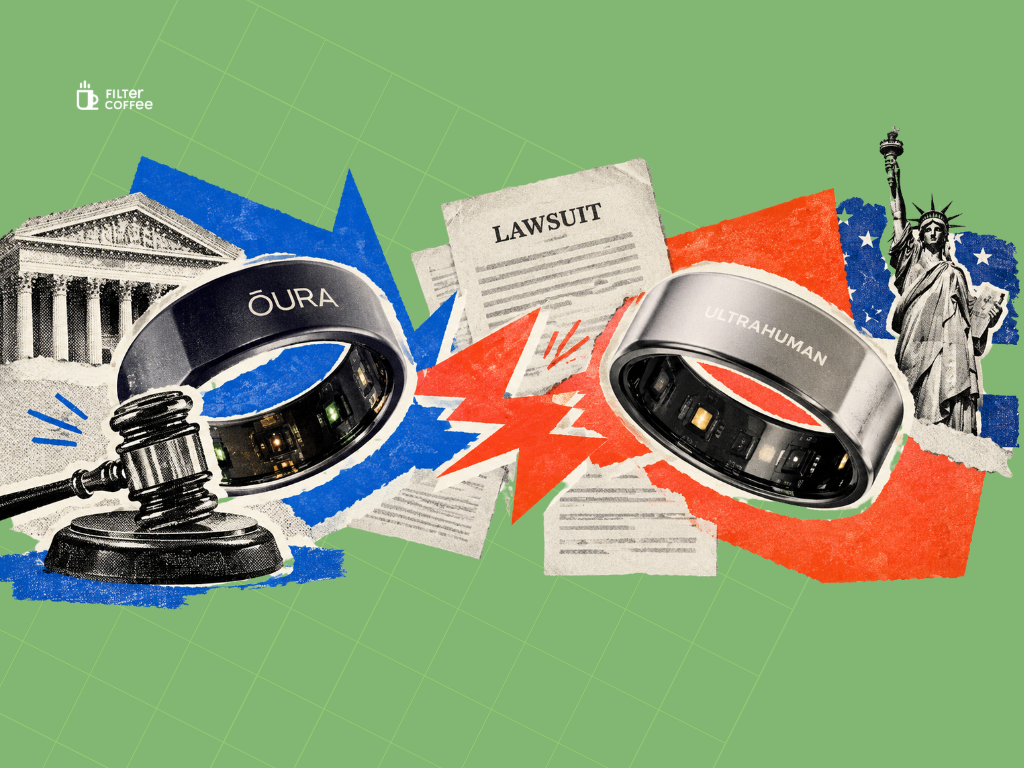
On 22 October, Finnish-origin smart-ring giant Oura filed a fresh lawsuit against Ultrahuman in a US federal court, alleging that its redesigned Ring Pro infringes two patents covering the ring's appearance and internal components. Oura wants financial compensation and a permanent injunction that would stop Ultrahuman from selling the device in America.
One of the patents cited in the lawsuit was granted on 20 October, just two days before Oura went to court.
But this fight started long before that.
Ultrahuman, founded by Mohit Kumar and Vatsal Singhal in 2019, initially built its business around continuous glucose monitoring before expanding into smart rings. The company entered a market already dominated by Oura, which had spent years developing the technology.
In 2023, Oura began pursuing patent litigation against Ultrahuman. The dispute escalated when Oura approached the US International Trade Commission, a government agency that can restrict imports of products found to infringe American intellectual-property rights.
In August 2025, the commission ruled against Ultrahuman and imposed an import restriction affecting its Ring Air. For the Indian startup, this was a serious setback.
America was its largest market, and losing access meant losing an important source of sales. Ultrahuman therefore went back to its engineers and redesigned the product.
The resulting Ring Pro used a different internal construction, including a single-piece titanium housing. In March 2026, US Customs ruled that this redesigned structure fell outside the earlier exclusion order, clearing the way for Ultrahuman's American comeback.
You would think that settled the issue. Legally, it didn't.
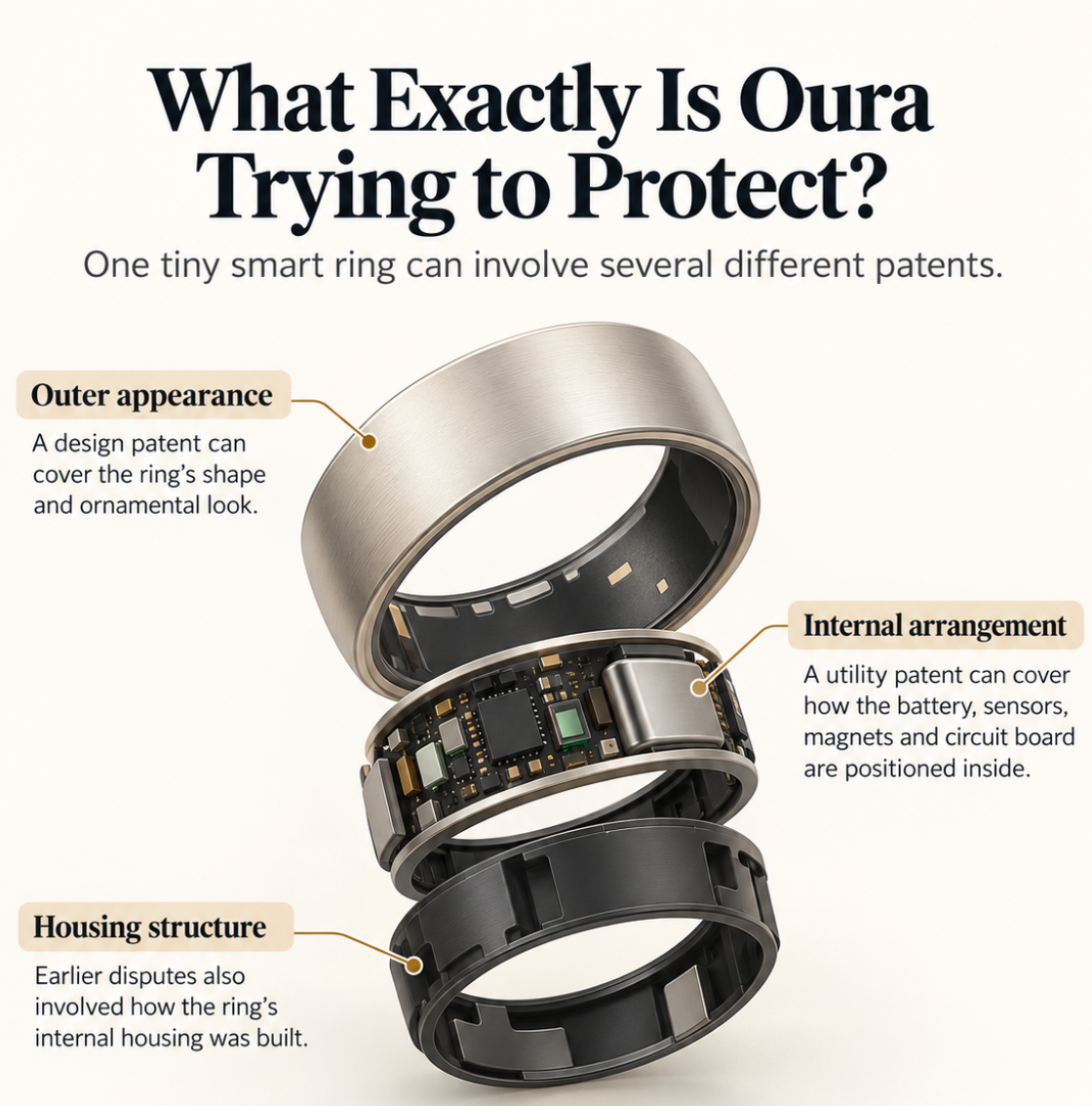
A smart ring might look like a simple piece of jewellery, but fitting a battery, sensors, circuit boards and other electronics inside something that small requires considerable engineering. Companies can obtain separate patents covering different aspects of that design.
The earlier dispute concerned how the ring's housing and battery were arranged. Oura's latest lawsuit involves two other patents, including one covering the ring's appearance and another involving components such as its curved battery, magnets and sensors.
In other words, changing a product to avoid one patent doesn't automatically protect it against every other patent.
Oura maintains that Ultrahuman continues to use its protected technology. Ultrahuman rejects the allegations and says Ring Pro remains available in America because no court has ordered sales to stop. The new infringement claims are yet to be decided.
The uncertainty arrives at a particularly sensitive moment for Ultrahuman.
In September, the company raised $70 million from investors including Qualcomm Ventures, Labcorp and others, at a reported valuation of approximately $365 million. CEO Mohit Kumar told TechCrunch that Ultrahuman had sold around 800,000 rings and reached an annualised revenue run rate of $140 million.
More importantly, the US accounted for approximately 45% of its revenue in the quarter discussed, compared with just 11% from India.
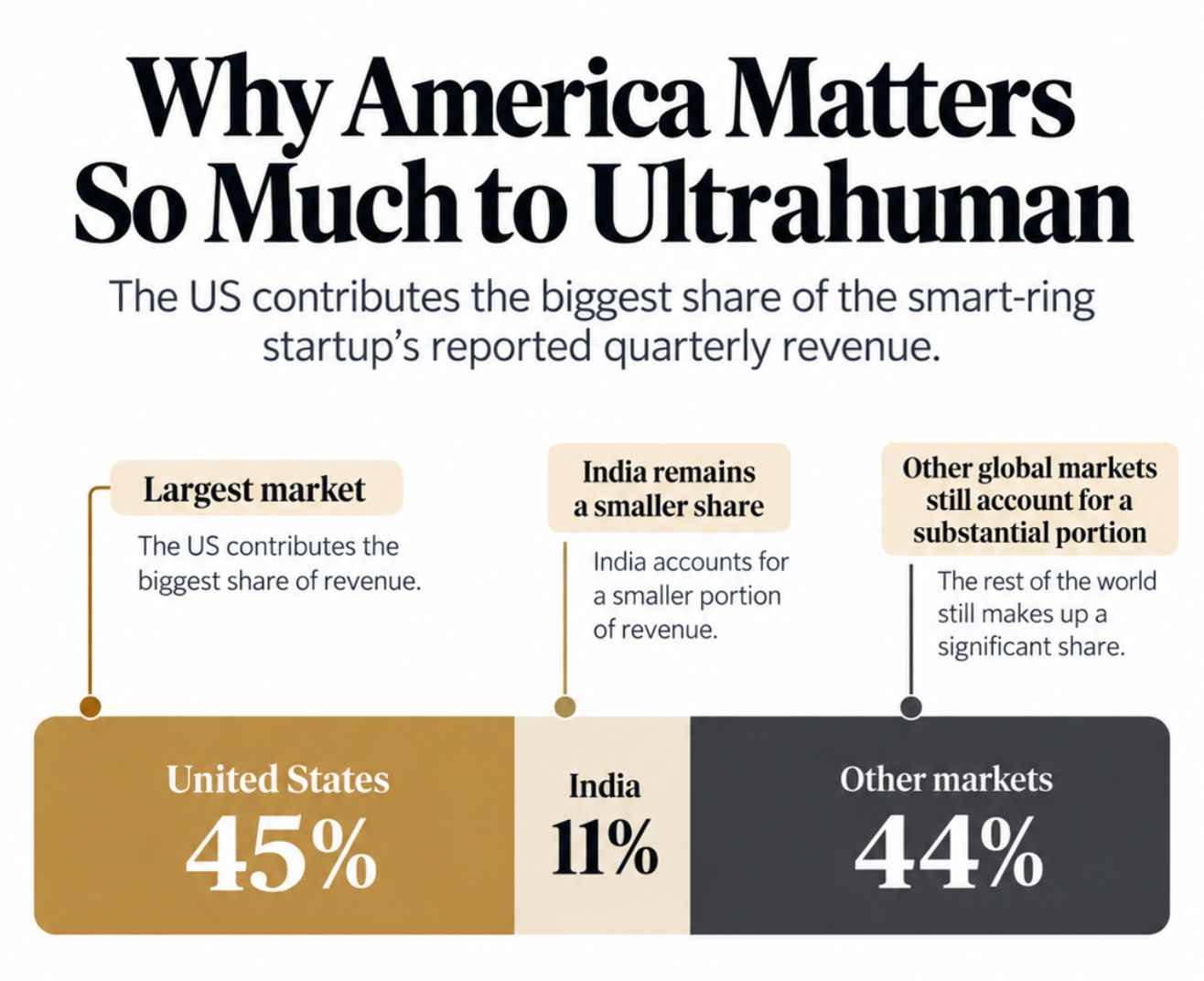
A fresh sales restriction could therefore disrupt a substantial part of its business, especially when the company is investing in research, manufacturing and expansion.
And Ultrahuman isn't the only competitor facing Oura's legal challenges. Oura has pursued patent disputes involving Samsung, RingConn and Circular, among others. Some competitors have settled through licensing arrangements, which allow companies to use patented technology in exchange for agreed payments.
Of course, protecting inventions is a legitimate business interest. Developing hardware takes money, and patents are designed to prevent competitors from using protected inventions without permission. But repeated litigation can be particularly expensive for smaller manufacturers that lack the financial resources of established market leaders.
The commercial stakes are growing too. Research firm IDC expects global smart-ring shipments to reach 4.9 million units in 2026 and approximately 6.3 million by 2030.
For Ultrahuman, the immediate challenge is keeping its American comeback on track while defending its redesigned product. The latest lawsuit has not stopped Ring Pro sales, but another adverse ruling could force the startup into further redesigns, licensing negotiations or restrictions on its US business.
Its experience also illustrates a difficult part of building a global hardware company: successfully engineering a product is one challenge. Securing the legal freedom to sell it in your most valuable market can be another.
Research sources: TechCrunch, October 2026, US Customs ruling, Oura's statement, Ultrahuman's funding and financials and IDC market forecast.


