

 Newsletter

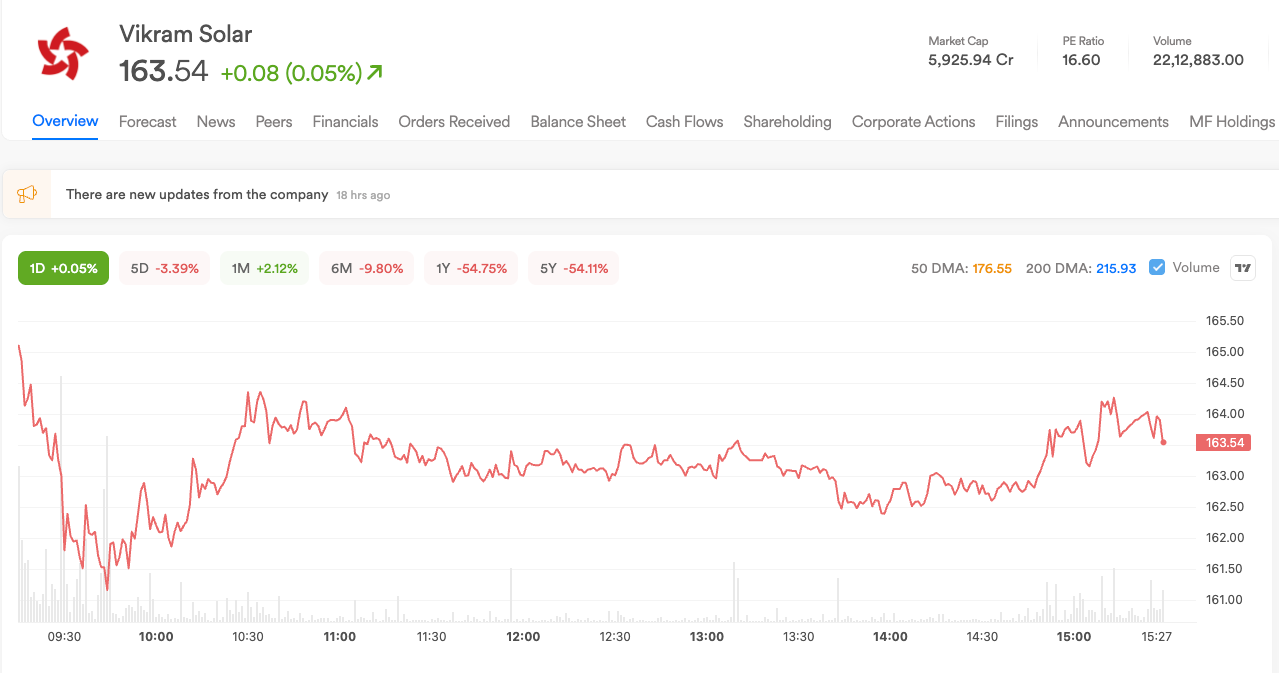
Vikram Solar has signed a ₹1,250 crore domestic solar cell supply agreement with Avaada Electro to procure 1 gigawatt (GW) of ALMM-compliant N-Type G12R TOPCon solar cells.
Avaada Electro, the manufacturing arm of Avaada Group, is an Indian solar manufacturer specialising in high-efficiency N-Type TOPCon solar products.
What the hell is N-Type G12R TOPCon: these are high-efficiency solar cells used to make powerful solar panels for large solar farms and commercial projects. ‘ALMM-compliant’ means they meet the government’s approved manufacturing requirements.
The why: Avaada Electro will supply domestically manufactured, half-cut N-Type G12R TOPCon solar cells for Vikram Solar’s module manufacturing operations. The deal will also help strengthen Vikram Solar’s position in India’s Domestic Content Requirement (DCR) market, where certain projects require domestically manufactured solar components.
The agreement also ties into Vikram Solar’s backward integration plans. The company is setting up a 9 GW high-efficiency solar cell manufacturing facility, which is expected to be commissioned in the fourth quarter of FY27.
What lies ahead: India’s shift from being a buyer to a builder of solar equipment has been rapid, at least on paper.
But there’s a gap, India’s solar module manufacturing capacity has surged to 173 GW, while solar cell capacity stands at just around 30 GW. That mismatch is creating strong demand for domestically manufactured cells.
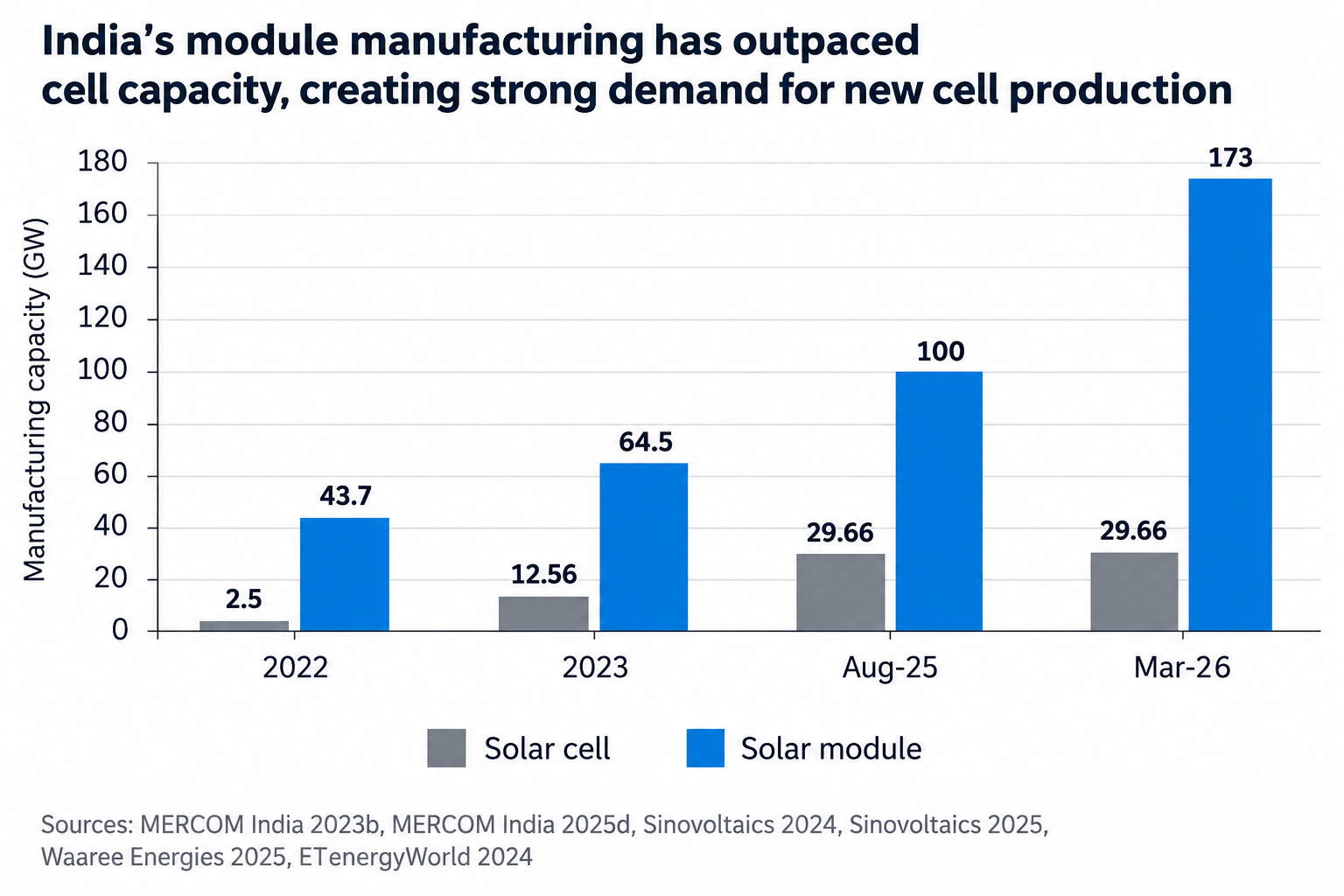
Much of this shift has been policy-driven. The government’s ‘Make in India’ push, tariffs and non-tariff measures such as the Approved List of Models and Manufacturers (ALMM), along with a roughly $2.5 billion Production-Linked Incentive (PLI) scheme, have helped reshape the sector.
Five years ago, nearly all solar modules installed in India were imported from China. Today, modules are largely manufactured domestically, while about 50% of the solar cells consumed in India are made locally.
But there’s still a major missing piece: wafers. Roughly 99% of the world’s photovoltaic wafers are still made in China, making them a critical bottleneck in India’s push to build a domestic solar supply chain.
Chinese manufacturers can also price wafers extremely competitively, making it difficult for new manufacturers elsewhere to compete purely on cost.
So, while India has made significant progress in manufacturing cells and modules, it still depends heavily on China for wafers, polysilicon and manufacturing equipment. In other words, India is making more of the solar panel at home, but it hasn’t localised the entire supply chain yet.