
 Newsletter
Finance Minister Nirmala Sitharaman’s Union Budget 2026 speech made one thing clear.
India is at the center of everything. The word ‘India’ appeared 58 times, ‘tax’ 55 times, and ‘sector’ 32 times.
The message was obvious. The government is focused on growth, taxation, and sectoral development, with a particular spotlight on manufacturing and textiles.
Let’s dive into history.
Textiles in India are not just a modern industry. They are history woven into culture. The story begins in the Indus Valley Civilisation around 2500 to 1750 BC, where the Harappans were likely the first to grow cotton.
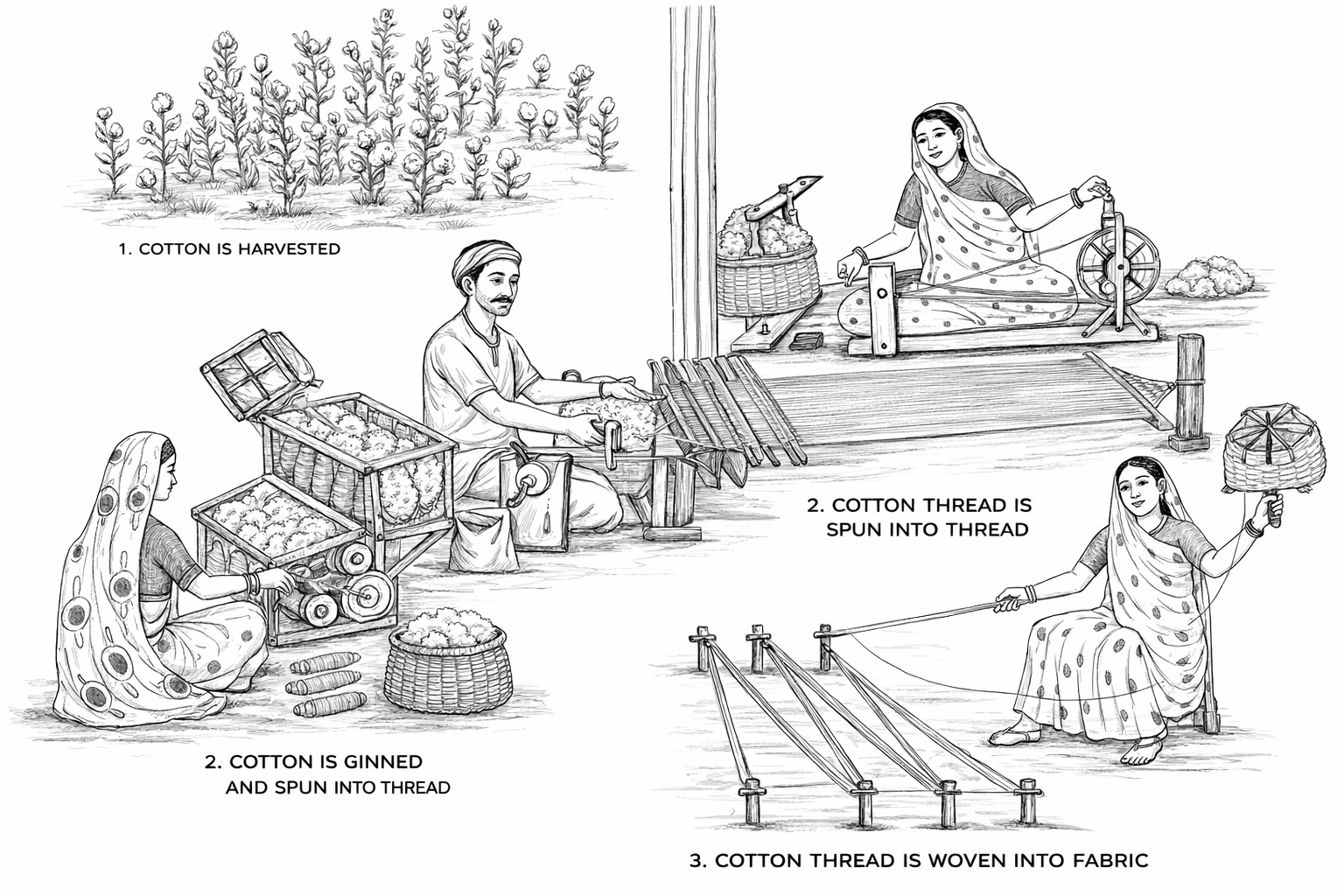
The Greeks called it Sindon, marveling at its quality. Centuries later, Indian muslin, or malmal, became world-famous.
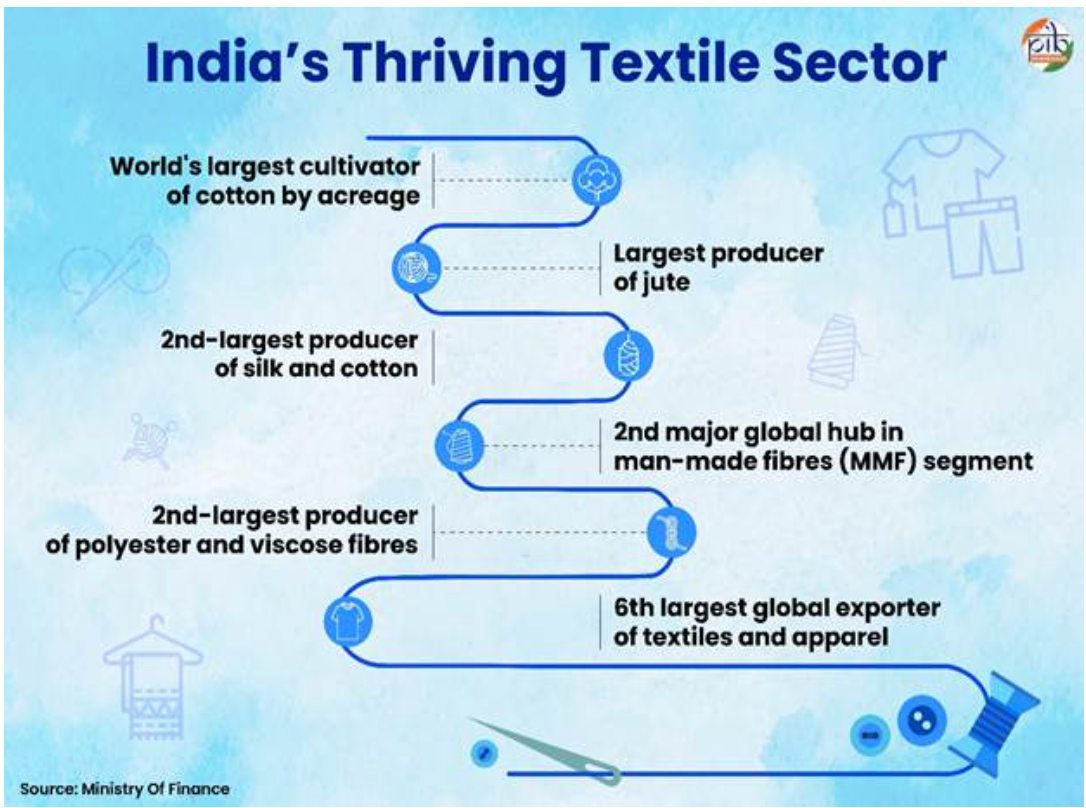
Today, India is among the world’s major textile and fibre producers. It ranks among the leading producers of cotton and jute, is a significant player in silk, and is a major base for man-made fibres, including polyester and viscose.
In 2025 alone, textile investments and commitments crossed ₹60,000 crore.
Among the major initiatives are the Mega Integrated Textile and Apparel Parks, known as PMMITRA, and Cluster Vikas Yojana.
Breaking it down: PMMITRA provides world-class infrastructure with manufacturing units, export-ready facilities, and innovation centers to boost competitiveness, employment, and global integration.
Cluster Vikas Yojana focuses on smaller units, developing industry clusters by improving infrastructure, technology, marketing, and skills.
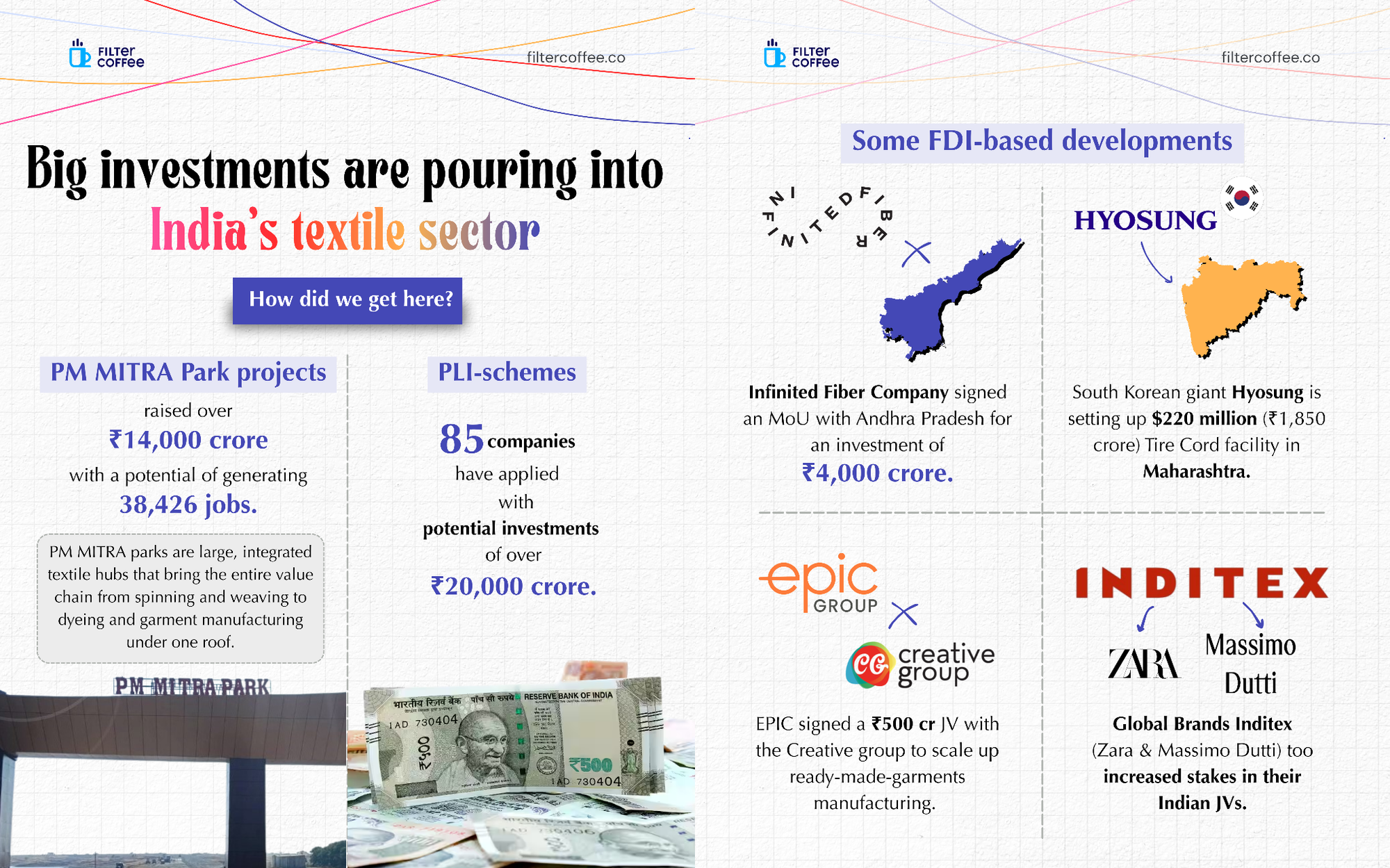
Seven PMMITRA Parks have been approved with a ₹4,445 crore outlay over seven years, and investment MoUs totaling more than ₹27,000 crore have been signed.
The Production Linked Incentive scheme, running until 2029-30, promotes production of man-made fibre apparel, fabrics, and technical textiles. The aim is scale, competitiveness, employment, and global positioning.
FDI is also flowing in.
Finland-based Infinited Fiber Company is investing ₹4,000 crore in Andhra Pradesh. Singapore’s RGE is putting in ₹4,953 crore for a man-made fibre project in Thoothukudi, Tamil Nadu. South Korea’s Hyosung is setting up a $220 million tyre cord facility in Maharashtra.
These investments suggest rising investor interest in India’s textile and man-made fibre capacity.
The government’s approach follows the 5F approach: Farm to Fibre, Fibre to Factory, Factory to Fashion, Fashion to Foreign. Every step in the value chain is getting attention. Farmers benefit from better raw materials, factories get modern infrastructure, designers and traders scale production, and exports receive a boost.
Policy support reinforces this. Investments, incentives for Man-made Fibres & technical textiles, easing raw-material constraints, and integrated parks all aim to increase competitiveness and value addition.
Exports are a major target, from ₹3 lakh crore currently to a Vision 2030 goal of ₹9 lakh crore. The Budget 2026-27 proposes measures intended to support the chain across fibre, manufacturing capacity, skills, sustainability, and market access.
On the ground, this matters.
Farmers see better income, weavers access modern machinery and global markets, investors get clear policies and infrastructure, and workers benefit from safer conditions and better wages.
The sector does face challenges, such as raw material costs, technological gaps, and global competition. But, a combination of policy support and investment is likely to build momentum, though outcomes will depend on execution and global demand.
In 2026, textiles in India are more than threads and fabrics. They are a mission connecting farms to factories, fashion to foreign markets, policies to practice, and people to prosperity.
All the investments, textile parks, PLI schemes, labour reforms, and export plans aren’t just government stuff on paper. They’re what’s actually building India’s story, leading globally, coming up with smart, sustainable ideas, and creating jobs for millions.
Think about it, from Harappan cotton to today’s high-tech fabrics, it’s not just history. It’s a plan that’s alive, kicking, and shaping the future.