

 Newsletter

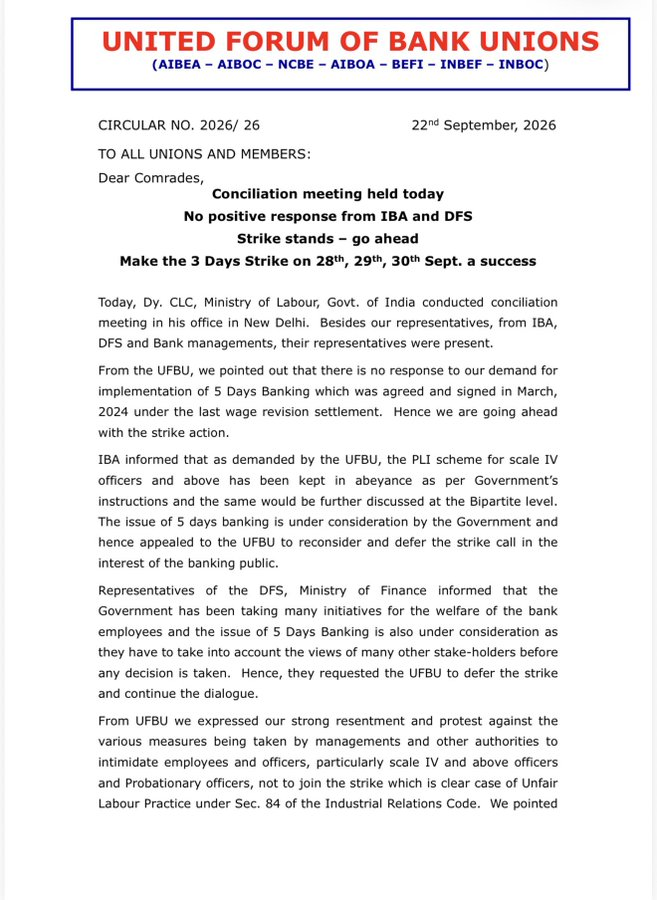
Banking services across India could be disrupted from September 28 to 30, as employees and officers represented by the United Forum of Bank Unions (UFBU) go on a three-day nationwide strike.
What to expect: the biggest impact is expected at public sector banks, regional rural banks and older private banks. Newer private banks such as HDFC Bank, ICICI Bank and Axis Bank are expected to remain open.
Why are bankers striking: the biggest demand is bank employees want a five-day working week.
Banks currently work on the first, third and fifth Saturdays of a month. Unions argue that institutions such as the RBI and many government offices already follow a five-day week. UFBU says five-day banking was agreed to with the Indian Banks’ Association as part of the March 2024 wage settlement, but has still not been implemented. Finance Ministry sources, however, have disputed that the government itself ever agreed to the change.
And that’s not their only demand. Unions are also seeking changes to pensions and dearness allowance, including an option for employees covered under the National Pension System to move to the Old Pension Scheme. A dispute over a new performance-linked incentive scheme was another major issue, although the government has now put that scheme on hold.
What does it mean for you: branch services such as cash deposits and withdrawals, cheque clearing, KYC and other staff-assisted work could face delays.
However, UPI, internet banking, mobile banking, ATMs, NEFT, RTGS and IMPS are expected to continue working. SBI has even waived ATM transaction charges during the strike period.
What happens next: the Finance Ministry has asked employees to avoid the strike and continue negotiations. But UFBU has already warned of an indefinite nationwide strike from October 26 if its demands remain unresolved.