

 Newsletter

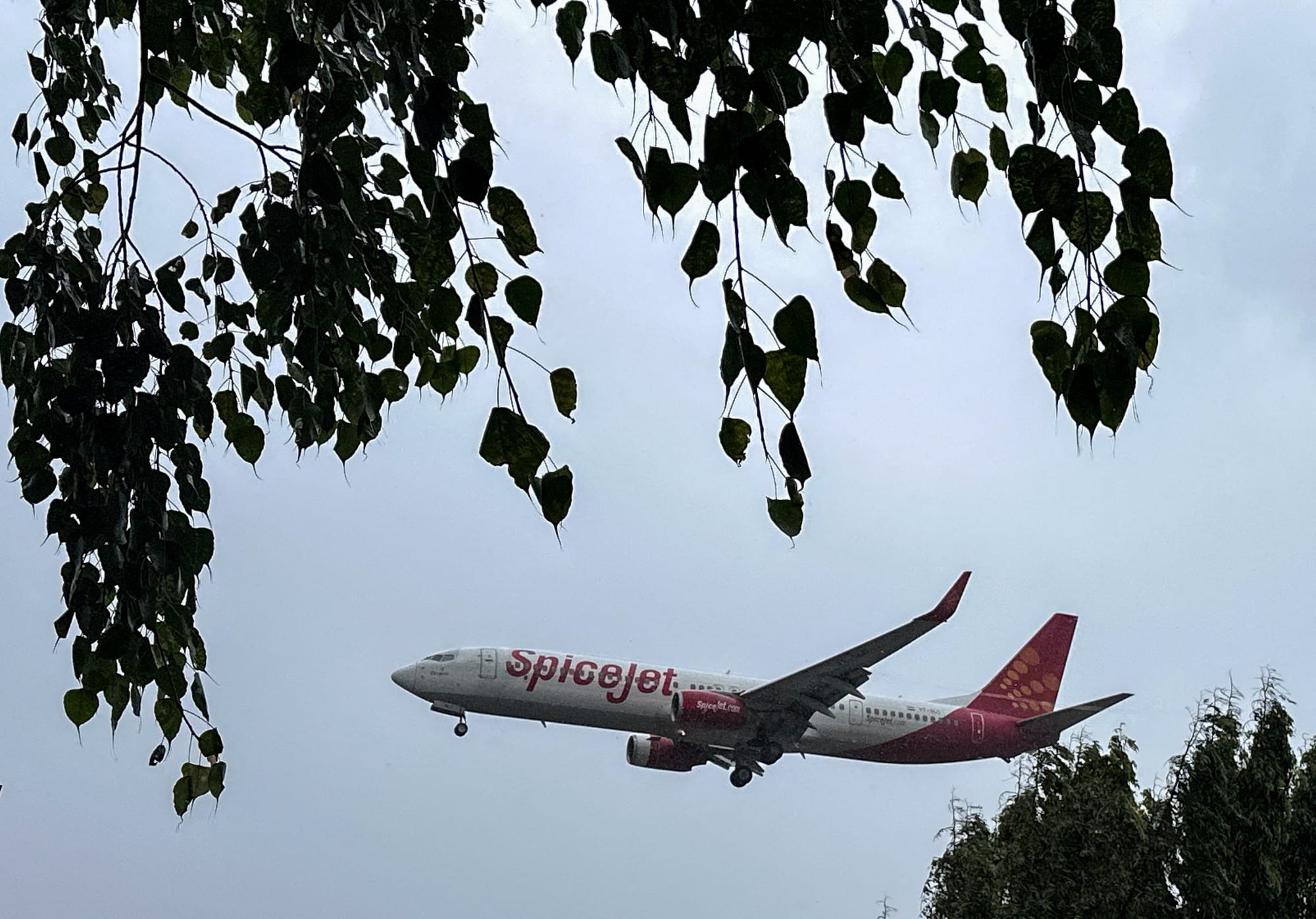
Well, nothing speeds up overdue paperwork quite like the threat of a trading suspension.
SpiceJet has promised to publish its pending financial results by December 7 after BSE warned that trading in its shares could be discontinued.
What BSE said: SpiceJet has not submitted its financial results for two consecutive quarters including March and June 2026.
Therefore the company’s trading in the airline’s shares will be suspended from December 10 unless it clears all pending requirements by December 7.
This is not the same as removing SpiceJet permanently from the stock exchange. However, during a suspension, regular investors cannot freely buy or sell its shares.
The promoter group’s SpiceJet shares would also be frozen. Other securities held in its demat accounts would remain blocked during the suspension.
What is happening at SpiceJet: the delayed results come while the airline is facing a much wider cash crunch.
Its domestic market share fell to just 0.6% in September, compared with nearly 15% in 2019. SpiceJet carried approximately 73,000 domestic passengers during the month, down from nearly 5.92 lakh in January.
Only nine of its 12 aircraft were operational in November. The remaining planes were grounded amid payment disputes with aircraft owners.
Its service reliability has also deteriorated:
- SpiceJet cancelled 20.29% of its scheduled flights in September, the highest among domestic airlines.
- Nearly two in five flights were delayed by more than two hours.
- Its on-time performance fell to 16.6%, meaning only around one in six flights departed on schedule.
The airline is also struggling to pay smaller suppliers. It owed micro, small and medium enterprises ₹122.93 crore during April–September 2026. Of this, ₹63.03 crore remained unpaid beyond the legally permitted 45 days.
Why things became worse: SpiceJet was already dealing with grounded aircraft, delayed salaries and unpaid supplier bills.
The West Asia conflict added another problem. Higher crude prices increased aviation fuel costs, while airspace restrictions made some international routes longer and more expensive.
With fewer operating planes, the airline also has fewer flights available to generate revenue. That makes clearing old dues and bringing grounded aircraft back into service even harder.