
 Newsletter
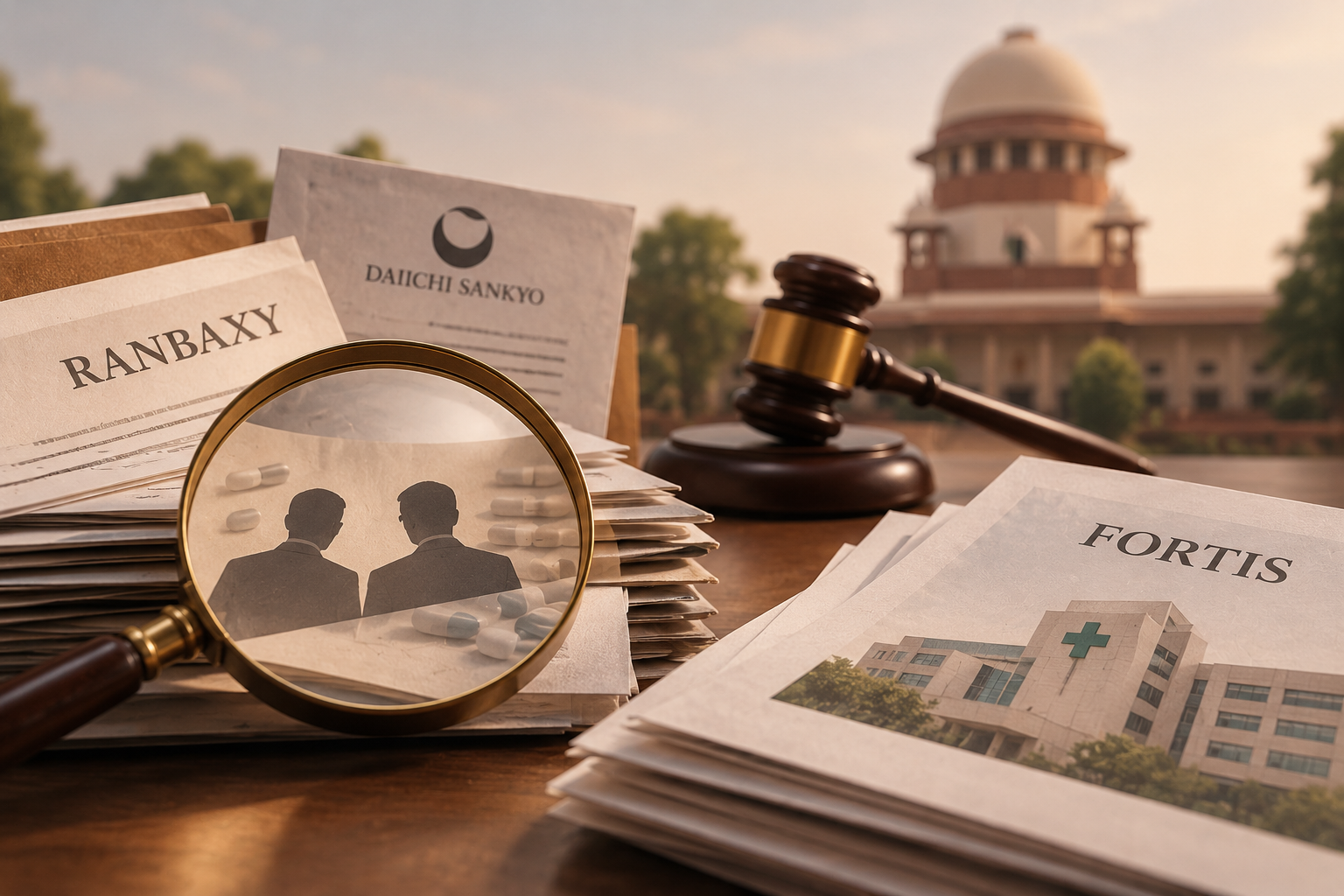
Fortis Healthcare shares ended lower after the Supreme Court allowed a forensic audit of the company’s past transactions to go ahead.
About the case: this goes back to the company's former promoters, brothers Malvinder and Shivinder Singh, and their long-running legal battle with Japanese drugmaker Daiichi Sankyo.
Daiichi bought the Singh brothers’ stake in Ranbaxy years ago and later accused them of hiding important information about regulatory problems at the drugmaker. Daiichi eventually won a ₹2,562 crore arbitration award in 2016.
Since then, it has been trying to recover that money. Daiichi alleges that assets available to pay it including the brothers’ shares in Fortis were sold, pledged or otherwise reduced while the recovery case was underway. The Singh brothers and financial institutions involved have disputed aspects of those allegations.
Where does Fortis come in: when the arbitration award was made, the Singh brothers controlled a large stake in Fortis. Their holding subsequently fell sharply and eventually dropped below 1%. So the Delhi High Court wants a forensic auditor to essentially follow the money and shares, checking what happened to those assets and examining related Fortis transactions, including IHH Healthcare’s 2018 investment.
Think of it as getting an independent accountant to reconstruct an old financial trail and figure out exactly what happened.
Fortis says: don’t drag us into their mess. The company argues that it was not part of the Daiichi-Singh brothers arbitration and isn't responsible for the former promoters’ personal liabilities.
It also says that as a listed company, it couldn't control shareholders selling or transferring their shares. Fortis says IHH entered only after the brothers had left the board and their holding had fallen below 1%; IHH invested through newly issued Fortis shares rather than buying shares from the brothers.
What happened now: Fortis challenged the Delhi High Court’s audit order in the Supreme Court, but the SC declined to stop the forensic audit.
There is an important distinction, though: the Supreme Court said the auditor must work independently and shouldn't treat the Delhi High Court’s earlier observations against Fortis as established findings. And as things stand, no liability, penalty or fine has been imposed on Fortis simply because the audit is happening.
In simple terms, the audit isn't saying Fortis did something wrong. It's an investigation to establish what actually happened to assets and transactions connected to its former promoters.