
 Newsletter
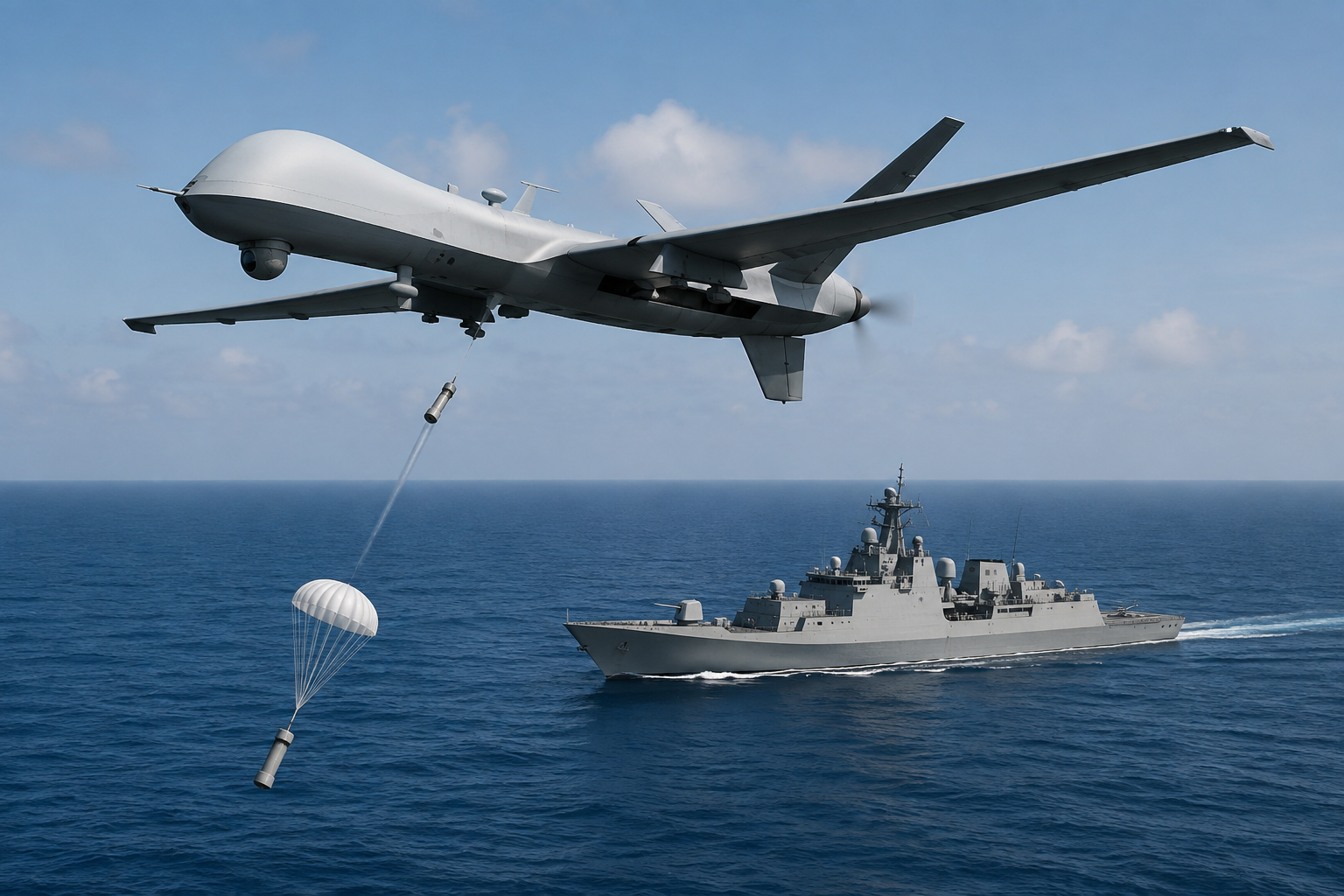
The Ministry of Defence signed a ₹1,943 crore contract with US-based General Atomics to lease two MQ-9B SeaGuardian drones for the Indian Navy for 30 months.
What’s going on: these drones are large, long-range unmanned aircraft built to watch huge stretches of the sea for hours at a time.
Depending on its configuration, it can remain airborne for more than 30 hours and fly beyond the operator's direct line of sight using satellite connectivity.
Think of it as giving the Navy an eye in the sky that doesn't need a pilot sitting inside the aircraft.
For anti-submarine missions, the drone can even carry and drop sonobuoys, small devices placed in the water that help detect and track submarines.
Why India needs them: the Indian Ocean is enormous. Keeping watch over such a large area continuously using only ships and crewed aircraft is difficult and expensive.
A drone that can stay in the air for more than a day gives the Navy much longer surveillance coverage and can pass information back in real time.
And this lease is only one piece of a much larger General Atomics relationship.
Zoom out: India has already signed a roughly $3 billion deal for 31 MQ-9B drones. The Navy is set to receive 15 SeaGuardians, while the Army and Air Force will get eight SkyGuardians each.
Additionally, the country has also signed a separate agreement with General Atomics to support the drones through maintenance, repair and overhaul facilities in India.
Big thing: just last week, Reliance Industries partnered with Britain's Rolls-Royce to jointly pursue an indigenous combat aircraft engine for India's upcoming AMCA stealth fighter programme.