
 Newsletter
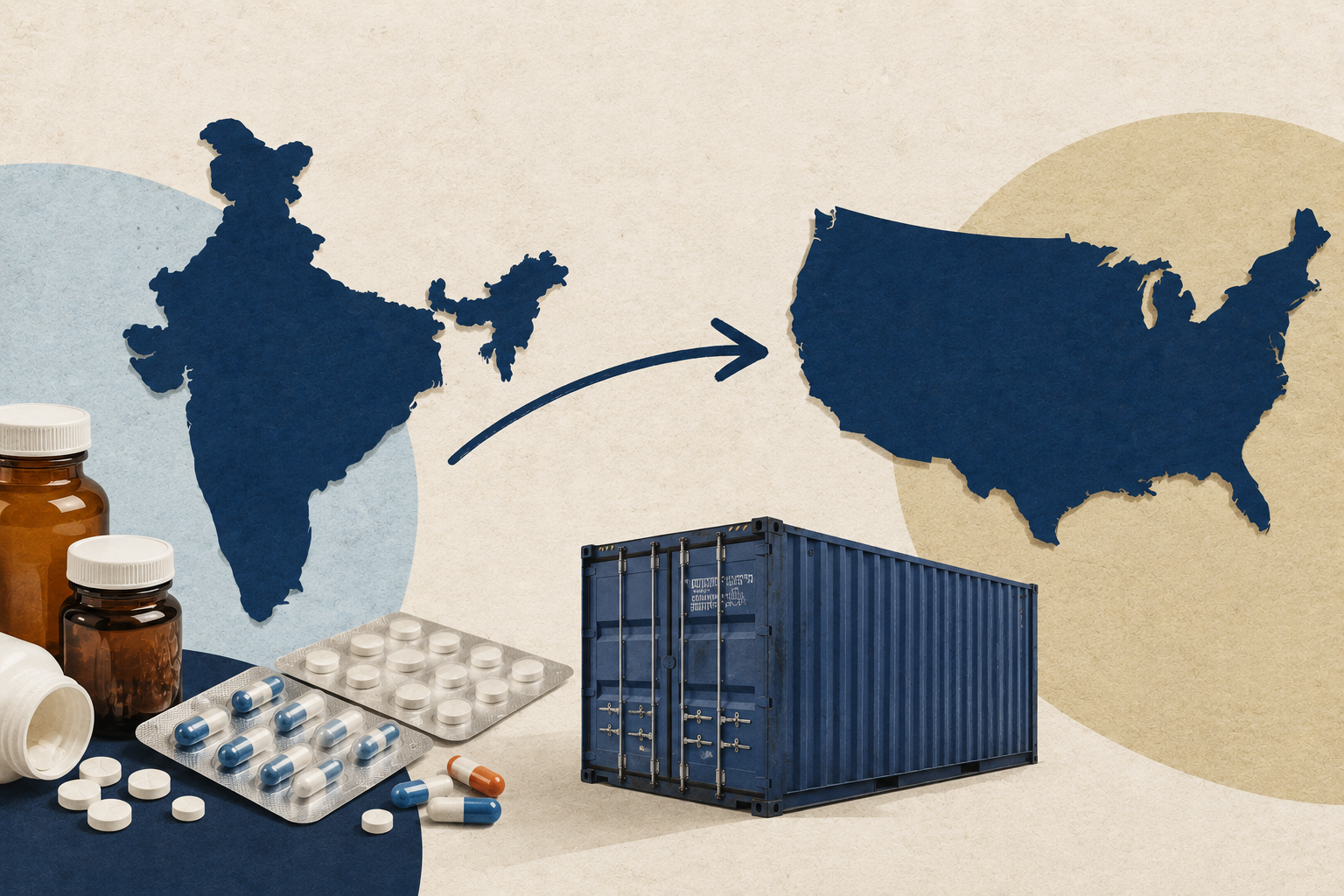
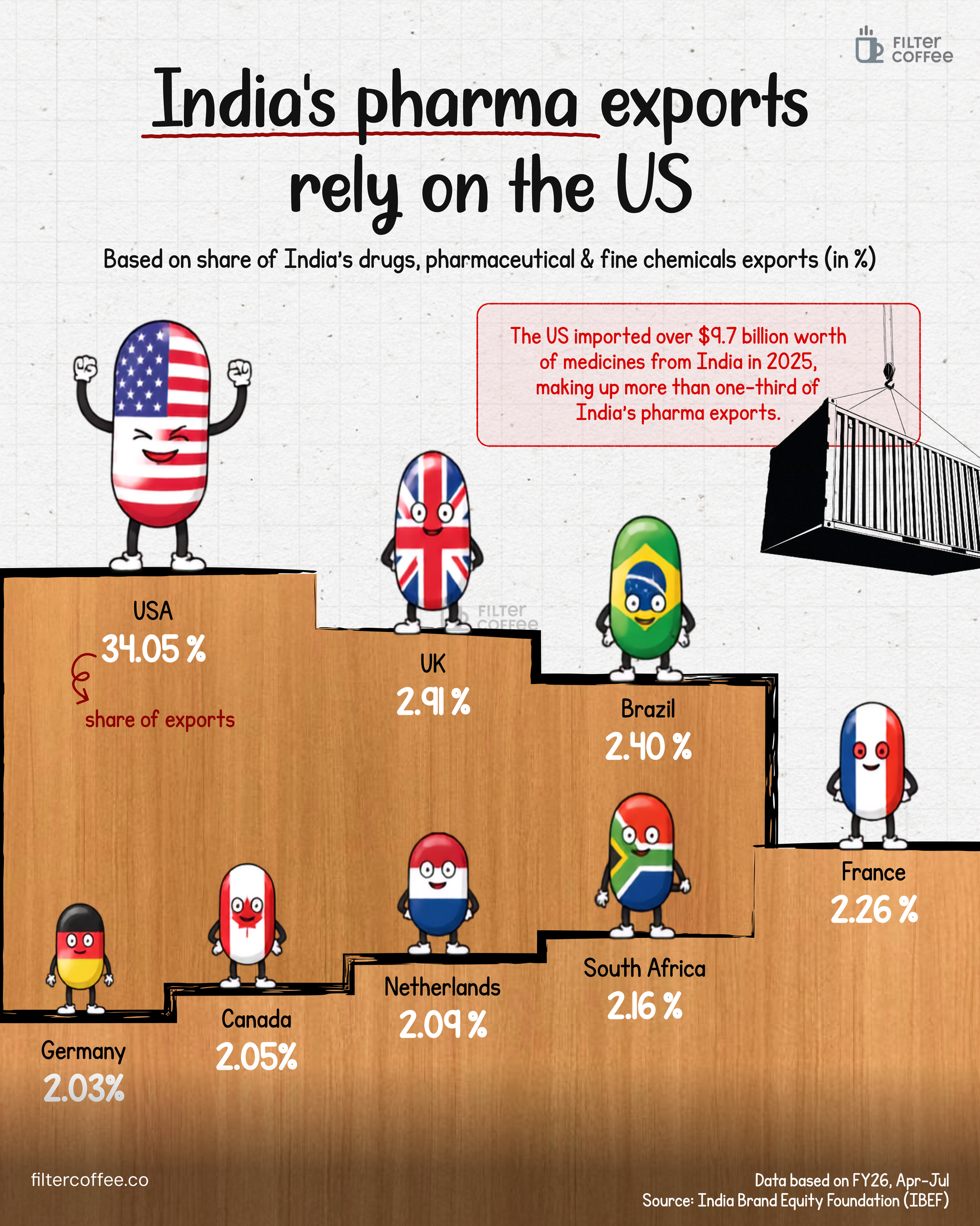
One out of every three dollars India earns from exporting medicines comes from just one country: the United States. And that dependence is becoming more important than ever.
The reason? The US is looking to bring more drug manufacturing back home and has proposed tariffs on imported pharmaceuticals in the coming years. For Indian drugmakers, every policy announcement from Washington now carries significant weight.
That's because the US imported over $9.7 billion worth of medicines from India in 2025, accounting for more than one-third of India's pharmaceutical exports.
India didn't become the world's "pharmacy" by accident.
The country supplies roughly 20% of all generic medicines consumed globally and has the largest number of US FDA-approved manufacturing plants outside the United States.
Decades of low-cost manufacturing, skilled scientists and a strong regulatory track record have helped Indian companies become indispensable to global healthcare.
That success is still accelerating. India's pharmaceutical exports crossed $31 billion in FY26, driven by rising demand for generic medicines, biosimilars and speciality drugs. Government incentives under the PLI scheme are also encouraging companies to manufacture more complex medicines within the country instead of relying on imports.
But there's another side to this story.
When more than one-third of your export revenue depends on a single market, even small policy changes can have a large impact. Higher tariffs, pricing reforms or incentives for domestic manufacturing in the US could affect revenues for several Indian pharmaceutical companies.
That's why many companies are now expanding into Europe, Latin America, Africa and other emerging markets while investing in high-value products like biosimilars and complex generics that are less vulnerable to pricing pressure.
India's pharmaceutical industry has spent decades becoming the world's most reliable supplier of affordable medicines. Its next challenge may not be making more drugs. It may be making sure that its biggest customer doesn't remain its only growth engine.