
 Newsletter
This is a source-based report. According to people familiar with the matter, L&T is preparing to bid for the government’s rare-earth permanent magnet incentive scheme. The company has not publicly confirmed the proposed bid yet.
When China tightened export controls on rare-earth materials earlier this year, the impact rippled far beyond its borders.
Automakers slowed production, supply chains came under strain and governments were reminded of just how dependent the world remains on one country for a resource that powers everything from electric vehicles and fighter jets to wind turbines and smartphones.
The problem isn't that the rest of the world has no rare earths. The bigger problem is what happens after they are taken out of the ground.
China has spent decades building the factories, technology and expertise required to separate and process rare earths and turn them into high-performance magnets. Today, it controls more than 90% of global rare-earth processing capacity, making it extremely difficult for manufacturers to quickly find alternatives when supplies get disrupted.
India got a taste of that vulnerability last year.
China's export restrictions created uncertainty around supplies of rare-earth magnets to Indian automakers. Maruti Suzuki was even forced to cut its near-term production plan for the e-Vitara as shortages threatened its supply chain.
So, India is now trying to make sure the next disruption hurts a little less.
First, what is India doing: India's strategy isn't simply about digging up more rare earths.
It wants to build the entire chain at home, from processing rare-earth material to converting it into metals and alloys and, finally, manufacturing the high-performance magnets that companies actually need.
That distinction matters.
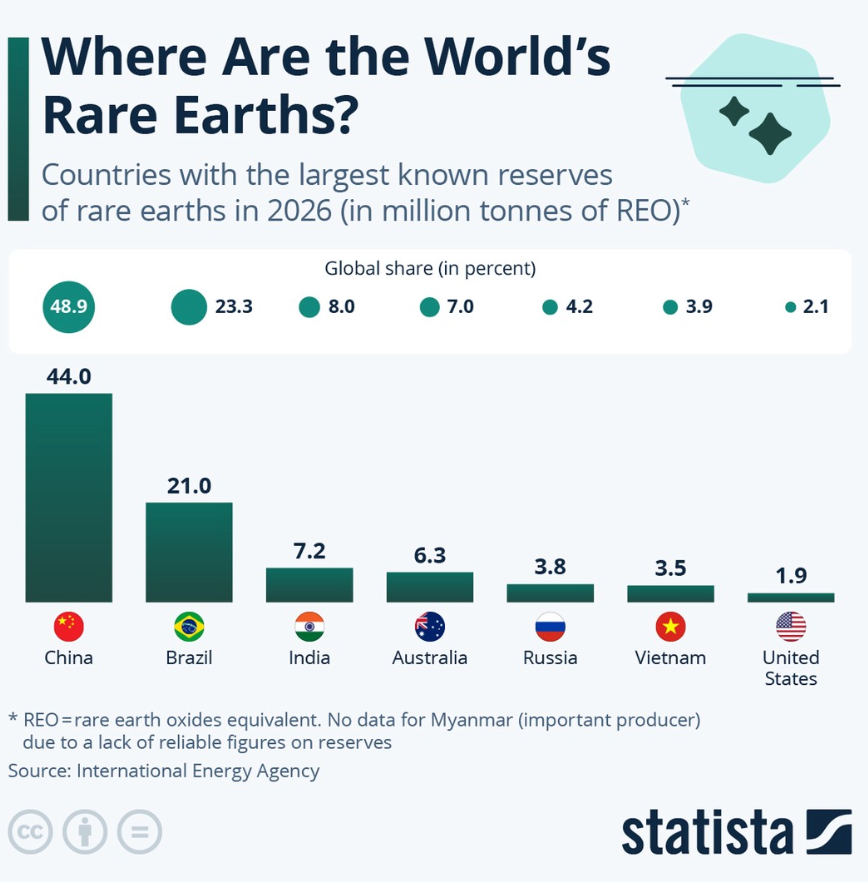
India isn't exactly short of rare-earth resources. The Geological Survey of India has identified around 482.6 million tonnes of rare-earth ore resources. Yet the country still depends heavily on imports for the high-performance permanent magnets used by industry.
Think of it like having wheat but importing bread because you don't have enough bakeries.
The government is now trying to build those bakeries.
In November 2025, it approved a ₹7,280 crore scheme to manufacture sintered rare-earth permanent magnets in India.
The target is to create 6,000 tonnes of annual domestic manufacturing capacity, divided among five companies selected through competitive bidding.
Around ₹6,450 crore will be offered as incentives linked to magnet sales over five years, while another ₹750 crore will help companies cover the cost of setting up factories. The three lowest bidders are also expected to get access to a limited assured supply of rare-earth oxides from government-owned IREL.
Why spend so much: because demand isn't slowing down.
The government expects India's consumption of rare-earth permanent magnets to double between 2025 and 2030, driven by EVs, renewable energy, electronics, aerospace and defence.
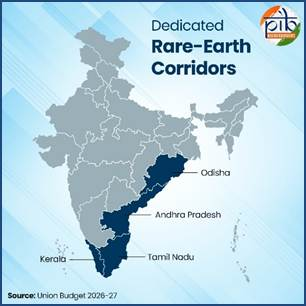
The 2026-27 Budget went another step further, announcing dedicated rare-earth corridors in Odisha, Kerala, Andhra Pradesh and Tamil Nadu. These are meant to bring mining, processing, research and magnet manufacturing closer together instead of treating them as separate industries.
And now, one of India's biggest engineering companies wants in.
Enter L&T: according to people familiar with the matter, Larsen & Toubro is preparing to bid for the government's ₹7,280 crore rare-earth magnet scheme.
If it goes ahead, L&T would enter a business quite different from the construction projects, heavy engineering and industrial equipment most people associate with the company.
But look a little closer and the move starts making sense. L&T reportedly wants to manufacture rare-earth permanent magnets in India.
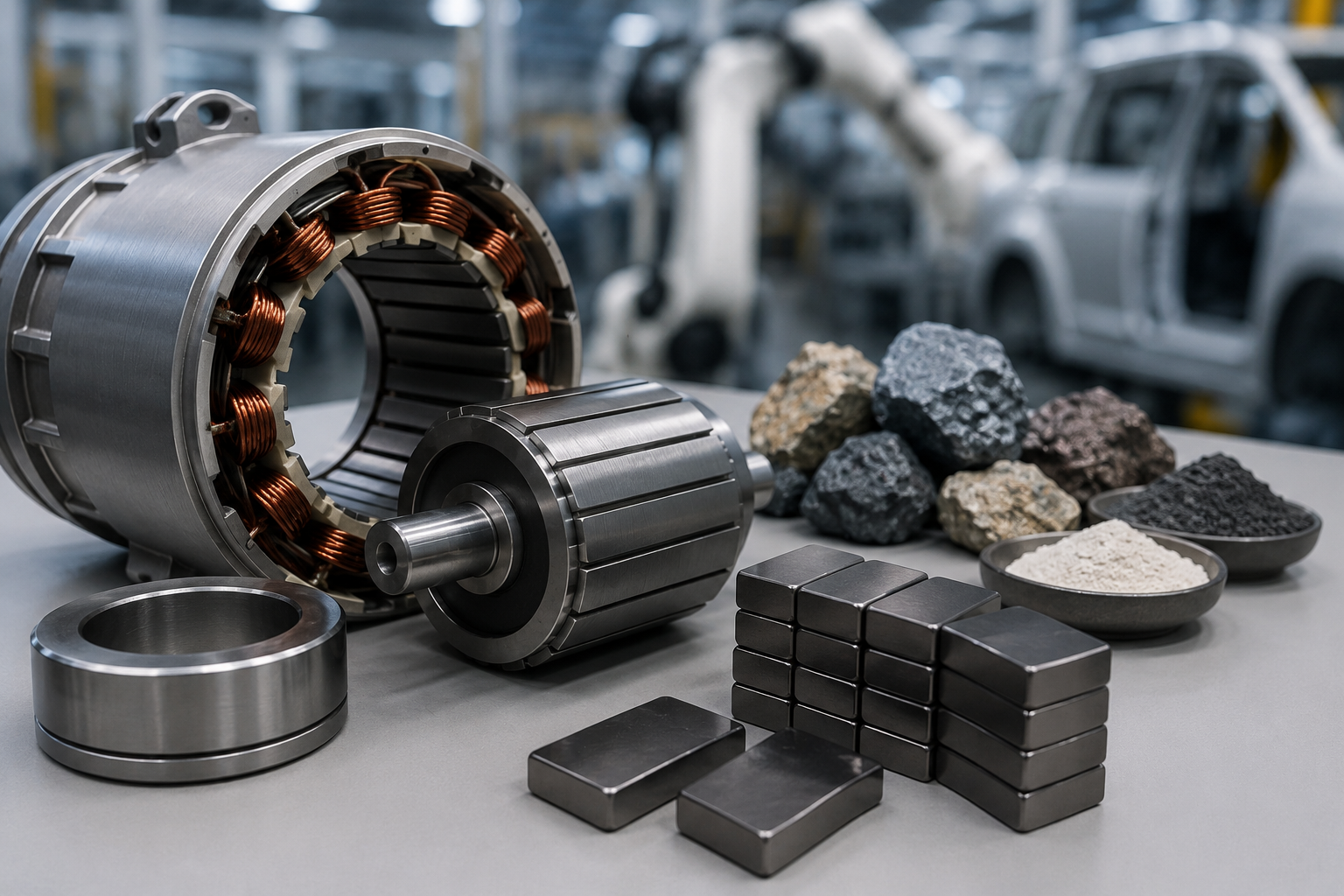
Rare-earth permanent magnets are extremely powerful magnets used inside EV motors, wind turbines, industrial robots, electronics, aerospace equipment and defence systems. Their strength allows manufacturers to build motors and other machines that are smaller, lighter and more efficient.
The government's scheme specifically targets sintered NdFeB magnets, made using neodymium, iron and boron.
L&T, however, cannot simply put up a factory and start producing them.
There's a technology problem
According to the people familiar with its plans, L&T will need to secure a technology partner with the expertise required to manufacture these magnets.
That's because making high-performance magnets involves far more than simply melting metals together.
Rare-earth oxides first have to be converted into metals. Those metals are turned into specialised alloys. The material is then processed into magnets with extremely precise properties depending on where they will eventually be used.
Even the government's incentive programme reflects this complexity: it is designed to create India's first fully integrated manufacturing facilities, covering everything from rare-earth oxides to finished magnets.
And L&T won't be alone.
According to the people cited in the source report, the programme has received 15 bids so far, including one from a consortium involving Japanese magnet manufacturer Proterial and two Indian automakers.
The government ultimately intends to allocate the 6,000-tonne capacity among roughly five successful applicants.
So why does L&T want a seat at the table?
The answer may be sitting inside an EV.
L&T is already building another business that could eventually need these magnets: electric vehicle motors.
In May, L&T Electronic Products & Systems partnered with Israel-based EVR Motors to develop and manufacture next-generation EV traction motors in India.
The companies plan to make motors for everything from two- and three-wheelers to passenger cars and commercial vehicles.