
 Newsletter

Shares of digital payment companies Paytm and MobiKwik dropped up to 10% following reports that the introduction of new UPI charges for merchants could be pushed to January 1, 2027.
Nothing has been finalised yet. The National Payments Corporation of India (NPCI) is reportedly in talks with the Finance Ministry, with a decision expected in the next two days.
Merchant Discount Rate (MDR) is a fee businesses pay to banks and payment companies for processing digital payments.
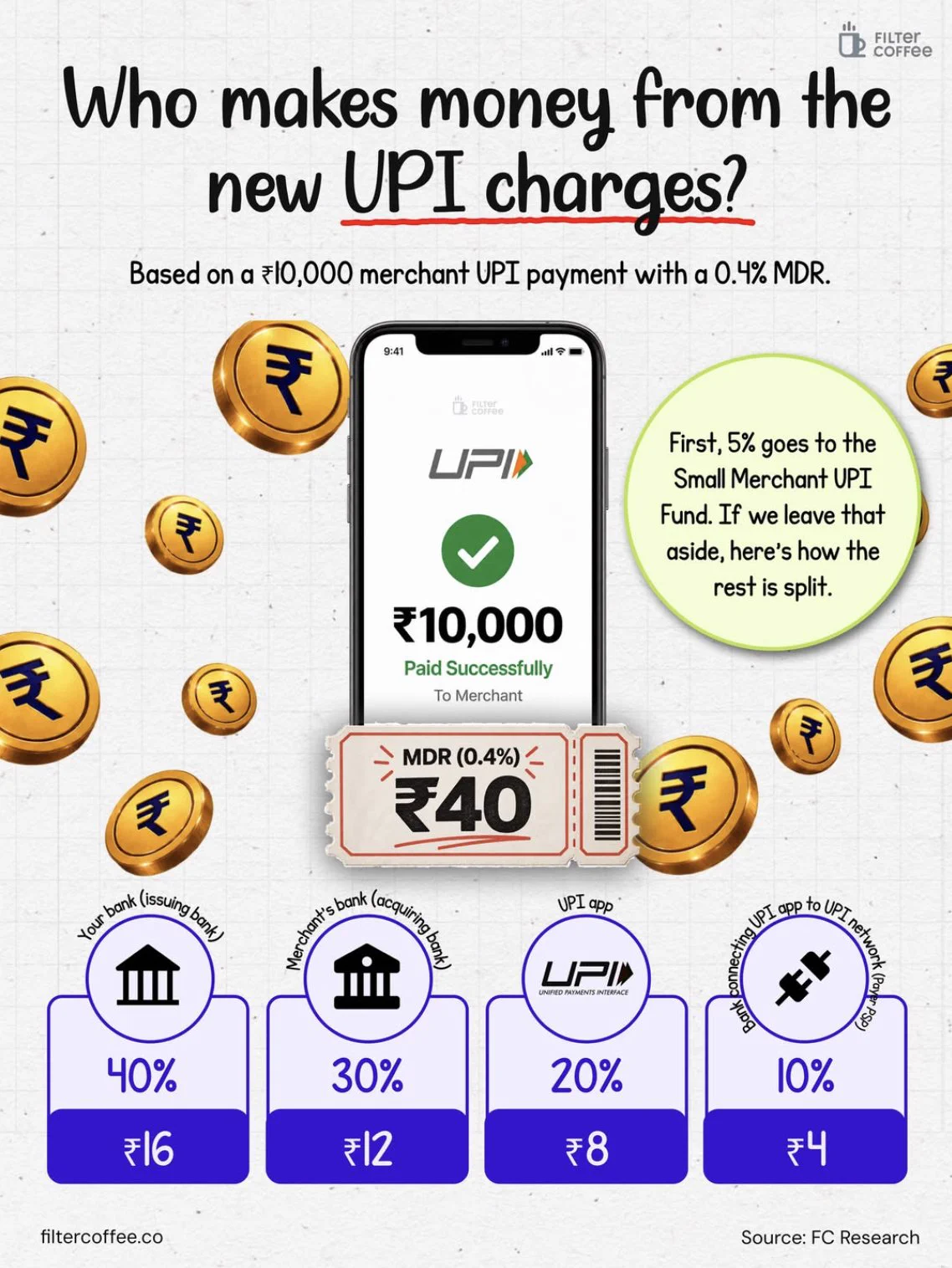
Under the proposed system, certain UPI payments above ₹2,000 would attract a 0.4% fee. For example, a ₹10,000 payment would cost the merchant ₹40. At the same rate, a ₹2,000 payment would cost ₹8, although the proposed charge applies to transactions above ₹2,000.
The why: several merchant associations, fintech firms and payment companies have asked NPCI for more time before the new charges take effect.
And the timing is a major concern.
With festive shopping around the corner and inflation already squeezing household budgets, businesses fear that another expense could affect customer spending.
There is also the possibility that shopkeepers may recover these charges by increasing prices, leaving customers to pay more indirectly.
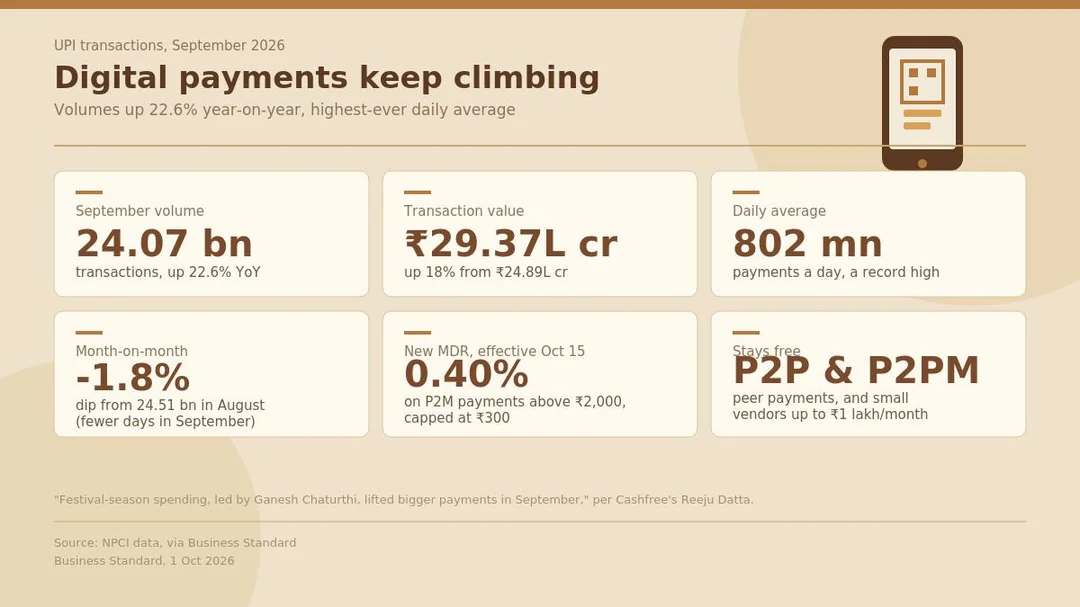
Quick background: the UPI Steering Committee reportedly decided last month to introduce a 0.4% MDR on eligible transactions above ₹2,000, starting October 15, 2026.
However, just days before the planned rollout, businesses say several questions about the new fee structure remain unanswered.
Where's the confusion? UPI is no longer used only for shopping. People also use it to pay utility bills, clear loan instalments and transfer money into investment accounts.
The proposed rules treat some of these payments differently, meaning the fee could change depending on what the money is being used for.
For example, imagine transferring ₹10,000 into your stockbroking account.
The brokerage is only holding that money so you can invest it. It isn't necessarily earning anything from the deposit itself. That's why brokers are questioning whether they should be charged MDR for such transfers.
Loan payments present another challenge.
Certain loan repayments made through automatic payment instructions would carry a fixed ₹5 charge.
But suppose the automatic payment fails because there isn't enough money in the customer's account. When the customer pays manually later, the transaction could be placed in another category, potentially attracting a 0.4% fee instead.
NPCI has issued clarification on loan repayment charges, but banks and payment platforms still want clearer rules for identifying these payments correctly.
Big picture: UPI is now used by more than 500 million people in India.
In August 2026, the platform handled 24.51 billion transactions worth ₹29.82 lakh crore, according to NPCI.
At that scale, even a small processing fee can add up for businesses receiving hundreds or thousands of payments every day.
For now, the industry is waiting to see whether NPCI will postpone the rollout and allow more time to resolve the confusion.
One important distinction: these proposed charges are for eligible merchant transactions. They do not mean every customer will suddenly have to pay a fee for using UPI.