
 Newsletter

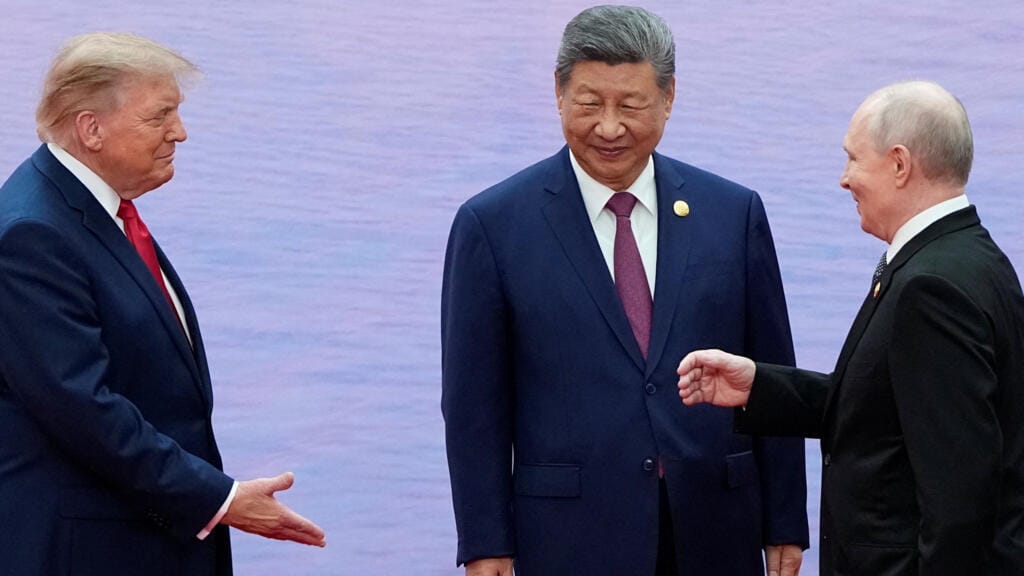
Amid the Russia–Ukraine and US–Iran conflicts, the leaders of China, the US and Russia sat together to discuss “world peace”.
Xi Jinping, Donald Trump and Vladimir Putin met in Shenzhen on Thursday for the first trilateral summit involving the leaders of all three countries.
The closed-door discussion at Kylin Villa lasted approximately one hour and 20 minutes. Trump said the three leaders were “making history”, while Xi called on them to “jointly safeguard world peace and stability”.
The meeting ended with a four-point Declaration Toward Peace covering nuclear weapons, energy supplies, the United Nations and international courts.
Everything they discussed: first, nuclear weapons: the US, Russia and China possess three of the world’s largest nuclear arsenals.
The leaders agreed that a nuclear war cannot be won and must never be fought. Their countries will begin discussions on reducing the risk of nuclear conflict and preventing more nations from obtaining nuclear weapons.
However, this is only a promise to hold talks. The declaration did not set any targets for reducing weapons or provide a timeline.
China has previously argued that the US and Russia must first reduce their much larger stockpiles before Beijing can be expected to make similar cuts.
Second, the world needs more fuel: the three countries plan to increase the production and supply of refined petroleum products.
Refined products are fuels made after crude oil is processed, including petrol, diesel and aviation fuel.
The Russia–Ukraine and US–Iran conflicts have disrupted energy trade and shipping routes. Increasing fuel supplies could reduce shortages and help control global prices.
Third, reforming the United Nations: China, Russia and the US are permanent members of the UN Security Council. Each can block major resolutions using its veto power.
The leaders said they want to reform the UN so it can respond more effectively to global conflicts and security challenges.
Fourth, a warning for the International Criminal Court: the three leaders said international courts must respect the sovereignty of countries and should not “abuse” their authority.
The position is particularly relevant to Putin, who faces an ICC arrest warrant related to the Ukraine war. The court has also issued warrants connected to the Gaza conflict, including one for Israeli Prime Minister Benjamin Netanyahu.
Neither the US, Russia nor China is a member of the ICC.
What about Ukraine, Iran and North Korea: the leaders discussed the Ukraine war, the Middle East and tensions on the Korean Peninsula behind closed doors. Putin said Russia had a shared interest in resolving the Ukraine conflict, while Trump had pushed for nuclear risks to remain central to the meeting.
Trade also entered the room: Xi argued that the three countries should avoid breaking global supply chains and strengthen economic cooperation. He also called for regular high-level communication and systems that could prevent a misunderstanding from becoming a larger confrontation.
Putin supported open trade, food and energy security and greater cooperation on artificial intelligence governance. The leaders did not announce any new trade deal or tariff reduction.
Zoom out: some Western observers have compared the summit with the 1945 Yalta Conference, where US President Franklin Roosevelt, British Prime Minister Winston Churchill and Soviet leader Joseph Stalin met during the final months of World War II.
At Yalta, the leaders discussed post-war Germany, divided Europe into spheres of influence and helped shape the international order that followed, including the creation of the United Nations.
The comparison has emerged because Trump, Xi and Putin also represent three powerful countries and met while major wars were underway. The concern is that they could make decisions affecting smaller countries without those countries sitting at the table.
But the comparison has limits. The three countries are not wartime allies, their interests differ sharply and the summit produced no agreement remotely as detailed as Yalta.
For now, the meeting gave Trump, Xi and Putin a historic photograph and a document filled with ambitious language. Turning “jointly safeguarding world peace” into something measurable will be the slightly harder part.