
 Newsletter
New Nobel win, Voice AI makes noise, and EVs in overdrive.
🗓️ Morning, folks!
The Nobel Prize party is far from over.
This year’s Physics Nobel goes to Francis Halzen, the scientist behind a giant detector buried deep under the ice in Antarctica that helped us spot some of the universe’s most elusive particles: neutrinos.
Often called “ghost particles”, neutrinos are so tiny and so reluctant to interact with matter that around 65 billion pass through your fingernail every second without you noticing.
Halzen’s IceCube Observatory changed the game by detecting high-energy neutrinos coming from far beyond our galaxy, giving scientists a whole new way to study the universe.
Think of it as adding another sense to astronomy, alongside light, cosmic rays and gravitational waves. By combining these signals, scientists can piece together a much richer picture of cosmic events, opening up a new era of “multi-messenger astronomy.”

Moving on, the markets’ two-day winning streak came to an end, with the Sensex and Nifty slipping 0.5% and 0.76%, respectively.
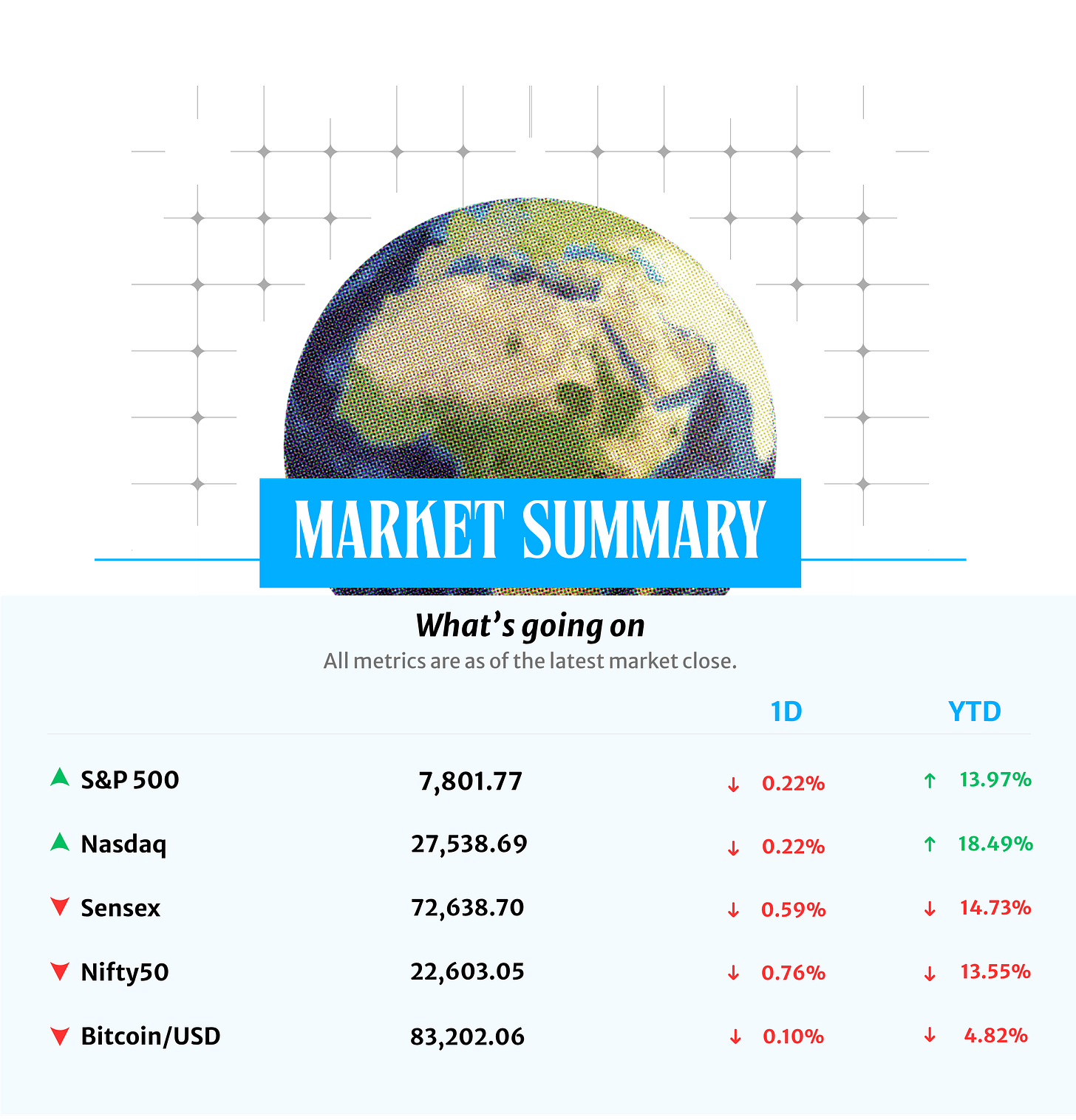
The reason? RBI raised the repo rate by 25 basis points, while its cautious commentary weighed on sentiment. The rupee also weakened to a five-month low of 96.7 against the dollar.
All sectoral indices except media and PSU banks ended in the red, with FMCG, IT, auto, metal and realty falling 1-2%.
Since we’re discussing the RBI’s decision, here’s how different sectors fared:
- Metal and realty stocks were among the biggest losers. Higher interest rates can make property loans more expensive, affecting demand for homes. They can also raise financing costs for metal companies and slow demand.
- The auto sector declined over 1%. A repo rate hike can make vehicle loans costlier, potentially slowing sales. Ashok Leyland, Bajaj Auto and Hyundai dropped over 2%, while Hero MotoCorp, Bharat Forge, Maruti Suzuki, M&M and Bosch fell over 1%. TVS Motor, Tata Motors PV and Eicher Motors also traded in the red.
Let’s hit it! 💪🏻
1 Big Thing: What changed in India’s economy? 📈
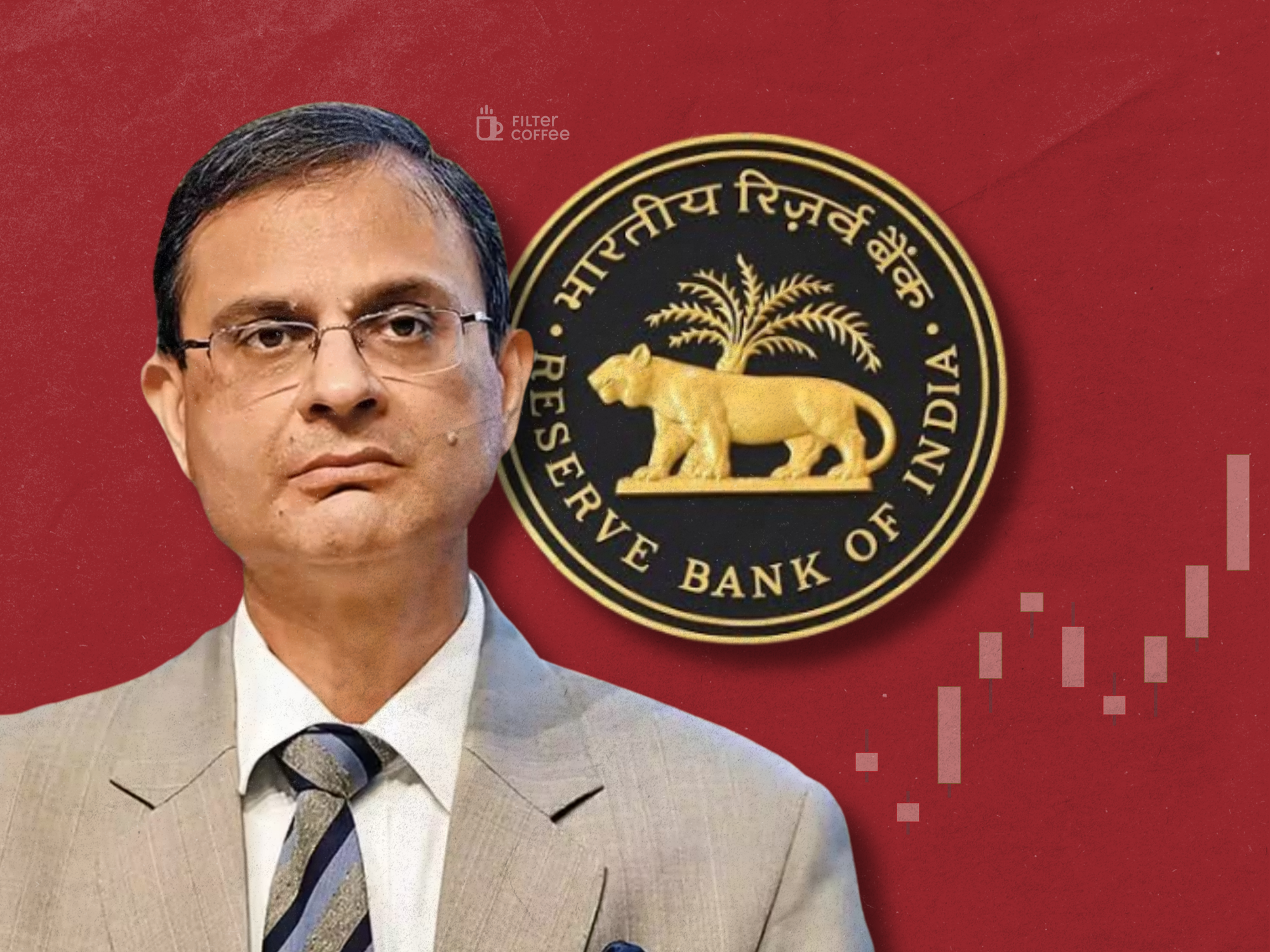
The Reserve Bank of India, as expected, hiked the repo rate by 25 basis points, or 0.25 percentage points, from 5.25% to 5.5%. The last rate hike was in February 2023.
Before we get into the details, the important thing here to ask is since this has come after almost 4 years, what has changed?
The repo rate is basically the interest rate at which RBI lends money to banks. When this rate goes up, borrowing becomes more expensive for banks. Banks can then pass some of that increase on to customers through higher loan rates.
For someone with a floating-rate home loan, this could mean either a higher EMI or a longer loan tenure.
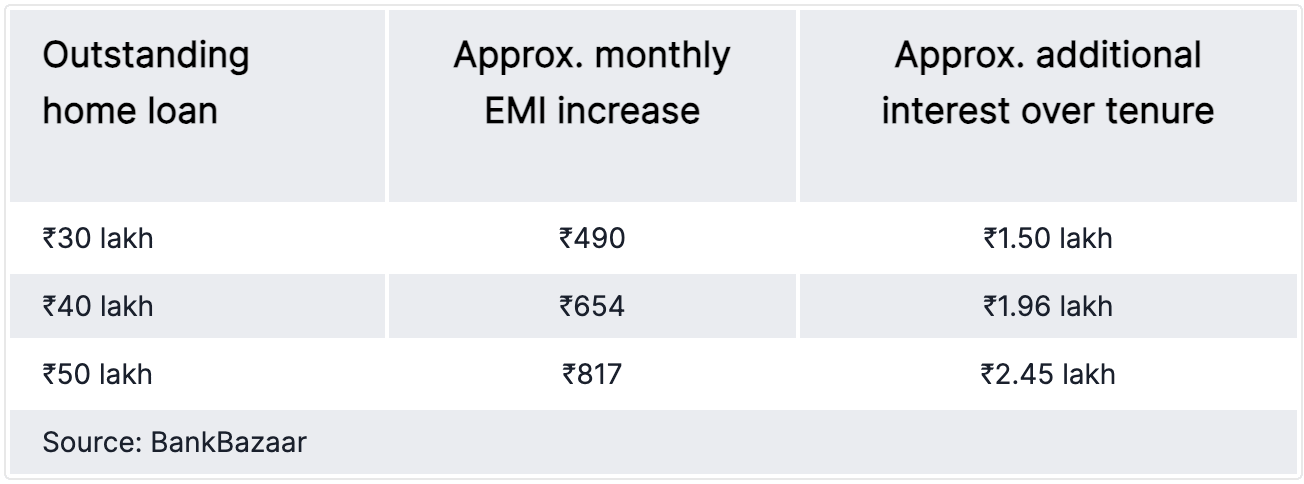
But the bigger change is RBI’s stance: the rate hike itself was largely expected. What caught attention was RBI changing its policy stance from “neutral” to “calibrated tightening” for the first time since 2018.
Neutral means RBI is keeping both options open. If inflation falls and growth needs support, it can cut rates. If inflation rises, it can increase them. Calibrated tightening means RBI is now more worried about inflation and is leaning towards keeping interest rates higher.
The why: the decision was taken unanimously by the Monetary Policy Committee, headed by RBI Governor Sanjay Malhotra.
The backdrop has changed. Inflation is rising, oil prices are higher and the rupee has weakened. All three can make goods and services more expensive in India.
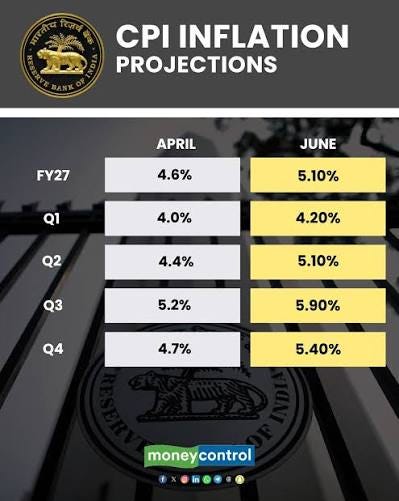
Important numbers: RBI has also slightly raised its core inflation forecast for the current financial year to 4.4% from 4.3%.
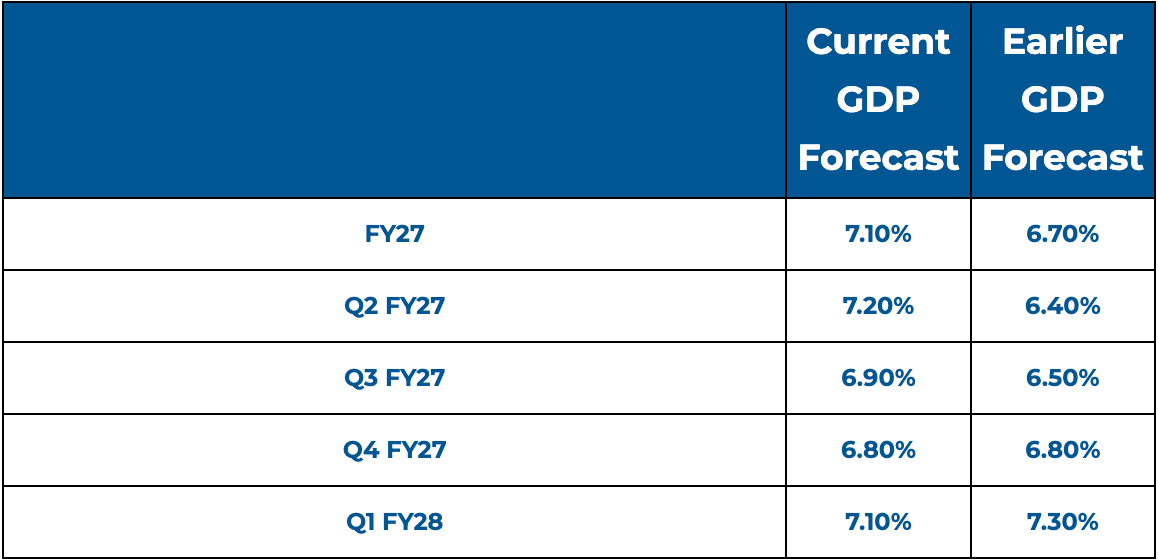
Interestingly, RBI is raising rates even as it becomes more optimistic about economic growth. The central bank increased its real GDP growth forecast to 7.1% from 6.7%.
RBI said economic activity maintained momentum during the July-September quarter. Manufacturing has remained resilient despite higher costs, while services and investment activity continue to hold up.
Private consumption and investment are expected to remain major growth drivers, while net exports have also remained positive.
The weakness is seen in non-durable goods and domestic air traffic. Supply-chain disruptions could also hurt growth. Weather is another risk. A weak monsoon and the possibility of El Niño could affect the rabi crop season.
For now, however, RBI expects both rural and urban demand to remain steady.
We also broke this down on video, watch here 🚀
2. The fix for America’s power bottleneck 🔌
Power transformer manufacturer Marsons Limited has partnered with New York-based private equity firm Cleanhill Partners to expand its transformer manufacturing, distribution and servicing business across the US and Canada.
What these companies do: Kolkata-based Marsons makes power transformers, which help move electricity from power plants to homes and businesses.
Cleanhill Partners, meanwhile, is a private equity firm focused on clean-energy infrastructure, investing in areas such as energy storage, power systems and solar infrastructure.
The significance: the US is facing a serious transformer shortage, with wait times for new equipment now exceeding 24 months. Demand is soaring as data centres, factories, EVs, renewable projects and grid upgrades require more power.
Between 2019 and 2025, demand for generator step-up transformers rose 274%, while demand for substation transformers jumped 116%.
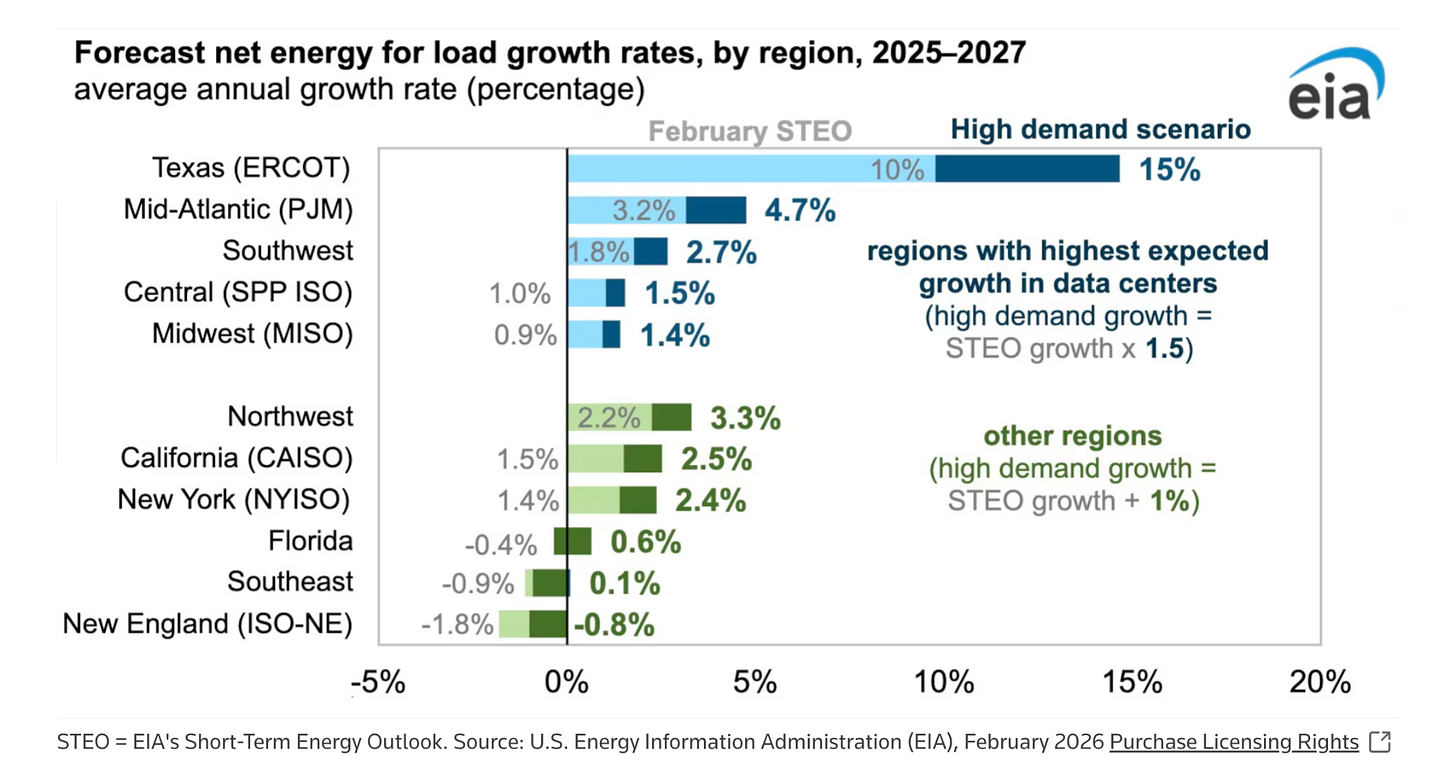
That makes this partnership particularly timely as the JV aims to expand local manufacturing capacity and help ease this bottleneck.
While we are on partnerships 🤝,
Karnataka is working with ElevenLabs on a tool that could help people who have lost the ability to speak communicate using an AI-generated version of their own voice.
The voice comeback: the voice AI startup has signed a deal with the Karnataka Innovation and Technology Society (KITS), marking its first partnership with an Indian state government.
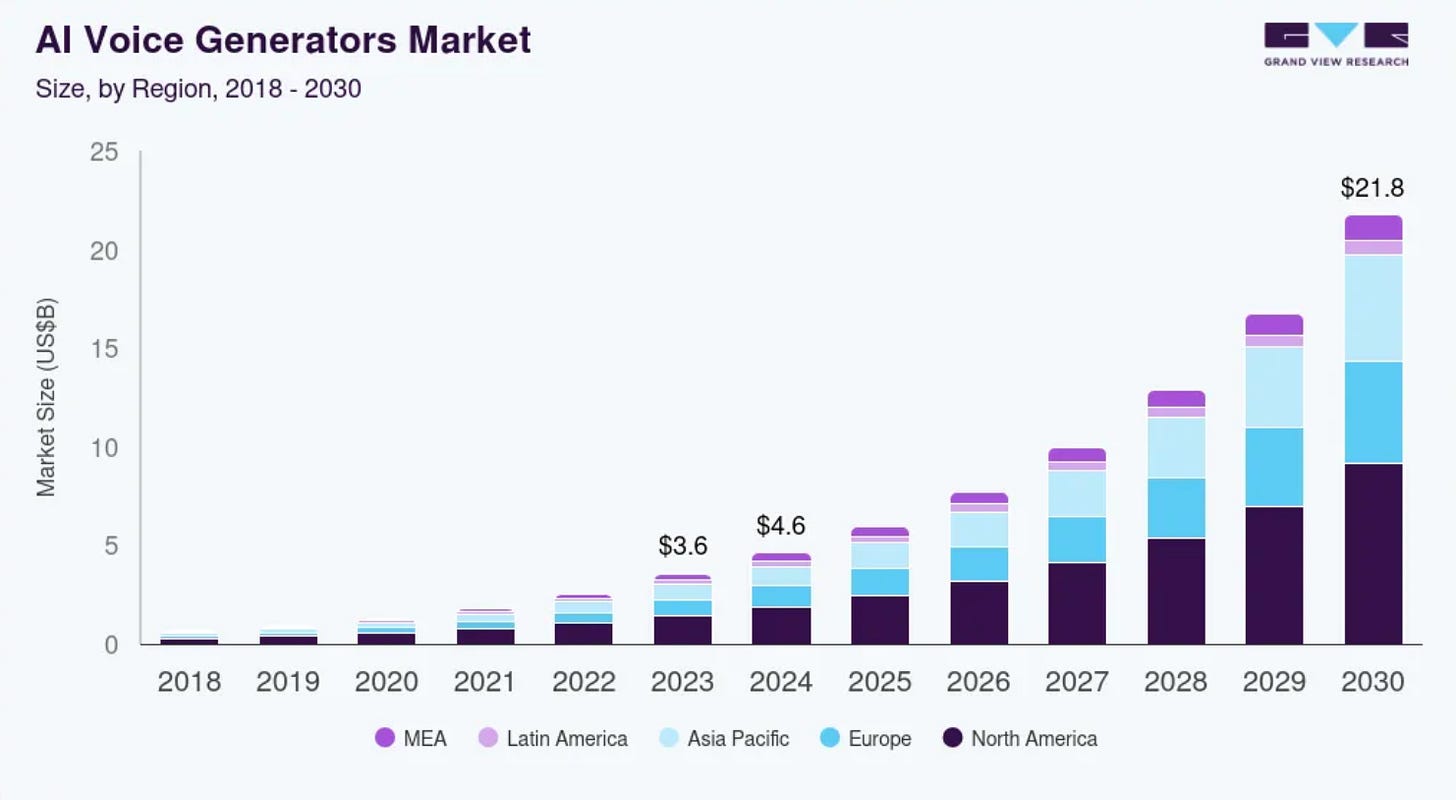
The India advantage: the country is now ElevenLabs’ second-largest market, with 250+ businesses using its tech. This also comes as the global AI voice market is projected to nearly triple from $7.7 billion in 2026 to $21.8 billion by 2030.
3. Taiwan’s Gemtek teams up with Dixon📍
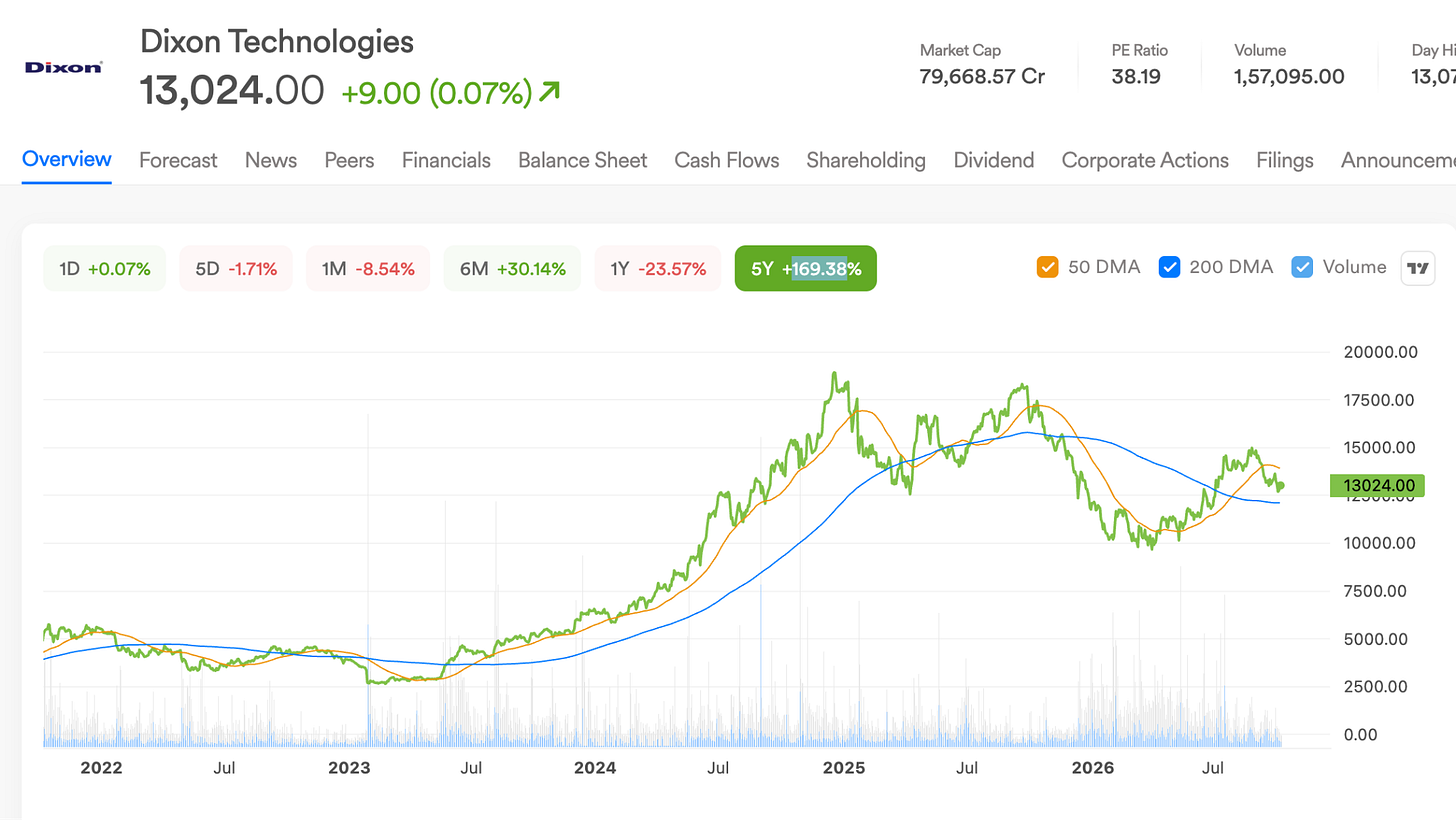
Electronics manufacturer Dixon Technologies has signed an agreement with Taiwan-based Gemtek Technology to manufacture and supply optical communication components in India.
Gemtek provides wireless and broadband communication solutions and is based in Taiwan’s Hsinchu Industrial Park.
What’s the deal: the companies will make optical transceivers and bidirectional optical subassemblies. These components help telecom networks send and receive data through fibre-optic cables.
The venture combines Dixon’s manufacturing capabilities with Gemtek’s optical networking expertise to serve growing demand from AI, data centres and telecom networks.
4. Swiggy is not just about food delivery…🍔
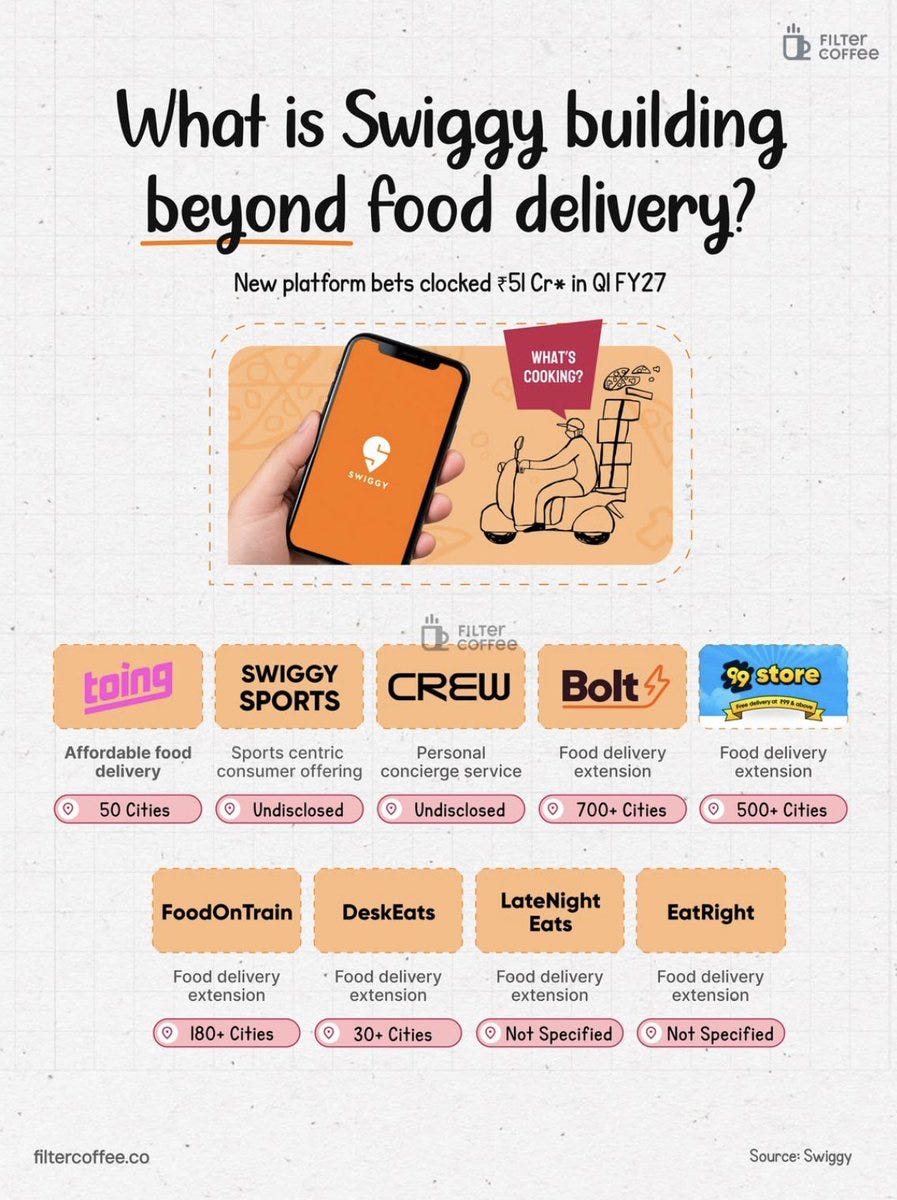
Swiggy doesn’t want to be just the app you open when you’re hungry.
It’s building different ways to capture different eating occasions, from 10-minute meals with Bolt and budget orders through Toing and 99 Store, to office lunches, train journeys and late-night cravings.
And with bets like Crew and Swiggy Sports moving beyond food altogether, the bigger play looks clear: get users to open Swiggy for more reasons, more often.
5. Stocks that kept us interested 🚀
What went up ⬆️
🎬 PVR INOX surged 8%, extending gains after CLSA maintained its ‘Outperform’ rating with a ₹2,135 target, implying 71% potential upside.
🥳 Kalyan Jewellers jumped 3% after its India revenue grew 27% in Q2FY27 compared with last year, driven by stronger sales at its existing stores.
📈 PTC Industries rose 7% to a record ₹24,262.6 as its QIP opened with a ₹22,150 floor price per share.
💰 Swastika Infra gained 5% after it secured an order worth ₹616 crore from Maharashtra State Electricity Distribution Company Limited (MSEDCL).
😮💨 Bharti Airtel recovered from intraday lows, gaining up to 1% after raising all postpaid plan tariffs by ₹50 each.
What went down ⬇️
☹️ Titan slipped 3% and hit a three-month low as slower jewellery growth missed expectations, reflecting festive timing and last year’s strong performance.
👎🏻 Prime Focus tumbled up to 8% intraday after CNBC-TV18 reported Income Tax Department searches at the company’s offices in Mumbai.
What else are we snackin’ 🍿
☁️ Data centre: Anant Raj and Orange Business partnered with Haryana to explore hosting overseas data and promote the state’s cloud and data centre services globally.
🚗 EV sales: Electric car sales in India nearly doubled to 36,108 units in September, driven by festive demand, more model choices and policy support.
💻 Scotland deal: Mphasis secured a £35.4 million contract with Social Security Scotland to maintain its core benefits management platform.
That’s a wrap! Don’t let the weekday blues get to you.

And if you’d like to place your brand on this newsletter, let us know.
Hit that 💚 if you liked this issue.
Disclaimer: this newsletter is for informational and research purposes only. Nothing here should be considered financial, investment, legal, or professional advice.